





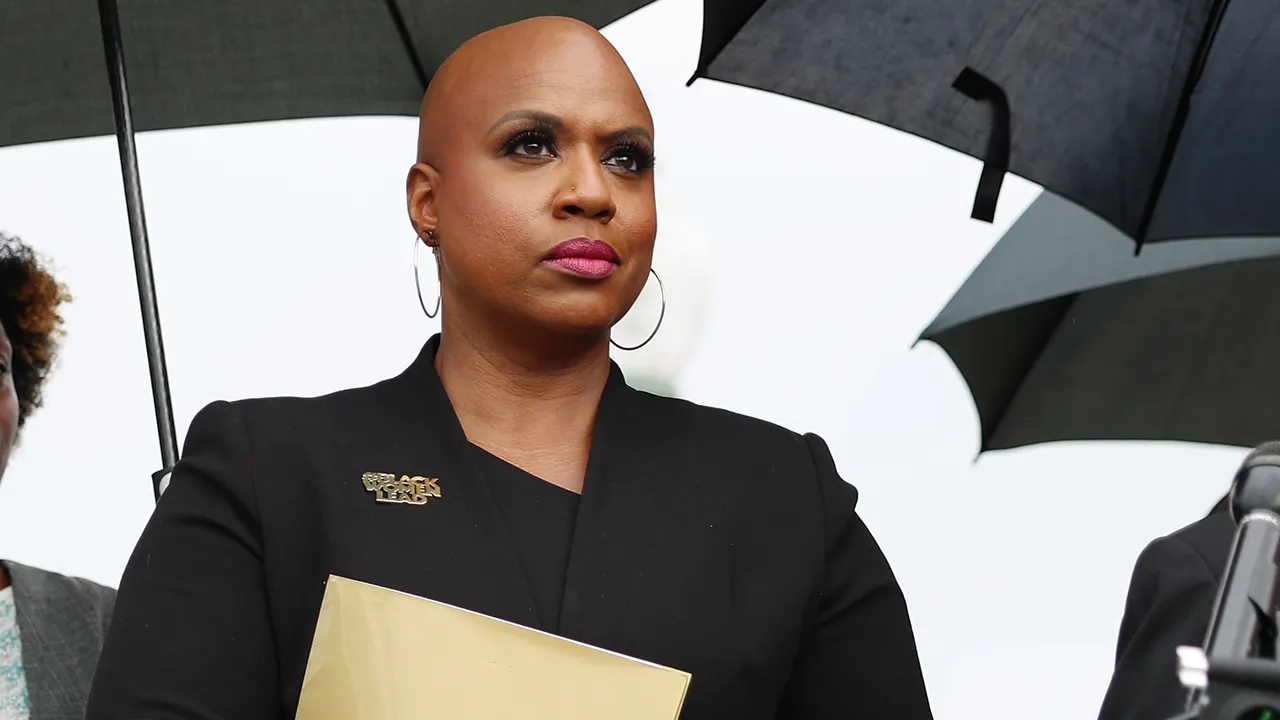
In a political system where most incumbents brace for primary challengers and general-election fights, Rep. Ayanna Pressley of Massachusetts has taken a remarkably different path this year. The Boston Democrat officially became her party’s nominee for the 7th Congressional District after Tuesday’s primary, but that milestone came with a twist: she faced no challenger from her own party, and she will face no Republican opponent in November. In effect, her reelection is all but assured. Her district, which covers roughly three-quarters of Boston, is ranked as Solid Democrat by the Cook Political Report, making a competitive general election essentially unthinkable. For Pressley, a member of the progressive “Squad” who first entered Congress in 2018 alongside Alexandria Ocasio-Cortez, Ilhan Omar, and Rashida Tlaib, this means her path back to Washington has been unusually quiet—at least in terms of electoral mechanics. Yet the silence on the ballot has not translated into silence from Pressley herself. She has spent the cycle campaigning for other Democrats, criticizing former President Donald Trump and the conservative Supreme Court, and making headlines with sharp, racially charged rhetoric. The lack of opposition has not tempered her voice; if anything, it has allowed her to speak more freely, knowing her seat is safe. But that safety has also opened the door to scrutiny of a different kind, involving personal finances, her husband’s business dealings, and the gulf between her political messaging and her own family’s economic profile. In a year when voters across the country are demanding accountability, Pressley’s unchallenged status raises uncomfortable questions about representation, power, and the role of money in politics—questions that are unlikely to cost her the seat, but that nevertheless hang over her victory.
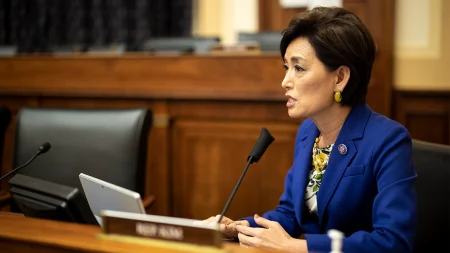
Because she had no opponent in either the primary or the general election, Pressley has been free to act as a surrogate for other Democratic candidates rather than focus on defending her own record. One of those candidates is state Rep. Tram Nguyen, a Democrat running in Massachusetts’ 6th District, who shares Pressley’s most progressive priorities. Pressley joined Nguyen on the campaign trail, lending her national platform to a local race that has attracted attention for its ideological intensity. Nguyen has called for abolishing Immigration and Customs Enforcement, implementing Medicare for All, and ending all military aid to Israel—positions that put her firmly to the left of the national Democratic Party and align closely with Pressley’s own voting record and public statements. For Pressley, this is not just about helping a like-minded colleague; it is about building a broader movement within Massachusetts and beyond. She has also campaigned alongside Sen. Ed Markey, the veteran Democrat who has become a champion of the party’s climate and progressive wings. Markey, who has represented Massachusetts in the Senate since 2013, is facing his own primary challenge, and Pressley’s appearances at his rallies have been framed as a defense of the party’s more ambitious agenda. At one such rally, held just a week before the primary, Pressley delivered a speech that captured national attention, declaring that white supremacy is thriving under Trump’s presidency. She went further, arguing that the problem is bigger than any single individual. “Because whenever we do the work of ousting the occupant of the Oval Office, the Confederacy is still alive and well,” she said. “That’s all MAGA is. White supremacy is still alive and well. Anti-Blackness will still be alive and well.” Those words were meant to rally the faithful, but they also reflect a willingness to speak in stark, uncompromising terms that has defined her political identity since she entered Congress.
Pressley’s rhetoric has not been limited to campaign rallies. In the wake of a Supreme Court decision that she saw as a direct attack on Black political power, she issued a statement that drew both praise and condemnation. The ruling in Louisiana v. Callais, a 6-3 decision, held that creating a second majority-Black congressional district in Louisiana constituted unconstitutional racial gerrymandering. For Pressley, the decision was evidence of a deeper problem within the Trump administration and the conservative legal movement. She accused the administration of being “anti-Black” and suggested that the court’s conservative majority would prefer a return to an era when Black Americans had no political agency. Her exact phrase was searing: she said the administration “would rather Black Americans pick cotton than pick the president, than pick their congressperson, than pick a senator.” The comparison was intentionally provocative, invoking the horrors of slavery to describe what she sees as a systematic effort to dilute Black voting power. To her supporters, Pressley was speaking an uncomfortable truth about the erosion of civil rights in America. To her critics, the remark was hyperbolic, divisive, and disrespectful to the memory of those who actually suffered under slavery. But Pressley has never shied away from such language. She has built her career on being unapologetically outspoken, particularly on issues of race, criminal justice, and economic inequality. Her district is overwhelmingly Democratic and heavily diverse, and her unopposed status suggests that her constituents are comfortable with her style. Whether the broader electorate shares that comfort is another matter. In a deep-blue district like Massachusetts’ 7th, there is little electoral risk in making controversial statements, but Pressley’s words carry weight beyond her district. They shape how the national Democratic Party is perceived, and they fuel ongoing debates about the party’s direction, its willingness to embrace bold rhetoric, and its capacity to win over moderate voters in swing states.
One of the more striking juxtapositions to emerge this cycle involves Pressley’s legislative focus on housing and evictions. In April, she introduced a bill aimed at providing relief to people facing eviction, a measure she framed as a moral imperative in a country where housing costs have skyrocketed and millions of families are one missed paycheck away from losing their homes. At the time, she described evictions as “an act of violence”—a phrase that resonated with tenant advocates but also invited scrutiny of her own financial circumstances. That scrutiny came when her 2024 financial disclosure was made public. The disclosure showed that Pressley and her husband, Conan Harris, reported $8 million in assets tied to four rental properties in Massachusetts. For a politician who speaks so passionately about the housing crisis and the need to protect renters, the revelation created an obvious tension. How can someone who benefits from the rental market, and who holds properties that presumably generate income, claim to fully understand the trauma of eviction? The question is not necessarily a fair one—owning rental property is not inherently unethical, and many landlords support tenant protections—but in politics, perception often matters more than nuance. Pressley’s defenders point out that being a landlord does not disqualify someone from caring about housing justice, and that her bill was aimed at preventing displacement, not at undermining property owners. Still, the contrast between her rhetoric and her balance sheet is the kind of thing that opponents would have seized upon in a competitive race. But Pressley has no opponent, so the issue has not been tested in a serious debate. Instead, it has simmered in the background, a reminder that even the most progressive politicians can find themselves caught between their ideals and their personal economic interests.
The controversy surrounding Pressley’s husband has added another layer to this complex picture. In July, Conan Harris found himself in the spotlight after a company he is involved with, CoJo Real Estate, secured a $2 billion contract from the state of Massachusetts to build a new courthouse in Boston. The deal was a significant win for the company, but it also raised ethical concerns. John Barros, a key partner in CoJo Real Estate and a well-known figure in Massachusetts political circles, divested from the company because of concerns about how the contract was awarded. Barros’s decision was a red flag, and losing bidders for the courthouse project have since filed a lawsuit pointing to his departure as evidence of potential wrongdoing. The lawsuit alleges that the process was tainted, though it does not accuse Pressley herself of any misconduct. Pressley has not been named as a defendant, and there is no evidence that she was involved in securing the contract for her husband’s company. But the optics are unavoidable. A sitting congresswoman whose campaign and political brand are built on fighting corruption, corporate power, and inequality is now linked, through marriage, to a massive government contract that has sparked a legal battle. That does not mean anything improper occurred, but it does create an appearance problem. Voters who are already cynical about the relationship between money, politics, and government decisions may see this as just another example of the powerful looking out for their own. Pressley’s office has not commented extensively on the lawsuit, and she has continued to campaign as if nothing has changed. But the episode is a reminder that in the modern political world, family members’ business dealings can become just as important—and just as damaging—as a politician’s own record, especially when that politician has built a career on high-minded principles.
In the end, Pressley’s unopposed status means that none of these controversies are likely to cost her the election. Her district is solidly Democratic, and she has a loyal base of supporters who see her as a fearless advocate for marginalized communities. She will return to Congress for another term, where she will continue to push for Medicare for All, racial justice, and an end to military aid to Israel. She will continue to criticize Trump and the Supreme Court, and she will continue to speak in the blunt, emotional language that has become her trademark. But the 2024 cycle has revealed something about the nature of safe seats and political protection. When a politician faces no real challenger, there is no opportunity for accountability. No opponent will force her to explain her husband’s business dealings or square her housing rhetoric with her personal wealth. No debate will challenge her “pick cotton” comment as divisive or unproductive. Instead, she moves forward with a degree of freedom that most candidates would envy, but also with a burden that is harder to measure: the suspicion that her safe seat has insulated her from the consequences of her own actions. For Pressley, that may be exactly what she wants. She has positioned herself as a national progressive leader, and her reelection was never truly in doubt. But for the voters in her district and across the country, the lack of a competitive race means they are left with more questions than answers. What would happen if she had to defend her record? How would she explain the $2 billion contract awarded to her husband’s partner? Would she soften her rhetoric if it meant losing votes? These questions remain unanswered, and perhaps they always will. In a democracy, competition is supposed to bring truth to light. In Pressley’s case, the absence of competition has allowed her to glide through the election season, leaving her ideals and her controversies to coexist in an uneasy, unexamined peace. That is the real story of her 2024 victory—not that she won, but that she won without ever having to prove why she deserved it.