





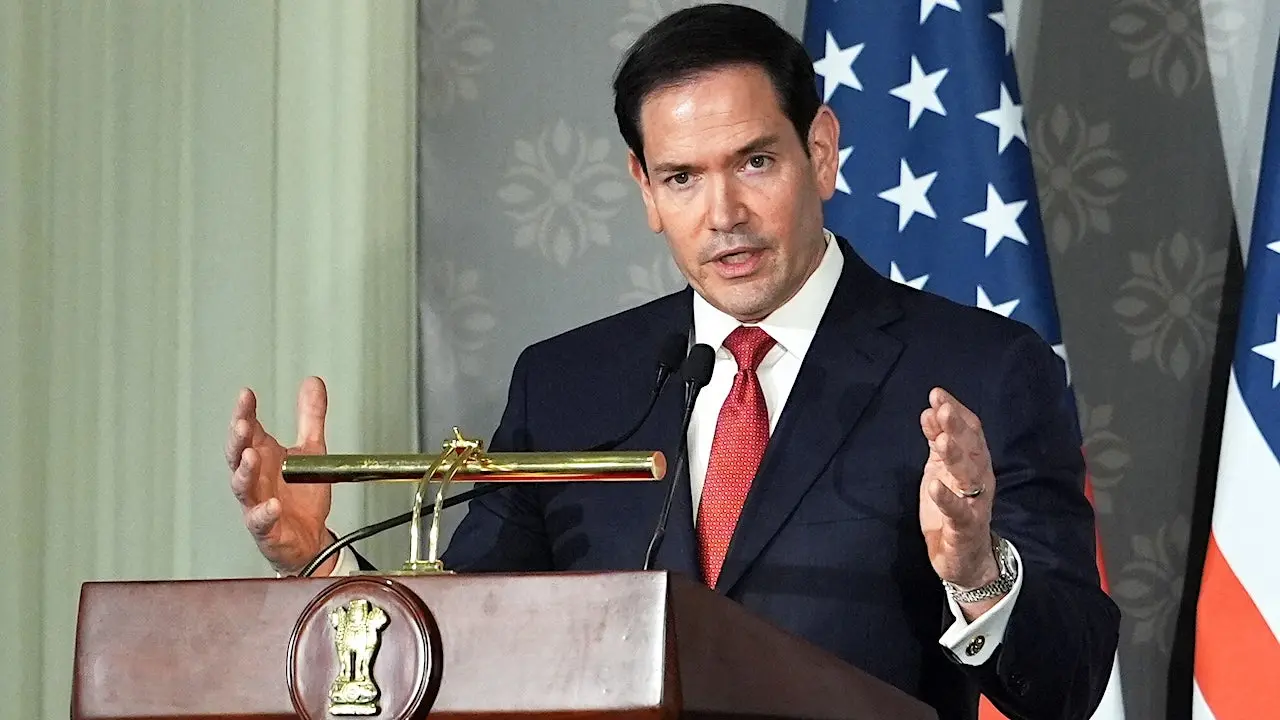
The diplomatic theater in New Delhi recently served as the backdrop for a critical conversation about the future of global talent mobility, exposing the delicate friction between national sovereignty and international collaboration. When U.S. Secretary of State Marco Rubio stood before a room of eager reporters and Indian officials, he was met with a wave of deep-seated anxiety regarding the Trump administration’s ambitious plans to overhaul America’s immigration and visa systems. For decades, India has been the single largest exporter of high-skilled labor to the United States, driving the engine of Silicon Valley and fueling innovation across American academia and corporate boardrooms. The mere whisper of policy shifts that could curtail this human pipeline sent ripples of concern through Indian tech hubs like Bengaluru and Hyderabad, where thousands of aspiring engineers and seasoned professionals view the U.S. visa process as their gateway to the global stage. Recognizing these palpable fears, Rubio sought to assuage local anxieties by dismantling the narrative that the United States was deliberately targeting Indian nationals, explaining instead that the impending structural reforms are part of a broader, non-discriminatory global stabilization effort. This high-stakes meeting highlighted not just the technicalities of visa caps and legal processes, but the deeply human stories of ambition, family security, and economic interdependence that bind these two democratic giants together.
In addressing his hosts, Rubio brought a unique personal perspective to the podium, one rooted in his own identity as the son of Cuban immigrants who sought and found a better life on American shores. This personal history added a layer of human complexity to his defense of the administration’s “America First” doctrine, a political philosophy that prioritizes domestic security and national interest above all else. Rubio argued passionately that the United States is currently navigating an unprecedented migratory crisis, pointing to the staggering figure of over twenty million unauthorized border crossings in recent years as proof that the existing immigration framework is fundamentally broken. He emphasized that the ongoing reforms are not born out of animosity toward any single nation, but are rather a long-overdue “modernization” of a system struggling to cope with contemporary global pressures. By framing the policy shifts as a global reset rather than an India-specific restriction, Rubio attempted to paint a picture of a nation that remains fundamentally welcoming but must first restore order to its chaotic borders. His narrative suggested that for America to remain a beacon of hope and opportunity, it must first ensure that its entryways are governed by sustainable, modern, and legally rigorous mechanisms that serve the host nation’s economic and security needs.
However, India’s External Affairs Minister, Subrahmanyam Jaishankar, presented a sharp, pragmatic counter-perspective that brought the conversation back to the immediate, real-world consequences for everyday people. Jaishankar, a seasoned diplomat known for his unwavering defense of India’s global interests, did not mince words when conveying the immense hurdles currently faced by legitimate Indian travelers, researchers, and business leaders. He reminded his American counterpart that while New Delhi fully supports collaborative global efforts to curb illegal and irregular migration, such measures must never come at the expense of “legal mobility.” The human cost of visa delays, administrative bottlenecks, and unpredictable policy changes is measured in severed family ties, canceled academic pursuits, and derailed business ventures. Jaishankar highlighted the profound economic synergy between the two countries, noting that Indian enterprises have injected over $20 billion directly into the American economy, creating jobs and fostering local innovation. For India, the smooth and predictable flow of highly educated minds is not a luxury or a diplomatic favor; it is the vital currency of a bilateral partnership that underpins critical advancements in biotechnology, artificial intelligence, and aerospace engineering.
The dialogue between Rubio and Jaishankar underscored a profound philosophical conflict that many modern democracies are currently grappling with: the tension between national protectionism and global economic integration. On one side of this debate is the conviction, articulated by Rubio, that a sovereign nation’s primary, non-negotiable duty is to design an immigration policy that serves its own national self-interest, dictating precisely who enters, when they arrive, and under what conditions. He proudly defended America’s legacy as the most welcoming nation on Earth, pointing out that nearly one million individuals successfully achieve permanent residency status every single year, contributing immensely to the country’s cultural and economic tapestry. Yet, on the other side of this philosophical divide is the reality of a borderless digital economy, where corporations and research institutions rely on a fluid, global labor pool to maintain their competitive edge. For the millions of high-skilled workers who spend years navigating the labyrinthine American visa system, these shifting political philosophies translate into a state of perpetual limbo. The debate ceases to be a theoretical discussion about sovereignty and becomes an existential struggle for families trying to build a stable future amidst the shifting geopolitical tides of their adopted home.
To address these immediate anxieties, Rubio urged the Indian government and its public to view the current challenges as temporary “friction points” inherent to any major systemic transition. He candidly acknowledged that the journey toward a modernized 21st-century immigration system would be marked by administrative bumps, delays, and periods of adjustment that would undoubtedly test the patience of applicants and international partners alike. However, his message was ultimately one of long-term optimism, asserting that the destination of this difficult transition is a significantly more efficient, predictable, and transparent framework. Rubio posited that once the antiquated legacy processes are fully updated, the new system could actually prove more beneficial to Indian innovators and professionals by reducing bureaucratic red tape and establishing clearer pathways for legal entry. This perspective asks aspiring immigrants to endure present-day hardships in exchange for the promise of a more robust and sustainable future. Yet, for those currently caught in the gears of this bureaucratic evolution, the promise of tomorrow offers little solace in the face of today’s regulatory uncertainties, highlighting the profound disconnect between macro-level policy planning and the micro-level human experience of migration.
Beyond the dry statistics of visas and bilateral trade figures, the press conference also touched upon the painful social realities that often accompany intense national debates on immigration, specifically the rise of xenophobia and online prejudice. When questioned about reports of anti-India rhetoric circulating on social media and within certain political spheres in America, Rubio responded with a refreshing, unfiltered bluntness, advising his audience to simply ignore “the stupid people.” He candidly remarked that every country, including the United States and India, possesses individuals who propagate ignorance and division, and that their loud voices do not represent the core character of the American people. He reiterated that the United States has been immeasurably enriched by generations of immigrants who have assimilated into the American way of life, brought diverse cultural perspectives, and built prosperous communities. Ultimately, the high-level exchanges in New Delhi revealed that while policy frameworks, security protocols, and economic strategies may fluctuate with political seasons, the human connections between the United States and India remain resilient. As both nations continue to navigate the complex realities of the modern era, their shared democratic values and mutual reliance on human ingenuity will likely ensure that legal pathways for talent and innovation remain a cornerstone of their enduring strategic alliance.