


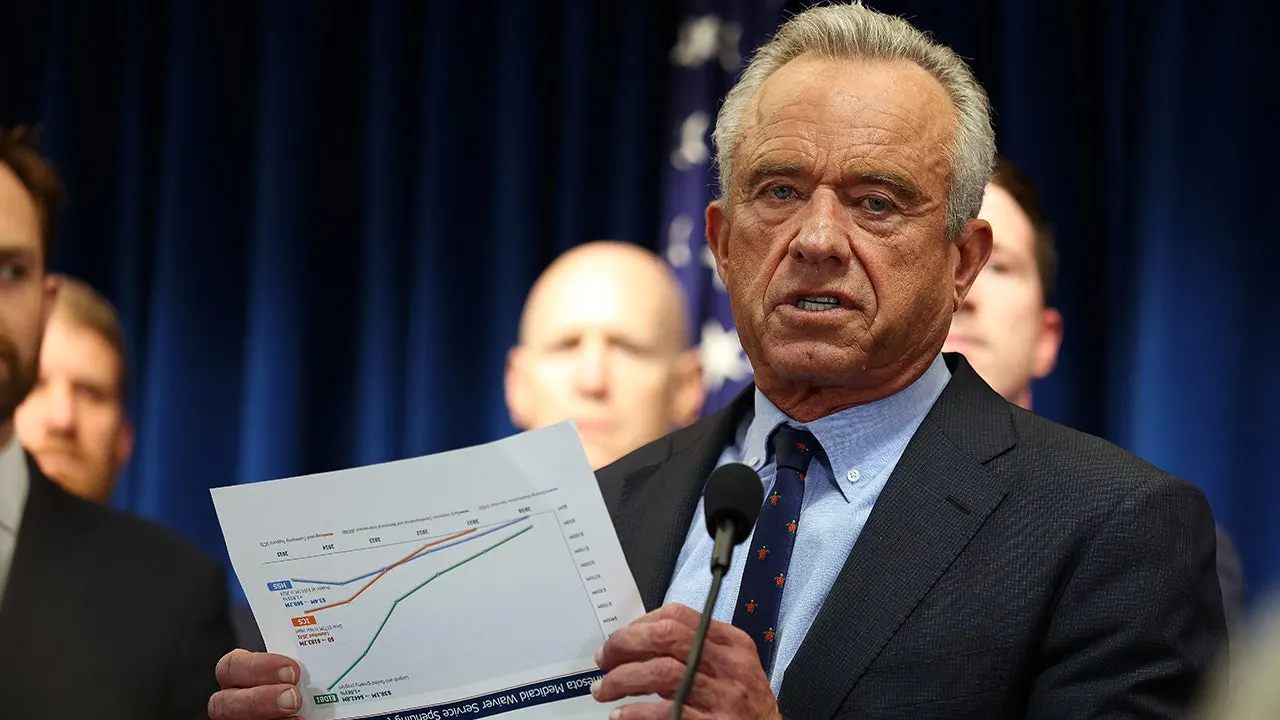
For families navigating the deeply emotional and often overwhelming journey of raising a child with autism, securing early intervention services is not just a medical box to check—it is a vital lifeline. It represents the hope that a non-verbal child might one day speak their first words, that a struggling toddler might learn to navigate a chaotic world with confidence, and that a family might find a community of support to carry them through their hardest days. It is against this backdrop of vulnerability and hope that the U.S. Department of Justice recently unveiled what is being called the largest autism fraud bust in American history. Health and Human Services (HHS) Secretary Robert F. Kennedy Jr. announced the federal indictments of two Minnesota women, bringing to light a staggering, organized theft that prioritized personal luxury over the developmental minds and futures of thousands of children. In a poignant Friday news conference, Kennedy made it clear that this was no innocent administrative error, but a calculated, predatory operation that actively stole taxpayer dollars meant to help children with autism access legitimate, life-altering care.
At the epicenter of this historic fraud scheme are 55-year-old Shamso Ahmed Hassan and 25-year-old Hanaan Mursal Yusuf. According to federal prosecutors, Hassan was a hidden shareholder in two Minnesota-based therapeutic entities: the Smart Therapy Center and the Star Autism Center. To bypass federal regulatory guardrails, she intentionally hid her ownership stake from the Minnesota Department of Human Services, a violation of state and federal transparency laws designed to prevent conflicts of interest. Meanwhile, Yusuf operated on the ground level of the Smart Therapy Center, managing daily logistics and taking charge of submitting reimbursement claims to Minnesota Medicaid’s Early Intensive Developmental and Behavioral Intervention (EIDBI) program. Together, the pair transformed what should have been sanctuaries of healing and behavioral developmental therapy into a highly sophisticated machine designed to extract massive sums of public money under the false pretense of serving the public good.
The mechanics of their scheme were as heartbreaking as they were illegal, preying directly on local families who were often in financially precarious situations. To fuel their billing engine, Hassan and Yusuf reportedly offered cash kickbacks to families, incentivizing them to enroll their children in the Smart Therapy and Star Autism centers. Once these children were on the books, their names and diagnostic identities were commodified. The defendants launched a massive paper campaign, billing Medicaid for millions of dollars in autism-related services that were never actually provided, or that were entirely ineligible for reimbursement under Medicaid guidelines. Of the eye-popping $46.6 million in fraudulent claims submitted by the duo, the state actually paid out $21.6 million before investigators intervened—hard-earned taxpayer funds that were completely diverted away from genuine pediatric therapy providers.
Rather than buying therapy supplies, hiring qualified speech-language pathologists, or expanding access to high-quality behavioral interventions, the stolen millions were treated as personal windfalls. Federal prosecutors revealed that Hassan and Yusuf diverted hundreds of thousands of dollars of the fraud proceeds directly into their personal bank accounts to fund lavish lifestyles and secure long-term wealth. The indictment details how the stolen Medicaid funds were used to purchase high-value real estate and transferred overseas into foreign bank accounts, including heavy transactions sent directly to Kenya. Today, both women face severe legal reckonings; each has been hit with a count of conspiracy to commit healthcare fraud and a count of money laundering, with Yusuf facing five additional counts of healthcare fraud and Hassan facing two. The Department of Justice is aggressively seeking full restitution of the diverted $21.6 million, though the emotional damage inflicted on the community cannot be so easily repaid.
This massive bust is not an isolated incident, but rather the crown jewel of a much broader federal sweep conducted by the DOJ’s National Fraud Enforcement Division. In total, the federal crackdown has swept up 15 alleged fraudsters across various networks, targeting schemes that collectively sought to steal over $90 million in taxpayer funds. Minnesota has unfortunately gained a reputation among federal watchdogs as an active epicenter for this type of exploitation, with previous scandals involving empty food bank programs and fraudulent therapy centers threatening to reach a cumulative total of over $2 billion in stolen or wasted funds. When public programs are treated as open season for organized crime, it creates a hostile environment for legitimate healthcare providers, fuels public cynicism, and forces state governments to implement choking layers of bureaucracy that make it even more difficult for honest, struggling families to access the care they need.
Ultimately, the true tragedy of this historic fraud bust lies in the stolen potential of the children who were used as pawns in a get-rich-quick scheme. As HHS Secretary Kennedy Jr. passionately pointed out, every single fraudulent diagnosis, fake billing hour, and stolen dollar represents a door slammed shut on a child who desperately needed real, dedicated clinical attention. Families of children with autism already climb an incredibly steep mountain every day, balancing intensive schedules, emotional exhaustion, and the constant worry of what the future holds for their children. By prosecuting these cases to the fullest extent of the law, federal agencies are sending a clear, uncompromising message: public health programs are sacred trusts, and those who attempt to build fortunes on the backs of America’s most vulnerable children will be found, exposed, and held fully accountable.