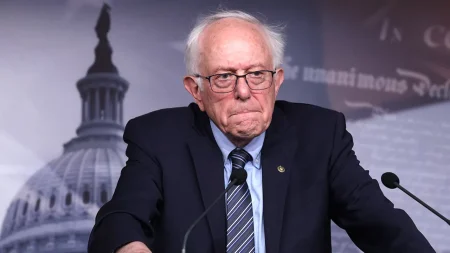




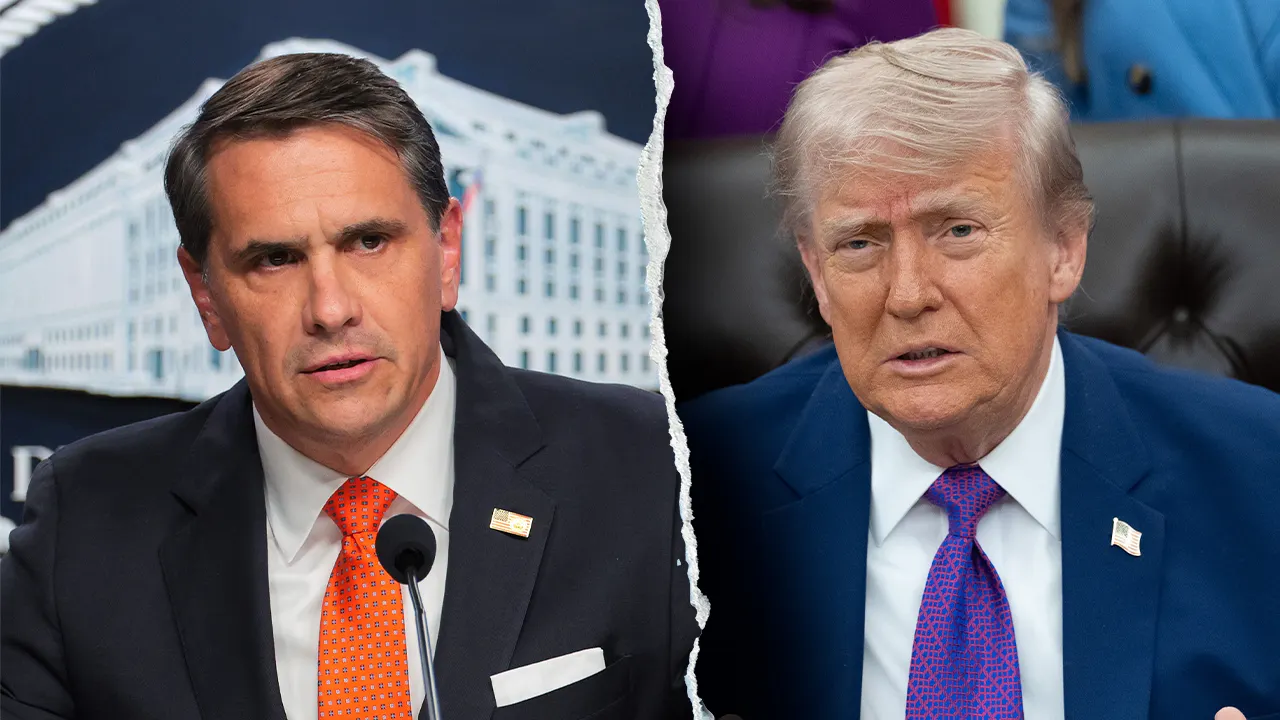
The marbled, echoing corridors of the United States Capitol have played host to countless strange political dramas, but few have felt quite as unprecedented or constitutionally jarring as the morning Acting Attorney General Todd Blanche stepped before a congressional panel to defend his department’s budget. Blanche, a sharp and highly focused legal mind who had previously spent years acting as Donald Trump’s personal defense counsel, was making his debut appearance in this traditional, high-stakes political ritual. Typically, cabinet secretaries arrive on Capitol Hill with hat in hand, prepared to cajole, negotiate, and plead with protective lawmakers for the critical federal dollars needed to keep their sprawling departments running. Yet, on this Tuesday morning, a bizarre and heavy reality hung over the hearing room: Blanche did not actually need to ask for the most controversial, eye-popping sum of money in recent memory. Without any legislative debate, public hearings, or congressional votes, a staggering $1.776 billion “compensation fund” had miraculously materialized within the Department of Justice’s coffers, already approved through a quiet administrative maneuver. Billed by the administration as a remedy for victims of systematic government “weaponization,” the fund’s sudden birth felt to many like a conjuring trick executed right under the nose of the legislative branch. What was supposed to be a dry, bureaucratic review of line-item expenditures had transformed overnight into an existential debate over executive overreach, leaving many to wonder if the traditional boundaries separating the branches of government had permanently dissolved. The sheer scale of the treasury, combined with the deliberate symbolism of its $1.776 billion price tag—a blatant nod to the year of American independence—sent shockwaves through congressional offices on both sides of the aisle, exposing a profound, existential anxiety about who truly controls the nation’s purse strings in an era of increasingly consolidated executive power.
To fully comprehend how this massive, unmonitored cash reservoir came to exist, one must unpack a legal maneuver that critics have described as an unprecedented hall of mirrors. The origin of the fund traces mockingly back to a civil lawsuit filed by Donald Trump against his own Internal Revenue Service, stemming from the unauthorized and highly publicized leak of his tax returns, along with those of several hundred other prominent, highly wealthy, and easily targeted Americans. When Trump returned to the White House, the litigation did not end; instead, the parties representing the opposing sides inexplicably shifted. In essence, Trump’s newly appointed Justice Department, led by his former defense attorney, negotiated a settlement with Trump himself. Under the terms of this extraordinary agreement, the plaintiffs received a formal apology from the government, but absolutely no personal monetary damages or payouts. In trade, they agreed to drop their lawsuit with prejudice and withdraw a series of highly sensitive administrative claims, including those seeking damages for the unlawful raid on Mar-a-Lago and the long-running Russia-collusion investigation. But the true kicker was the creation of the $1.776 billion compensation fund. While the president himself cannot legally draw a dime from this money, the fund is perfectly structured to distribute massive payouts to his political allies, donors, and supporters who claim they, too, were targeted by federal agencies. This bizarre circular settlement left even seasoned Republican lawmakers deeply unsettled. Senator John Kennedy of Louisiana, known for his folksy but razor-sharp questioning, openly wondered whether the money was hidden somewhere in the existing federal budget or if the government would have to borrow it, while Senator Jerry Moran of Kansas publicly questioned the constitutional legality of establishing a multi-billion-dollar fund without a single word of input from Congress, which traditionally guards the power of the purse with fierce, bipartisan jealousy.
Indeed, the human element of this battle lies in the deeply personal, often bitter narratives of those who believe they have been victimized by their own government. Supporters of the fund argue that federal power has long been wielded as a partisan weapon, pointing to events like Operation Arctic Frost, a federal probe that swept up the communication data of multiple Republican lawmakers, including Tennessee Senator Bill Hagerty, in the chaotic aftermath of the January 6th Capitol riot. To Hagerty, the fund is a necessary and long-overdue act of constitutional restitution, a way to heal the deep wounds inflicted by what he termed the absolute disgrace of the previous administration’s justice system. However, Democrats see a far more insidious picture, viewing the fund as a tax-funded war chest designed to reward loyalists and potentially even reimburse those who participated in the Capitol attack. During the hearings, Senator Chris Van Hollen of Maryland and Senator Jack Reed of Rhode Island spared no diplomatic niceties, directly accusing Todd Blanche of shedding his constitutional duties to act as the president’s personal “consigliere” rather than the nation’s chief law enforcement officer. When Van Hollen pointedly asked if individuals who assaulted police officers on January 6th would be allowed to apply for these taxpayer dollars, Blanche’s broad response—that “anybody in this country is eligible to apply” if they believe they were victims of weaponization—only heightened the alarm. This fundamental disagreement highlights the deep-seated polarization gripping the modern electorate, where one side’s victim is another’s insurgent. For the average citizen watching from home, this escalating rhetoric offered a depressing glimpse into a government increasingly tribalized, where even the administration of justice is viewed through a lens of deep suspicion and political warfare. This clash transformed a complex fiscal debate into an emotional, highly volatile human argument about systemic accountability and the true meaning of justice in a divided republic.
The political fallout from this executive maneuver did not remain confined to a single committee room; instead, it rapidly bled into the broader Senate floor, acting as a devastating wrench thrown into the gears of a major legislative priority. For months, congressional Republicans had been working tirelessly to pass a landmark funding bill to permanently secure resources for Immigration and Customs Enforcement (ICE) and Customs and Border Protection (CBP). To bypass the perpetual threat of a Democratic filibuster, GOP leadership utilized a high-stakes, hyper-technical legislative procedure known as budget reconciliation. This pathway allowed them to pass the high-profile border security bill with a simple 51-vote majority rather than the typical 60-vote threshold. However, the Achilles’ heel of the reconciliation process is the mandatory “vote-a-rama”—a grueling, open-ended marathon where senators can introduce an unlimited number of amendments on virtually any topic, forcing grueling, overnight votes in rapid succession. Suddenly, the newly revealed $1.776 billion compensation fund became a massive liability. Senate Republicans realized that Democrats were preparing a barrage of toxic amendments designed to force them into highly uncomfortable public votes, matching their support for border security against the defense of an unpopular, unchecked executive slush fund. Within the halls of the Senate, the budget reconciliation process is often treated as a golden ticket, a rare opportunity to bypass the typical legislative paralysis. Yet, the introduction of the compensation fund turned this golden ticket into a poisoned chalice. Furthermore, many independent-minded Republicans, furious at being bypassed by the White House, were planning to introduce their own amendments to strip or heavily restrict the fund, turning what was supposed to be a unifying conservative victory into a chaotic, very public civil war on the Senate floor, threatening to tear apart party unity on their signature electoral issue, proving that executive overreach has a cost.
Recognizing the imminent collapse of their border bill, frantic Republican leaders summoned Acting Attorney General Todd Blanche to a closed-door meeting on Capitol Hill on a tense Thursday morning to explain his actions. The atmosphere inside the room was reportedly scorching, filled with the raw frustration of seasoned lawmakers who felt their legislative achievements were being sacrificed for a legally dubious executive gimmick. Senior conservative heavyweights like Senators Chuck Grassley of Iowa and Tom Cotton of Arkansas were described as highly pointed and uncharacteristically blunt in their dressing-down of the Acting Attorney General. As the meeting progressed, the internal rebellion spilled out into the historic corridors of the Capitol; Senator Thom Tillis of North Carolina was overheard by reporters shouting, “And I’m not voting for it!” as he strode angrily past the Ohio Clock Corridor. For Thune, who had only recently assumed the mantle of leadership, this was a baptism by fire, demonstrating the immense difficulty of keeping an ideologically diverse conference united. Realizing that at least six or seven of their own members were prepared to kill the entire border security package out of sheer protest, Republican leadership made the agonizing decision to pull the bill entirely, abruptly sending lawmakers home early for the Memorial Day recess. The sudden retreat was a visual testament to a party temporarily broken, unable to agree on its own policy goals because of the shadow cast by the administration’s legal actions. It was a stunning, self-inflicted defeat and the most significant legislative rebuke of the president’s second term, leaving Majority Leader John Thune to lament that the administration’s total failure to consult with congressional allies ahead of time had needlessly derailed a critical national security priority. This breakdown left rank-and-file members feeling utterly abandoned by a White House that valued its personal legal disputes over meaningful national legislation.
As Washington fell silent over the holiday weekend, the wreckage of the failed border bill left both parties contemplating a deeply fractured legislative landscape. Some of the president’s most ardent defenders, such as Senator Eric Schmitt of Missouri, continued to argue that the compensation fund is a vital mechanism of redress for citizens whose lives were disrupted by partisan investigations. Yet, the overriding sentiment among lawmakers was one of profound frustration over the erosion of congressional authority, with representatives like Ryan Zinke of Montana reminding the executive branch that the power of the purse remains the sole constitutional duty of Congress. This institutional stand-off has led to a sobering realization that even with a supportive Republican majority in both chambers, the president cannot simply steamroll his own party when it comes to fundamental constitutional boundaries. With major figures like Senator Bill Cassidy and Representative Thomas Massie departing the legislative stage, the president may eventually get the loyal personnel he desires in future elections, but the immediate consequence is a paralyzed legislature. Democratic leaders, led by a gleeful Senate Minority Leader Chuck Schumer, have seized on the dysfunction to paint the majority party as hopelessly divided and incapable of governing. As both chambers prepare to return in June, the path forward remains highly uncertain, with trust between the White House and Capitol Hill severely eroded. Ultimately, this battle has shown that while political loyalty can win elections, governing requires a delicate respect for the institutional rules of the game—rules that cannot be easily bypassed, even by a president determined to reshape the nation in his own image, turning what should have been straightforward victories into self-defeating struggles over the very nature of democratic power. In the end, Washington remains caught in a bitter, self-inflicted gridlock, leaving no easy path forward toward legislative peace or national reconciliation.