



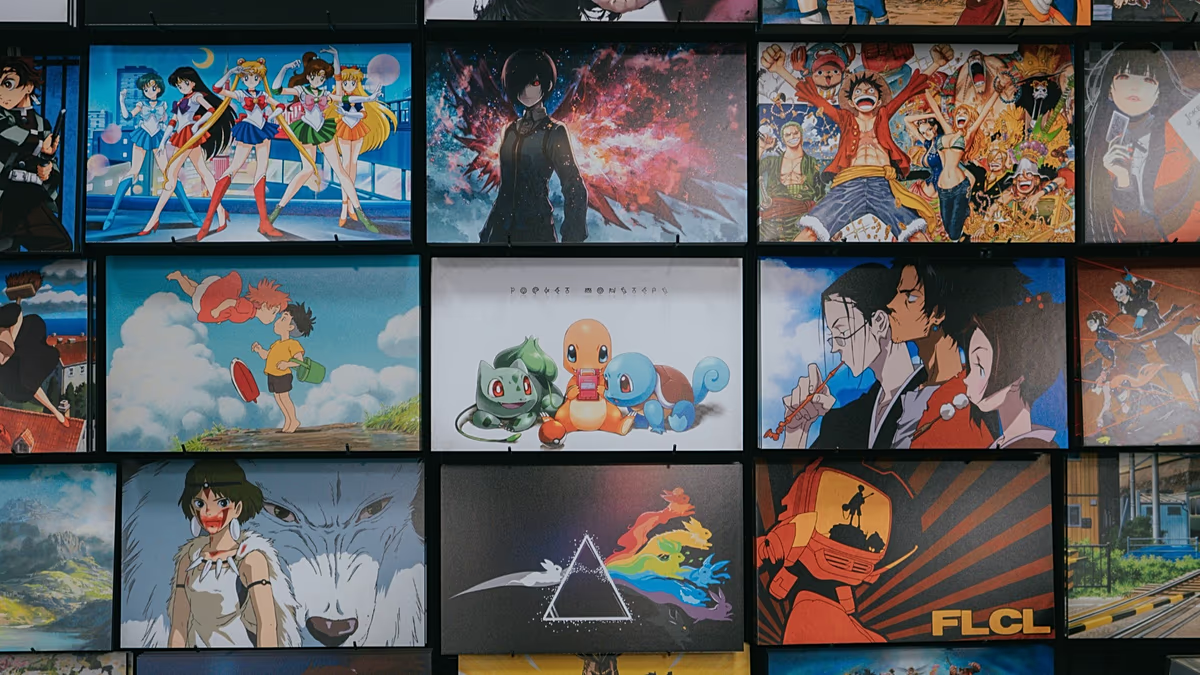
For decades, consuming anime and reading manga was a solitary passion, a cherished subculture confined to the glowing screens of late-night televisions and the quiet, ink-scented corners of local comic shops. Today, however, this once-niche interest has undergone a breathtaking metamorphosis, spilling out of bedrooms and across international borders to become one of the most powerful, dynamic drivers of global tourism. This cultural phenomenon is characterized by a deeply emotional desire for physical connection, manifesting in what has come to be known in Japan as seichi junrei, or “holy land pilgrimages.” These are not merely vacations; they are deeply personal journeys where modern travelers cross oceans to stand in the exact real-world locations that inspired the hand-drawn backgrounds of their favorite animated series. According to recent data from Trip.com, this yearning for tangible connection has triggered an astonishing 195% year-on-year surge in searches for anime- and comic-related travel experiences across Asia. This massive wave of interest is being propelled primarily by passionate travelers originating from Hong Kong, Taiwan, Indonesia, South Korea, and the Philippines, proving that the vibrant stories of Japanese animation have woven themselves into the universal fabric of global youth culture, turning digital screens into windows to physical destinations.
This unprecedented boom is being driven by a profound generational shift in cultural capital, where traditional markers of pop stardom have been eclipsed by drawn and animated icons. A groundbreaking study by the global streaming platform Crunchyroll highlighted this modern reality, revealing that a staggering 54% of Gen Z respondents view anime more favorably than some of the world’s most dominant flesh-and-blood celebrities and musical acts, including global powerhouses like BTS, BLACKPINK, and Bad Bunny. Even hyper-competitive, high-octane arenas of traditional sports are being swept up in the wave, with legendary Formula 1 drivers like Charles Leclerc publicly professing their love for iconic franchises like Pokémon. The demographic profile of the modern anime traveler reflects this paradigm shift, dominated by highly active Gen Z and Millennial audiences who seek physical spaces to express their communal identities. This is vividly illustrated by ticket sales data for Hong Kong Comic Con 2026, where over 80% of the attendees belong to these younger generations. Crucially, the event has shattered outdated, male-dominated stereotypes of geek culture, with women accounting for more than 80% of ticket buyers. This massive, diverse demographic is consistently fueling local economies by demanding face-to-face, real-world engagement over digital interactions, translating into massive surges in hotel bookings within a tight three-kilometer radius of convention centers whenever a major festival comes to town.
When these massive, highly organized gatherings occur, they generate waves of international tourism that completely transform host cities into bustling, global crossroads. The pure magnetic pull of these events was on full display at the massive AnimeJapan 2026 festival in Tokyo, where Trip.com reported a spectacular 697% year-on-year explosion in international ticket sales, drawing enthusiastic travelers from 82 different countries and regions, led primarily by fans from mainland China, Hong Kong, and Singapore. Similarly, the historic and twice-yearly Comiket (Comic Market) event continues to be a sacred pilgrimage site for dedicated fans from all over the earth. For the upcoming Summer Comiket 2026, set to take place in August in Odaiba, nearby hotels are already experiencing a massive 78% year-on-year increase in bookings as travelers secure their footholds for the intense, creative gathering. Odaiba’s status as a premier playground for pop-culture enthusiasts is further cemented by the highly anticipated, 10th-anniversary celebration of Pokémon GO Fest 2026, a massive mobile gaming event that has generated immense excitement online, racking up over 630,000 views on Trip.com’s trend-tracking platform, Trip.Pulse. These staggering statistics tell a deeply human story of a global community eager to step away from their isolated digital feeds and gather in packed convention halls, where they can share high-fives with fellow fans, showcase elaborate cosplay, and celebrate the imaginary worlds that have given them real-world comfort.
The profound influence of anime culture, however, reaches far beyond the crowded, high-energy convention floor, fundamentally rewriting the rules of leisure travel through the rise of “set-jetting.” A remarkable 70% of travelers across Asia now report that their vacation choices are inspired by the scenic backdrops of the films, series, and animations they watch on streaming platforms. Supporting this trend, data compiled by the Japan Tourism Agency reveals a steady and undeniable rise in international visitors traveling specifically to see media-linked landmarks, with the percentage of foreign tourists seeking out locations associated with movies and anime growing from 4.6% in 2019 to 7.5% in 2023. This emotional connection turns everyday infrastructure into sites of quiet wonder. For instance, a simple, picturesque coastal railway crossing near Kamakura-Koko-mae Station has become a legendary landmark for global travelers, purely because it served as the backdrop for the opening sequence of the beloved basketball manga and anime, Slam Dunk. Here, tourists from across the globe stand in quiet reverence, waiting for the green train to pass against the blue backdrop of the ocean, recreating a single hand-drawn frame from their childhood memories. Similarly, the bustling neon alleyways of Tokyo’s Akihabara and the trendsetting streets of Ikebukuro—long known as the beating hearts of otaku culture—have experienced a robust 10% average year-on-year increase in hotel bookings, fueled by a steady stream of travelers from South Korea, Thailand, Singapore, Hong Kong, and Taiwan who wish to walk the very pavement where their favorite fictional characters once stood.
In response to this sophisticated, narrative-driven demand, the global hospitality and travel industries are transitioning away from cookie-cutter accommodations, instead offering deep, highly immersive experiences that allow fans to step directly into the worlds they adore. Modern travelers no longer want to just look at a landmark through a camera lens; they want to live, sleep, and breathe within the atmosphere of their favorite stories. This evolution is beautifully showcased in Katori, Japan, at The Farm resort, which recently unveiled creatively designed, themed glamping rooms dedicated to the critically acclaimed fantasy anime and manga series, Frieren: Beyond Journey’s End. Guests staying at this unique woodland retreat can escape the stresses of modern city life while wandering through physical, meticulously designed photo spots and monuments erected across the campgrounds that carefully recreate memorable, emotional scenes from the series. By blending the peaceful, natural beauty of outdoor glamping with the gentle, melancholic fantasy of Frieren, the resort offers travelers a profoundly therapeutic experience. This creative synergy demonstrates that themed hospitality is no longer just about placing a simple poster on a bedroom wall; it is about crafting high-end, sensory-rich environments where fans can temporarily step away from reality, share beautiful moments with loved ones, and dwell safely within the fictional landscapes that have touched their hearts.
Ultimately, this global boom in anime and comic-related tourism represents much more than a collection of impressive corporate statistics, spiked hotel bookings, or successful marketing campaigns; it is a testament to the timeless human need for storytelling, connection, and belonging in an increasingly digital and fragmented world. As travelers pack their bags to fly halfway around the globe for a weekend convention, or stand quietly by a train track in Kamakura to capture a nostalgic childhood memory, they are proving that the boundaries between art, geography, and human emotion have completely dissolved. These travelers are not passive consumers of entertainment; they are active authors of their own life journeys, seeking to imbue their physical steps with the deep emotional resonance of the narratives that have shaped their identities. As we look to the future of global tourism, it is clear that the destinations of tomorrow will not be defined solely by their physical geographical beauty, historical architecture, or luxury amenities, but by the beloved, living stories that have captured the hearts of audiences worldwide. In this exciting new era of travel, the maps we use are no longer guided solely by latitudes and longitudes, but by the shared dreams, colorful animations, and deep-seated human connections that bridge the gap between our imagination and the real world.