




The physical and mental toll of war is not measured merely in body counts or territory reclaimed; it is etched into the silent, grueling routines of the survivors who are left to carry its heaviest burdens long after the guns have fallen silent. In November 2017, Navy Chief Petty Officer Kenton Stacy, an elite Explosive Ordnance Disposal specialist trained to disarm the deadliest hidden threats, was clearing a hospital rigged with explosives in Raqqa, Syria—a facility transformed by ISIS into a lethal, booby-trapped labyrinth. When a hidden bomb detonated, it tore through his body, shattering his spine and permanently altering the course of his life. He survived only because of the rapid, heroic intervention of Army Staff Sgt. Justin Peck, who bounded into the active danger zone to rescue Stacy, and then administered continuous, grueling CPR for over two hours until medical teams could stabilize him. Stacy’s miraculous survival was eventually lauded before the entire nation during President Donald Trump’s 2018 State of the Union Address, where Raqqa’s liberation was declared and the country stood to salute Stacy’s sacrifice. Yet, the raw reality of that sacrifice is an ongoing, exhausting daily battle fought far from the spotlight of congressional halls. Today, Kenton is a quadriplegic, navigating the silent prison of his own injured body and the profound mental battles that follow such immense trauma. In their Texas home, his wife Lindsey has quietly assumed the dual role of loving partner and primary caregiver, orchestrating a complex web of daily medical interventions for Kenton while simultaneously providing round-the-clock support for their eldest son, who suffers from cerebral palsy. For Lindsey and their four children, the war did not end when the troops left the battlefield; it remains an ongoing test of family endurance, characterized by relentless physical strain and an overwhelming, constant struggle to keep their heads above water.
But the tragedy of the Stacy family, and many others like them, is compounded by a deep, unsettling sense of corporate betrayal that highlights the darker intersections of global finance and warfare. Just across the ocean in France, the world’s largest cement manufacturer, Lafarge, possessed a massive, state-of-the-art manufacturing plant in Jalabiya, Northern Syria—a facility acquired for a staggering $680 million just months before the country dissolved into a bloody civil war in 2011. Rather than evacuating their staff or ceasing operations in compliance with international law and human decency as the region descended into chaos, the corporation chose profit margins over human lives. Between 2013 and 2014, as ISIS was committing unspeakable horrors against local populations and targeting Western coalition forces, Lafarge’s Syrian subsidiary systematically funneled more than $6.5 million in protection bribes directly into the treasury of the terrorist organization to keep its production lines active. The relationship was transactional and cold: the company bought safe passage and operational security for its factory, while the terror group received millions of dollars in cash to fund its international reign of violence. More devastating still, the high-grade cement rolling out of that factory did not build homes; it was bought and utilized by ISIS to construct a subterranean empire of military-grade tunnels, reinforced bunkers, and fortified trenches. This cement did not just shield terror cells from coalition airstrikes; it built the physical infrastructure of a terror state, directly enabling the construction of the hidden traps that would eventually blow Kenton Stacy apart.
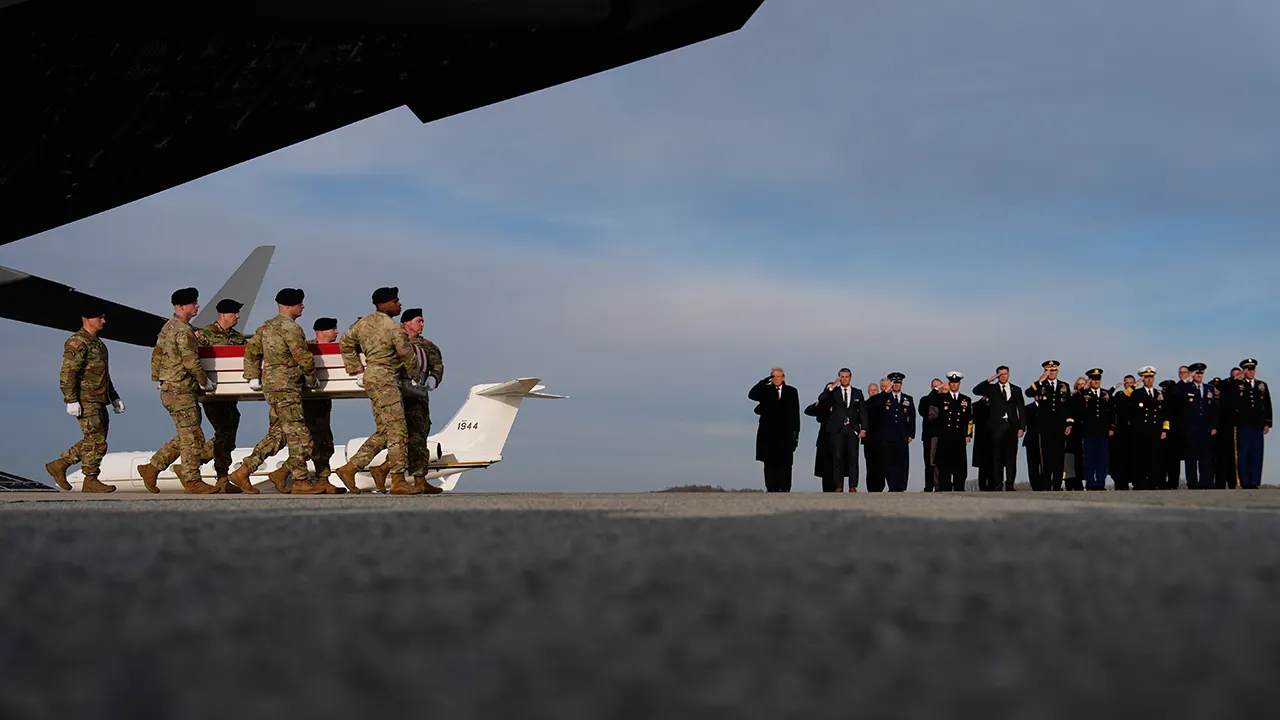
The devastating ripple effect of this corporate-funded terror network shattered communities across the United States, leaving behind a trail of broken homes and grieving children who must live with the permanent void left by their heroes. Among them is Hailey Dayton, whose father, Navy Chief Petty Officer Scott Dayton, was the first American service member to be killed by ISIS in Syria, during a deployment on Thanksgiving Day in 2016. At just fifteen years old, Hailey was expecting a warm holiday filled with family memories when she looked out the window of their Florida home and saw a white Navy van pulling up close to the curb. In that brief, innocent instant, her heart leaped with joy; she truly believed her father had returned ahead of schedule to surprise his family on the holiday. She ran to the front door with a desperate, radiant smile, her eyes searching the vehicle for the familiar face of her father, only to find six stoic men in Navy whites stepping out, their eyes pooling with tears as they prepared to deliver the most destructive news a child could ever hear. That moment of pure hope turning into immediate, life-altering grief is a burden Hailey has carried into adulthood—a reminder of the real, human cost of decisions made in distant, pristine boardrooms. Hailey, the Stacy family, and almost one thousand other plaintiffs, largely composed of Gold Star and military families, have unified to demand that those who bankrolled the murderers of their fathers, husbands, and sons are forced to face the harsh light of accountability.
Their quest for justice reached a historic, watershed moment in April when a French court convicted Lafarge of providing material support to a terrorist group, handing its former chief executive a six-year prison sentence and finding eight other former employees guilty. This landmark ruling was unprecedented, representing the first time in modern legal history that a multinational corporation, along with its high-ranking executives, has been held criminally accountable for direct complicity in aiding and abetting international terrorism. Connectedly, in October 2022, before the French court reached its verdict, Lafarge pleaded guilty in a United States federal court to conspiring to provide material support to a foreign terrorist organization, marking the first time a company has faced such charges in America. As part of that historic plea agreement, the cement giant agreed to surrender more than $777 million in criminal penalties and forfeitures. This administrative victory was spearheaded by dedicated advocates like Todd Toral, a U.S. Marine veteran and trial attorney with Jenner & Block, who represents the Stacy family and dozens of other plaintiffs. Toral has relentlessly pursued this battle to demonstrate that global corporations cannot wash their hands of blood spilled by their investments, arguing that this substantial sum belongs to the families who have uniquely borne the ultimate cost of Lafarge’s material assistance to ISIS.
Yet, despite these historic court rulings and the massive financial settlement, the families of these fallen and wounded warriors are trapped in a frustrating, high-stakes bureaucratic limbo. The $777 million has been sitting in a Department of Justice asset forfeiture fund since October 2022, but the federal government has continually stalled and delayed distributing the money to the victims of these ISIS attacks. Under the Biden administration, requests to release the funds were repeatedly put on hold under the pretense of waiting for the French legal proceedings to conclude, a justification that has expired now that the French courts have handed down their definitive guilty verdicts. The frustrating slow-walking of these funds has drawn sharp, bipartisan criticism from members of Congress, such as Representative Andy Biggs of Arizona, who actively confronted federal judicial authorities to demand a clear timeline for the resolution of these outstanding victim petitions. Yet, despite these public confrontations and empty institutional promises to “support our brave servicemembers to the maximum extent permitted by law,” the money remains locked away in Washington, leaving families to navigate their financial and emotional crises alone. Gold Star children like Hailey Dayton are left feeling like minor pawns in a cold, administrative game, watching their government hoover up hundreds of millions of dollars in corporate blood money while ignoring the very citizens who sacrificed everything to stop the enemy that Lafarge funded.
To the military families who are fighting for survival at home, this is not a dry legal dispute over assets; it is a profound moral obligation and a test of our national character. For Lindsey Stacy, who battles everyday to secure specialized care, handicap-accessible vehicles, and a safe future for her quadriplegic husband and their disabled son, these funds are the difference between carrying an unbearable financial weight and finally finding some measure of dignity, peace, and closure. These families are not asking for charity or government handouts; they are asking for the restoration of resources that were surrendered by the very entity that bankrolled their suffering. As Todd Toral emphasizes, there is no group of citizens in the United States more deserving of this compensation than the Gold Star wives, the wounded warriors, and the grieving children who have given up their peace of mind, their physical health, and their loved ones in defense of our collective freedom. True accountability cannot be achieved merely through a corporate statement classifying Lafarge’s crimes as a “legacy matter” or a domestic settlement that quietly enriches the Treasury. It requires our nation’s leaders, including the current heads of the Department of Justice, to step out from behind bureaucratic excuses, act with the same courage shown by our veterans on the battlefield, and deliver these hard-won funds to the families who have sacrificed so much for the flag.