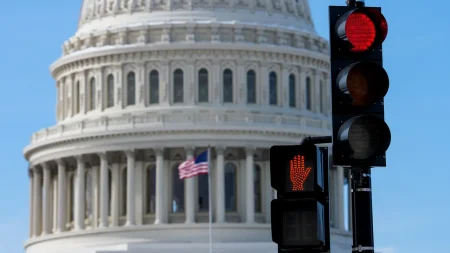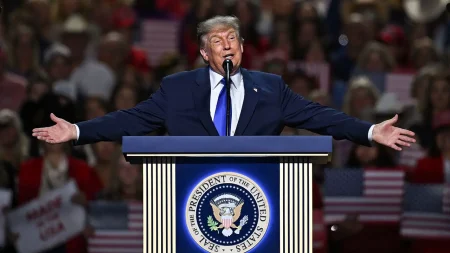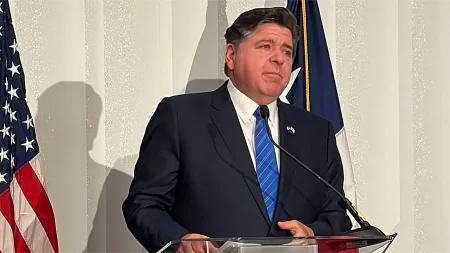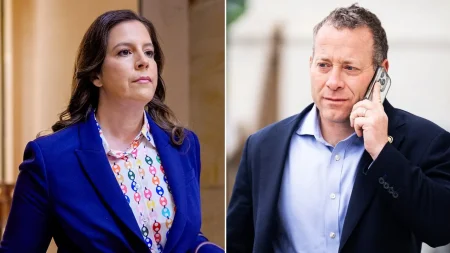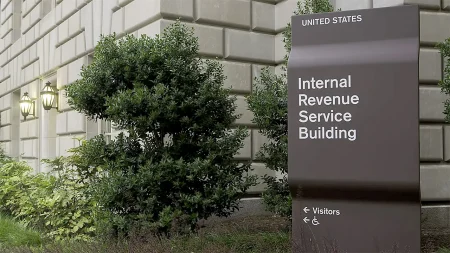







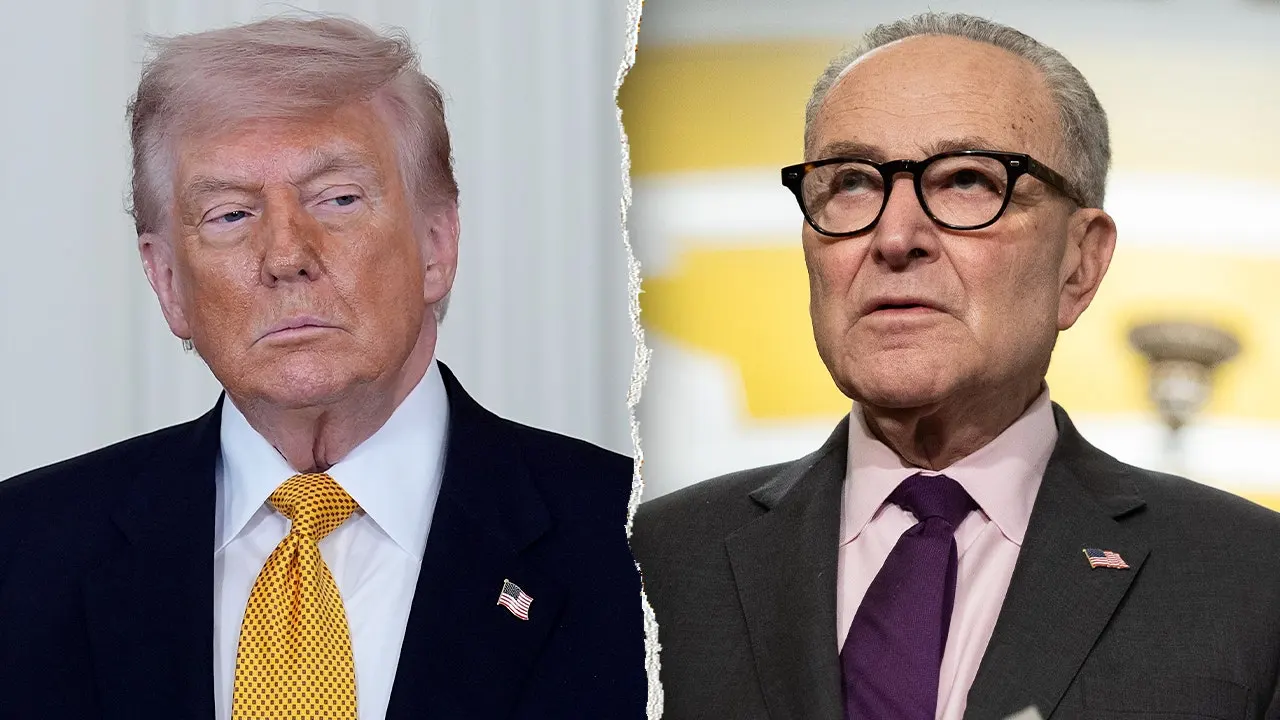
The high-ceilinged corridors of the United States Capitol, usually a bustling labyrinth of tourists, staffers, and journalists, fell into a tense hush as lawmakers returned from their week-long recess to confront an escalating legislative crisis that is as deeply personal as it is systemic. At the absolute center of this unfolding political drama is a newly minted, nearly $2 billion “anti-weaponization” fund, which emerged from a quiet, controversial legal settlement between former President Donald Trump and the Internal Revenue Service. What Trump’s loyalists envisioned as a protective shield against what they characterize as a hostile, biased administration has rapidly mutated into one of the most volatile and toxic issues to hit Washington in years, completely hijacking the federal legislative pipeline. For Senate Democrats, under the leadership of a fiercely determined Majority Leader Chuck Schumer, this massive reserve of taxpayer cash is a dangerous and unprecedented “slush fund” designed to enrich and protect political allies of the former president without any traditional oversight. For Republicans, however, the fund represents a complex, agonizing trap that threatens to derail their own carefully crafted legislative priorities and expose deep internal ideological fractures. As senators navigate the historic marble hallways, the human cost of this gridlock is palpable; staffers whisper in hushed tones behind closed doors, committee rooms bubble with nervous energy, and the usual pleasantries exchanged between opposing parties have been replaced by icy stares and calculated silence. This is not merely a bureaucratic disagreement over fiscal policy; it is a profound struggle over the very soul of American governance, illustrative of a system where trust has so thoroughly eroded that even a standard legal settlement can paralyze the nation’s highest legislative body. The atmosphere is heavy with the knowledge that the coming days will force a public reckoning, exposing deep-seated ideological rifts and putting the fragile mechanics of representative democracy to a severe, highly visible test.
Sensing a golden opportunity to not only dismantle the controversial fund but also to expose and widen the deep divisions within the Republican ranks, Senate Minority Leader Chuck Schumer has launched a highly coordinated, relentless political offensive. In a fiery, widely circulated letter addressed to his Democratic colleagues, Schumer laid bare a calculated strategy designed to leave his opponents with absolutely no room to maneuver, declaring that his party would use every parliamentary tool at their disposal to kill the fund before a single penny of taxpayer money could be spent. The primary battleground for this clash is the impending budget reconciliation process, a complex, fast-tracked legislative mechanism that allows the majority party to bypass filibuster threats but also leaves them highly vulnerable to a grueling, open-ended amendment process colloquially known as a “vote-a-rama.” Schumer’s plan is simple yet devastating: force a series of highly sensitive, public votes on the Senate floor that will compel every single Republican to go on the record regarding the ethically ambiguous fund. Democrats are preparing a barrage of targeted amendments, including a highly provocative proposal that would explicitly prohibit individuals convicted of horrific crimes like rape and sexual assault from accessing any money from this public fund. By framing the debate around such stark moral and ethical questions, Schumer is intentionally transforming a dry legislative procedure into a deeply emotional, human reality that cannot be easily hand-waved away by partisan rhetoric. This strategic maneuvering is designed to place moderate and vulnerable Republicans in an untenable position, forcing them to choose between alienating their highly passionate, Trump-supporting base or defending a funding mechanism that could be painted by opponents as a blank check for criminals. The tactical precision of this offensive reflects a seasoned lawmaker who understands that in modern Washington, political victories are won not just by passing laws, but by forcing your opponents into uncomfortable, highly publicized moral dilemmas.
Within the Senate Republican conference, the introduction of the multi-billion-dollar fund has triggered an existential crisis, laying bare the deep and painful fractures that have come to define the modern conservative coalition. The typical façade of party unity has completely shattered, replaced by a mixture of resentment, fear, and profound frustration among lawmakers who feel caught in a crossfire of their party’s own making. The underlying tension is heavily exacerbated by a frayed relationship between Senate leadership and Donald Trump, whose recent decisions to publicly support aggressive primary challengers against sitting Republican Senators Bill Cassidy of Louisiana and John Cornyn of Texas have left deep, unhealed political wounds. Many traditional Republicans feel personally betrayed by a leader who demands absolute loyalty and legislative compliance while actively undermining and seeking to unseat their own colleagues back home. This internal civil war burst into the open during a fiery, highly charged closed-door meeting where senators locked horns with acting Attorney General Todd Blanche over the practical implications of implementing Trump’s fund. For many in the room, the anxiety is not just political, but deeply personal; they are terrified of being associated with a fund that lacks robust legal guardrails and appears to bypass traditional congressional oversight. Lawmakers who pride themselves on being guardians of the Constitution find themselves in the agonizing position of defending a financial structure that borders on executive overreach, compromising their long-standing principles for short-term party peace. The human element of this struggle is evident in the exhausted faces of senators who must constantly run a gauntlet of media scrutiny while trying to pacify their own warring factions. The debate has transformed from a matter of party loyalty into a distressing test of personal conscience, as establishment Republicans grapple with a populist movement that increasingly views traditional legislative compromise as a form of treason, leaving many to wonder if the party can ever find a stable path forward.
The most damaging collateral damage of this internal Republican warfare is the sudden, catastrophic disruption of their signature legislative push: a massive, $72 billion package designed to fund Immigration and Customs Enforcement (ICE) and the Border Patrol over the next three and a half years. For months, Republicans had been working tirelessly to advance this major funding package, viewing it as both a vital national security measure and a critical political selling point for their constituents ahead of a high-stakes election cycle. However, the unexpected introduction of the “anti-weaponization” fund has completely hijacked the political narrative, grinding the entire immigration package to a screeching halt and throwing months of hard work out the window. The tragedy of this legislative paralysis is felt most acutely far away from the polished, air-conditioned corridors of Washington, out on the dusty, overstretched terrain of the southern border where border patrol agents and local communities are forced to bear the brunt of political gamesmanship. For these front-line agents, the delay in funding means a severe lack of essential resources, updated technology, and much-needed personnel to manage an ongoing humanitarian and security crisis that impacts real lives daily. Within the Capitol, the frustration among lawmakers who spent countless hours negotiating the intricate details of the border funding is palpable and deeply bitter; they see their hard work being sacrificed on the altar of a personal, legal dispute that has nothing to do with the safety of American citizens. The irony of the situation is not lost on anyone: a party that has built its brand on robust border security and law enforcement is now stalled, unable to deliver essential funding to those who need it most because they are deadlocked over a controversial, multi-billion-dollar legal shield for a single individual, proving how easily the personal interests of powerful political figures can derail essential national policy and leave vulnerable public servants on the front lines completely hung out to dry.
The internal Republican dissent reached a fever pitch during the confrontational closed-door session with acting Attorney General Todd Blanche, focusing intensely on a deeply sensitive and emotionally charged issue: the total lack of clear guardrails to prevent individuals convicted of violent crimes from accessing the multi-billion-dollar fund. Specifically, multiple senators demanded to know if the administration would implement strict parameters to ensure that those convicted of assaulting law enforcement officers during the violent riots at the Capitol on January 6, 2021, would be legally barred from receiving public money. For many Republicans, especially those who pride themselves on being staunch, unwavering allies of law enforcement, the prospect of taxpayer dollars being used to support individuals who actively harmed police officers is an intolerable ethical line that they absolutely refuse to cross. Blanche and the Department of Justice have repeatedly attempted to de-escalate the situation by arguing that the anti-weaponization fund is entirely separate from the budget reconciliation process and should not be conflated with the broader legislative package. This bureaucratic explanation, however, has done little to satisfy skeptical lawmakers who recognize that public perception is reality in politics, and that the Senate Judiciary Committee’s oversight role inextricably links the two issues in the eyes of the American public. The fear of being painted as enablers of political violence has created a state of near-panic among moderate Republicans, who feel they are being forced to defend an ethically ambiguous policy designed in secret. This intense, behind-the-scenes clash highlights a profound crisis of confidence within the party, where the desire to support the executive branch is constantly colliding with the fundamental moral duty to protect the integrity of public funds and honor the sacrifices of law enforcement, illustrating the deep personal toll of modern political alignment.
As the battle lines harden, Chuck Schumer has made it abundantly clear that he has no interest in allowing Republicans a quiet exit or accepting compromise measures that merely paper over the cracks, issuing a stark ultimatum that there will be “no escape hatch” for those seeking a middle ground. In his view, the proposed fund is a symptom of a deeply systemic corruption that cannot be managed with half-measures, symbolic guardrails, or backroom promises of future reform, insisting that the only acceptable outcome is its complete and permanent destruction. This uncompromising stance underscores a broader, deeply troubling shift in modern American politics, where the art of compromise has been entirely abandoned in favor of scorched-earth tactics designed to achieve total victory and the political annihilation of the opponent. The standoff over the “anti-weaponization” fund represents a miniature version of the larger ideological war currently raging across the United States—a war where public policy is increasingly treated as a weapon to reward friends and punish enemies, rather than a collaborative effort to serve the common good. For the American people watching this bitter spectacle unfold from afar, the conflict serves as a cynical reminder of why trust in public institutions has reached historic lows, gasping at a system where billions of dollars can be held hostage over personal vendettas while urgent, real-world problems like border security and public safety are left entirely unaddressed. As the Senate prepares to vote, the eventual outcome remains highly uncertain, but one reality is painfully clear: the human connections and shared values that once bound lawmakers together in the pursuit of governance have been replaced by a cold, calculating struggle for raw political survival, leaving a deeply divided nation to navigate an increasingly uncertain and volatile future where the true cost of partisan warfare is measured not in dollars, but in the slow decay of democratic norms.