




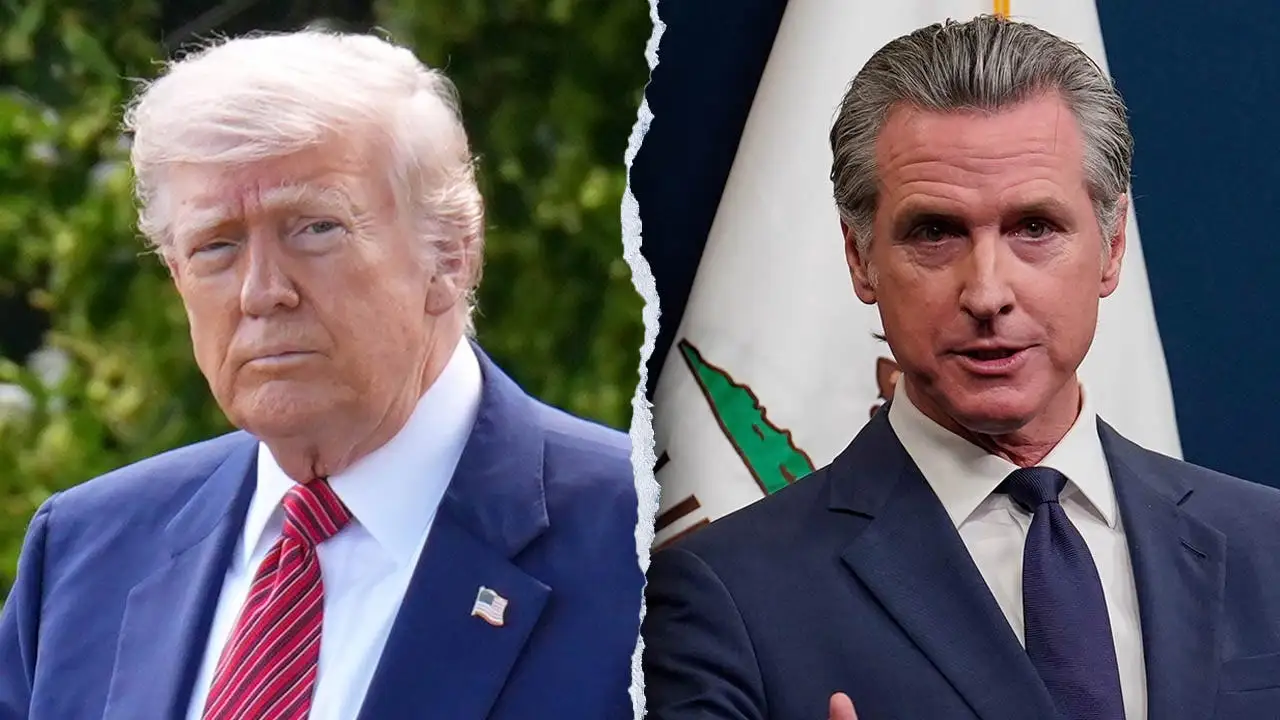
The rising political tension between California Governor Gavin Newsom and the federal government has reached a boiling point, centered on a high-stakes debate over the integrity of the American justice system. Newsom has loudly sounded the alarm, accusing President Donald Trump’s administration of weaponizing the Department of Justice to launch a politically motivated “fishing expedition” against him. The governor portrays these developments as a direct, retaliatory strike from a hostile White House aimed at undermining one of the nation’s most prominent Democratic voices. However, a deeper look into the timeline of these federal inquiries has sparked intense public scrutiny, throwing a wrench into the governor’s narrative and shifting the national conversation toward the actual origins of the investigations.
At the heart of the controversy is a critical timeline that suggests these legal troubles are not a sudden invention of the current administration. Multiple reputable news outlets, including CalMatters, CBS News, Axios, the Financial Times, and The Guardian, have reported that federal prosecutors were already looking into Newsom’s inner circle long before Trump took office. According to sources familiar with the matter, at least two criminal investigations handled by the U.S. Attorney’s Office for the Eastern District of California have been active for over a year. Notably, these inquiries originated during the Biden administration, sparked not by directives from Washington, but by whistleblowers and local complaints registered right in Sacramento.
One primary thread of the federal inquiry traces back to Dana Williamson, Newsom’s former chief of staff, who pleaded guilty to corruption charges in a case that did not implicate the governor. While Newsom’s team argues that federal prosecutors pivoted to a broader “fishing expedition” after failing to build a larger case from the Williamson investigation, the underlying facts remain. The initial probes began under a Democratic administration, contradicting the narrative of a newly manufactured political hit job. Nevertheless, Newsom’s camp strongly contends that the current Justice Department has dramatically expanded and politicized these inquiries, weaponizing the machinery of the state to target the governor’s family, finances, and closest associates in a bid for political retribution.
The scope of this expanded scrutiny has reportedly reached into the governor’s household, focusing heavily on his wife, First Partner Jennifer Siebel Newsom. Investigators have reportedly begun examining her tax filings, nonprofit organizations, and several “behested payments”—contributions made to charities at the request of a public official. While there have been no allegations that these payments were unlawful, the transition of federal focus toward the first family’s financial ecosystem has escalated the political drama. Newsom’s office has aggressively fired back by filing Freedom of Information Act requests, seeking to unmask the individuals who authorized what they view as a highly suspect and targeted expansion of the original investigation.
The war of words escalated to a federal level when Acting Attorney General Todd Blanche publicly dismissed Newsom’s claims of political persecution, stating that the governor’s accusations were simply not “grounded in fact.” Though Blanche adhered to standard protocol by refusing to officially confirm or deny the existence of any active investigations, his sharp dismissal drew an immediate, highly unorthodox reaction from Sacramento. Newsom’s press office took to social media to mock the nation’s chief law enforcement officer with memes, while publicly labeling Trump’s team as “goons” who have no qualms about lying to the media. This fierce, public mudslinging highlights just how deeply personal and politically charged the battle has become.
Ultimately, this clash represents a profound conflict over power, perception, and the rule of law. While federal sources indicate that the inquiries are currently focused on Jennifer Siebel Newsom and peripheral associates rather than the governor himself, the political fallout is already immense. To his supporters, Newsom is a resilient leader standing up against authoritarian overreach and the weaponization of federal law enforcement. To his critics, the timeline reveals a governor attempting to deflect legitimate, pre-existing legal scrutiny by wrapping himself in the mantle of political martyrdom. As the investigations run their course, the true nature of these inquiries will continue to shape the political landscape, testing the resilience of California’s leadership against the formidable weight of federal oversight.