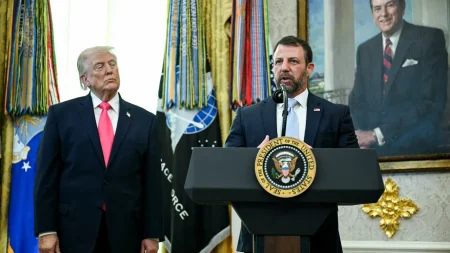







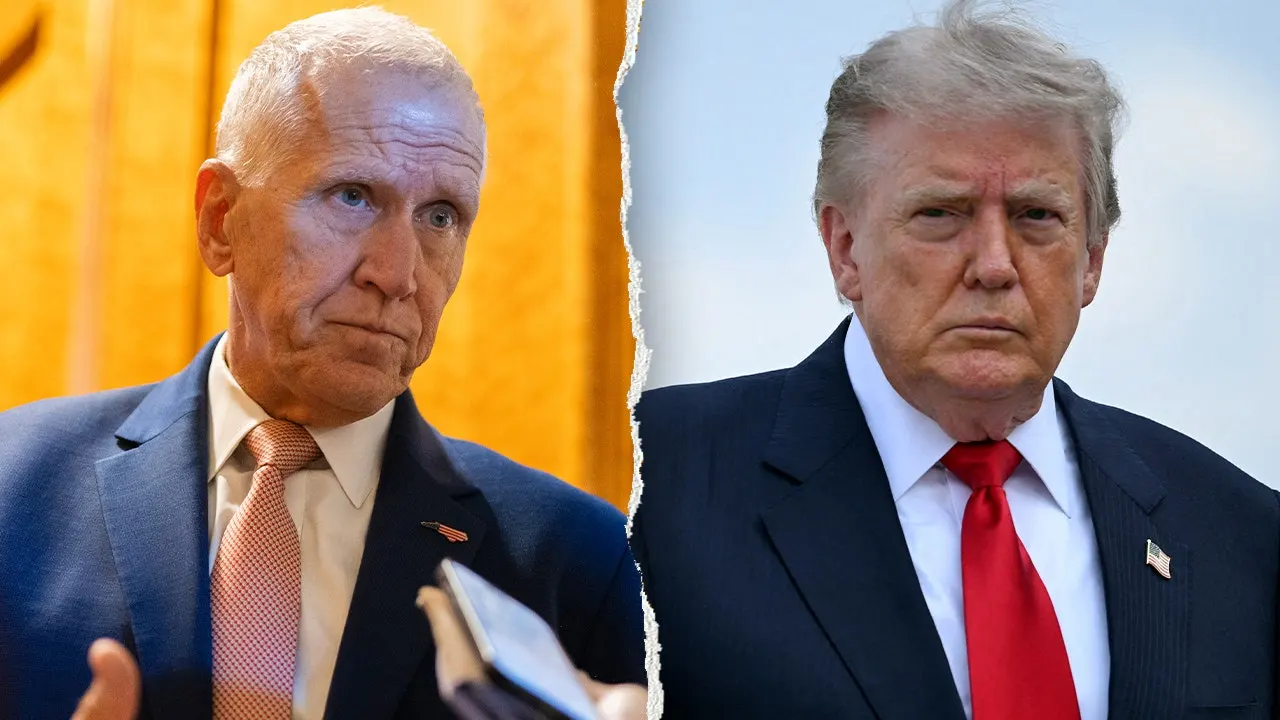
In the high-stakes theater of Washington politics, the tension between legislative oversight and executive ambition often plays out behind closed doors, but occasionally it bursts into the public square with dramatic intensity. The latest flashpoint features a direct, public confrontation between a retiring senator and a president known for using public pressure as his primary tool of persuasion. Senator Thom Tillis, a North Carolina Republican preparing to leave the halls of Congress, recently stood his ground against a direct threat from President Donald Trump to withdraw the nomination of Todd Blanche, who is currently serving as the acting Attorney General. Rather than capitulating to the presidential social media broadside, Tillis dismissively characterized Trump’s threat as simply “his prerogative,” signaling that his vote cannot be bought with political intimidation. This clash highlights a deeper, more personal dynamic in modern governance, where lame-duck status can transform a normally cautious politician into an immovable institutionalist, willing to defy his own party’s leader to protect what he views as a fundamental constitutional check on executive authority. By standing shoulder-to-shoulder with Senator John Cornyn of Texas, who is also preparing to exit the Senate after a primary defeat, Tillis has effectively created an ideological barrier that the White House cannot easily bypass, turning the confirmation of the nation’s top law enforcement officer into a battle of wills over legislative integrity and verbal commitments.
To understand the weight of this standoff, one must look at the human figure resting at the center of the political storm: Todd Blanche. As the acting Attorney General, Blanche occupies one of the most powerful and scrutinized positions in the United States government, serving as the steward of federal law enforcement and the coordinator of the nation’s legal apparatus. Yet, despite his immense responsibilities, Blanche has found himself reduced to a bargaining chip in a broader systemic dispute, a classic Washington tale of a highly qualified public servant caught in the crossfire between co-equal branches of government. Tillis has been careful to shield Blanche from personal blame, repeatedly emphasizing that the acting Attorney General has acted with utmost honesty and transparency throughout the grueling Senate confirmation process. This defense humanizes Blanche, portraying him not as an ideological zealot or an unqualified loyalist, but as a dedicated professional who negotiated in good faith only to have his pathway to confirmation blocked by the larger machinations of the presidential transition team. The conflict raises profound questions about the constitutional process of “advise and consent,” highlighting the delicate balance between a president’s right to assemble his cabinet and the Senate’s duty to ensure those nominees are bound by institutional agreements and statutory boundaries, rather than just personal fealty to the executive branch.
The core of Tillis’s objection is not rooted in personal animosity toward Blanche, but rather in a complex, multi-billion-dollar policy dispute that illustrates how abstract federal budgets directly impact national governance. Tillis has consistently withheld his crucial support for Blanche’s confirmation because of an outstanding dispute over what critics call a massive administrative “slush fund.” Specifically, Tillis is demanding the permanent elimination of a nearly $2 billion anti-weaponization fund—a pool of money that critics argue could be used to target political opponents or bypass traditional congressional appropriations—alongside a complete rewrite of Trump’s audit immunity language within an ongoing settlement agreement. From Tillis’s perspective, the administration had previously agreed to these institutional guardrails, and his insistence on holding up the nomination is simply a matter of demanding that the White House honor its original handshake agreement. For the retiring North Carolina senator, this is a defining battle over fiscal accountability and administrative transparency, one that goes to the heart of how executive power is checked and balanced. He views the resolution of these financial and legal disputes as a prerequisite for any vote, telling advisors and media outlets alike that the smartest path forward for the administration is not to throw public tantrums, but to honor the agreed-upon terms, secure the policy win, and allow Blanche to be formally confirmed.
This stalemate also exposes the internal friction and finger-pointing that often derails the transition of power in Washington, revealing a fascinating disconnect between a president and his inner circle of advisors. In defending Blanche’s personal integrity, Tillis has pointed an accusing finger at Trump’s staff, suggesting that the impasse is the direct result of a betrayal by unelected presidential aides who have failed to deliver on the administration’s negotiated promises. This dynamic speaks to a broader truth about modern political administrations, where the public focus is often fixed on the commander-in-chief, while the actual mechanics of policy are managed—and sometimes sabotaged—by a cadre of highly protective, fiercely ideological staffers who may prioritize short-term political victories over long-term institutional stability. Tillis’s public assertion that one of the president’s advisors is “the problem” and needs to “own it” represents a rare, candid glimpse into the frustration of lawmakers who find their legislative efforts undermined by unelected gatekeepers. It shifts the narrative from a simple partisan disagreement to a story about broken trust, bureaucratic arrogance, and the challenge of conducting honest negotiations when the staff level refuses to honor the commitments made by their principals, ultimately jeopardizing the career of a nominee who had otherwise built broad consensus.
Beyond the immediate policy disputes, the conflict is deeply tied to the unforgiving math of the United States Senate and the realities of the upcoming legislative calendar. Tillis has issued a clear, pragmatic warning to the White House: withdrawing Blanche’s nomination now and waiting for a new Senate next year is a highly risky gamble that could easily backfire on the administration. Even though Republicans will retain control, the electoral map is highly volatile, and there is absolutely no guarantee that a future Senate will be any more cooperative or willing to overlook the executive overreach currently being contested. Tillis understands that political capital is a highly perishable commodity, and that legislative colleagues who remain in the chamber are watching this dispute closely, establishing a precedent for how they expect to be treated by the executive branch. Furthermore, the administration’s potential fallback strategy—using the Federal Vacancies Reform Act to keep Blanche in an acting capacity for 210 days by cycling the nomination clock—is viewed by many as a cynical manipulation of statutory loopholes rather than a sustainable path to governance. By threatening to yank the nomination, Trump may buy himself time until late February, but he does so at the cost of institutional goodwill and the long-term stability of the Department of Justice, illustrating how the desire for immediate control can undermine the structural health of federal agencies.
Ultimately, this standoff serves as a compelling case study in the messy, human, and often contradictory process of American governance, where public hostility and private negotiation must somehow coexist. Despite the fiery public rhetoric emanating from social media and the apparent breakdown in communication, Tillis’s measured assertion that he is “not a no” on Blanche, combined with his philosophical reminder that “nothing’s ever as good or as bad as it seems,” reminds us that Washington is a relationship-driven town where the door to compromise is rarely completely shut. The ongoing discussions behind the scenes suggest that both sides recognize the high stakes of a prolonged vacancy at the Department of Justice, and that some form of accommodation remains the most rational outcome for all parties involved. This conflict highlights a deeper irony of modern political life: while the public is treated to a theatrical display of ultimatums and presidential rage, the actual work of governing continues to rely on the tedious, unglamorous, and deeply personal labor of negotiation, draft agreements, and mutual concession. Whether Tillis succeeds in forcing the administration’s hand or Trump chooses to bypass the Senate entirely, the episode stands as a stark reminder of the enduring power of individual senators who, when freed from the constraints of re-election, can choose to act as stubborn guardians of the constitutional order.