





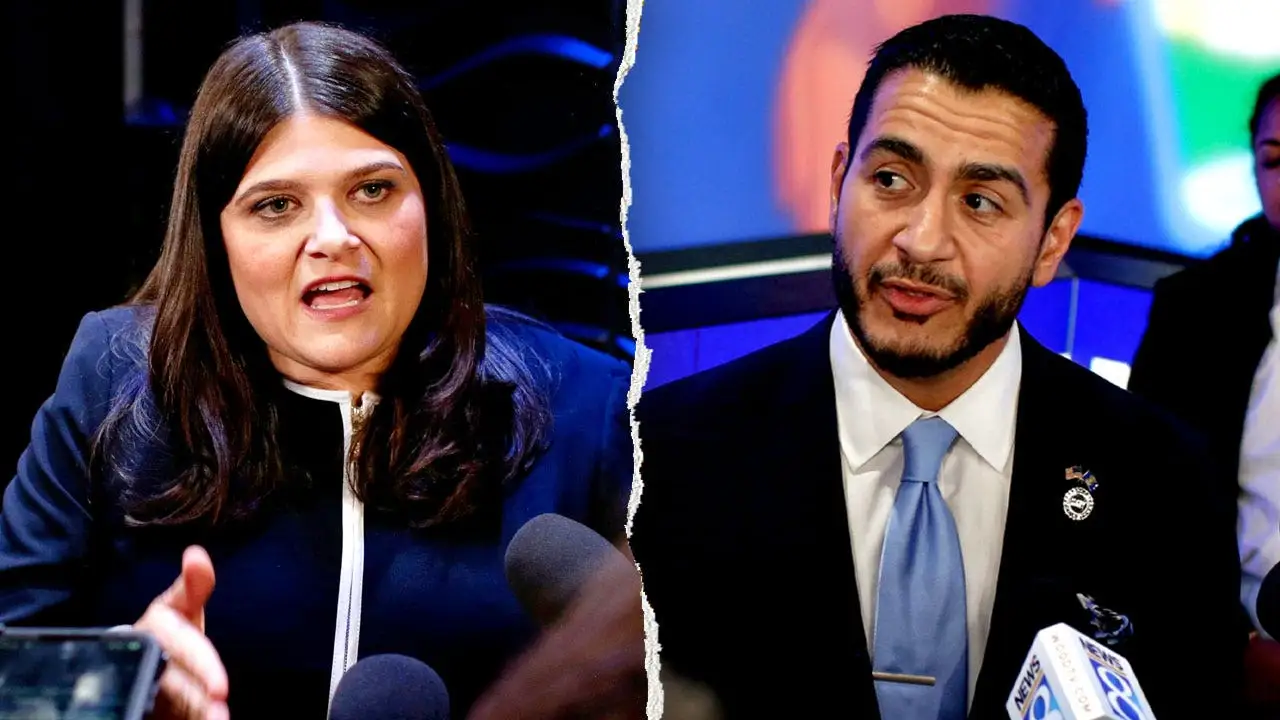
The battle for Michigan’s open Senate seat has reached a fever pitch, transforming what was once a quiet succession plan into a high-stakes proxy war for the soul of the Democratic Party. In a dramatic shift that has sent shockwaves through the state’s political landscape, retiring two-term Democratic Senator Gary Peters has shattered his pledge of neutrality to officially endorse U.S. Representative Haley Stevens. This calculated, late-stage intervention is a clear signal that the party’s establishment is pulling out all the stops to block her formidable progressive rival, former state health director Abdul El-Sayed, ahead of the critical August 4th primary. By rallying behind Stevens, a pragmatic four-term congresswoman, Peters and other national party leaders are betting that her moderate, job-focused appeal is their safest wager to retain a seat that is absolutely vital to keeping their razor-thin Senate majority.
This sudden consolidation around Stevens underscores a growing anxiety within the Democratic hierarchy, particularly as the path to holding the Senate grows increasingly treacherous. The pressure on Michigan has intensified exponentially following a disastrous setback in Maine, where the Democratic nominee, Graham Platner, was forced to abruptly withdraw from his race against Republican Senator Susan Collins due to serious allegations of sexual assault. This unexpected vacancy has thrown national Democrats into a tailspin, making battleground states like Michigan absolutely non-negotiable. With no room for error, influential figures like Senate Democratic Leader Chuck Schumer, Arizona’s Ruben Gallego, and Nevada’s Catherine Cortez Masto have swiftly followed Peters’ lead, viewing Stevens as a battle-tested pragmatist who can withstand the grueling demands of a general election.
At its core, this primary is a classic ideological clash between two starkly different visions for the future of the Democratic Party and the nation. Representative Stevens has grounded her campaign in the traditional, blue-collar anxieties of her state, championing the revival of Michigan’s legendary automotive industry, protecting manufacturing jobs, and offering pragmatic, common-sense economic policies. In sharp contrast, El-Sayed’s campaign is fueled by grassroots, anti-establishment energy. Running on a bold, unapologetically progressive platform that champions Medicare for All and aggressive campaign finance reform, El-Sayed has also turned national foreign policy into a local litmus test, making the war in Gaza a central theme of his campaign and tapping into the deep undercurrents of ideological division within the state’s diverse electorate.
The race has inevitably devolved into a deeply personal and fiercely contentious civil war, characterized by sharp exchanges and mutual accusations. El-Sayed has aggressively targeted Stevens over the staggering volume of outside campaign spending supporting her bid, explicitly calling out millions of dollars funneled through groups like the American Israel Public Affairs Committee (AIPAC)—funding he has provocatively likened to “legalized bribery.” Stevens has aggressively pushed back, shifting the spotlight onto El-Sayed’s own transparency by demanding he release his personal financial records to the public. During a recent fiery televised debate, the simmering tension boiled over as both candidates accused one another of abandoning positive campaigning in favor of mudslinging, highlighting just how personal and high-stakes this race has become as the clock ticks down.
While the primary battle rages on, national Democratic strategists are keeping an anxious eye on the general election, where the victorious Democrat will face a formidable opponent. Former Republican Congressman Mike Rogers is running virtually unopposed for his party’s nomination, allowing him to stockpile resources and hone his message while his potential opponents tear each other apart. Rogers, a well-known political figure with deep roots in the state, represents a significant threat in November. Political analysts widely predict that this matchup will ultimately become one of the most expensive, heavily scrutinized, and fiercely contested Senate races in the country, with both national parties pouring untold millions of dollars into Michigan to secure victory.
Ultimately, Senator Peters’ endorsement is a testament to the belief that winning in a purple state like Michigan requires grit, resilience, and a brand of politics that resonates with moderate swing voters. By throwing his weight behind Stevens, Peters has put his formidable political legacy on the line to guide his party toward what he believes is the safest path to victory. Whether the passionate, progressive grassroots movement behind El-Sayed can overcome this wall of establishment opposition remains to be seen. What is certain, however, is that the outcome of this August primary will not only shape the future of Michigan politics but will also ripple across the national landscape, helping to decide which political party wields power in Washington next year.