





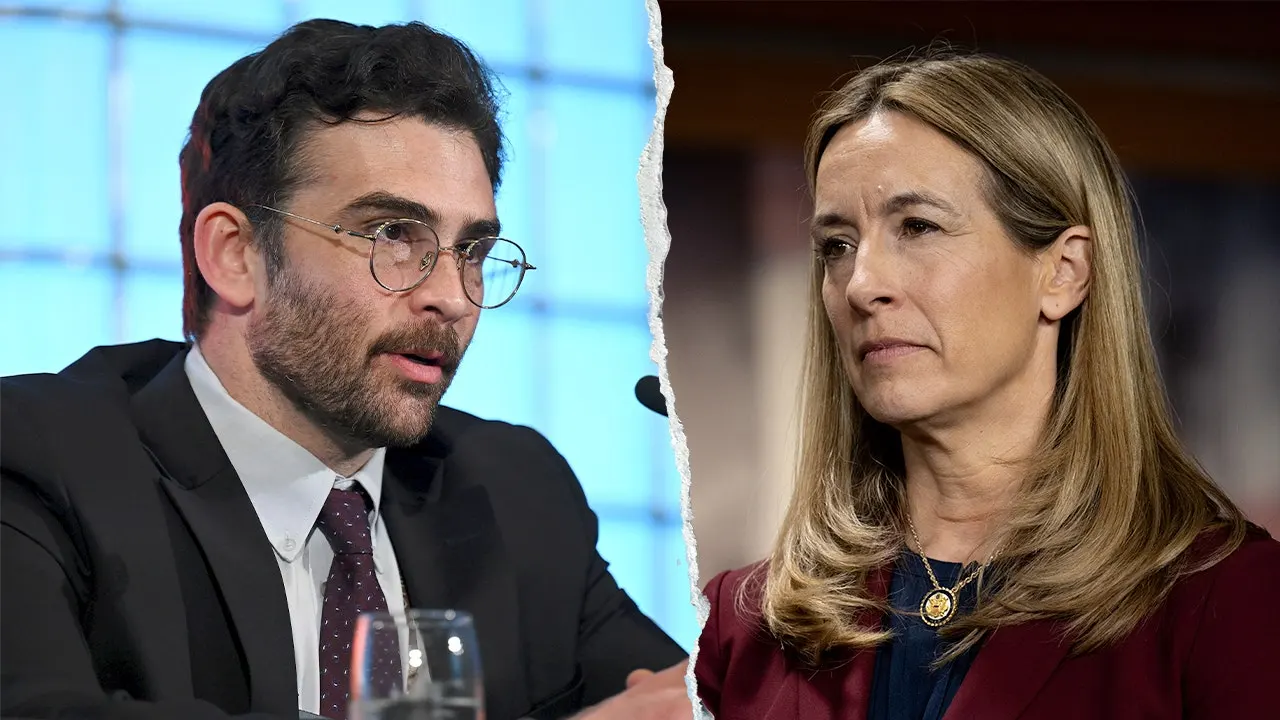
In an era where political discourse is increasingly shaped by the glow of computer screens and the raw, unfiltered energy of live broadcasting, the boundaries between digital commentary and real-world activism have entirely dissolved. This shift was vividly on display during a recent Sunday livestream when prominent left-wing political commentator and Twitch streamer Hasan Piker turned his platform’s massive spotlight toward the escalating crisis in New Jersey. For hours, Piker’s broadcast became a focal point of outrage, translating sterile news reports about a clash between immigration activists and state authorities into a deeply human narrative of betrayal, systemic violence, and ideological division. At the center of his critique was New Jersey Governor Mikie Sherrill, whose administrative decisions regarding anti-ICE demonstrations outside Delaney Hall in Newark sparked a fierce debate about what it truly means for a leader to protect vulnerable populations in a highly polarized political landscape. By reacting in real-time to the escalating events on the ground, Piker did not merely report the news; he gave voice to a profound sense of disillusionment shared by many young progressives who feel that establishment politicians have prioritized optics and state control over human dignity and fundamental immigrant rights.
The physical backdrop to this digital confrontation was Delaney Hall, an immigration detention facility in Newark where the atmosphere had grown increasingly tense as activists rallied against what they described as inhumane conditions. Behind the brick walls of the facility, detainees were reportedly suffering from an alarming lack of basic necessities, including inadequate food and substandard living conditions—claims that, while vigorously disputed by the Department of Homeland Security, resonated deeply with the protesters gathering outside. Seeking to address the escalating unrest, Governor Sherrill made the controversial decision to deploy state troopers in riot gear and on horseback around the facility. In a public statement that she hoped would clarify her administration’s position, Sherrill argued that the deployment of state police was a defensive maneuver designed to maintain order and deny the federal government a “pretext” to expand its heavy-handed immigration enforcement operations within her state. To the officials in Trenton, this was a calculated chess move in a complex federalist struggle; to those standing on the hot pavement of the protest lines, however, it felt like an incredibly cold and bureaucratized justification that prioritized administrative protection over the immediate safety of the people.
Piker was quick to dismantle the governor’s logic with a mix of sarcasm and genuine exasperation, highlighting the absurdity of a Democratic executive using state resources to preemptively execute the very policies they claim to oppose. “Yeah, I won’t give ICE a pretext,” Piker mocked, adopting a patronizing tone to expose what he viewed as the deep hypocrisy of centrist Democratic governance. “So I’m going to ensure that they don’t have to do anything because I’m going to do it myself.” For Piker and his audience, this moment was a textbook illustration of how the modern center-left operates when pressured by grassroots movements: rather than offering a radical break from the punitive policies of the federal government, they attempt to manage and sanitize those policies through local administrative power. By framing Sherrill’s actions as a form of capitulation disguised as public safety, Piker spoke directly to the growing frustration among left-wing organizers who argue that “blue-state” leadership too often serves as a polite shield for the status quo, effectively doing the heavy lifting for federal agencies under the banner of pragmatism.
The conflict on the streets of Newark quickly escalated beyond mere policy differences, turning into a raw and violent confrontation that Piker argued was being actively sanitized by mainstream narratives. On his stream, the visual reality of state troopers on horseback, armored in anti-riot gear and clashing with demonstrators, became a powerful symbol of state-sanctioned violence directed at ordinary citizens. Reports surfaced of physical scuffles, the use of pepper spray, and even the injury of an Associated Press photographer who was attempting to document the chaos. Piker did not hold back in his assessment of these tactics, comparing the behavior of the New Jersey State Police to occupying forces in contested global conflict zones, calling the operations “disgusting” and pointing out the tragic irony of state troopers brutalizing the very New Jersyans they are sworn to protect. By focusing on the physical toll of the state’s response—the bruised bodies of activists and the silencing of journalists—Piker humanized the abstract debate around immigration, forcing his viewers to look past the official press releases and witness the human cost of maintaining “order” outside a detention center.
Beyond the immediate crisis in Newark, Piker used the moment to articulate a much broader and more systemic critique of the Democratic Party’s historical relationship with the American immigration apparatus. He challenged the widely accepted political binary of the two-party system, reminding his viewers that the current network of detention centers and aggressive enforcement mechanisms was not built overnight by a single administration, but was rather a bipartisan creation. Piker argued that many Democratic lawmakers have actively participated in this process over the decades, consistently voting for funding bills and policy measures that expanded the reach and power of agencies like ICE, even while presenting themselves as allies to immigrant communities during election cycles. This systemic complicity, Piker suggested, has created a sense of exhaustion and betrayal among immigrant rights advocates who feel their lives and freedoms are treated as mere currency in a perpetual game of partisan theater. His call to “change that system” was an appeal to move beyond defensive voting strategies and instead build a political movement that places genuine human welfare at the center of its legislative philosophy.
Ultimately, Piker’s broadcast reflected a growing movement that seeks to bridge the gap between digital advocacy and shoe-leather grassroots organizing. No longer content with merely commenting on the actions of politicians from a comfortable distance, Piker has increasingly immersed himself in the physical work of political campaigns, traveling the country to canvas for progressive candidates endorsed by the Democratic Socialists of America, such as congressional hopeful Adam Hamamy in New Jersey. His reference points during the stream—ranging from expressions of support for progressive billionaire Tom Steyer to quoting the revolutionary theories of Mao Zedong—demonstrate a diverse, sometimes chaotic blend of ideological tools utilized by a new generation of activists who are desperately searching for a way out of the political gridlock. By demanding that voters support candidates who are willing to “make a big fuss” and directly challenge state power, Piker’s livestream highlighted an ongoing, deeply human struggle for the soul of American progressivism, where the ultimate goal is not just the management of existing institutions, but their radical transformation in the name of human decency and justice.