






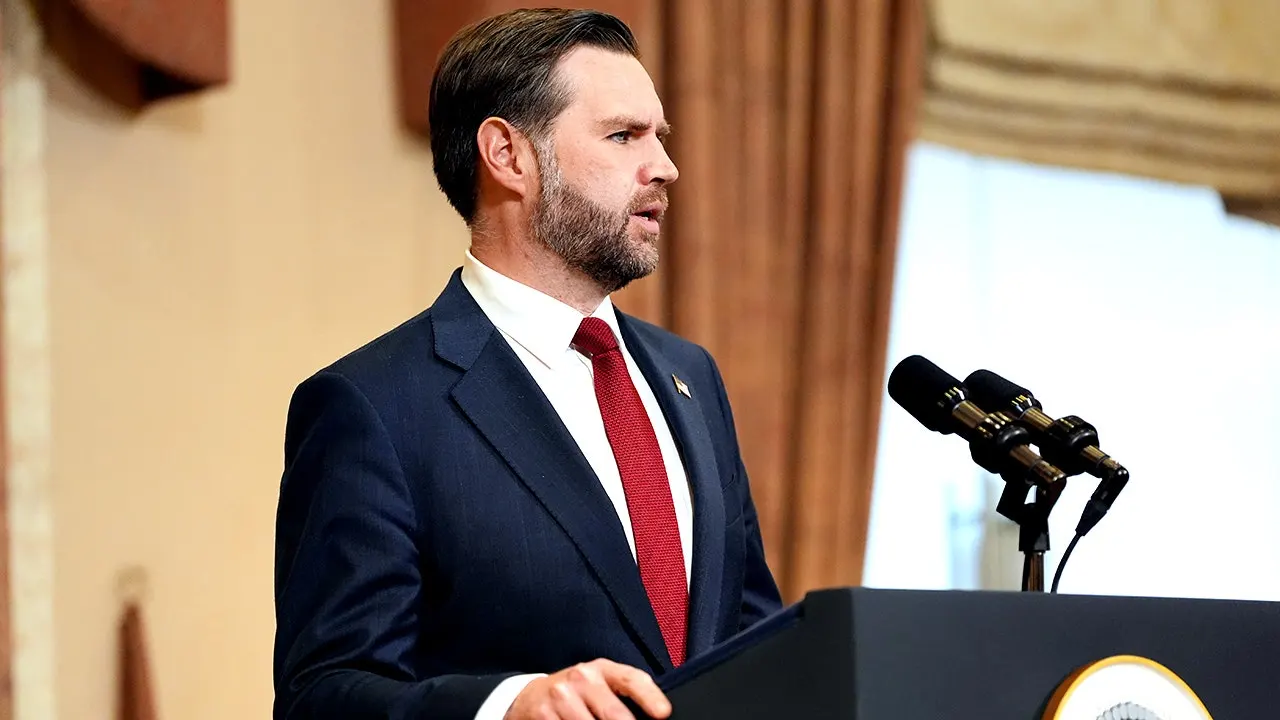
The crisp, cold alpine air of Switzerland at dawn carries a quiet weight, a stillness that stands in stark contrast to the volatile political currents surging across our modern world. As morning sunlight first touched the snow-dusted peaks, Air Force Two touched down shortly before six o’clock on Sunday morning, carrying Vice President JD Vance into what is arguably the most critical diplomatic laboratory of the decade. This high-altitude arrival marks a massive pivot for Vance, moving swiftly from the raucous domestic political arenas of America to the quiet, secure corridors of international diplomacy, where every word is calculated and every silence carries deep meaning. The mission ahead is complex, daunting, and incredibly delicate: to nurture, organize, and construct a permanent peace out of a highly fragile, newly minted framework with Iran. It is a moment of immense gravity for the newly elected administration, signaling an ambitious attempt to rewrite the rules of Middle Eastern statecraft. For Vance, the journey is not merely about representing his country on a glamorous European stage, but about establishing the groundwork for a lasting geopolitical realignment that could redefine global security for many years to come. Stepping off the plane into the Swiss morning, he carries the hopes of a war-weary global public and the heavy expectations of an administration determined to prove that its unconventional, direct approach to global conflicts can yield historic breakthroughs where traditional diplomacy has historically faltered. The backdrop of Switzerland, a classic neutral ground historically chosen to settle the differences of battling empires, feels both poetic and calculated, safe yet charged with anticipation. Here beneath the quiet mountains, the administration is attempting to build an enduring bridge over decades of mutual hostility, deep-seated ideological division, and regional economic warfare, transforming a brief cessation of active hostilities into a stable, lasting architecture of peace that could prevent future generations from ever having to inherit the structural damage and terrible, ongoing costs of another prolonged and devastating international armed conflict in the Middle East.
At the core of this diplomatic push lies a temporary ceasefire, a sixty-day breathing room established by a recent memorandum of understanding signed during the high-stakes G7 summit at the historic Palace of Versailles. This sixty-day window represents a brief, invaluable pause in a long cycle of violence, offering a rare opportunity for both countries to step back from the precipice of a devastating regional war. Yet, as with all things in high-stakes negotiations, this peace framework is accompanied by a severe, uncompromising undercurrent of economic pressure. President Donald Trump, utilizing his characteristic style of transactional diplomacy, made it abundantly clear that this window of peace is not a permanent pass, warning via social media that the failure to reach a lasting agreement before the ceasefire expires would result in punishing maritime tolls in the strategically vital Strait of Hormuz. The Strait of Hormuz represents the primary windpipe of global energy markets, a narrow chokepoint through which a significant portion of the world’s oil flows daily. By linking the success of these delicate negotiations to the threat of disruptive economic tolls, the administration has raised the stakes to an absolute premium, signaling its belief that true diplomatic progress is only achieved when backed by credible, devastating pressure. It is a high-wire act of statecraft, blending the humanitarian desire to end active military conflicts with the cold, hard reality of global economic leverage. This dual-track approach, balancing a genuine offer of diplomatic reconciliation with a massive economic warning, defines the signature strategy of peace built upon strength. For the citizens of the Middle East, whose daily lives are continuously shadowed by the threat of escalating violence, these sixty days are an agonizing countdown, a desperate period wherein the actions of elite diplomats in comfortable Swiss rooms will directly dictate whether their skies remain peaceful or fill once again with the frightening, destructive thunder of modern, unrestricted aerial warfare that has historically claimed countless lives, shattered neighborhoods, and deeply scarred the collective psyche of millions.
To navigate this complex geopolitical terrain, the administration has assembled a unique, close knit delegation that blends traditional diplomatic experience with absolute, direct negotiation loyalty. Vance is scheduled to join forces on the ground in Switzerland with some of the president’s most trusted advisers, notably including White House envoys Steve Witkoff and Jared Kushner, the latter of whom brings extensive, hands on experience in orchestrating breakthrough regional agreements, such as the historic Abraham Accords. This American team represents a group of unconventional dealmakers who pride themselves on bypassing bureaucratic red tape in favor of swift, direct, results oriented engagement. Facing them across the negotiating table is an experienced, highly motivated Iranian delegation led by Iranian Foreign Minister Abbas Araghchi, a seasoned diplomat who is currently navigating intense domestic pressures from hardliners in Tehran who remain deeply suspicious of any American overtures. The logistics of this high stakes summit have already proven to be incredibly fluid and unpredictable, highlighted by the sudden postponement of the initial talks which were originally scheduled to begin on a Friday. The Swiss foreign ministry, acting as the essential diplomatic facilitator and primary host, had to scramble to rearrange complex schedules, coordinate massive international security details, and manage the rapid arrival of delegations from multiple time zones as the summit location shifted toward the secluded resort of Bürgenstock, situated dramatically above Lake Lucerne. This initial delay served as a stark, sobering reminder of just how fragile these talks are, proving that even administrative details can become fraught with geopolitical tension. As the Iranian team finally landed, quiet caravans began winding their way up the steep mountain roads toward Bürgenstock, creating an atmosphere dense with a mixture of anxiety, immense pressure, and quiet focus, as both sides recognized that any failure to communicate basic points in the opening hours could quickly unravel months of painful, hard won progress accomplished through secret, backchannel communication between national security officials working behind closed doors to keep this historic diplomatic possibility alive during difficult times.
The agenda for these negotiations is both deep and wide, touching upon existential issues that have threatened global stability for nearly half a century, most notably the continuous development of the Iranian nuclear program and the fragile status of the Lebanon ceasefire. For decades, the specter of a nuclear armed Iran has been a primary driver of international anxiety, steering a non stop cycle of sanctions, proxy conflicts, and covert operations. Concurrently, the situation in southern Lebanon, where ongoing fighting between Israel and Hezbollah has repeatedly threatened to blow past localized boundaries, remains a constant, dangerous tinderbox. Before departing from Maryland’s Joint Base Andrews, Vance offered a rare, humanizing window into his personal thoughts on these proceedings, speaking frankly with reporters about the immediate, practical goals of his Swiss trip. “I think number one, just getting things set up in the right way and getting the actual structure of the negotiations in place,” Vance explained, emphasizing that sustainable peace is constructed on clear, agreed upon procedures. He candidly addressed the profound difficulty of maintaining order when regional tensions remain historically high, urging a focus on preventing small sparks from igniting massive blazes. “The big problem is that somebody will shoot and then somebody will respond,” Vance observed, cutting through abstract jargon to highlight the raw, tragic pattern of human retaliation that drives war. “You’ve just got to stop the shooting for long enough to get the ceasefire to hold.” These observations, spoken with the pragmatic realism of a veteran, underscore his acute awareness that behind every bureaucratic treaty are real human lives, young soldiers on the frontlines, and innocent families in quiet neighborhoods, all of whom are entirely dependent upon these distant leaders to break the devastating, self perpetuating cycles of violence that threaten to swallow their fragile dreams of a normal, quiet existence, free from the constant threat of random, sudden destruction that has characterized life in this unstable and heavily militarized zone for far too many bitter, painful, and difficult years.
The global nature of this diplomatic endeavor is further highlighted by the active participation of key regional powers, demonstrating that any lasting peace in the Middle East requires a broad, highly cooperative multilateral coalition. Pakistan has notably dispatched a powerful, highly influential delegation consisting of Prime Minister Shehbaz Sharif and Army Chief Field Marshal Syed Asim Munir, reflecting the deep, interconnected security ties that bind South Asia to the Persian Gulf. In addition to Pakistan’s heavyweight diplomatic presence, seasoned representatives from Qatar are playing a crucial, active role in facilitating discussions, utilizing their unique position as trusted intermediaries to help bridge the deep trust deficit between Washington and Tehran. Under the dual track strategy outlined by Vance, the negotiations will proceed through a carefully structured, two tiered system designed to maximize efficiency while preserving political flexibility. A dedicated principal level of top political leaders will guide and oversee the overarching vision at the top, while an experienced, highly specialized technical team of experts remains stationed on the ground to tackle the exhaustively difficult tasks of drafting treaties, verifying nuclear compliance, and establishing maritime protocols. This structure is deliberately designed to prevent the summit from becoming bogged down in minor disputes, allowing leaders to maintain their focus on making big picture deals while technical staffers resolve the intricate details. It is an exhausting, high pressure process of diplomacy, requiring countless hours of intensive debate over single words in draft documents. The vital participation of primary military leadership, such as Field Marshal Munir, signals that these discussions are not merely academic debates in foreign policy, but vital national security maneuvers aimed at averting a massive military escalation that would close vital global shipping routes, trigger severe energy price spikes, destabilize regional financial systems, and initiate an unpredictable, deeply destructive chain reaction across multiple sovereign nations that are already struggling with internal economic hardships, extensive domestic unrest, and the difficult long term recovery from a series of separate but deeply damaging security crises globally now.
As the negotiations finally get underway in the secluded halls of Bürgenstock, the eyes of the world are fixed on Switzerland, hoping that this unexpected, high stakes diplomatic gamble will pay off. For Vance, this summit is a historic test of dynamic leadership on the global stage, a chance to prove that a direct, business oriented approach to foreign policy can yield tangible, peaceful results in the world’s most stubborn conflict zones. Regardless of the ultimate outcome, the human stakes of these talks could not possibly be higher. The difference between success and failure in these Swiss rooms will be measured not in diplomatic points, but in human lives saved, trade routes secured, and the prevention of a devastating regional conflict. As Vance and his colleagues sit down with their international counterparts, looking out over the peaceful, mirror like waters of Lake Lucerne, they are acutely aware of the stark contrast between their serene surroundings and the dusty, conflict scarred cities of the Middle East, where millions of people are waiting to see if they will finally be granted a future free from the constant fear of violence. It is this human element, the shared desire of ordinary families across the globe to live their lives in safety and prosperity, which must ultimately guide every handshake, every concession, and every agreement made in Switzerland. The journey toward a lasting peace is notoriously long, winding, and filled with unexpected obstacles, but in the quiet of the Swiss mountains, a crucial, highly promising first step is finally being taken, offering a rare beacon of hope in a world too often dominated by division, economic instability, political polarization, and endless international strife, proving that even when the paths forward seem entirely blocked by decades of hatred and systemic division, focused and determined diplomatic actions can still illuminate a viable, bright pathway toward mutual respect, shared economic safety, localized security, and a much better future for all of humanity in every single region around this small shared planet right now.