




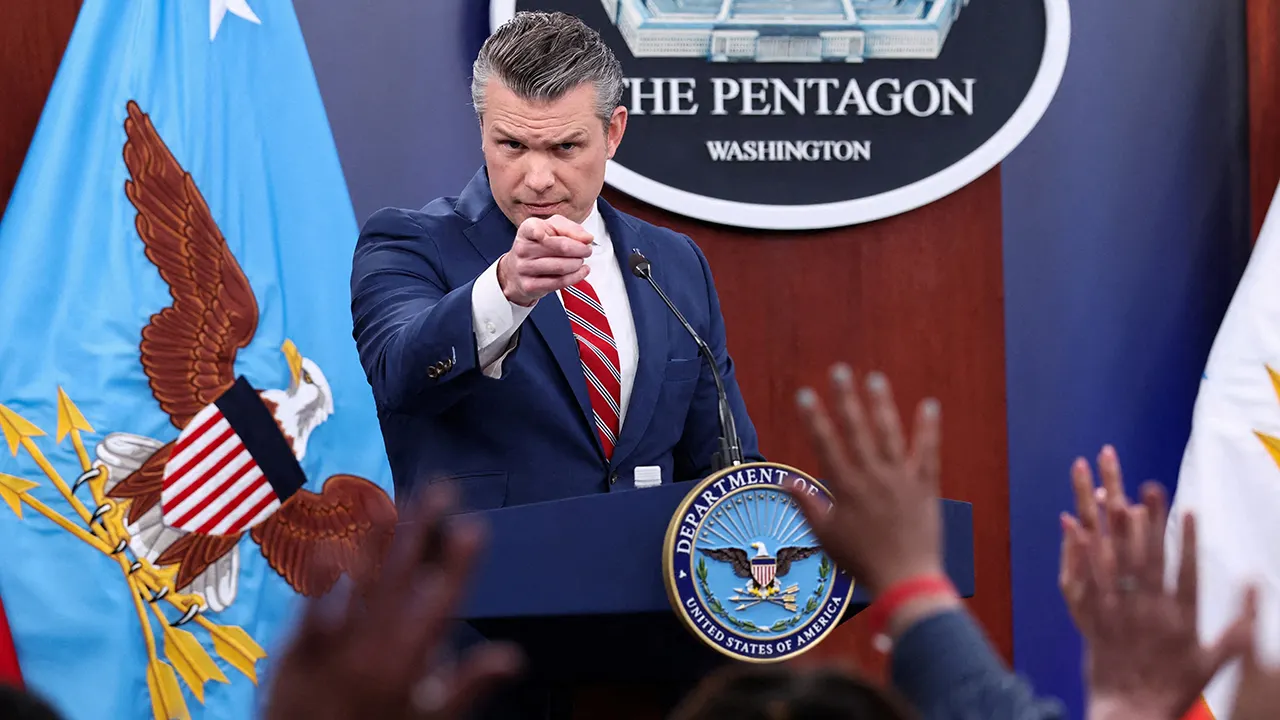
Pentagon Chief Pete Hegseth has escalated the federal government’s war on unauthorized disclosures by establishing a powerful joint task force with the Department of Justice, designed specifically to hunt down and prosecute officials who leak sensitive information to the press. In a video address shared on X, Hegseth announced that he has delegated sweeping tasking authority to the Pentagon’s Office of General Counsel (OGC). Under this new directive, the OGC is empowered to demand and receive any information, records, and logistical support from any branch of the military to assist in leak investigations. Characterizing unauthorized disclosures as an existential risk to active-duty service members, Hegseth frames access to classified material as a sacred trust, warning that anyone who betrays it for fleeting media attention will face the full weight of federal prosecution.
This aggressive crackdown is already operating in lockstep with the Department of Justice, led by Acting Attorney General Todd Blanche, whom Hegseth publicly thanked for orchestrating an unprecedented level of interagency cooperation. The teeth behind this new alliance became immediately apparent when the DOJ issued federal grand jury subpoenas to four New York Times journalists. The administration is demanding their testimony regarding a highly sensitive report on security vulnerabilities associated with a luxury aircraft gifted to President Donald Trump by Qatar, which Trump recently utilized to travel to a NATO summit in Turkey. This escalation marks a dramatic shift in how the administration intends to handle national security reporting, transforming what was once a game of political cat-and-mouse into a high-stakes legal battleground.
The government’s heavy-handed tactics have triggered fierce backlash from media organizations, constitutional lawyers, and press freedom advocates who argue the administration is actively dismantling First Amendment protections. David McCraw, an attorney representing The New York Times, publicly condemned the subpoenas, stating that the sudden appearance of federal agents on reporters’ doorsteps should deeply shock any citizen who values constitutional rights. McCraw defended the press’s constitutional mandate to keep the public informed about government operations and the distribution of taxpayer money. Press advocates warn that these actions go far beyond protecting legitimate military secrets, serving instead as a deliberate mechanism to terrorize government whistleblowers and starve the free press of vital, public-interest information.
This latest escalation is the continuation of a relentless campaign Hegseth has waged against the media since taking leadership of the Pentagon. Over the past year, the Defense Department has instituted aggressive internal investigations to weed out sources, even threatening staff with polygraph examinations. Hegseth’s ultimate goal appears to be the total control of information flowing out of the military, a philosophy that has increasingly placed him on a collision course with the Pentagon press corps. Rather than operating as independent watchdogs, journalists covering the military have found themselves facing unprecedented administrative hurdles designed to limit their access and monitor their daily interactions with service members.
Indeed, the Pentagon previously attempted to force resident journalists to sign a restrictive pledge promising they would never solicit unauthorized information, regardless of whether it was classified. This heavy-handed administrative overreach resulted in a major standoff, with the vast majority of veteran Pentagon correspondents choosing to surrender their official press credentials rather than compromise their professional ethics. The department also mandated that reporters be accompanied by government chaperones at all times. This restrictive environment eventually drew a legal challenge from The New York Times, culminating in a federal judge granting a preliminary injunction that struck down the chaperone policy as a direct violation of the First Amendment.
Ultimately, this newly minted joint task force represents a critical juncture in the relationship between the American free press and the federal government. By combining the vast investigative apparatus of the Pentagon with the prosecuting power of the Department of Justice, the Trump administration is signaling that it will no longer tolerate the traditional, informal channels of government transparency. As legal battles loom and tension thickens within the halls of the Pentagon, this aggressive anti-leak campaign threatens to fundamentally redefine the boundaries of national security journalism and alter the public’s right to know what its government is doing behind closed doors.