






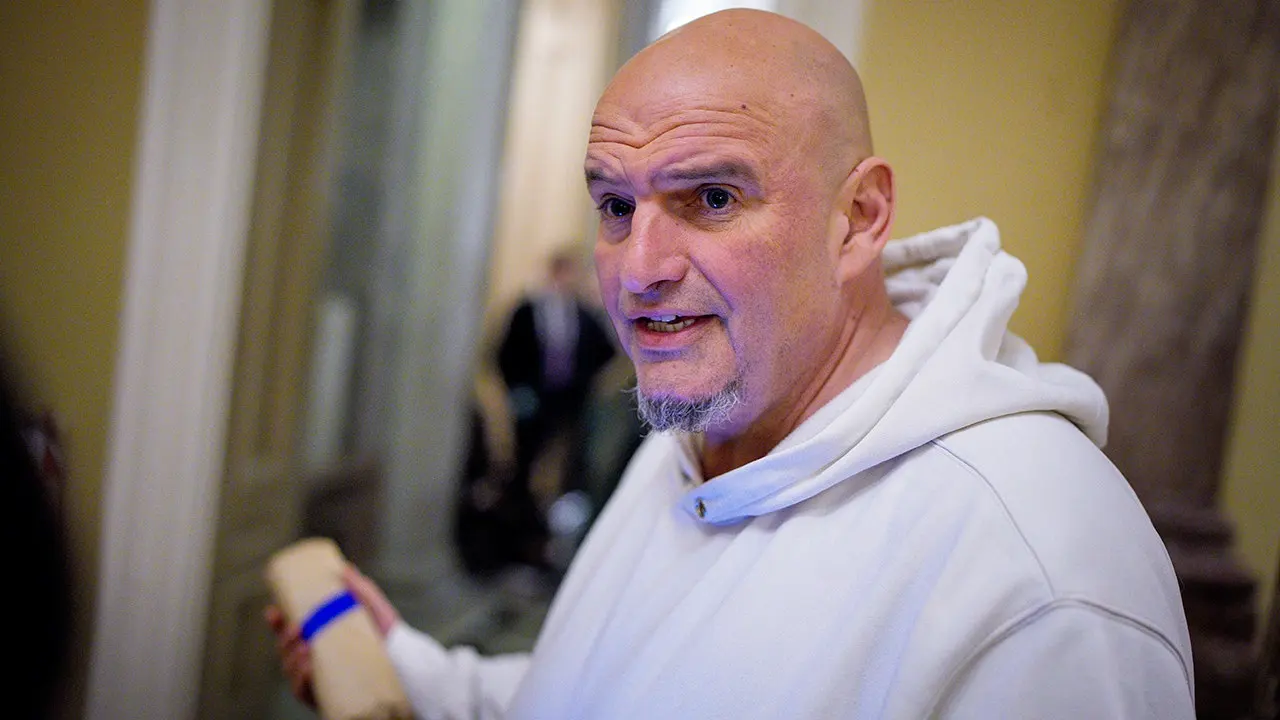
In an era of highly orchestrated political theater where partisan loyalty frequently trumps personal integrity, Senator John Fetterman of Pennsylvania has carved out a unique reputation as a raw, unfiltered political force who is utterly willing to break ranks with his own party. In Washington, D.C., where legislators typically communicate through a sanitized filter of carefully curated press releases and calculated talking points, Fetterman’s rugged, plainspoken approach stands out as a stark departure from the norm. This divide has never been more apparent than in his recent, scathing condemnation of Graham Platner, the embattled Democratic Senate candidate running to represent the state of Maine. While most of his Democratic colleagues have chosen to remain quiet, tread carefully, or outright ignore the growing avalanche of controversies surrounding Platner, Fetterman has refused to participate in the silence. By speaking out so forcefully, the Pennsylvania senator has highlighted the uncomfortable tension that exists when party leadership feels forced to choose between the cold, hard pragmatism of capturing a pivotal legislative seat and defending the core ethical standards that undergird public trust. Fetterman’s refusal to “carry water” for a nominee whose behavior he finds deeply repulsive has injected a dose of raw human emotion and genuine moral outrage into a news cycle that is too often dominated by cynical political calculus.
To fully comprehend the depth of Fetterman’s outrage, one must examine the truly bizarre and troubling mosaic of scandals that have plagued Graham Platner over the past several months, transforming his once-promising Senate run into a highly public disaster. The trouble began to brew publicly last year when voters and watchdogs discovered that the legislative hopeful bore a tattoo of Nazi iconography on his chest, a shocking revelation that instantly alienated many who were once willing to give him the benefit of the doubt. Yet, that initial controversy proved to be only the tip of an exceptionally dark iceberg, as massive troves of past digital activity under the screen name “P-Hustle” began to emerge from the archives of Reddit. These online footprints, coupled with the revelation of Platner’s active account on the highly controversial messaging platform Kik and explicit text messages sent to various women during his marriage, revealed a double life that stood in stark contrast to the wholesome, family-focused representative persona he attempted to project on the campaign trail. For the average voter, discovering this level of hypocrisy is not merely disappointing; it is a betrayal of the fundamental contract of trust that should exist between a political candidate and the community they seek to serve, demonstrating how the digital footprints of the modern era can ruthlessly drag a candidate’s secret alter-ego into the unforgiving light of public scrutiny.
Fetterman did not hold back in drawing historically potent parallels to emphasize how dangerous it is for his party to ignore such flagrant red flags, pointing directly to the tarnished legacy of former Representative Eric Swalwell of California to illustrate his point. By reminding his fellow Democrats of Swalwell—who ultimately resigned from his congressional seat amid intense allegations of rape and sexual assault—Fetterman warned that the party’s historical tendency to defend, protect, or simply overlook the predatory or inappropriate behavior of its own members is a recipe for moral and electoral disaster. The senator’s blunt vernacular, such as openly discussing the “sexually explicit texts” and inappropriate messages Platner frequently sent to women on Kik, serves to cut through the bloated, euphemistic jargon of Capitol Hill, bringing a raw and highly relatable sense of reality to the conversation. In Fetterman’s view, there is a clear line between standard partisan politics and the active defense of individuals whose private behaviors are fundamentally predatory or manipulative. By choosing to voice these thoughts openly rather than hiding behind party lines, Fetterman is demanding that his party hold its own candidates to the same rigid standards of human decency that they so frequently demand of their political opponents on the other side of the aisle.
Beyond the disturbing nature of the sexually explicit digital messages and the shadow of white supremacist iconography, the facets of Platner’s internet history that have drawn perhaps the most visceral ire from Fetterman are those that mock the immense sacrifices of American service members and international allies. In various social media posts, Platner went so far as to describe a wounded American soldier who had been awarded the Purple Heart as a “dumb motherf—–” who “didn’t deserve to live”—an incredibly callous statement that cuts to the bone of anyone who respects the heavy toll of military service. Furthermore, his digital trail revealed that he actively smeared legendary Navy SEAL sniper Chris Kyle and openly cheered for the violent deaths of IDF soldiers. For Fetterman, who represents a state with a vast population of active-duty military families and veterans who have bled for their country, these comments are not just minor political gaffes that can be swept under the rug with a quick public relations apology; they are a profound reflection of a deeply warped character. In a culture that places an immense premium on honoring those who sacrifice their lives and physical well-being for their nation, Platner’s flippant, cruel dismissals of military heroics serve as a powerful signal that he is fundamentally disconnected from the core values of ordinary citizens.
Despite the undeniable weight of these compounding scandals, the response from the broader Democratic establishment has been a study in uncomfortable silence and strategic deflection, revealing the party’s desperate obsession with flipping the crucial Maine Senate seat to regain control of the upper chamber. While Fetterman calls out the candidate without hesitation, prominent leaders like Senator Bernie Sanders have continued to defend Platner, arguing that he possesses the necessary “guts” to wage war against billionaires and fight corporate greed. This dynamic exposes a deeply cynical reality of modern politics: often, a candidate’s perceived utility in a high-stakes legislative battle is deemed far more valuable than their personal character or moral fitness. Even as Platner traveled to Washington, D.C., to meet with senators and party leaders, rumors swirled around whether Maine Governor Janet Mills—who had previously teased a return to the ballot—should jump back into the race to rescue the party from certain doom. The spectacle of Democratic elites tip-toeing around these compounding scandals while simultaneously trying to manage the fallout of Platner’s toxic campaign demonstrates the deep moral compromises that occur when the pursuit of raw political power is allowed to override basic ethical boundaries.
In the end, Fetterman’s vivid and memorable characterization of Platner’s scandals as a metaphorical “bingo card” of tacky, gross, and bizarre behavior perfectly captures the profound exhaustion that so many everyday voters feel toward the modern political landscape. In a world where political theater has become incredibly normalized and major parties routinely run defense for deeply flawed individuals in the name of political expediency, Fetterman’s vocal refusal to play along serves as a refreshingly human defense of common decency. By pointing out that Platner has committed so many bizarre acts that one literally loses count, the Pennsylvania senator has given voice to a silent majority of Americans who are tired of being asked to compromise their values for the sake of party loyalty. The unfolding crisis surrounding Graham Platner is more than just a localized campaign trail controversy; it is a critical test of whether the political system can still prioritize baseline human decency over the raw calculation of legislative math. If the democratic process is to maintain any semblance of credibility, parties must eventually find the courage to police their own ranks, acknowledging that some lines of behavior are simply too sacred to be crossed, no matter how valuable the seat on the line may be.