





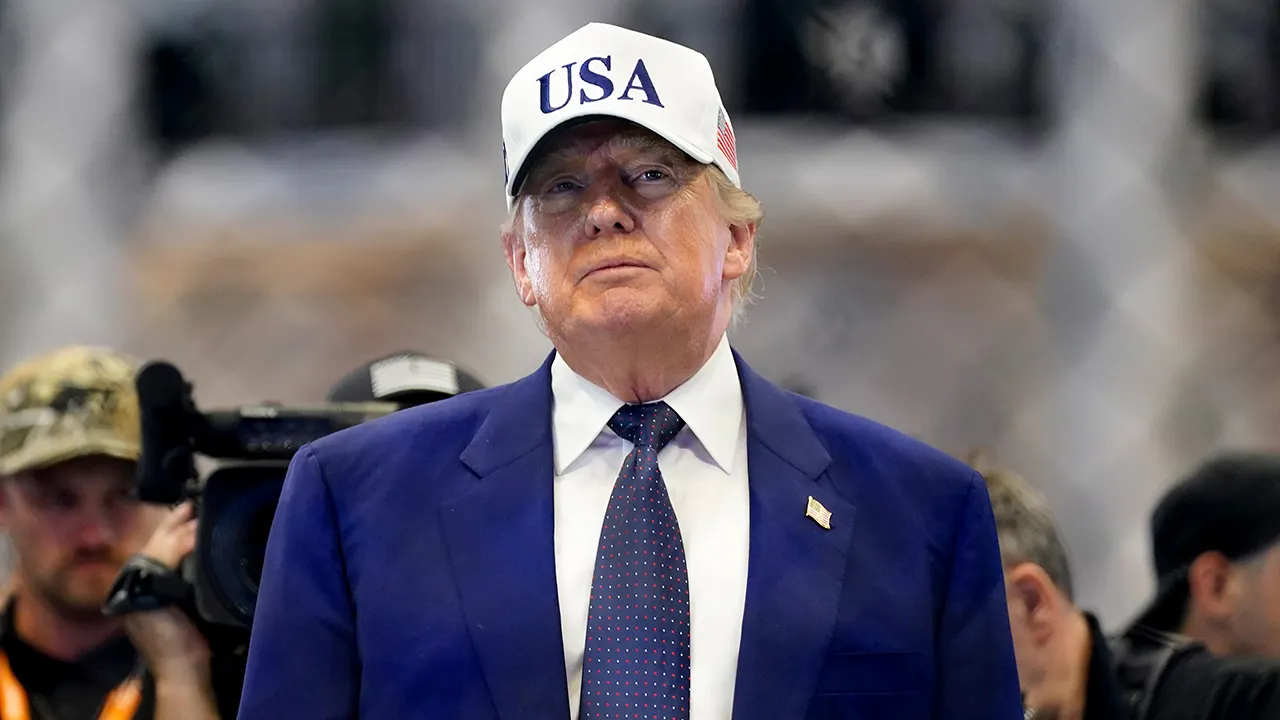
In the high-stakes arena of South Carolina politics, where the red clay of the Palmetto State matches the deeply conservative hue of its electorate, a political drama of epic proportions has reached its absolute boiling point. On Tuesday, voters will head to the polls for a highly anticipated Republican gubernatorial runoff, but the chief architect of modern conservative politics, former President Donald Trump, recently found himself caught in a classic political bind. Recognizing the formidable strength and deep-rooted popularity of both candidates—incumbent Lieutenant Governor Pamela Evette and longtime state Attorney General Alan Wilson—Trump opted for a rare, diplomatic escape hatch rather than choosing between two of his most loyal disciples. Taking to his Truth Social platform in an eleventh-hour announcement, Trump delivered a dual endorsement that sent shockwaves through the political establishment, declaring that he simply could not bring himself to harm one candidate by backing the other. “With either one you can’t go wrong,” Trump wrote, effectively blessing both campaigns and hedging his bets in a race that has became a proxy war for the future of the state’s GOP. For Evette, who already enjoyed Trump’s initial endorsement alongside the active backing of outgoing Governor Henry McMaster, this dual nod somewhat diluted her exclusive claim to the MAGA banner. For Wilson, the state’s veteran top law enforcement officer, it was a massive late-stage victory that leveled the playing field and injected a fresh dose of adrenaline into his grassroots campaign. This tactical move exposes the sheer human complexity behind high-stakes political calculations, demonstrating how even the most dominant kingmaker in modern American history must sometimes compromise to preserve his prized winning record and maintain harmony among his ultimate allies in a critical Southern stronghold.
This unconventional strategic decision to issue a double endorsement is far from a historical anomaly in the Trump playbook; rather, it reflects a deeply calculated move that has been deployed in several high-profile primary battles across the nation. Political observers will easily recall the surreal events of the 2022 Republican Senate primary in Missouri, where Trump famously threw his support behind the name “ERIC” when the two leading frontrunners were Eric Schmitt and Eric Greitens. Both campaigns quickly scrambled to claim the endorsement as their own in a bizarre, almost comedic display of political gymnastics that ultimately saw Schmitt emerge victorious. Similarly, in Arizona’s 1st Congressional District, Trump initially backed both Gina Swoboda and Jay Feely before Swoboda transitioned out of the congressional race to pursue a run for Secretary of State. By employing this double-barreled endorsement strategy, Trump effectively inoculates himself against the sting of primary defeats while keeping both factions of his enthusiastic base happy, motivated, and engaged. To the ordinary observer, it reveals the fascinating human psychology of political power, showing how modern candidates are willing to eagerly share a blessing rather than go without one, transforming what could have been a bitter public rejection into a shared badge of honor. Critics may view it as a convenient political hedge to protect a winning percentage, but for the candidates fighting on the ground, it remains a precious currency of legitimacy that they must spin to their ultimate advantage in the exhausting final stretch of a grueling campaign trail.
The battle for South Carolina’s future has devolved into a highly personal and combustible affair, transitioning from polite Southern drawing rooms to a fiery, mud-slinging public spectacle. During the final debate, both Pamela Evette and Alan Wilson launched sharp personal attacks, accusing each other of lying, misrepresenting records, and distorting the truth of their accomplishments. Wilson has consistently worked to contrast his extensive tenure as attorney general—framing himself as a battle-tested prosecutor, military combat veteran, and the shield of state law enforcement—with what he dismissively labels as Evette’s largely ceremonial role as lieutenant governor. In response, Evette has proudly showcased her credentials as a political outsider and a successful businesswoman, framing Wilson as a career champion of the permanent political class who is out of touch with everyday South Carolinians. The surrogate warfare happening behind the scenes further illustrates the deep divisions within the conservative elite; while Evette has the powerhouse backing of Governor McMaster, Wilson has assembled a formidable coalition of his own, earning the endorsement of firebrand Texas Senator Ted Cruz, Representatives Nancy Mace and Ralph Norman, and even quiet, influential backing from South Carolina’s own Senator Tim Scott. Scott’s backroom lobbying was reportedly instrumental in pushing Trump toward the dual endorsement, proving that behind the grand public theater of presidential tweets lies a complex, human web of relationships, loyalty tests, and strategic whispers.
The stakes in this Palmetto State slugfest could not be higher, because in South Carolina, winning the Republican primary is historically equivalent to winning the office itself. It has been twenty-eight long years since a Democrat managed to win a gubernatorial election in the state, making the winner of this GOP runoff the overwhelming favorite to defeat the Democratic nominee, State Representative Jermaine Johnson, in the upcoming general election. For the average South Carolina family, this primary election is the true battleground where the actual policies governing their schools, taxes, and courts will be decided for the next four years. This reality infuses the race with a palpable sense of urgency and gravity, as voters are forced to choose between two fundamentally different archetypes of conservative leadership. On one side stands Evette’s promise of corporate-style efficiency, political disruption, and outsider energy, while on the other lies Wilson’s appeal to institutional continuity, legal warfare against federal overreach, and a classical law-and-order philosophy. The intensity of this race highlights how, within solid-red states, political evolution occurs not through general election debates with Democrats, but through these intense, soul-searching internal primaries where neighbors must choose which brand of conservatism will define their collective future.
To truly understand the weight of Trump’s dual intervention in South Carolina, one must look at the broader, highly volatile national landscape where the former president’s endorsement power has faced unprecedented trials. Over the past several months, the sheer force of Trump’s blessing has functioned as a political sledgehammer, successfully helping to oust entrenched incumbents in states like Indiana, Louisiana, Kentucky, and Texas, asserting his absolute grip over the national party. However, this seemingly invincible streak was recently shattered in Iowa, where his eleventh-hour endorsement of three-term Republican Representative Randy Feenstra was not enough to save the incumbent from a stinging defeat. Feenstra was narrowly edged out by Zach Lahn, an outsider businessman and farmer who was backed by a potent coalition of Turning Point USA and the “Make America Healthy Again” (MAHA) movement, which is closely aligned with Trump’s own Health Secretary, Robert F. Kennedy Jr. This surprising upset signaled to political analysts that the MAGA coalition is no longer a monolith that blindly follows a single endorsement, but a diverse and sometimes fractured movement where grassroots organizations and alternative conservative leaders can successfully challenge Trump’s preferred candidates. Trump quickly rebounded a week later when his longtime ally, Senator Lindsey Graham, comfortably won his primary in South Carolina despite facing a barrage of attacks from anti-interventionist MAGA challengers, demonstrating that the political tides remain highly unpredictable and deeply localized.
Ultimately, the lessons of recent runoffs in neighboring Southern states like Georgia and Alabama reveal a Republican Party in a state of rapid, fascinating transformation. In Alabama, Trump-backed Representative Barry Moore comfortably defeated a highly regarded former Navy SEAL sniper, Jared Hudson, proving that pure alignment with the House Freedom Caucus and Trump’s explicit blessing still carries immense weight among deep-red voters. Conversely, in the battleground state of Georgia, Representative Mike Collins secured a crucial Senate runoff victory with a late Trump endorsement, while the gubernatorial runoff saw Lt. Gov. Burt Jones, despite receiving endorsements from both Trump and popular Governor Brian Kemp, fall to Rick Jackson. Jackson, a billionaire who poured over one hundred million dollars of his own money into his campaign, successfully managed to “bearhug” Trump in his advertising, convincing voters he would be Trump’s favorite governor regardless of the official endorsement paper. This phenomenon indicates that we are entering a new era of conservative politics where candidates can bypass official endorsements simply by out-spending their opponents and aligning themselves so closely with the populist spirit of the movement that the official nod becomes redundant. As South Carolina voters head to the ballot box, they are not just choosing a governor; they are participating in a living, breathing laboratory of American democracy, proving that while Donald Trump remains the undisputed emotional compass of the Republican Party, the final power always belongs to the passionate, independent-minded citizens who make their voices heard at the polls.