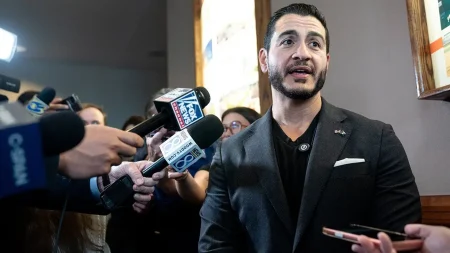







The Rising Storm in New York’s Swing District
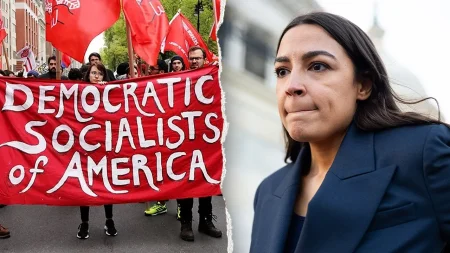
In the heart of America’s political battlegrounds, where every vote feels like a heartbeat in the fight for democracy, a young progressive Democrat named Effie Phillips-Staley is stepping into the spotlight. Running for a hotly contested New York congressional seat that could swing the House this November, Effie is no stranger to controversy. She’s vying to unseat Republican Rep. Mike Lawler in one of the most competitive districts—a suburban slice of the Hudson Valley that’s as diverse as it is divided. At just the start of her campaign, Effie drew fire for appearing on the livestream of Hasan Piker, a far-left streamer whose sharp tongue and unfiltered opinions have made him both a darling of young progressives and a lightning rod for criticism. For many, it’s a puzzle: how a candidate aiming to build bridges in her community could align with someone whose rhetoric often burns them. Yet, as you’ll see, Effie’s story embodies the tensions tearing at the fabric of the Democratic Party, where the need to energize new voters clashes with the reality of polarizing views. Imagine her, a passionate advocate for human rights, sitting in her modest campaign office late at night, scrolling through messages of support and scorn. She’s not just a politician; she’s a daughter, a friend, a dreamer who believes in collective humanity. But in this race, her choices might define whether the party moves forward or fractures further. The district she’s targeting isn’t just geography—it’s a microcosm of America, with Jewish communities thriving alongside a growing progressive base. Lawler, the incumbent, has won before, but this time, with midterms looming like a thunderstorm, everything feels up in the air. Effie’s campaign is personal; she grew up in progressive circles, inspired by mentors like former Rep. Jamaal Bowman, and she’s endorsed by groups like the Working Families Party. Her heart beats for issues like economic justice, but now, thanks to that one livestream appearance, she’s wrapped in a whirlwind of accusations ranging from betrayal to bravery. It’s the kind of drama that turns local races into national spectacles, reminding us that politics isn’t just about policies—it’s about people, their fears, and their hopes. As she navigates this, Effie’s resolve shines through; she’s doubling down, arguing that to win hearts, you sometimes have to challenge minds. Yet, whispers from her own party warn that this gamble could backfire, alienating moderate voters who value unity over edge. In a world where social media amplifies every word, her story is a testament to the double-edged sword of visibility. Will she emerge as a hero for the left, or will the backlash overshadow her message? As the June primary nears, Effie’s journey is just beginning, but it’s already full of the twists that make American democracy both exhilarating and exhausting.
A Bold Appearance and the Shocking Claims
Picture this: It’s late March, and Effie Phillips-Staley, fueled by a mix of nervous energy and unwavering conviction, logs into Hasan Piker’s livestream, a digital arena where millions of young viewers tune in for raw, unscripted conversations. Hasan, a 34-year-old commentator with a knack for stirring debates, is known for his fearless takes, but this session dives deep into the Israeli-Palestinian conflict—a topic as emotionally charged as a family feud over inheritance. Effie, speaking from the heart, calls Israel an “apartheid state” and accuses it of genocide in Gaza, her words hanging heavy in the virtual room like smoke after a fire. For her, this isn’t propaganda; it’s a cry for human rights, rooted in what she sees as the brutal realities of occupation. But in a nation where stories of survival and loss shape opinions, her statements ignite fury. She details the disproportionate toll on Palestinian lives, the blockades, the settler violence, making a case for self-determination that feels urgent and authentic. Yet, to her critics within the Democratic ranks, it sounds like echo chambers amplifying harm. How did a smart, promising candidate—someone who’s hustled through grassroots campaigns and community organizing—end up here? Effie’s background offers clues: raised in an era of Black Lives Matter and #MeToo, she’s shaped by global injustices, from racial inequities to climate crises. Her appearance isn’t accidental; it’s strategic, a bid to reach Generation Z, the voters who scroll TikTok instead of watching cable news. Hasan provides the platform, a bridge to those alienated by traditional politics. But as the livestream rolls on, her words reverberate, drawing parallels to historical debates where language about oppression has sparked both progress and backlash. Effie explains her stance as one of empathy, not enmity—condemning antisemitism while advocating for Palestinians. “We’re talking about human suffering on both sides,” she might say in quieter moments, but online, nuance gets lost. Her opponents seize on it, painting her as radical. Lawler, the Republican she’s challenging, frames it as extremism, yet Effie counters that true progressives must confront uncomfortable truths. This isn’t just policy talk; it’s personal for her. Growing up hearing stories of discrimination, she empathizes with marginalized voices, but now, in the glare of the spotlight, she’s forced to explain. The livestream becomes a turning point, humanizing conflicts that news headlines often flatten. For viewers worldwide, it’s a reminder: behind every label—”apartheid,” “genocide,” “human rights”—are real people grappling with loss. Effie’s gamble pays off with engagement from young Democrats, but it alienates others, setting the stage for intraparty warfare. As the dust settles, she reflects on the power of words to unite or divide, wondering if her honesty will inspire change or cost her the seat.
Intraparty Backlash and a Steadfast Defense
The backlash hits like a wave crashing on shore, starting from within Effie’s own party. Democratic county chairs in the Hudson Valley district—her backyard, filled with picket fences and community meetings—issue a joint statement denouncing her. They accuse her of “normalizing antisemitic, racist, and misogynist rhetoric” by platforming Hasan Piker, whose fame is as divisive as his views. For these longtime party stalwarts, it’s not just about one interview; it’s about protecting the party’s soul in a district where Jewish voters hold significant sway. Effie reads the statement, feeling the sting of betrayal from comrades who’ve shared coffee and canvassed doors with her. Yet, instead of retreating, she doubles down, her voice steady in an interview with Fox News Digital. She sees Piker—a millennial firebrand with millions of followers—as a vital conduit for engaging young voters, those digital natives ignored by mainstream campaigns. “While I don’t align with every word he’s said, the platform is gold,” she insists, humanizing her strategy as pragmatic love for inclusivity. “As Democrats, we build bridges, not walls,” she adds, echoing ideals of unity in her statement. This humanitarian angle is key for Effie; she’s not just defending Piker—she’s advocating for a bigger tent, where even the edgiest voices find a place. Her successful past lobbying for progressive causes shows she’s not naive; she’s calculated, knowing that Nixon’s Southern strategy worked for Republicans by energizing bases. Now, she’s flipping it, aiming to mobilize the left’s youth against apathy. Critics call it reckless, but for Effie, it’s revolutionary. She points to Piker’s 34-year-old persona—a guy who, like many, learned from mistakes—as proof that redemption is possible. “He’s on the right side of history on Israel-Palestine,” she tells a podcast, arguing misinterpretations fuel the outrage. This stance, however, widens rifts. Party elders worry it alienates moderates, while progressives cheer her boldness. Effie’s personal journey mirrors this tension: from quiet organizer to headline-making rebel, she’s evolving in public. Her lawyer father taught her to fight for the underdog, and here, in the midterms’ high-stakes drama, she’s embodying that. The criticism doesn’t break her; it sharpens her. She rallies supporters with stories of coalition-building—inviting in those who feel excluded, from urban Millennials to suburban families. Yet, the intraparty bloodletting raises questions: can the Democrats hold together in a year when unified opposition is crucial? For Effie, it’s personal stakes—losing means more than a seat; it means silencing voices like hers. As primaries approach, her defense becomes a rallying cry, transforming potential weakness into perceived strength. In a party grappling with identity, she’s the human face of change, proving that integrity in politics often means weathering storms from all sides.
Hasan Piker’s Controversial Edge and Denials
To understand the uproar, you have to dive into Hasan Piker’s world—a virtual realm where unapologetic commentary meets raw emotion. At 34, this streamer from New Jersey isn’t shy about his opinions, and they’ve often landed him in hot water. Infamously, he once said “America deserved 9/11,” a statement he later called “inappropriate,” owning it as youthful hyperbole but not apology. Critics see it as endorsing terrorism; supporters view it as critiquing foreign policy excesses that fueled such events. Then there’s his biting rhetoric on sensitive topics, like calling some Orthodox Jews “inbred”—words that evoke historical prejudices and sparked accusations of antisemitism. During one show, he labeled a caller disapproving of Hamas’ October 7 attacks a “bloodthirsty violent pig dog,” defending groups like Hamas as “a thousand times better” than Israel. Piker denies charges of hatred, framing his words as resistance against what he perceives as imperialist actions. Humanizing him reveals a complex figure: a son of Turkish immigrants, raised in a diverse America, channeling frustrations into content that resonates with anti-establishment crowds. His platform, with millions of views, attracts the disenfranchised—young people sick of corporate media’s spin. Yet, this popularity comes at a cost; even fans admit he’s volatile, his jokes and jabs sometimes crossing lines. For Effie, who defended him on podcasts by saying remarks were taken out of context, Piker’s history is a mirror to broader debates. She sees his work as promoting Palestinian rights, aligning with her humanitarian lens. But detractors, like Rep. Mike Lawler’s campaign spokesman Ciro Riccardi, slam it as dangerous normalized extremism. Effie’s choice to associate raises eyebrows: is she endorsing hate, or is it a calculated risk to amplify voices? Piker’s journey— from viral sensation to invited speaker at Bernie Sanders events—shows untamed influence. He’s interviewed big names like AOC and Ro Khanna, headlined rallies for candidates like Abdul El-Sayed, proving his star power in progressive circles. Yet, notables like Sens. Elissa Slotkin and Cory Booker distance themselves, wary of his baggage. For Piker, it’s about truth-telling in a polarized age. Human stories behind his streams—threads of family displacement, economic struggles—make him relatable to listeners craving authenticity. Effie empathizes; she’s no stranger to context wars, having argued that his Israel critiques stem from genuine outrage over injustices. As the narrative unfolds, Piker’s persona forces discussions on free speech versus harm. Will his edge alienate or energize? For now, it fuels fires in Democratic debates, humanizing how one man’s words can echo through elections, challenging norms and inviting reflection on prejudice in all forms.
A Wider Embryo of Progressive Alliances and Divisions
Zooming out, Effie’s saga isn’t isolated; it’s part of a broader shift in the Democratic Party, where far-left influencers like Hasan Piker are gaining traction among progressives hungry for unfiltered dialogue. High-profile figures are hopping on his bandwagon: Rep. Alexandria Ocasio-Cortez praised his reach, while Ro Khanna and New York Mayor Zohran Mamdani graced his show. Piker’s recent event for Bernie Sanders’ favored Senate candidate in Michigan underscores his role as a progressive amplifier. For Effie, who’s endorsed by Bowman’s crew, this network is gold— a way to tap into the energy of youth activists who view traditional media as out of touch. Yet, this alliance exposes deep rifts; not all Democrats are on board. A “swath” of lawmakers, from Slotkin to Booker, steer clear, citing Piker’s history as a red flag for unity. They argue that embracing such views risks the party’s electability, especially in swing districts like Effie’s, where Jewish voters, comprising a large bloc, hold negative views toward Israel according to NBC surveys (57% of Democrats see it unfavorably). These divisions humanize the party’s internal struggle: on one side, pragmatic centrists fearing voter loss; on the other, ideals-first progressives like Effie, who tells Piker that “overwhelming majorities” demand separation from Israel policies. Her “hardening anti-Israel stance” is portrayed as victory-bound, but skeptics question the math. National Republicans like Maureen O’Toole criticize Effie’s rivals—veteran Cait Conley and Beth Davidson—for not condemning her, despite their pro-Israel backings from groups like Democratic Majority for Israel PAC. Effie’s approach, embracing authenticity over conformity, mirrors personal ambitions; she’s a mother and advocate whose path led from sidelines to spotlight. The human element shines in her public statements, invoking “collective humanity” to justify risks. But as primaries heat up, these alliances test loyalties. Will Piker’s endorsement rally Gen Z, or will it haunt Democrats in November? For Effie, it’s about coalition-building, inviting in diverse voices to heal divides. Yet, the silence from Conley and Davidson adds intrigue— are they silent allies, or wary opponents? This episode reveals a party at crossroads, balancing radical energy with moderation’s appeal. In a district rated a “toss-up” by Cook, personal stories of voters—young and old—will decide outcomes. Effie’s gamble feels like generational handoff; will progressives redefine the party, or will backlash reignite moderates? Humanizing this means seeing faces behind votes: a suburban mom weighing security against justice, a young activist dreaming of change. As midterms approach, Effie’s tale embodies the emotion-charged quest for a just democracy, where every endorsement carries echoes of hope and fear.
Clashes Beyond Israel and the Legal Blow
It’s not just Israel causing sparks in this race; Effie’s clashes with Rep. Mike Lawler extend to controversy on the ground. Lawler, a pragmatic Republican who’s held the seat through tough wins (like defeating Rep. Mondaire Jones in 2024), filed a lawsuit this Tuesday alleging forgery in Effie’s petition signatures— a serious claim threatening her ballot access for the June primary. Dozens of affidavits from district voters swear they never signed, suggesting tampering that could derail her campaign. For Effie, this feels like dirty politics, a low blow in a season of high tension. She’s accused Lawler’s team of playing rough, reminiscent of past campaigns where smears overshadowed substance. Humanizing the legal drama reveals the human cost: time spent in court instead of community events, stress on her family, volunteers questioning motives. Yet, Effie views it as a litmus test—proving her commitment to transparent democracy. Lawler, with his own moderates straddling balance, argues it’s about integrity, but critics see it as desperation. In a district with real vulnerabilities—economic swings, immigration debates— this lawsuit distracts from policy battles. Effie counters with her progressive platform: pushing for human rights, economic equity, self-determination. The irony? While she’s called out for radical moves, her campaign faces accusations of illegality, painting a picture of both sides bending rules. Voters, like everyday Americans grappling with inflation or job losses, might tune out, weary of the mudslinging. For Effie, surviving this means leaning on grassroots strength—those volunteers knocking doors, inspired by her story. Polls show her approach gaining traction with young Democrats, but the Jewish community’s density could tip scales. As Cook rates this a “toss-up,” personal narratives loom large: a teacher in Rockland County concerned about education, a business owner eyeing taxes. Effie’s journey transcends headlines; she’s a symbol of perseverance, channeling her lawyer background to fight. Regardless of outcome, this Adds depth to her human arc—from livestream debates to courtroom defenses. In midterms where civic discourse feels frayed, Effie’s tale urges reflection: politics thrives on humanity, not hatred. Will she prevail, or will scandals define her? As primaries near, one thing’s clear: democracy’s pulse beats in stories like hers, reminding us that behind every vote is a life seeking justice and connection.