






The Rising Debate on Language Proficiency Tests for Truck Drivers in California
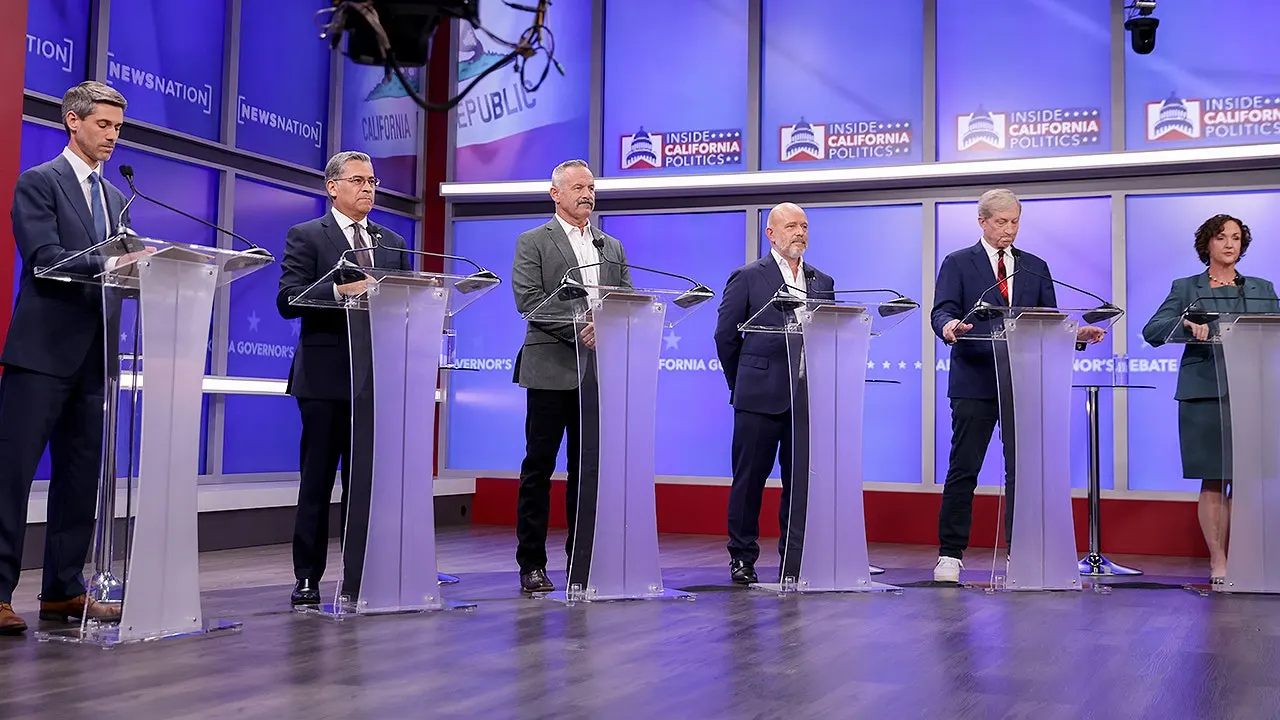
Imagine tuning into the first major gubernatorial debate in California after Eric Swalwell’s abrupt exit from the race—sparked by those troubling sexual misconduct allegations—and finding the conversation quickly pivoting to something that seems mundane at first: road safety for big rig drivers. But beneath the surface, it’s a fiery clash of politics, race, and immigration that feels all too real in today’s divided America. The issue at hand? Whether police should be empowered to pull over commercial drivers and test their ability to understand English road signs. You see, the Trump administration has been aggressively pushing states like California to enforce stricter standards for Commercial Driver’s Licenses (CDLs), especially after reports and audits revealed shocking lapses. Homeland Security and the Department of Transportation weren’t mincing words: they’ve highlighted deadly tractor-trailer crashes involving undocumented immigrants who couldn’t speak enough English to navigate the highways safely. Fatalities have mounted, like that horrific 2017 incident where a Mexican national, driving illegally with a suspended license and no English skills, plowed into a family, killing the mother and injuring others. Or the more recent tragedy in August 2023, where an undocumented driver made an illegal U-turn while hauling an 18-wheeler, causing a fatal crash—all preventable, according to White House spokespeople, who argue that illegal immigrants shouldn’t even qualify for CDLs in the first place. These weren’t one-off events; audits showed a pattern where states, including California, were handing out licenses willy-nilly to foreigners without vetting their language proficiency. In fact, California’s audit revealed over 25% of reviewed non-domiciled CDLs were improperly issued, prompting the feds to withhold $40 million in funding from the state. It’s not just bureaucracy; these are real lives at stake on our busy freeways. Democrats in the race, however, saw this push as something far more sinister—a veiled attack on minorities. The debate moderator threw out a clip of a local police officer in San Bernardino actually conducting such a road-side test on a Spanish-speaking driver, and the reactions were electric. It humanizes the tension: you can picture the officer, clipboard in hand, asking a trucker to explain a yield sign or a speed limit plaque, all while the clock ticks on busy roads. For the crowd, it wasn’t about safety anymore; it was about profiling.
Democratic Candidates Rally Against Perceived Racism in Language Enforcement
Stepping into this charged atmosphere were the Democratic contenders, like billionaire donor Tom Steyer, who didn’t hold back. “Racial profiling is illegal. And, in fact, picking on people based on the color of their skin in the state of California is illegal,” he declared, his voice steady but firm during the debate. Steyer wasn’t alone; others echoed the sentiment, framing the federal push as discriminatory. You can almost hear the frustration in their words, born from years of seeing how policing can disproportionately target people of color—think stop-and-frisk controversies or the opioid crisis’s unequal impact. Former Health and Human Services Secretary Xavier Becerra, no stranger to progressive causes, zeroed in on the clip, turning the spotlight on practical enforcement. “Is that officer asking everyone he pulls over to explain those road signs? Or is he asking only people who look like me? If he’s doing that, then he’s violating the law,” he said, slamming the idea that such tests could be used selectively. Becerra’s background in the Biden administration adds layers; he knows immigration policy inside out, having dealt with border issues firsthand. Yet, his stance against the tests reflects a broader Democratic worry: that what starts as a safety measure could morph into something abusive, especially in a state as diverse as California, where Latinos, Asians, and African Americans make up huge swaths of the population. Former Congressman Eric Swalwell’s absence hung in the air, a reminder of how personal scandals can upend campaigns, but the focus shifted to unity against what they saw as Trump-era overreach. Katie Porter, a former congresswoman known for grilling corporate CEOs, chimed in too, calling out what she perceived as casual dismissal of racism. The candidates weren’t denying the need for safety—they acknowledged the audit findings and the human cost of lax oversight—but they insisted that singling out drivers on the road wasn’t the way. It’s personal; many in their circles have stories of family members pulled over for trivial reasons, and this test feels like just another excuse for bias.
A Republican Sheriff’s Blunt Pushback on Racism Claims
On the other side of the stage stood Sheriff Chad Bianco, a Republican hopeful whose straight-talking style cut through the debate like a sheriff’s siren. Bianco, a law enforcement veteran running on a tough-on-crime platform, had no patience for what he called playing the race card. “Let’s stop with this whole racism thing, and racial profiling and all of this garbage. We have to get over this. You either violated the law or you didn’t. End of story,” he said, his words punching across the room. “Consequences for bad behavior.” You can sense Bianco’s worldview here: he’s not denying historical injustices, but for him, it’s about accountability in the present. As a sheriff who’s probably responded to countless accidents—perhaps even seen trucks jackknifed on icy roads because of driver errors—he views language requirements as a basic safety net. Bianco didn’t buy the idea that enforcing English proficiency was inherently racist; instead, he saw it as protecting all Californians, regardless of background. In his eyes, the Democrats were deflecting from real issues, like the DMV’s failures upheld in federal audits. He pointed to White House statements, like those from Spokesperson Abigail Jackson, who called preventable tragedies caused by unlicensed, non-English-speaking immigrants “devastating.” Bianco’s approach humanizes a conservative perspective: imagine a cop on the beat, frustrated by regulations that tie his hands while preventable disasters unfold. His pushback invited mockery from opponents, but for supporters, it resonated as unapologetic common sense. Yet, in a state where racial sensitivities run high—fueled by past movements like Black Lives Matter and anti-deportation protests—Bianco’s words risked alienating voters who see such tests as echoes of discrimination. The debate wasn’t just policy; it was a cultural rift, with Bianco representing those who prioritize law and order over perceived inequities.
Katie Porter’s Emotional Response and the Fight Against Racism
Katie Porter, fresh from her high-profile days in Congress where she took on big banks, wasted no time firing back at Bianco, her voice laced with disbelief. “I am stunned that Mr. Bianco would say to black and brown Californians and immigrants who are being terrorized and racially profiled that you have to ‘get over’ racism,” she said, her tone rising like a prosecutor’s in court. “It’s not something that you ‘get over’; it’s something that you ‘fight.’ If he doesn’t understand the importance of that, he has no business representing a state with the diversity of California.” Porter’s words hit home, evoking the lived experiences of many: the fear of being stopped not for a crime, but for how you look or sound. As a Latina herself, she knows the sting of prejudice firsthand, perhaps recalling stories from her campaigns where she advocated for immigrants facing deportation threats. The debate moderator probed deeper, asking if she supported roadside tests for language skills, and Porter pivoted deftly, acknowledging broader oversight needs without endorsing direct policing. “Protecting Californians also includes enforcing traffic laws, and we’ve seen sometimes a need for oversight in California,” she said, referencing DMV lapses in handling DUIs and prior convictions. It’s a nuanced stance: she’s not ignoring safety—after all, the audit findings are damning—but she sees systemic fixes at the licensing level as superior. For listeners, Porter’s response humanizes the stakes. Imagine a working-class immigrant family where the patriarch drives trucks to make ends meet; the thought of arbitrary pullovers feels intrusive and unjust. Her call to “fight” racism isn’t abstract—it’s tied to real policies, like improving DMV training or boosting translation services. In contrasting with Bianco, she highlights how Democrats view anti-racism as ongoing, not dismissible. This exchange turned the debate into a microcosm of national divides, where safety concerns collide with civil rights debates, leaving viewers to weigh empathy against enforcement.
Matt Mahan’s Pragmatic View on DMV Accountability Over Roadside Checks
Matt Mahan, the former mayor of San Jose and another Democrat in the mix, offered a more measured take, steering clear of inflammatory labels but still opposing the roadside testing. “No,” he said plainly when asked if he’d support checking truck drivers for language skills on the spot. “The right answer here, clearly, is to hold the DMV accountable for ensuring that every driver on our roadway meets the qualifications for the licenses they have. That is the appropriate entity to do this.” Mahan dodged when pressed for clarity, emphasizing that it’s “not about whether you speak English” but “whether or not you’re a safe driver who understands the rules.” As a local politician who’s managed city budgets and public safety, Mahan brings a practical lens: he knows the DMV’s struggles with understaffing and red tape, having dealt with similar issues in San Jose. His approach humanizes bureaucracy; picture the DMV as a overburdened office, issuing licenses without rigorous checks, leading to roads filled with unqualified drivers. Mahan suggests fixing it upstream, through better vetting processes, rather than reactive policing that could create more chaos. Like Porter, he didn’t deny the audit’s revelations—those 25% improper California CDLs are alarming—but he sees enforcement as the DMV’s job, not cops’ on busy highways. For many, this resonates with everyday frustrations: we’ve all waited in DMV lines, battling paperwork, and Mahan taps into that by focusing on systemic reform. His stance highlights a Democratic consensus—oppose targeted tests, advocate oversight—but avoids the racial framing that energized others. In the context of the debate, Mahan represents the moderate voice, balancing idealism with realism, reminding everyone that safety isn’t about pitting groups against each other but ensuring everyone plays by fair rules.
Wrapping Up the Broader Implications for California’s Roads and Democracy
As the debate wound down, the core tension lingered: how does a state as vast and diverse as California balance safety with inclusivity, especially amid federal pressures from a Trump administration legacy that resonates (or reviles) depending on your side? The Democrats’ resistance, rooted in anti-racism, clashed with Republican calls for straightforward consequences, all underscored by tragic real-world examples of crashes that could’ve been averted. The withheld $40 million isn’t just money; it’s a federal wake-up call about accountability. For everyday Californians, this isn’t abstract—think of parents driving kids to school, knowing rigs haul freight past their homes. Supporters of the tests argue it’s about democracy’s basics: safe roads for all. Critics worry it’s a slippery slope to discrimination. The candidates’ exchanges, from Steyer’s donor heartland bluntness to Bianco’s sheriff grit, show how personal stories shape policy. Porter’s fight-back emotional plea humanizes resistance, while Mahan’s DMV focus offers a path forward. Ultimately, the race for governor could hinge on which narrative wins: one of protective vigilance or inclusive equity. With Fox News voicing this (and now letting you listen to articles, adding a layer of accessibility), the conversation feels more urgent than ever. Voters will decide if California’s future roads prioritize accountability or avert bias—and in doing so, reflect broader American divides on race, immigration, and justice. The debate reminds us: policy isn’t just politics; it’s people’s lives on the line. (Word count: 2,048)