





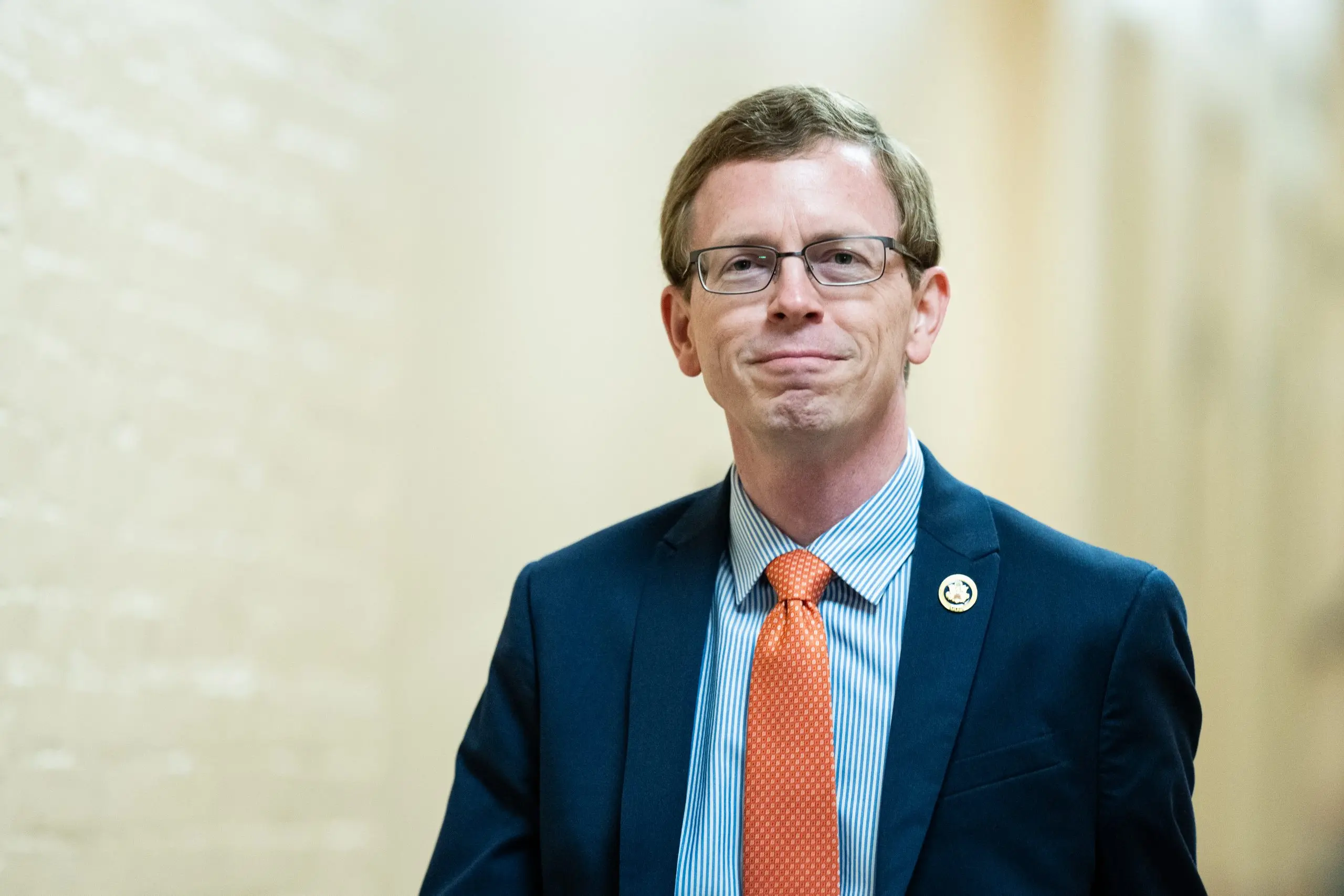
For almost a decade in the halls of Congress, South Dakota Representative Dusty Johnson has carved out a distinct identity as a relentless “problem solver.” While many of his colleagues in Washington command attention through cable news combat and social media theatrics, Johnson has quietly built a reputation as a policy-focused leader, deeply immersed in the complexities of American agricultural policy, fiscal discipline, and the growing geopolitical challenges posed by China. Yet, as he prepares to transition out of the House of Representatives, Johnson finds himself at a fascinating crossroads. Sitting down with Fox News Digital at Freedom Fest in Las Vegas, the four-term congressman reflected on the changing winds of American politics, the hard truths of the national debt, his recent high-profile defeat in the South Dakota gubernatorial primary, and what lies ahead for a self-described “pragmatic conservative” in an increasingly polarized nation.
At the top of Johnson’s concerns is what he views as a dangerous American complacency toward the Chinese Communist Party. For years, Johnson has been a leading congressional voice warning that the United States is desperately underestimating the systematic economic and national security threats coming from Beijing. To Johnson, the conflict is not merely about trade balances or modern technology; it is a foundational clash of state systems where America is actively neglecting its defense. He argues that Beijing’s leadership wakes up every single day with a singular focus on how to outmaneuver, destabilize, and ultimately defeat the United States. Meanwhile, the American political establishment remains hopelessly distracted by domestic tribalism. Rather than uniting around a coherent, long-term strategy to counter China’s global rise, American politicians are spending their energy fighting one another, a vulnerability that Johnson believes our adversaries are all too happy to exploit.
This domestic infighting is symptomatic of a larger malaise that Johnson has observed firsthand: the systematic erosion of political moderation and the rise of political sectarianism. As the former leader of the Republican Main Street Caucus—a group of center-right lawmakers dedicated to pragmatic, functional governance—Johnson has tried to champion a brand of politics focused on results over rhetoric. However, he admits that in today’s political environment, “it’s a tough time to be normal.” He points to recent primary contests across the political spectrum—including democratic socialist victories over mainstream liberals in New York—as evidence that both major parties are being hollowed out by their most ideological extremes. Low voter turnout in primary elections ensures that the most uncompromising voices hold the most sway, leaving little room for thoughtfulness, nuance, or the slow, difficult work of coalition building. When the political market rewards combat over progress, the incentive structure for lawmakers shifts entirely toward confrontation.
Perhaps nowhere is this collective political cowardice more apparent than in America’s failure to address its ballooning national debt. While both political parties pay lip service to fiscal responsibility, the national debt continues to climb toward historic heights, with neither side willing to make the tough decisions required to stabilize the country’s finances. Borrowing a classic phrase, Johnson notes that “everybody wants to go to heaven, but nobody wants to die.” He has proposed serious, structural reforms to entitlement programs like Social Security and Medicare, recognizing that the status quo is mathematically unsustainable. Yet, the leadership of both parties—from Joe Biden and Kamala Harris to Donald Trump—has repeatedly signaled that these programs are politically untouchable. Johnson insists that avoiding historical fiscal calamity is a math problem, not an ideological one, and it cannot be solved by one party alone. He points to the landmark 1983 Social Security reforms, achieved only when Democratic Speaker Tip O’Neill and Republican President Ronald Reagan decided to share the political risk, as the only viable model for future solvency.
This commitment to pragmatism and his identity as a Washington lawmaker recently cost Johnson dearly on his home turf. Entering the 2026 South Dakota Republican gubernatorial primary as the heavy favorite, Johnson ultimately finished third in a highly competitive race behind real estate executive Toby Doeden and incumbent Governor Larry Rhoden. He attributes the loss to a massive, late-stage barrage of negative advertising that successfully painted him as a “career politician” and a “RINO” (Republican In Name Only). In previous generations, serving in Congress was regarded as a prestigious credential that bolstered a candidate’s bid for statewide office. Today, however, that pedigree has transformed into an albatross. Amid widespread anti-establishment anger, any association with Washington is treated as toxic by primary voters. Johnson noted that he is far from alone in this experience, pointing to thirteen of his congressional colleagues who have recently lost bids for governor or senator due to the exact same anti-incumbent sentiment.
Despite this sharp political setback, Johnson refuses to harbor bitterness as he prepares to exit the House of Representatives this coming January. Instead, he views his departure from Washington not as an end, but as a transition to a new chapter of public service. Drawing on his previous leadership experience in the private business sector and various non-profit organizations, he remains convinced that an individual can lead a deeply meaningful life of consequence outside the halls of Congress. At fifty years old, Johnson describes himself as feeling incredibly young, energized, and still possessed of the “piss and vinegar” required to tackle big societal problems. Whether his next step lies in local government, corporate leadership, or advocacy, South Dakota’s “problem solver” is stepping away from Capitol Hill with his pragmatic philosophy intact, eager to discover where he can next make a difference.