





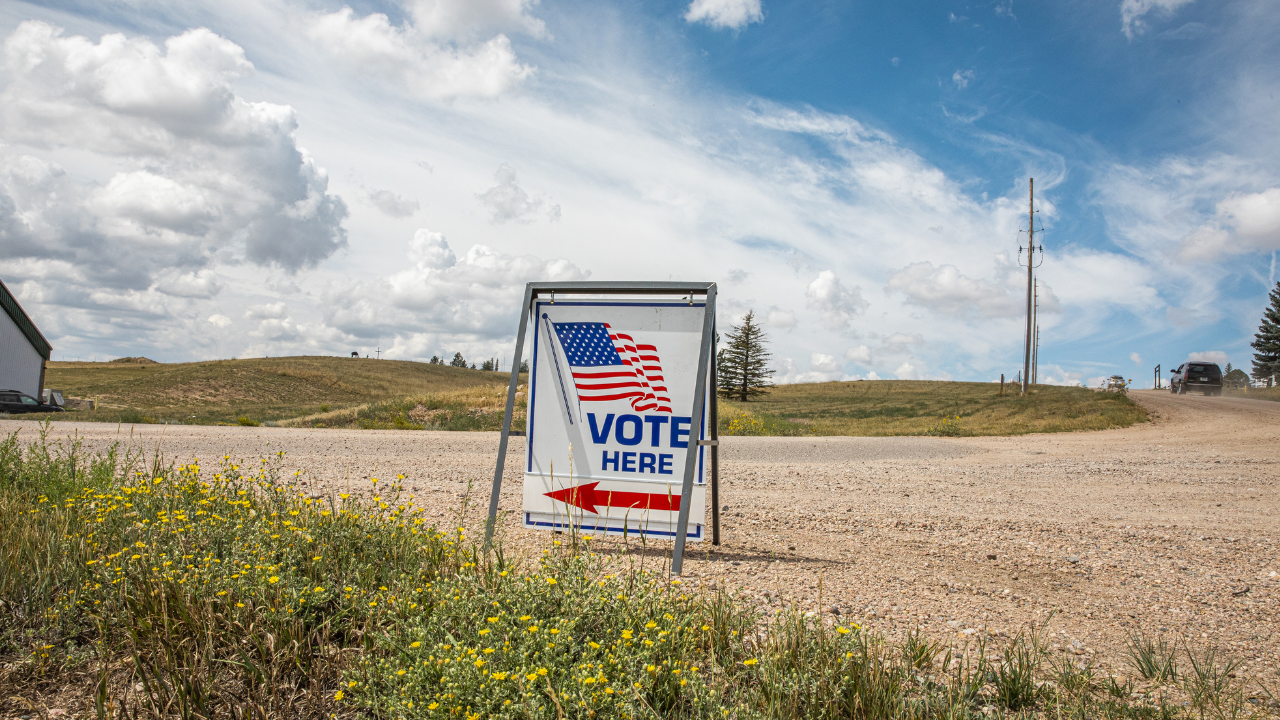
Wyoming is a place where politics, like the weather, can shift quickly, but the outcome of Tuesday’s Republican primary for governor felt a little like the calm after a storm. Voters chose state Sen. Eric Barlow, a former speaker of the Wyoming House, as their party’s nominee to replace outgoing Gov. Mark Gordon. It was a crowded and competitive race, with four Republican candidates vying for a chance to lead a state that hasn’t elected a Democrat to the governor’s office in years. The fact that Barlow emerged from the pack says a lot about what Wyoming Republicans value in a leader right now: experience, steadiness, and a deep familiarity with the state’s legislative machinery. Gordon himself had considered making a bid for a third term, even exploring a challenge to the state’s term-limit law, but ultimately stepped aside, leaving the field wide open. What followed was a spirited primary that tested the power of endorsements, fundraising, and personal history, and in the end, it was Barlow’s combination of legislative know-how and measured conservatism that carried the day. With the general election still ahead, Wyoming’s deep Republican roots make Barlow the clear favorite to move into the governor’s mansion come January. But to understand why that moment feels so significant, you have to look not only at Barlow’s victory but at the unusual political climate that shaped it. This wasn’t just another primary in a reliably red state; it was a turning point, a chance for voters to define what comes next after years of Gordon’s leadership, and the choice they made speaks volumes about the path they want Wyoming to take.
Barlow isn’t the kind of politician who lights up cable news segments or grabs national headlines with flashy rhetoric. He’s more of a handshake-and-cattle-barn figure, someone whose career has been built in committee rooms and county courthouses rather than on campaign stages. As a former speaker of the Wyoming House and now a member of the state Senate, he has spent years working through the tedious, often thankless work of budgeting, mineral policy, education funding, and rural healthcare. That background seems to have resonated deeply with voters who wanted a nominee with a proven track record of governing. In a race that included a Trump-backed superintendent, a military veteran, and a professional bull rider, Barlow’s victory was a quiet but firm declaration that Wyoming Republicans were looking for substance over spectacle. He didn’t have the loudest campaign or the most famous allies, but he had something perhaps more meaningful in a small but proud state: a long memory of showing up and doing the job. His campaign was built on the kind of conservative principles that have long dominated Wyoming politics—limited government, individual liberty, and a fierce defense of the state’s energy industry—but he also brought a pragmatic streak that appealed to voters who are tired of ideological battles and want someone who can actually pass laws and balance budgets. In that sense, Barlow represents a return to a more traditional style of Western Republicanism, one that prizes competence and local knowledge over national party loyalty.
The rest of the primary field tells an equally interesting story about where Wyoming’s Republican Party might be headed. State Superintendent Megan Degenfelder, who had earned the endorsement of former President Donald Trump, finished second behind Barlow. Her campaign brought in roughly $1.3 million, just ahead of Barlow’s $1.2 million, making her a formidable opponent in terms of fundraising and national attention. But in Wyoming, endorsements from national figures don’t always carry the same weight they might in other states, especially when the race is dominated by concerns that are deeply local. Degenfelder, who oversees education in the state, ran on a platform of parental rights and school choice, but she couldn’t quite close the gap with Barlow. Coming in third was Marine Corps colonel Brent Bien, who had run for governor in 2022 and was hoping this would be his year. Bien’s campaign raised only about $192,000, a modest sum that reflected his more limited statewide footprint, and his military service and outsider appeal weren’t enough to overcome the financial and organizational advantages of the front-runners. Rounding out the field was Curt Blake, a professional bull rider who brought a colorful personality to the race and seemed to enjoy the ride even as the vote totals stayed in the low triple digits. With some 26 percent of the vote counted, Blake had less than 1,000 votes, a reminder that not every candidate enters a campaign expecting to win. Some just want to make a point, and in a state with a fiercely independent streak, that’s part of the political tradition too.
Now that Barlow has secured the nomination, his path to the governor’s office is about as smooth as any general election can be in Wyoming. He’ll face Democrat Kenneth Casner in November, and while Casner will bring his own ideas and energy to the campaign, the math is hard to ignore. Wyoming is not just a red state; it’s one of the reddest states in the country, with every single statewide elected office currently held by a Republican. The last time a Democrat won a statewide race for governor, it was a different political era entirely, and the structural advantages for the GOP are enormous. Still, Barlow isn’t taking anything for granted. In a year when incumbency and insider experience have sometimes been treated as liabilities, his victory in the primary was something of a throwback, a reminder that voters are often looking for steady hands rather than political fireworks. His campaign will likely focus on the issues that define Wyoming life: energy production, public lands, rural infrastructure, and the challenge of keeping young people in the state. He’ll also have to address the concerns of voters who feel left behind by national politics, people who care less about Washington’s headlines and more about whether their roads are maintained and their children’s schools are funded. If Barlow can speak to those concerns in a way that feels authentic and grounded, he should have no trouble in November. But the fact that he has to try at all could be a sign of how much the political landscape has changed, even in a state as reliably conservative as Wyoming.
This year’s ballot is especially crowded at the top, and the governor’s race is just one of several open contests that will reshape Wyoming’s political leadership. In addition to the governor’s mansion, voters will also choose a new U.S. senator, a new member of the U.S. House, a new secretary of state, and a new superintendent of public instruction. That’s an unusually large turnover for a state that typically values continuity and long-serving local officials. The sudden wave of retirements and open seats is partly a reflection of exhaustion in the political class, but it also represents an opportunity for a new generation of Wyoming conservatives to step forward. The fact that so many offices are on the ballot at once means the state is essentially hitting reset on its leadership in a single election cycle. That can be exciting, but it can also be risky. When so much institutional memory walks out the door, the learning curve for the newcomers is steep, and the decisions they make will carry outsized consequences. Barlow’s experience in the Legislature may give him a head start, but he’s still stepping into a world where the entire upper echelon of state government is being remade in real time. Voters will be watching not just individual races, but the broader question of what Wyoming wants its government to look like for the next decade.
If there’s a human thread running through all of this, it’s that Wyoming residents value a leader who knows them, who understands the rhythm of small towns and wide-open spaces, and who doesn’t treat politics as a national performance. Barlow’s rise from House speaker to primary winner wasn’t built on a single dramatic moment or a viral campaign ad. It was built on years of showing up, listening to constituents, and doing the unglamorous work of governing. That’s the kind of story that doesn’t always get told in today’s political landscape, where loud voices and big personalities often dominate the coverage. But in Wyoming, it still matters. The general election may be a foregone conclusion for many observers, but for the people of Wyoming, the real election was Tuesday. They had a chance to decide which direction their state would take, and they chose experience, pragmatism, and a sense of rootedness over the allure of national endorsements and flashier campaigns. Whether Barlow turns out to be the transformative leader some hope for or simply a steady caretaker, his primary win has already sent a message: Wyoming still believes in substance, and the next governor will be someone who knows the territory. As the leaves begin to turn and the winter snow starts to creep down the mountains, Barlow and Casner will crisscross the state, shaking hands and asking for votes. But in a place where the wind blows hard and the politics are as independent as the people, the safest bet is that Eric Barlow will be the one unpacking boxes in the governor’s office come January.