



AUSTIN, Texas — If you want to understand how the people who cover Donald Trump every day see the next four years, you could do worse than to spend an hour inside a packed festival hall in Austin, where three of the most prominent White House reporters in the country sat down to talk about the strange, exhausting, endlessly unpredictable business of watching the president up close. The occasion was the Texas Tribune Festival, a sprawling political gathering where journalists, politicians and ordinary voters come together to argue about the future of the country. On Friday, Politico’s Dasha Burns, NBC News’ Garrett Haake and New York Times correspondent Maggie Haberman took the stage for a panel that was supposed to be about covering the Trump presidency. But as the conversation wound down, the moderator, Washington Post editor Annah Aschbrenner, asked the kind of question that makes every political obsessive lean forward in their seat: What will the 2028 Republican primary look like? No one knows, of course. But these three reporters have spent years watching ambitious people scheme, flatter, backstab and reinvent themselves in the shadow of a political force who has remade the party in his own image. The answers they offered were less a poll of the future than a portrait of a party still trying to figure out what it will become after Trump is gone.
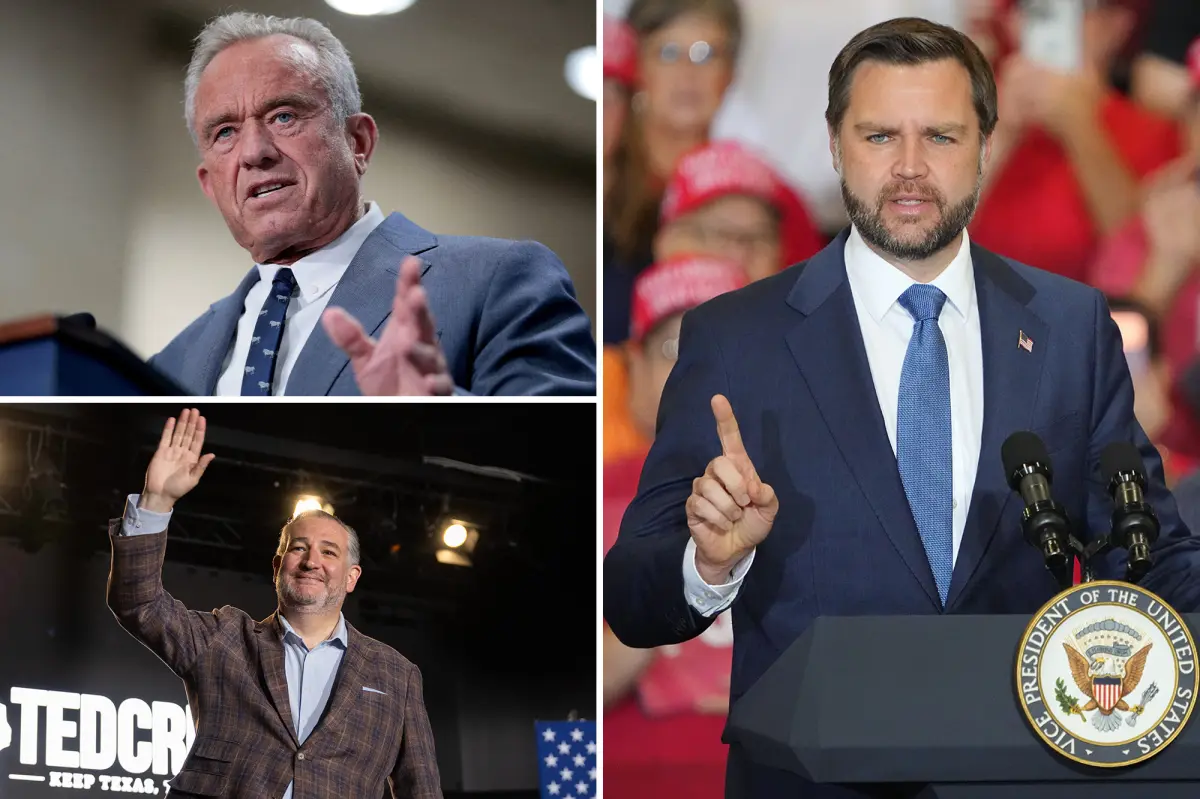
Haake, who has covered Trump since 2016, was first to sketch out the landscape, and he did it with a kind of reporter’s practicality, dividing the Republican Party into what he called “four lanes.” The first and most obvious lane belongs to the heir apparent — the person who inherits Trump’s blessing and runs as the continuation of the movement. Haake said that person is almost certainly Vice President JD Vance, assuming he wants it and doesn’t get disqualified somehow. Vance, after all, has spent his time in office transforming himself into Trump’s most loyal soldier, championing the kinds of culture-war fights and economic populism that resonate with the MAGA base. But Haake added a fascinating contingency: if Vance stumbles, Secretary of State Marco Rubio could slip into that lane. Rubio, who once called Trump a danger to the country, has carefully repositioned himself as a foreign-policy heavyweight and a grown-up in the room, the kind of figure who might reassure donors while still claiming the Trump mantle. There is something almost cinematic about this first lane: a combination of anointment, timing and luck. The reporters all seemed to agree that Trump’s endorsement will be the most valuable currency in Republican politics, even after he leaves office. But they also hinted at a deeper truth: endorsements can be withdrawn, and heirs can disappoint. The person in this lane is not necessarily the most authentic conservative; they are the one who manages to convince the movement that they are the safest bet to continue the fight.
The second lane Haake described was almost poetic in its grief. He called it the “I tried to help you, but you didn’t listen” lane, and named Senator Ted Cruz as its embodiment. The image he painted was vivid: a politician spends the next two years trying to be Trump’s closest ally, fighting hard for him in the Senate, showing up at rallies, defending him against every attack. But at the same time, this politician is quietly building a different story for 2028. When the moment comes, he would say to primary voters: You see, I told him what to do, I begged him to change course, but he wouldn’t listen, and now his approval rating is stuck at 25 percent. That is a deliciously human political strategy — the art of positioning yourself as both a loyal soldier and a wise counselor whose advice was tragically ignored. It requires a kind of split consciousness, and Cruz is nothing if not disciplined. But the lane also includes people who tried to work with Trump from the outside, talented operators who want to take the energy of MAGA and point it in a more pragmatic direction. This is the lane of grievance and regret, of ambition dressed in patience. It is also, in a strange way, the most honest lane, because it acknowledges that Trump’s movement will not simply dissolve when he is gone. The people in this lane understand that you have to hug the movement tightly if you want to eventually lead it somewhere else.
The third lane, according to Haake, is explicitly anti-Trump, and he almost laughed when he named it. This is the lane for people like former New Jersey Governor Chris Christie, or outgoing Nebraska Congressman Don Bacon, the kind of Republicans who refused to bow down to the former president and paid a political price for it. Haake’s tone suggested that this lane is narrow, rocky and probably leads to a cliff in a Republican primary, where Trump’s loyalists still cast the largest share of ballots. But he also gave these candidates credit for having a genuine identity, even if it’s a lonely one. Christie, of course, is a bombastic former prosecutor who ran against Trump in 2016 and then became an ally, then a bitter critic after the January 6 attack on the Capitol. Bacon is a more moderate military veteran who represents a district that a Democrat could win, and his name is often floated as a kind of noble, doomed crusader. The reporters made clear that these candidates would have a very hard time winning the nomination, but they might carve out a lane as the conscience of the party, the people who say aloud what a surprising number of Republicans think in private. There is something human about that role: the person who refuses to join the crowd, not because they are oblivious to the costs, but because they have decided that some principles matter more than winning. In the current Republican Party, that is a rare and unenviable position, but it may become more attractive if Trump’s popularity fades and the party begins to wonder what it actually stands for.
The fourth lane is where things got interesting, because Haake raised a name that drew gasps and groans from the mostly liberal audience: Robert F. Kennedy Jr. The health secretary, a former Democrat and vaccine skeptic, has built a powerful political movement around the “Make America Healthy Again” idea, and Haake called him the ultimate wild card. If the MAGA coalition fractures by 2028, Haake theorized, the MAHA group — the passionate, anti-establishment, health-conscious voters who rallied around RFK Jr. during his independent presidential run before he endorsed Trump — could split off and follow him. Kennedy is a strange figure: he has deep family roots in Democratic politics, but he has become a hero to many conservatives because of his attacks on pharmaceutical companies, processed foods, government agencies and the so-called deep state. Haberman added an important nuance, noting that Kennedy probably “owns” the health freedom constituency more than Trump does, which makes him a potentially serious player if the party becomes a messy, multi-front war. Burns jumped in and mentioned another former Democrat who could occupy that same wild-card space: Tulsi Gabbard, the former congresswoman and director of national intelligence who has also embraced a maverick, anti-interventionist, anti-establishment brand. This lane is unpredictable precisely because it is not based on traditional Republican ideology. It is based on a visceral distrust of institutions, a hunger for change, and a belief that the old political categories no longer make sense. The audience’s groans suggested that these possibilities feel uncomfortable, even frightening, to mainstream Democrats. But humanizing the wild-card lane means recognizing that these candidates are not just eccentric outsiders; they are tapping into something real and emotional in millions of Americans who feel left behind by both parties.
The panel then turned to an even more intimate element of the future: the influence of Donald Trump Jr. Burns explained, with a knowing smile, that the younger Trump is still enormously popular among the MAGA crowd, in ways that are hard to appreciate unless you have seen him speak. His relationship with the base is different from his father’s, she said, and Haberman agreed, describing him as someone who “speaks the language of conservatives more.” Trump Jr. has become a sort of bridge between the hardcore movement and the rest of the Republican Party, and Burns recounted a telling detail: when he used to introduce his father at campaign rallies, he would receive such massive ovations that Trump would come out and almost joke about the enthusiasm for his son. Eventually, Trump Jr. stopped introducing him, perhaps because the applause made his father uncomfortable. That little story is a window into the family dynamics that will shape 2028. If Trump Jr. throws his support behind Vance, as he already seems to have done, it could be a powerful force in consolidating the MAGA base. But Burns also warned that the midterm elections are coming, and if Republicans suffer the “bloodbath” that current polling suggests, the floodgates will open, and the 2028 dynamics could change in ways no one can predict. When a party loses badly, everyone starts to question the leadership, and the race becomes much more crowded. The reporters painted a picture of a party bursting with ambition, where every cabinet secretary, senator and governor is quietly calculating the odds.
Burns added that a “ton of people” from Trump’s own cabinet could throw their hats in the ring, and she specifically mentioned Secretary of War Pete Hegseth, the former Fox News host and combat veteran who has become a favorite among cultural conservatives. Hegseth is a perfect example of the new Republican archetype: not a policy wonk, but a warrior of the culture war, a man who speaks in bold, simple terms about masculinity, patriotism and the fight against political correctness. Haberman, ever cautious, offered an asterisk to the whole conversation: it is “likely JD Vance’s nomination if he wants it,” but there are forces that could change that calculus, including the war with Iran, which could alter the political landscape in unexpected ways. The whole conversation left the audience with a sense that the Republican Party of 2028 will not be a simple replay of Trumpism. It will be a kaleidoscope of competing personalities, grievances and visions, all struggling for the allegiance of a movement that still feels unmoored. The reporters themselves seemed fascinated rather than sure, and that is perhaps the most human part of it all: the future is a mystery, even to the people who spend every day watching the players up close. What happens in 2028 will depend on the choices of real people — their ambitions, their resentments, their compromises and their lucky breaks. In that way, the next presidential election will be a lot like every presidential election, except louder, weirder and shaped by the strange gravitational pull of a man who may no longer be in the White House but will almost certainly still be at the center of the story.