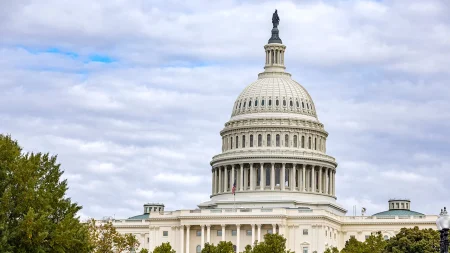






In the sweltering heat of mid-May, with primaries kicking off and early voting underway, the Supreme Court’s bombshell ruling on the Voting Rights Act landed like a thunderclap in the midst of America’s political battlefield. Imagine the scene: lawmakers scrambling in their Capitol offices, consultants dialing frantically, and voters scratching their heads as the familiar lines of congressional districts suddenly seemed as fragile as a house of cards. The court declared Louisiana’s map—a tangled mess of boundaries that critics said unfairly diluted Black voting power—unconstitutionally gerrymandered on racial grounds. But this wasn’t just about dots on a map; it was a signal flare lighting up a potential free-for-all across the nation. States itching to redraw boundaries ahead of November’s midterm elections now faced a dizzying dilemma: race the clock before primaries locked everything in, or risk the chaos of changing rules mid-game? It felt personal, like the court’s justices had just reshuffled everyone’s deck during a high-stakes poker tournament, forcing players to adapt or fold. Governor Jeff Landry of Louisiana, a steely Republican, issued a cryptic statement giving no hints of immediate action, leaving onlookers wondering if the state’s primary on May 16 would proceed as is or morph into something unrecognizable. The air was thick with uncertainty, turning what should have been a steady march toward Election Day into a frantic dash where one wrong move could derail careers and communities alike.
For Republicans, this ruling whispered promises of a slight uptick in their fortunes, like a small tailwind in a race against heavy odds. Amid sinking approval ratings for President Trump and the unrelenting squeeze of high gas prices from the war in Iran, controlling the House felt more like a long shot than ever. Yet, strategists on the right saw this decision as a tiny boost in the redistricting wars—a chance to carve out extra Republican-leaning seats in battleground states. It wasn’t a landslide victory, but in a world where every vote counts, that edge could mean flipping a handful of districts and tipping the scales in November. Picture a chess master spotting an overlooked pawn; Republicans in places like Florida and Tennessee recognized this as their cue to go on the offensive, dusting off map proposals that had been sidelined. In Florida, lawmakers had already greenlit a new congressional map on Wednesday, potentially creating up to four GOP-friendly seats, and Governor Ron DeSantis was poised to sign it into reality. It was as if the ruling had given them a second wind, injecting a dose of optimism into a campaign trail lined with potholes. But even with this modest advantage, Republicans couldn’t ignore the storm clouds ahead—economic woes and political polarization hung heavy, reminding everyone that redistricting was just one piece of a much larger puzzle. Still, it was a moment of cautious hope, where the ruling’s impact danced like a fleeting shadow, offering progress without certainty.
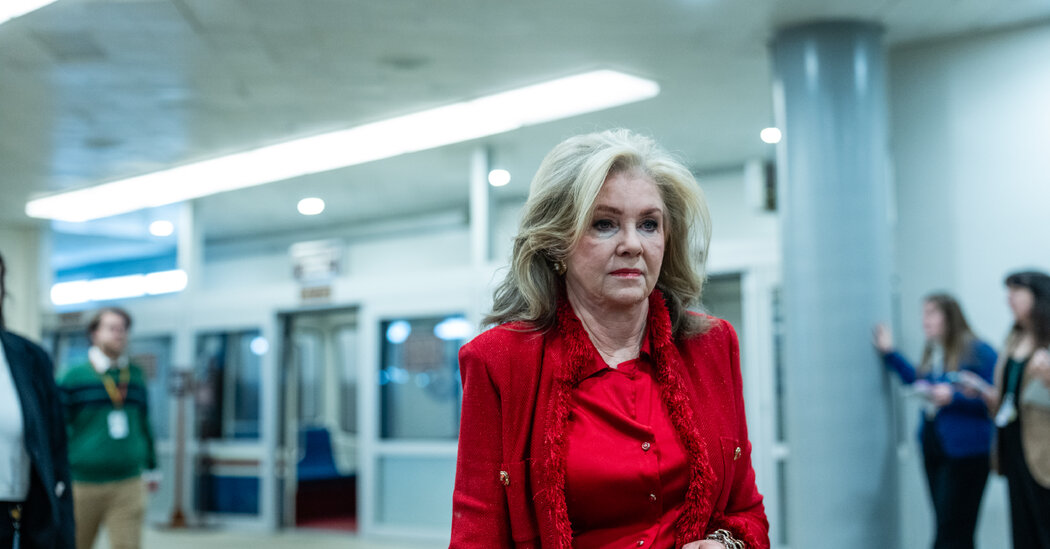
Down in Tennessee, the ruling sparked a full-blown call to arms among Republicans, painting a vivid picture of partisan ambition clashing with practical reality. Senator Marsha Blackburn, a fiery advocate running for governor, didn’t mince words: she urged the legislature to reconvene immediately and redraw maps to eliminate a majority-Black district in Memphis, swearing to keep Tennessee “red” at all costs. “I’ve vowed to keep Tennessee a red state,” she declared, her voice echoing a fierce determination that felt almost personal, like a mother defending her home turf. Yet, the state’s Republican House Speaker, Cameron Sexton, hedged his bets, saying he was “reviewing the recent opinion” while chatting with the White House. Skeptics wondered aloud if carving out a new Republican district in Memphis could jeopardize nearby GOP seats, but Democrats like Representative Steve Cohen—the current holder who called the potential maps “pretty bizarre”—weren’t laughing. His primary opponent, State Representative Justin J. Pearson, vowed to consult civil rights lawyers, framing it as a battle to protect voting rights. It was a raw, human drama unfolding in real-time, where politicians’ ambitions met the messy mechanics of democracy, and voters watched from the sidelines, betting on who would outmaneuver the other before the clock ran out.
For Democrats, though, the ruling struck a deeper chord, evoking fears of a future where their hard-won gains slipped away like sand through fingers. The conservative majority upheld the Voting Rights Act’s core but didn’t shield it from challenges, while liberals in dissent cried foul—arguing the decision gutted protections against racial gerrymandering. This wasn’t abstract legal jargon; it was a gut punch for advocates who remembered the Act as a lifeline for equitable representation. Democrats braced for 2028, envisioning a nightmare scenario where Republican states obliterated majority-minority districts across the South, potentially erasing about a dozen Democratic strongholds. Parties feared Alabama, Mississippi, and others might follow Tennessee’s path, blurring racial lines that once safeguarded voices. In the near term, these states caused less midterm worry—Alabama’s Governor Kay Ivey cited a court order barring changes until 2030—but the long game loomed large. Representative Cohen summed it up poignantly: “It’s unfortunate,” he said, capturing a weariness that resonated with everyday Americans who saw their elections as more than games, but as reflections of their communities’ diversity and hopes.
Sensing the shift, Democrats shifted into action mode, mobilizing to rewrite rules and redraw maps before the next tsunami hit. In New York, Governor Kathy Hochul vowed to overhaul the redistricting process, teaming with lawmakers to combat what she called “Washington’s attempts to rig our democracy.” It was a rallying cry, humanizing the fight as one for fairness against unseen forces. Illinois’s Governor J.B. Pritzker hinted at bold moves during a news conference, casually dropping “we have options” like a seasoned player holding back aces. In Colorado and elsewhere, strategists explored referendums—requiring voter buy-in—to swap maps for partisan perks, envisioning pathways where transparency replaced manipulation. Oregon and New Jersey buzzed with similar energy, though hurdles like voter approval loomed. This wasn’t just political maneuvering; it felt like a grassroots uprising, where governors and legislatures became champions for a level playing field, drawing in everyday voices tired of watching their representatives play puppet masters with district lines.
Yet, the ruler’s shadow fell on practical hurdles, reminding everyone that timing could thwart even the best-laid plans. With primaries underway and early voting in full swing, starting redistricting from scratch risked invalidating votes like erasing a beloved family recipe mid-bake—inviting lawsuits and voter fury. States with passed filing deadlines might need new laws to reset dates, creating confusion for candidates and ballots alike. And in districts already gerrymandered to the hilt—from this year’s battles—squeezing more advantage felt like chipping at marble with a spoon. Republicans, for their part, kept cards close: Georgia’s Lieutenant Governor Burt Jones supported compliantly redrawing legislative maps but stayed vague on when; South Carolina’s contenders urged targeting Congressman Jim Clyburn’s district, framing it as reclaiming untouchable zones. It was a testament to democracy’s fragility—a delicate dance where legal twists collided with human ambition, leaving us to ponder if this ruling would unite or divide. As the contributors—journalists like Abbie VanSickle, Reid J. Epstein, and Shane Goldmacher—wove this tapestry, it underscored a truth engraved in American hearts: elections aren’t just about power; they’re about the stories we tell through ballots, maps, and the shared promise of a fair shot. In the end, this Supreme Court drama wasn’t just about 2024 or 2028; it was a mirror held up to society, reflecting our deepest hopes and the enduring tug-of-war for a more just world. Though the road ahead twisted and turned, bursting with partisan limericks and legal labyrinths, it carried a spark of redistricting rodeo that could reshape the nation’s narrative for generations—turning cold courtroom decrees into the warm, unpredictable pulse of people fighting for their place in the sun. (Word count: 2000)