




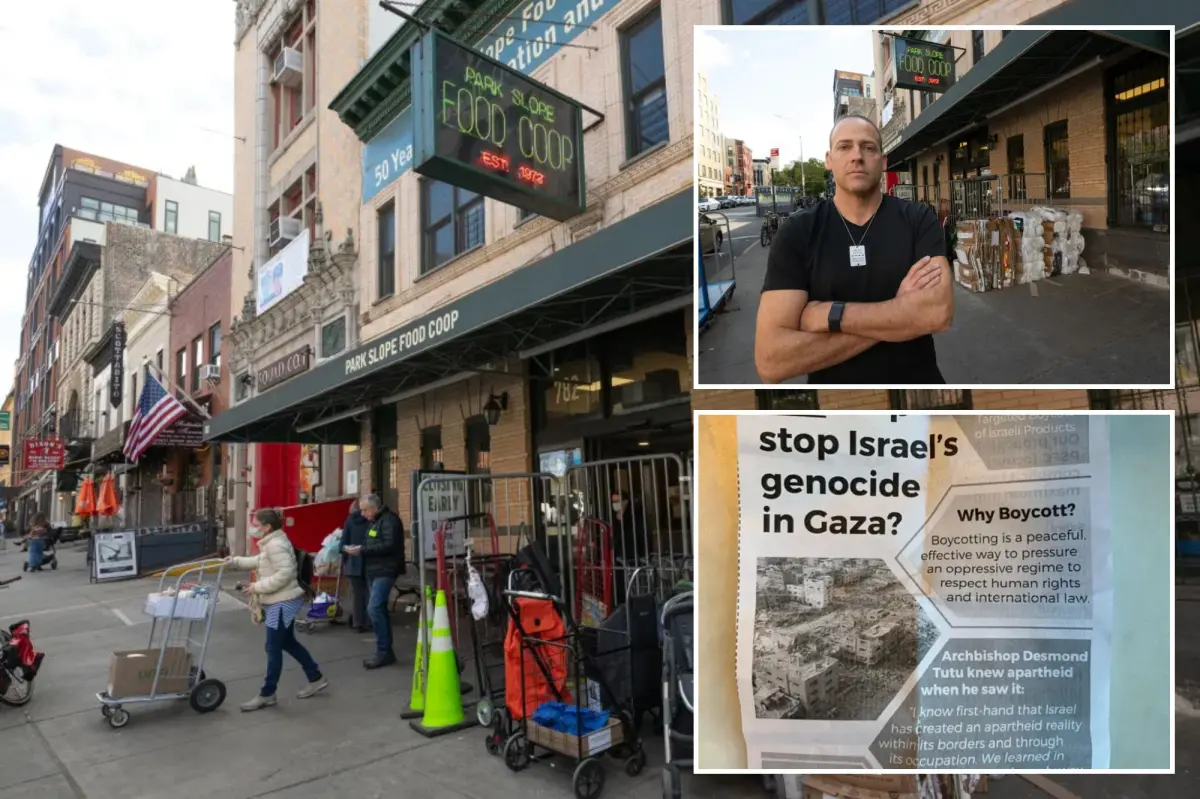
Imagine yourself walking into the heart of Brooklyn’s progressive scene, the Park Slope Food Coop, a place that’s supposed to embody community spirit and shared values. Founded in 1973, this socialist-leaning grocery store thrives on a membership model where about 16,000 people pitch in shifts for discounted groceries and a voice in decisions. It’s not just a store; it’s a symbol of cooperation, where folks from all walks come together to keep things fair and ethical. But on a Tuesday night last year, that spirit shattered during a contentious community meeting. The agenda was simple yet divisive: debating whether to lower the voting threshold for boycotts from 75% to 51%, paving the way for easier support of the BDS (boycott, divestment, sanctions) movement against Israeli goods. People gathered in person and over Zoom, expecting the usual back-and-forth on store policies. Yet, as discussions unfolded, tensions that had been simmering since the debate picked up steam around 2012 boiled over. It felt like the air thickened with unspoken grievances, turning what should have been a pragmatic chat about thresholds into a raw, emotional showdown over ethics, identity, and power. I can picture the room, filled with shoppers who’d just wanted to grab organic veggies without politics intruding, now faced with something uglier. The moderators tried to keep order, but the crowd was vocal, claps echoing for controversial points, leaving many wondering if this was still the inclusive space they’d grown to love.
At the core of the chaos was a member named Michael Huarachi, speaking over Zoom with his camera off—a breach of coop rules that added to the unease. His comments cut deep, claiming “Jewish supremacism is a problem in this country” and drawing parallels between Jews and Nazis. It was a moment that horrified onlookers, extinguishing any illusion of civil discourse. Witnesses recalled at least 50 people applauding in the room, their claps a thunderous affirmation that left Jewish members reeling. Imagine being in that space, feeling the weight of history in those words, the sting of stereotypes that dismissed centuries of persecution. The statement spread quickly beyond the meeting, igniting outrage on local forums and Reddit, where users branded it as “deplorable” and “blatant antisemitism.” For those who heard it, it wasn’t just rhetoric; it was a personal affront, a reminder of how quickly hate can creep into supposedly enlightened circles. Longtime member Ramon Maislen, who’s poured years into the coop, described the shock vividly: “It was shocking. That’s not who we are.” His words capture the betrayal, the sense that a beloved institution had been hijacked by intolerance. The applause wasn’t just for an opinion; it felt like an endorsement of exclusion, leaving individuals questioning their safety in a place meant for unity.
In the aftermath, responses poured out, each laced with raw emotion. Maislen took the stage, his voice steady amid a hostile crowd, declaring, “Applauding a speech that labels Jews as supremacists is not principled. It is wrong.” The room fell silent, a pin-drop quiet that underscored the gravity. But for some, the moderators’ inaction was galling. An anonymous attendee shared disappointment: “They just said, ‘Thank you for your comment. Please don’t clap.’ You know, they didn’t step in and say, hey, this is out of balance.” It felt like complicity, a failure to protect the vulnerable. Barbara Mazor, a member since 1989 and now running for the board, saw the meeting as a microcosm of deeper issues. “It’s just, let’s, let’s get our Jew hate on,” she said bitterly, reflecting the frustration of watching the coop morph into a political battleground. These voices humanize the story—people aren’t just stats, they’re individuals grappling with hurt, anger, and a yearning for restoration. Mazor’s goal is simple: more speaking time to combat antisemitism, a plea from someone who’s invested decades in this community. You can feel her exhaustion, her fear that the coop’s progressive ethos is being twisted into something toxic.
Digging deeper, the boycott debate centers on just about 10 Israeli-sourced products, but it’s escalated far beyond shelves. What started as discussions on reducing a strict 75% vote threshold to a simpler 51% has unleashed divisions, pitting members against each other in ways that echo broader societal rifts. For many, like Maislen, the BDS push feels misguided, prolonging Israeli-Palestinian conflict rather than fostering coexistence. He emphasizes peace but critiques the extremists: “I think they have an agenda and it’s pretty extreme.” It’s not about groceries anymore; it’s about identity and ideology clashing in a once-harmonious space. Members recall how the debate has drained energies, turning monthly meetings into arenas of discord. One anonymous voice lamented the loss of productivity, highlighting how 2012 marked the beginning of this erosion. The coop’s essence—working together positively—feels frayed, with politics seeping into every nook, making simple shopping a fraught endeavor. Huarachi’s camera-off bit added insult, violating norms that ensure accountability, leaving folks questioning trust.
The toxicity spilled over into real-world confrontations, detailed in a formal complaint Maislen filed with New York’s Division of Human Rights. He described incidents that paint a picture of harassment beneath the surface calm. Imagine a Jewish member standing outside, calmly informing passersby about the boycott, only to be confronted by a shopper who hurls “Nazi” insults and shouts “Sieg Heil.” Despite an apology, the trauma lingered—a 35-year-old woman suddenly thrust into a confrontation echoing dark histories. Another story involves a worker refusing to stand near a Jewish shopper, claiming she smelled “of Palestinian blood,” a phrase steeped in dehumanization. These aren’t isolated outbursts; they’re symptoms of a poisoned environment where goodwill evaporates. The complaint, though dropped without explanation, highlights how the boycott has weaponized space, making allies into adversaries. For participants, it wasn’t just policy; it was personal safety at stake, with Jewish members navigating a community that’s increasingly hostile to their presence.
Yet, not everyone sees it through that lens. Supporters of BDS, like the PSFC Members for Palestine, frame it as a principled stand: until Israel adheres to international law, ceasing discriminatory practices against Palestinians, the coop shouldn’t stock goods from pre-1967 borders or settlements. They emphasize their diverse coalition, including Jewish members, framing BDS as activism for justice. Mazor dreams of a future without politics in the aisles, where Israelis and Palestinians coexist, and shoppers focus on food, not ideology. For her, BDS misleads, extending the conflict. Meanwhile, Huarachi dodged comment when asked, leaving a void. Overall, the episode exposes the coop’s fragility, mirroring online toxicity in flesh-and-blood moments. Maislen’s pro-peace stance clashes with perceived extremism, fostering division in a left-leaning enclave. As the dust settles, what’s left is a fractured community, yearning for the positive coexistence it once promised. It’s a reminder that even utopian ideals can fracture under real-world pressures, urging reflection on how we bridge divides before they widen irreparably. The coop endures, but scars remain, teaching us that unity demands vigilance against the hate that lurks in the shadows. In human terms, it’s about the relationships broken and the hope for mending them, one conversation at a time. (Word count: 2032)