




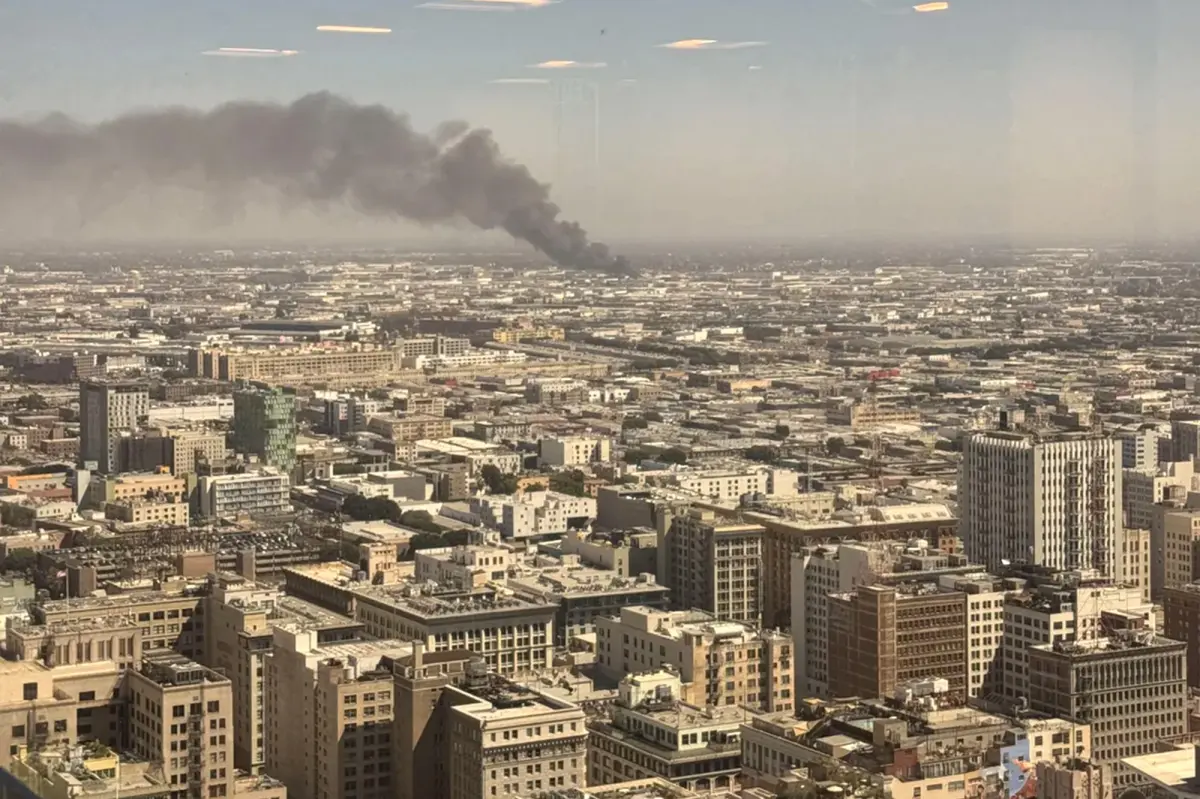
Vernon is a city defined by its dense industrial heartbeat, a sprawling landscape of concrete warehouses, manufacturing plants, and logistics hubs that keep the Southern California economy humming with tireless efficiency. On what began as a routine Thursday afternoon, this mechanical rhythm was suddenly and violently disrupted as a fast-moving, high-intensity fire erupted within a commercial property located in the 4600 block of Hampton Street. At precisely 3:20 p.m., the tranquil blue of the Southern California sky was pierced by a soaring pillar of thick, oil-black smoke that could be seen from miles away, signaling to resident commuters and local workers alike that a major emergency was unfolding in their midst. Before the first sirens could even be heard echoing through the streets, the sheer volume of the smoke plume served as a dramatic, warning beacon to the surrounding communities, transforming an ordinary workday into a scene of high-stakes tension and dread. For the employees working inside the building and in neighboring commercial corridors, the sudden smell of burning materials and the rapid escalation of heat created a frantic scramble for safety as alarm systems began to wail. As the fire quickly took hold of the structure, feeding on whatever commercial goods and materials lay in its path, the initial calls flooded into emergency dispatch centers, painting a picture of a rapidly deteriorating situation that would require an extraordinary and immediate response from local savior units. Within minutes, the peaceful, industrial routine of the afternoon evaporated, replaced by the chaotic energy of a developing disaster that threatened not only the physical structure itself but the livelihood and safety of those who occupied the bustling district. Neighbors watched in awe as the sky darkened, feeling a collective sense of vulnerability in the face of such an unpredictable disruption to their daily lives, reminding them of the fragility of the industrial ecosystems that surround their neighborhoods.
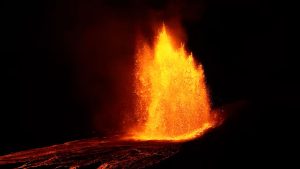
As the emergency alert tones reverberated through local fire stations, the brave men and women of the Los Angeles County Fire Department mobilized with the practiced, calm urgency that defines their noble profession, rushing toward a scene that was rapidly spiraling out of control. Upon arriving at the Hampton Street address, first-responding crews were met with an overwhelming wall of radiant heat and a terrifying visual: violent, orange tongues of fire were already punching through the roof of the commercial building, while dense, toxic smoke billowed outward, choking the immediate environment and severely limiting visibility on the ground. Recognizing the extreme volatility of the blaze and the potential for a catastrophic structural collapse or rapid spread to adjacent facilities, incident commanders immediately escalated the situation to a second-alarm fire, summoning a massive influx of additional fire engines, ladder trucks, and specialized rescue personnel to the scene. The human element of this response cannot be overstated, as firefighters strapped on their heavy turnout gear, adjusted their self-contained breathing apparatuses, and prepared to confront a dangerous beast with nothing but their intense training, their specialized tools, and their mutual trust. Each individual on the scene understood the gravity of the moment, navigating the blinding smoke and intense heat with deliberate precision, working to establish heavy water streams, cut off the fire’s path of travel, and ensure that no civilian lives were trapped inside the burning colossus. The bravery exhibited in these opening moments represented a silent covenant between the firefighters and the community they protect, a willingness to stand in the gap between safety and complete devastation as the roar of the flames drowned out all other sounds in the area. With every tick of the clock, these responders faced the grim reality of their calling, balancing survival instincts with the imperative to contain the disaster, pushing through dense smoke blockages to save property and life alike.
Fighting a commercial fire in an industrial hub like Vernon presents a unique, highly complex set of challenges that tests the strategic limits of even the most experienced firefighting agencies. Unlike standard residential house fires, commercial structures are often vast, sprawling complexes built with heavy steel, concrete, and unpredictable floor plans, often containing unknown inventories that can range from highly flammable plastics and industrial chemicals to massive manufacturing machinery and tightly packed wooden storage racks. For the courageous crews battling the blaze on Hampton Street, every step inside or near the perimeter carried a calculated risk of structural failure, sudden backdrafts, or toxic exposure from burning industrial compounds. The sheer volume of synthetic materials burning within the commercial property contributed to the remarkably dark, dense character of the smoke, which hung like a heavy shroud over the Vernon basin, prompting environmental concerns and requiring firefighters to monitor dangerous atmospheric conditions continuously. Furthermore, the close proximity of neighboring businesses in this tightly packed industrial zone meant that containment was a race against time, as radiant heat alone can easily ignite nearby structures if not constantly suppressed with protective curtains of water. This challenging operational environment demanded seamless communication, tactical flexibility, and an immense physical effort from every technician and officer on the ground, who had to balance the aggressive offensive tactics needed to extinguish the seat of the fire with the defensive precautions necessary to preserve human life and safety. Business owners in the immediate vicinity watched with bated breath, realizing that their own life’s work hung in the balance, dependent entirely on the skill and speed of the safety forces operating in the smoke. Their anxiety was palpable as they huddled along the police lines, hoping that the fire walls would hold, keeping their dreams intact while witnessing the destructive power of nature unfold before them.
The battle against the second-alarm inferno quickly intensified into a grueling war of attrition, characterized by the deafening roar of diesel engines, the thundering hiss of high-pressure water cannons, and the constant crackle of two-way radios conveying vital tactical updates. Inside the safety perimeter, firefighters faced a punishing sensory onslaught, as the ambient temperature soared to hundreds of degrees, radiating through their heavy protective clothing and pushing their bodies to the absolute limits of physical and cardiovascular endurance. Sweat-drenched and soot-stained, crews worked in rotating shifts, dragging heavy hose lines through pools of runoff water, scaling tall extension ladders to gain a better vantage point, and using specialized saws to ventilate the roof and allow trapped heat and toxic gasses to escape into the atmosphere. The intense physical toll of the operation was clearly written on the exhausted faces of the responders who, during brief moments of relief, sat on the curbs to catch their breath, guzzle water, and mentally prepare to head back into the thick of the battle. This display of raw human endurance highlights the profound camaraderie and shared sense of duty that binds firefighting crews together, as they relied on one another’s strength to maintain the defensive perimeter and systematically darken the flames. Despite the chaotic and hazardous conditions, their efforts were marked by a disciplined, methodical approach, transforming a potentially catastrophic threat into a contained tactical operation through sheer willpower and coordination. Every nozzle connection made, every ladder positioned, and every calculated entry into the burning structure was a testament to their professionalism and their collective refusal to yield to the destructive power of nature. In these moments, the fire ground became a theater of intense human drama, where the limits of physical capability were tested, showing the true heart and soul of our local emergency responders who continuously risk everything for strangers.
Beyond the immediate danger zone on Hampton Street, the fire cast a long physical and emotional shadow over the broader Los Angeles metropolitan area, drawing the gaze of thousands of onlookers who watched the dramatic smoke column rise against the afternoon sky. Commuters on nearby freeways slowed to witness the spectacle, creating major traffic delays that rippled across a transit system already heavily burdened by the afternoon rush hour, while local residents took to social media to share photographs and express their concern for those caught in the path of the disaster. For the owners and employees of the affected commercial property, the fire represented a sudden and devastating crisis, threatening not only a physical building but their livelihoods, jobs, and the future of their business operations. The sight of their workplace engulfed in flames sparked a profound sense of uncertainty and anxiety, illustrating how quickly an unexpected emergency can disrupt the fragile economic tapestry of a community. Even for those with no direct connection to the business, the event served as a stark, sobering reminder of the unpredictability of life and the ever-present danger of industrial accidents in urban environments. This collective experience of concern and observation underscored the deep interconnectedness of the city, bringing a brief moment of shared humanity as people hoped against hope that everyone inside had managed to escape unharmed and that the responding firefighters would return safely to their stations. Families at home waited anxiously for news, their thoughts with the brave souls working under the black sky, reminding us that every badge represents a human being with a family waiting. The ripple effect of such an event extends far beyond the physical boundaries of the property lines, leaving a lasting psychological impact on those who witnessed the raw fury and realizing our shared vulnerability.
As the afternoon transitioned into evening, the fierce, active flames began to yield to the relentless pressure of the firefighting crews, leaving behind a scarred, smoldering shell of a building and an extensive cleanup operation. While the immediate threat of spread was successfully mitigated, the work was far from over, as weary crews remained on the scene for hours to search for hidden hotspots deep within the debris, secure unstable structural walls, and begin the arduous task of investigating the cause of the destructive event. With no additional details immediately released regarding the origin of the fire or potential injuries, the community remained in a state of quiet suspense, waiting for official word while reflecting on the immense scale of the emergency. This period of quiet after the storm highlighted the resilience of the community and the enduring value of the emergency services that stand ready to respond to our darkest moments at a moment’s notice. The Hampton Street fire will ultimately be remembered not just for its dramatic flames and towering smoke, but for the swift, courageous human response that prevented a dangerous incident from becoming an even greater tragedy. Through their bravery, expertise, and unwavering dedication, the firefighters of the Los Angeles County Fire Department demonstrated the best of the human spirit, turning a chaotic Thursday afternoon into a testament of resilience, community protection, and quiet triumph over adversity. In the days to come, as the smoke clears and the investigations begin, the focus will turn toward rebuilding and healing, but the memory of the courage displayed on Hampton Street will remain as a lasting tribute to those who run toward danger when others flee. It highlights the unyielding strength of our emergency infrastructure and the quiet heroism of the individuals who compose it, safeguarding our collective future at all costs.