





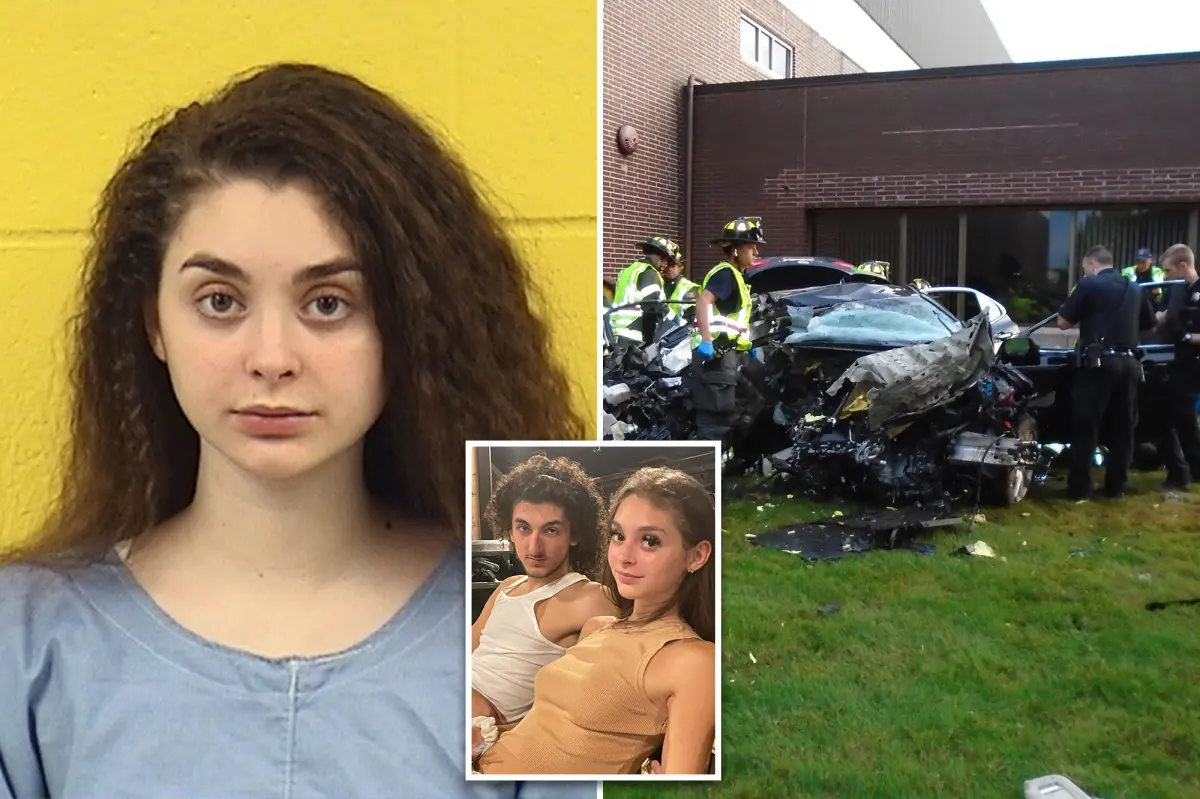
On the warm midsummer night of July 31, 2022, a devastating event occurred in a quiet Ohio suburb that would forever shatter the lives of three families and spark a national conversation about youth, recklessness, and the complex nature of human grief. Mackenzie Shirilla, then a typical teenager navigating the tumultuous waters of adolescence, was behind the wheel of a vehicle carrying her 20-year-old boyfriend, Dominic Russo, and their mutual friend, 18-year-old Davion Flanagan. In a singular, terrifying moment of escalation, the car accelerated to a staggering speed of over 100 miles per hour, hurtling down a business park road before crashing violently into a solid brick wall. The sheer force of the impact killed Dominic and Davion instantly, converting what should have been a routine drive into a catastrophic crime scene of twisted metal and extinguished potential. Mackenzie miraculously survived the horrific impact, but the wreckage of that night would soon transform into a public trial that captivated and horrified the community. She was eventually convicted on multiple counts of murder, with prosecutors painting a chilling portrait of a troubled young woman who intentionally used her vehicle as a weapon of destruction, leading to her receiving two concurrent sentences of fifteen years to life at the Ohio Reformatory for Women. Beneath the headlines of this shocking double homicide lay a deeply agonizing human tragedy—one defined by the sudden, violent loss of two vibrant young men whose futures were cut short, and the grim reality of a young woman facing decades behind bars for a split-second decision that destroyed everyone in her orbit.
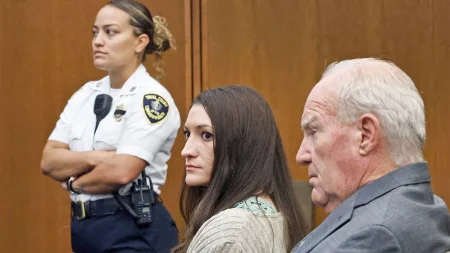
The public trial of Mackenzie Shirilla was marked by intense emotional displays, media scrutiny, and a prevailing narrative that she was an unfeeling, remorseless perpetrator who cared little for the lives she had stolen. During her hearing, prosecutors argued that her actions were deliberate, presenting a narrative of toxic teenage high-stakes drama that ended in cold-blooded murder. The court of public opinion was quick to condemn her, focusing heavily on her stoic courtroom demeanor, her prior social media presence, and what many perceived as a total lack of empathy or remorse for Dominic and Davion. For the families of the victims, who sat in the courtroom clutching photographs of their lost boys, the lack of an overt, public display of contrition from Mackenzie was like salt rubbed into an open, festering wound. Yet, the human mind in the wake of unimaginable trauma often reacts in unpredictable, deeply compartmentalized ways, leaving onlookers to wonder if her apparent coldness was a defense mechanism against a reality too heavy to bear, or if she truly failed to grasp the magnitude of her actions. As she was led away in handcuffs to begin her indefinite sentence, the community remained deeply divided between those who saw her as a calculating monster who got exactly what she deserved, and those who saw a profoundly damaged child caught in a spiral of self-destruction that ended in the ultimate tragedy.
Recently, a glimpse behind the heavily guarded curtain of Mackenzie’s private life emerged online, offering a poignant and highly controversial look at her internal state during the immediate aftermath of the crash. A video, quietly uploaded to her private Instagram account and swiftly deleted just twenty minutes later, depicted a starkly different, deeply vulnerable image of the young woman that clashed with her public persona. Shot shortly after the accident when she was still physically recovering, the footage showed a frail Mackenzie wearing a rigid neck brace, visiting Dominic Russo’s grave to lay flowers, her face tear-stained and contorted with what looked like genuine heartbreak. An artificial intelligence-generated voiceover narrated the video, directly addressing the public’s fierce condemnation by stating that the media and the public “definitely lied” when they claimed she showed no sadness or remorse after the accident. Other segments of the brief video showed her engaging in intimate, quiet acts of mourning, such as pouring a beer into a glass with the caption “sippin 4 you,” and holding a creased shirt to her face with a caption reading, “I found one of his shirts. It smells just like him.” This digital artifact, fleeting though it was, hummed with the raw, chaotic grief of a teenager mourning her first love, offering a complicated counter-narrative to the idea that she felt absolutely nothing, even as it raised difficult questions about the digitization and performance of modern grief.
The fleeting appearance and rapid deletion of the video also highlighted the strange, surrogate digital existence that incarcerated individuals often lead through their families on the outside. Because Mackenzie is locked away behind the high stone walls of the state penitentiary, it is widely believed that her parents actively manage her social media accounts, serving as her remaining voice to a world that has largely written her off. Reportedly, Mackenzie had repeatedly begged her mother from jail to update her digital biography to include the hashtag “#freekenzie,” indicating a desperate, youthful desire to maintain some semblance of control over her reputation and to rally support for an appeal. Her parents have remained fiercely devoted to their daughter, steadfastly maintaining her innocence in the face of insurmountable evidence and public outrage, driven by the protective instinct that refuses to abandon a child even when they have committed the unthinkable. This familial loyalty creates a stark, painful contrast with the families of Dominic and Davion, who have no social media campaigns to run, no hope of an appeal, and no future to fight for, leaving them to watch from the sidelines as the family of the person who killed their sons attempts to rewrite the narrative of that fateful night in July.
However, the sympathetic narrative of a grieving, misunderstood teenager was sharply complicated by chilling revelations from inside the prison walls, where Mackenzie’s daily reality is far removed from the polished filters of Instagram. A former inmate who had been in a relationship with Mackenzie, a woman going by the name of Anastasia, spoke out to describe a far more unsettling side of the convicted killer’s adjustment to prison life. While many inmates at the Ohio Reformatory for Women occupy their time by creating scrapbooks filled with cherished photographs of their boyfriends, families, and friends to keep their memories alive, Mackenzie’s scrapbook was reportedly empty of any images of Dominic or Davion. Instead, Anastasia revealed that the only striking item in Mackenzie’s possession was a clipped photograph of a brick wall—resembling the very structure she had hit—adorned with the hand-written, jarring word “BOOM” scrawled across it. To those on the outside, this revelation was deeply disturbing, interpreted as a cold, almost celebratory acknowledgment of the fatal crash rather than a symbol of repentance. This stark contrast between her private, online displays of tearful mourning and her bizarre jailhouse scrapbooking suggests a fractured psyche, suggesting she may be caught in a complex web of denial, dark humor, or a deeply troubled coping mechanism aimed at surviving the harsh reality of her confinement.
Ultimately, Mackenzie Shirilla’s story is a modern-day tragedy with no victors, only a trail of broken lives, lingering questions, and the relentless march of time toward her first parole eligibility in 2037. By the time she is even considered for release, she will have spent her entire youth behind bars, a somber realization of the high price exacted by a single night of reckless choices. For the families of Dominic Russo and Davion Flanagan, no number of years served, deleted videos, or court trials can ever fill the agonizing void left in their homes, where two empty chairs stand as permanent monuments to their loss. The human heart is a complex, often contradictory vessel, capable of holding deep love and destructive rage, raw grief and chilling detachment all at once, as evidenced by Mackenzie’s dual portrayal as both a mourning girlfriend and a detached prisoner. As the digital chatter fades and the public’s attention inevitably shifts to the next headline, the quiet, heavy reality of the tragedy remains: two young men lie in their graves, a young woman sits in a prison cell, and three families are left to navigate the wreckage of a split-second decision that echoed far beyond that brick wall.