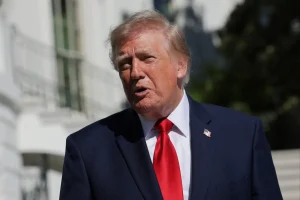





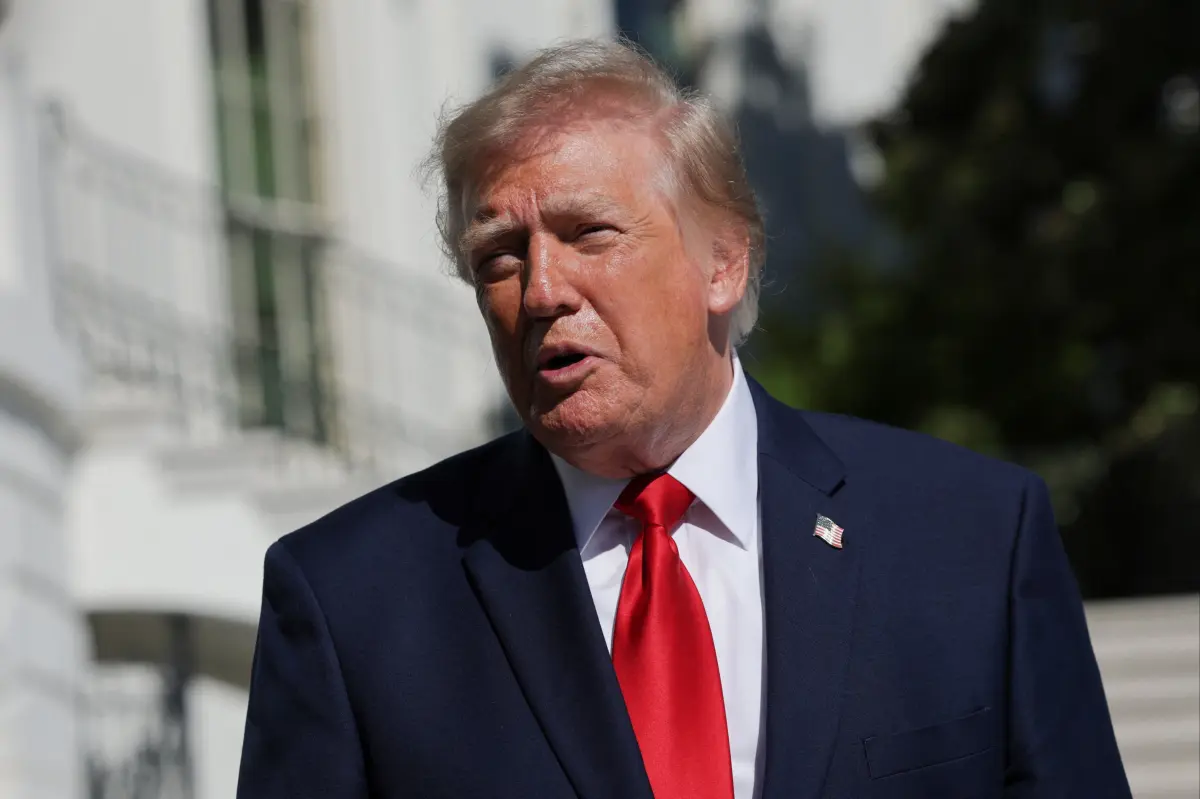
At a White House press conference on Wednesday, President Trump said he may ask the FBI to look into the death of Nolan Wells, an 18-year-old Mississippi football player whose body was found days after he vanished during a summer boat trip with friends. Asked directly whether federal authorities would conduct their own investigation, Trump replied, “We’re looking at that.” The words were brief, but for the family of Nolan Wells, they carried the weight of a possible turning point. For weeks, they had been pleading for a deeper inquiry, convinced that the local investigation had failed to uncover the full truth. Nolan’s father, Elmore Wonsley, had made an emotional public appeal on Monday, asking the FBI to step in. “Our son was found on federal land and we are asking the FBI to step in and do a full investigation,” Wonsley said. The request came from a place of profound grief and frustration. Nolan, who was Black, had disappeared during a Fourth of July outing with friends to Mississippi’s Horn Island, a remote barrier island in the Gulf of Mexico. What began as a holiday adventure turned into a nightmare, and the official account of what happened did little to ease the family’s pain. The White House’s response, while cautious, signaled that the case might finally receive the national attention and independent scrutiny that his loved ones had been demanding. For a father who had lost his son and then lost faith in the system, the possibility of an FBI investigation was more than a procedural matter—it was a chance to believe that Nolan’s death would not be forgotten.
Nolan Wells was a young man with a future full of promise. A student at Southwest Mississippi Community College, he was also a football player, a young athlete whose life was just beginning. When he set out with friends on the Fourth of July weekend, no one could have imagined the tragedy that was about to unfold. The group traveled by boat to Horn Island, part of the Gulf Islands National Seashore, a place known for its white sand beaches and wild, untamed beauty. It was supposed to be a day of fun and freedom, a chance to celebrate the summer with friends. But when his friends prepared to leave the island, Nolan did not return with them. The exact circumstances of his separation from the group remain murky. What is known is that the teen was reported missing, and a search was launched. Two days later, his body was found near the island, a discovery that shattered his family and sent shockwaves through the small community that knew him. The Jackson County Sheriff’s Department later said that Nolan was last seen traveling to the other side of the island with a girl. Yet authorities also maintained that there was no evidence of foul play. For the public, that explanation raised more questions than it answered. How could a healthy 18-year-old vanish and die with so little clarity? Why did his friends leave without him? And why did the official investigation seem to move so quickly toward a conclusion that his family found impossible to accept? These questions would become the center of a growing controversy, as the family and their supporters began to push back against the official narrative.
From the beginning, Nolan Wells’s family and their supporters challenged the way the case was handled. They questioned the transparency of the investigation, the accountability of the investigators, and whether race played a role in how the case was treated. Nolan was a young Black man, and his death came at a time when the nation was already wrestling with painful questions about racial injustice and the treatment of Black Americans by law enforcement and the legal system. The family’s attorney, Ben Crump, a prominent civil rights lawyer who has represented the families of many Black victims, became a powerful voice in their fight. The family did not simply demand answers; they demanded a process they could trust. They noted that Nolan’s body had been found on federal land, which they argued made the case a matter for federal authorities, not just local law enforcement. They also pointed to inconsistencies in the timeline and the lack of detailed information about what happened on the island. The Jackson County Sheriff’s Department maintained that there was no foul play, but the family saw a system that seemed too eager to close the case. The lack of transparency fueled speculation and distrust. Supporters took to social media, organizing rallies and spreading the word about Nolan’s story. The pressure grew, and the case became a rallying point for those who felt that Black lives were too often dismissed or undervalued in the American justice system. For the Wells family, the fight was never about politics. It was about a son, a brother, a friend, a young man whose life had been cut short and whose memory deserved more than a hasty conclusion. They wanted the truth, whatever it might be. And they believed that the truth could only be found through a full, fair, and independent investigation.
Last month, the case took a decisive and painful turn when a grand jury in Mississippi determined that Nolan Wells’s death was not criminal and not racially motivated. The decision was a major setback for the family, who had hoped that the legal process would uncover more information or lead to charges. Instead, the grand jury’s finding seemed to close the door on the case, at least in the eyes of the state. But for the family, it did anything but. They were suspicious of the decision and the process that led to it. How could a grand jury reach such a definitive conclusion, they asked, when so many questions remained unanswered? The decision felt like a betrayal, a signal that the system was more interested in moving on than in finding the truth. The family’s attorney, Ben Crump, issued a scathing statement in response. “Today, the State of Mississippi is attempting to close the chapter on Nolan Wells’s death without getting to the truth,” Crump said. He added that the grand jury’s decision left the family “with more questions than answers.” The statement captured the frustration and anguish of a family that had been fighting for weeks for a thorough investigation. They were not asking for a particular outcome; they were asking for a process that was transparent, fair, and willing to follow the facts wherever they led. Instead, they felt that the state had made a decision and then worked backward to justify it. The grand jury’s ruling did not bring closure. It deepened the wound and strengthened the family’s resolve to seek justice at the federal level.
The family’s appeal to the FBI was, in many ways, a last resort. After the grand jury decision, they had exhausted the options available to them within the state system. But they refused to give up. Elmore Wonsley, Nolan’s father, stood before cameras and made an emotional plea, asking federal authorities to take over the case. His argument was simple and powerful: Nolan was found on federal land, and therefore the federal government had both the jurisdiction and the responsibility to investigate. The request was echoed by Ben Crump, who called on the FBI to step in and conduct a full investigation. The case soon attracted attention at the highest levels of government. When President Trump was asked about the matter during a White House press conference, he did not promise an investigation, but he did leave the door open. “We’re looking at that,” he said. Those words, though carefully chosen, were enough to give the family hope. An FBI investigation would bring resources, expertise, and independence that local authorities might lack. It would also provide a level of accountability that the family had been demanding. For a community that had watched the case unfold with growing unease, the possibility of federal involvement was a sign that Nolan Wells’s death was not being ignored. It was a reminder that the fight for justice is not always over when a grand jury issues a ruling. Sometimes, it is only the beginning.
At its heart, this story is about a family’s love and a community’s demand for truth. Nolan Wells was more than a case number or a headline. He was an 18-year-old with dreams, a football player with a future, a son whose father refused to let his memory fade. The fight over the investigation is not just about the circumstances of his death; it is about whether the justice system truly serves everyone equally. For the Wells family, the pain of losing Nolan is compounded by the feeling that they have had to fight for every scrap of information, every gesture of accountability, every sign that his life mattered. The grand jury’s decision may have satisfied the state, but it did not satisfy those who loved him. And so they turned to the federal government, hoping that a new investigation might uncover what the local inquiry missed. Whether the FBI will ultimately step in remains uncertain. But the family’s resolve is not. They will continue to ask questions, to demand transparency, and to honor Nolan’s memory by seeking the truth. In the end, that is what justice means to them: not a verdict, but a complete and honest accounting of what happened to their son. Until that happens, they will not rest. And in that determination, there is something deeply human—a refusal to let a young life be reduced to a closed case, a refusal to accept silence when a family deserves answers. Nolan Wells was loved. And his family will keep fighting for him, no matter how long it takes.