




It was a Monday morning in Washington, and the White House was already humming with the usual rhythm of a presidential travel day. Reporters were gathered, cameras rolling, as President Donald Trump made his way toward the helicopter that would carry him to Air Force One for a trip to Nebraska. The questions were expected—politics, policy, the latest controversies of the day. But then, as sometimes happens in the stream of presidential departures, the conversation veered somewhere entirely unexpected. A reporter asked about Russia. Not about the war in Ukraine, not about sanctions, not about diplomacy, but about something older and more frightening: an outbreak at a plague research institute in Siberia. A laboratory worker had fallen ill and died under circumstances that were still unclear. Dozens of people had been quarantined. The president paused, and his tone shifted. “Well, I hate to see them having it,” he said. “It’s a rough disease.” Behind that brief, almost offhand remark was a world of meaning—a reminder that even in an era of advanced medicine, the word “plague” still carries a chilling weight. And for a moment, the ordinary machinery of politics gave way to something more human: one leader reacting to another nation’s suffering with words that sounded less like policy and more like empathy.
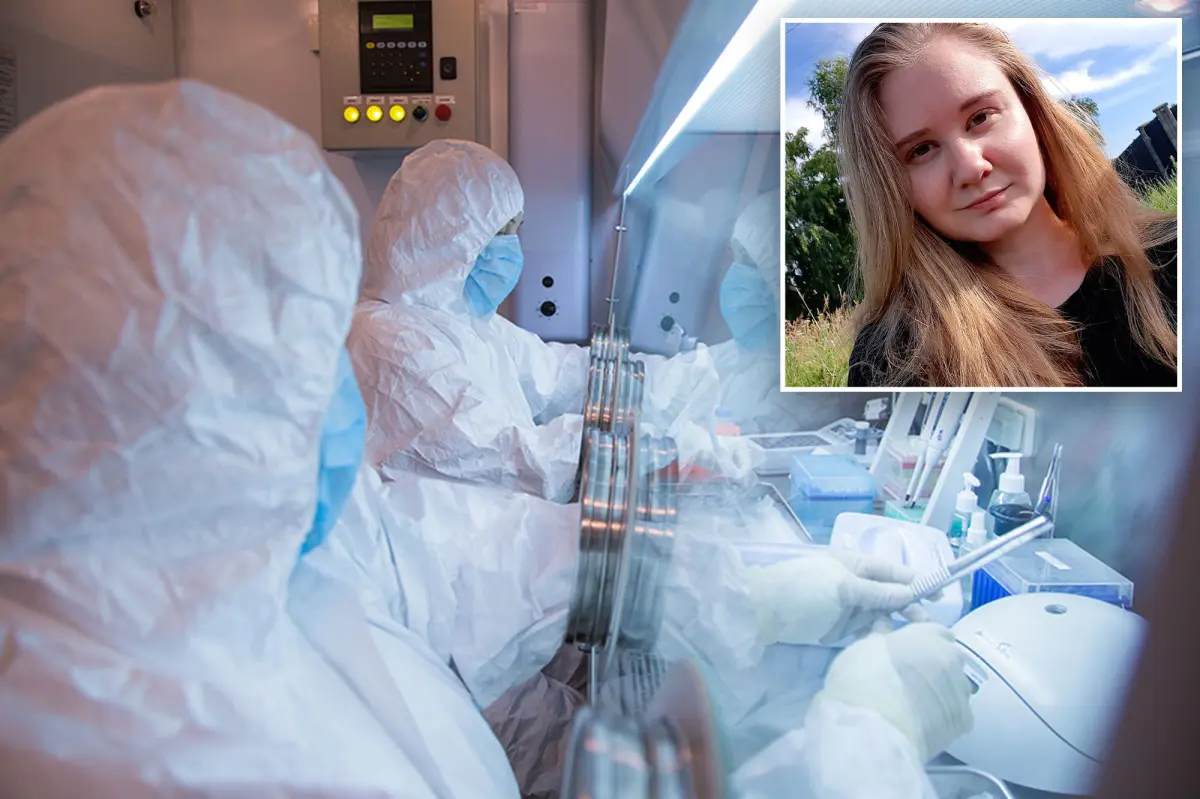
The incident in Siberia was small in scale but enormous in symbolic power. At a research institute dedicated to the study of plague—the bacterial disease caused by Yersinia pestis—a worker died in circumstances that authorities did not fully explain. The institute, located somewhere in the vast expanse of Siberia, is the kind of place where scientists work with dangerous pathogens behind multiple layers of security, wearing protective suits and following strict protocols. It is exactly the kind of environment where safety is supposed to be absolute. And yet, someone had died. The news spread quickly, and with it came the inevitable anxiety. Social media lit up with questions, fears, and wild speculation. How had the worker become infected? Was it a lapse in protocol? Could the disease spread beyond the quarantine zone? Russian authorities moved quickly to contain the story and the situation. They announced that dozens of people who may have come into contact with the deceased worker had been quarantined, and they insisted that the outbreak was under control. But the public unease was understandable. The very word “plague” conjures centuries of horror—the Black Death, the millions of dead, the images of masked physicians and mass graves. Even in the twenty-first century, even in a modern laboratory, that history clings to the name.
For the people who worked at the institute, the death was not a historical echo but a personal tragedy. Somewhere in Siberia, a family was mourning. Colleagues were stunned, trying to process the fact that someone they had worked beside, perhaps laughed with, perhaps shared tea with during a break, was suddenly gone. The quarantine meant that dozens of them were now confined, not as patients necessarily, but as people who might have been exposed. They faced an agonizing waiting period, uncertain whether they had been touched by the very organism they studied. Russian health officials tried to project calm. They described the situation as contained, emphasized that there was no evidence of wider transmission, and urged people not to panic. But the gap between official reassurance and public fear is often wide, especially when the disease in question is one of the most notorious killers in human history. The plague is, in fact, treatable with modern antibiotics if caught early, but that scientific truth does little to soothe the primal dread the name evokes. In a sense, the quarantine was a reminder of the quiet heroism of laboratory workers everywhere—people who spend their careers in close proximity to danger, handling microbes that could kill them if they made a single mistake. They do this work not for glory, but for the benefit of humanity, and their deaths, when they happen, deserve more than a brief news cycle.
President Trump’s reaction, captured in those few sentences, was striking for its simplicity. “Well, I hate to see them having it,” he said. “It’s a rough disease.” He went on to say that the United States would help Russia if needed. “We’ll help,” he said. “Anybody that has that kind of a problem, we’re always willing to help.” The remarks were short, unpolished, and delivered in the clipped, conversational style that has become familiar to anyone who has watched Trump speak. But there was something sincere in the way he said it. For all the divisions between the United States and Russia—and there are many—the president’s instinct was not to see a geopolitical rival, but a country in trouble. He did not mention the war in Ukraine. He did not mention sanctions or diplomacy or strategic interests. He simply said that plague is a rough disease and that the United States would do what it could. It was a humanitarian response, offered in a moment when the world’s attention was briefly fixed on a Siberian laboratory and a worker who had died. Whether the Russian government would accept the offer was another matter. But the offer itself was a reminder that in times of crisis, the lines that divide nations can sometimes blur.
The broader context, of course, cannot be ignored. Trump has repeatedly said that he considers Russian President Vladimir Putin someone he can work with, despite the intense tensions caused by Russia’s war against Ukraine. That stance has been controversial, to say the least. Many Western leaders have sought to isolate Russia, to punish its aggression, to hold it accountable for the devastation in Ukraine. Trump’s willingness to engage with Putin has been criticized as naive at best and dangerous at worst. And yet, here was a moment where that willingness to engage took on a different shape. Offering help after a plague-related death in Russia is not an endorsement of Russian foreign policy. It is not a defense of the war. It is not even a significant diplomatic gesture in the grand scheme of things. It is simply what one country does when another country faces a public health emergency. Diseases do not respect borders. They do not check passports. They do not care whether the government in charge is a friend or an adversary. In the fight against infectious disease, every nation is ultimately in the same boat. A plague that emerges in Siberia could, in theory, travel anywhere. The world learned that lesson with COVID-19, and it is a lesson that never truly fades. So Trump’s offer, however modest, spoke to a deeper truth: that humanity’s common enemies are often not other humans, but the invisible pathogens that have haunted us since the beginning of time.
In the end, the death of that laboratory worker in Siberia is a small story in the vast stream of global news. It will likely be forgotten in a matter of days, overtaken by political dramas and economic crises and the endless churn of headlines. But it deserves a moment of reflection. Behind the phrase “a laboratory worker at a plague research institute” was a real person, with a name, a family, a life. Someone who probably believed in the importance of science, who understood the risks of the work, and who died anyway. The quarantine of dozens of others is a reminder of the fragility of human life and the courage of those who choose to work with dangerous things. And the president’s words—simple, unpolished, almost tender in their awkwardness—are a reminder that even in the midst of global conflict, there is room for compassion. “It’s a rough disease,” he said, and he was right. It is. But so is the human condition. We are all vulnerable. We all need help from time to time. And when a country like the United States offers assistance to a country like Russia, not because of politics, but because of a shared threat, it is a small but meaningful step toward the kind of cooperation that might one day make the world a little safer. The plague may be a relic of the past, but it still exists, and it still kills. The least we can do is remember that the people who fight it are human too, and that the offer to help is always worth making.