




AI-Powered Cyberattacks on Banks Raise Alarms as President Confirms Investigation
President reveals evidence of artificial intelligence-driven intrusions targeting financial institutions, as federal authorities race to trace the digital footprints and protect customer data.
In a disclosure that has sent ripples through the financial and technology sectors, the president confirmed that early indications point to the use of sophisticated artificial intelligence models in a recent wave of cyberattacks against several major banks. The attacks, which reportedly compromised sensitive customer data, have triggered a swift and serious response from law enforcement agencies now working around the clock to identify the culprits and assess the full scale of the damage. While officials have remained tight-lipped about which specific financial institutions were targeted or how many customers may have been affected, the acknowledgment marks a troubling milestone in the evolving landscape of digital crime — one where machine learning and advanced algorithms are no longer just tools for defense, but also weapons of attack.
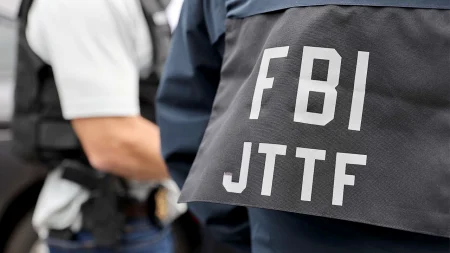
The president’s statement, delivered during a briefing on national cybersecurity, painted a stark picture of a new threat paradigm. “There are clear signs that such models were used in recent attacks on several banks involving customer data,” the president said, underscoring the sophistication of the operation. Police and federal investigators have launched a comprehensive probe into the incidents, working in tandem with cybersecurity firms and the affected banks themselves. The confirmation of AI involvement elevates these breaches from conventional hacking incidents to something far more complex, raising urgent questions about the adequacy of existing security measures in a world where attackers can leverage automation to adapt, learn, and evade detection in real time.
The modus operandi of these AI-driven attacks appears to differ fundamentally from traditional cyber intrusions, which typically rely on static code and known vulnerabilities. Rather than following a predictable script, the systems deployed in these attacks are believed to possess the ability to analyze a bank’s security infrastructure, identify weaknesses, and adjust their methods instantaneously, making them exceptionally difficult to counter. Cybersecurity experts who have been briefed on the matter suggest that the AI models may have been used to generate highly convincing phishing campaigns, manipulate authentication protocols, or even simulate legitimate user behavior to bypass multi-factor authentication systems. The end goal, investigators suspect, was the exfiltration of customer data — a commodity of immense value on the black market, where personal financial information can command premium prices.
This is not the first time concern has been raised about AI-enabled cybercrime, but it is among the most significant confirmations of its practical deployment in attacks on critical financial infrastructure. For years, security researchers have warned that generative and adaptive AI could lower the barrier to entry for sophisticated cyberattacks while simultaneously increasing their potency. Now, with the president’s acknowledgment, those warnings have crystallized into a concrete reality. The attacks also underscore a growing asymmetry in the digital arms race: while banks invest heavily in defensive AI systems, offensive AI tools have become increasingly accessible, often available as a service on dark web marketplaces for a fraction of the cost of a traditional hacker team.
The implications for the banking sector are profound. With customer trust already fragile in an era of frequent data breaches, the knowledge that attackers now possess AI capable of outmaneuvering conventional defenses will likely force financial institutions to accelerate their adoption of next-generation security technologies, including quantum-resistant encryption, behavioral biometrics, and AI-driven threat hunting systems. It will also intensify pressure on regulators to establish new standards for AI accountability and security resilience across the industry. In the interim, customers of the affected banks face a period of heightened uncertainty, as they wait to learn whether their personal information has been compromised and how that information might be used. In the coming days, as the investigation unfolds, the full story of these unprecedented attacks may come into sharper focus, revealing not only the identity of those responsible but also the extent to which AI has fundamentally changed the nature of cyber conflict.
In response to the developing situation, federal authorities are urging all financial institutions under potential threat to review and bolster their security protocols without delay. Meanwhile, cybersecurity firms are working diligently to analyze the forensic evidence left behind by the attacks, hoping to unravel the AI systems’ methods and, critically, to detect their digital signatures in other potential attacks. The investigation, which remains fluid and highly technical, is being given the highest priority, with cybersecurity specialists and law enforcement personnel collaborating across multiple jurisdictions. For the public, the president’s disclosure is a reminder that the digital battlefield is shifting — and that the very technologies driving innovation across society now also pose some of its gravest risks. As events unfold, one thing is certain: the era of AI-powered cybercrime has arrived, and the financial sector is now firmly in its crosshairs.