





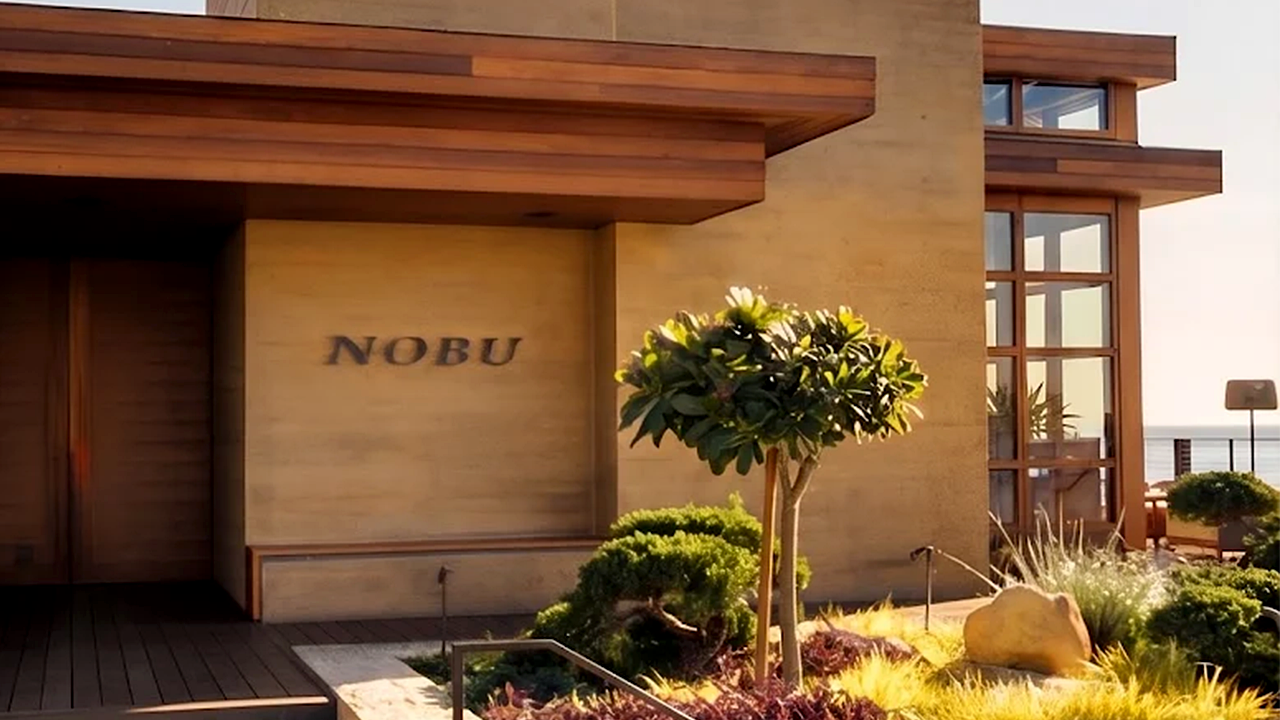
In the quiet, pre-dawn hours of a Saturday morning, along a stretch of California’s Pacific Coast Highway that is as beloved for its ocean views as it is feared for its speed, a gentle soul lost his life in a moment of sudden, senseless violence. Ryo Uchimiya, a 51-year-old sushi chef who had dedicated a quarter of a century to the famed Nobu Malibu restaurant, had pulled his car to the curb and settled in for a quick nap before his shift began. It was a familiar ritual for a dedicated craftsman who often arrived hours early to prepare for the day, perhaps to rest before a catering gig, to close his eyes and gather his strength before facing the meticulous art of preparing fish. At around 6:50 a.m., a 16-year-old boy driving a Range Rover slammed into the rear of Uchimiya’s parked sedan. The force of the impact was catastrophic, shoving the parked car into two other vehicles in a violent chain reaction. The Los Angeles County medical examiner’s office later ruled that Uchimiya died from multiple blunt force injuries, and the manner of death was an accident. There was no indication that the teenage driver was under the influence, but investigators say he appeared to be speeding. What was meant to be a peaceful pause before a day of work turned into a tragedy that would echo far beyond the coastal highway, leaving a family shattered, a restaurant in mourning, and a community demanding answers.
The aftermath of the crash painted a deeply unsettling picture, one filled with confusion and the weight of two young lives and an older one irreversibly altered. Surveillance footage captured the Range Rover plowing into the back of Uchimiya’s car, a stark image of how quickly an ordinary morning can turn catastrophic. A witness who spoke to local media described the teenage driver as appearing shocked and deeply confused in the moments after the collision, a boy who looked far too young to be standing amid the wreckage. The witness noted that the teen’s parents did not even show up to be with him, and that he sat alone for two hours, waiting, dazed, and likely terrified. There was talk floating through the day that perhaps he did not even have a license, though such details remained unconfirmed as the investigation continued. The Los Angeles County Sheriff’s Department remained tight-lipped about whether any charges would be filed, with the incident still under review. What is certain is that a 16-year-old’s split-second decision to speed—or perhaps his inexperience behind the wheel—cost a man his life. The teenager, too, will have to carry the weight of that morning forever, a burden no young person should have to bear. Yet it is impossible not to focus on the profound unfairness of Uchimiya’s death: he was parked, sleeping, harmless, simply trying to live his life and support his family. He was in a place that should have been safe, a car resting along the curb, and the world came crashing into him without warning. The randomness of the tragedy is perhaps the most difficult thing to process, a reminder that life can change in the blink of an eye.
This deadly crash did not happen in a vacuum. The stretch of Pacific Coast Highway where Uchimiya lost his life has a notorious reputation among locals, workers, and commuters as a dangerous roadway where speeding is the norm rather than the exception. Residents who live and work near the restaurant say they constantly see drivers racing along the highway, treating the scenic route like a personal racetrack. The Malibu City Council had already declared a local emergency in November 2023 over the dangerous conditions on PCH, just weeks after a speeding driver struck and killed four Pepperdine University students along the same highway. That tragedy had galvanized the community, sparking outrage, grief, and demands for immediate action to make the road safer. Now, less than two years later, another life has been claimed in almost identical circumstances, adding to the growing list of names that have become painful symbols of a preventable crisis. The people who live, work, and travel along PCH are tired of waiting for change; they are tired of seeing candles and flowers placed at the side of the road, tired of hearing about another family torn apart by a crash that never should have happened. The highway’s sweeping curves and stunning cliffsides may be beautiful, but they have also become a graveyard, a place where speed and carelessness have repeatedly met with devastating consequences. Uchimiya’s death is not just a personal tragedy; it is a public one, a painful indictment of a road that has been allowed to remain dangerous for far too long.
Amid the grief, those who knew Ryo Uchimiya remember him not as a statistic or a victim, but as a beloved husband, a devoted father of two, and an exceptionally gifted chef. For 25 years, he had been a fixture at Nobu Malibu, one of the most famous Japanese restaurants in the world, a place known for its celebrity clientele and its exacting standards. But to his colleagues, Uchimiya was never just a name on a menu or a face behind the counter; he was the real deal, a craftsman who cared deeply about his work and the people he served. One fellow Nobu chef, struggling to process the loss, told reporters, “He was a real nice guy, very talented chef. It’s such a shame.” The same chef explained that they all arrive extremely early to prepare, and that Uchimiya had been resting, getting ready for a catering gig when the crash happened. That small detail says so much about who he was: a man willing to sacrifice sleep and comfort to ensure that every detail was perfect, a worker who arrived before the sun came up so that others could enjoy an extraordinary meal. His dedication to his craft was matched only by his warmth and kindness, qualities that endeared him to everyone who had the privilege of working alongside him. His loved ones are left to grieve the many tomorrows they will never have with him—the family dinners, the quiet evenings, the simple moments that make life precious. A man who spent his life creating beautiful, delicate food for others has been reduced to a memory, but what a powerful and lasting memory it is.
The shock waves from Uchimiya’s death rippled through the Nobu Malibu family, a group of coworkers who describe themselves not merely as employees but as a close-knit family. The restaurant’s manager spoke publicly about the profound difficulty of the day, acknowledging that the pain was overwhelming for so many people. “Obviously, it’s been a very, very difficult day for so many people,” the manager said, his voice heavy with emotion. The restaurant, known for its impeccable service and serene atmosphere, was suddenly filled with sorrow, as staff members tried to make sense of the senseless loss of one of their own. A Nobu hostess, visibly shaken, told reporters that they were not ready to discuss it yet, adding, “We all need time.” There is no timeline for grief, no perfect way to mourn a colleague who was like family. The staff have rallied around Uchimiya’s family, doing whatever they can to support them during this unimaginable time, offering meals, companionship, and a shoulder to cry on. The manager emphasized that the entire team was leaning on one another, drawing strength from their shared memories and their collective love for the man they lost. In the coming days and weeks, there will likely be memorials, fundraisers, and quiet gatherings where stories will be told and tears will be shed. But for now, the grief is too fresh, the wound too raw, and the reality too painful to fully process. The restaurant’s kitchen, once a place of focused energy and creative passion, now feels the absence of a dear friend and mentor, a man whose presence brought a sense of calm and excellence to every service.
In the end, the story of Ryo Uchimiya is a story about the fragility of life and the preciousness of every single day. He was not doing anything risky or foolish; he was simply resting in his car, preparing for another day of hard work, when a speeding teenager turned everything upside down. His death leaves behind a grieving wife and two children who must now navigate a world without a husband and father, and a network of friends, coworkers, and community members who are struggling to imagine their lives without his gentle smile and generous spirit. It also leaves behind a stark and urgent reminder about the dangers of reckless driving and the need to address the dangerous conditions on Pacific Coast Highway. How many more people have to die before meaningful change is made? How many more families have to suffer this kind of loss before drivers understand that a few extra miles per hour are never worth a human life? As the investigation continues and the Malibu community mourns, one thing remains certain: Ryo Uchimiya will not be forgotten. He will live on in the memories of those who loved him, in the artistry of the food he created, and in the quiet moments when his family and friends remember the sound of his laugh. The ocean still crashes against the shore, the highway still winds along the cliffs, but the world is a little dimmer without him. May his story inspire us all to slow down, to cherish our loved ones, and to remember that every life is precious, every moment fragile, and every journey on the road—or in a parked car—deserves to end safely.