





A Shift in the Global Axis: Trump’s Pivot from Eastern Europe to the Middle East
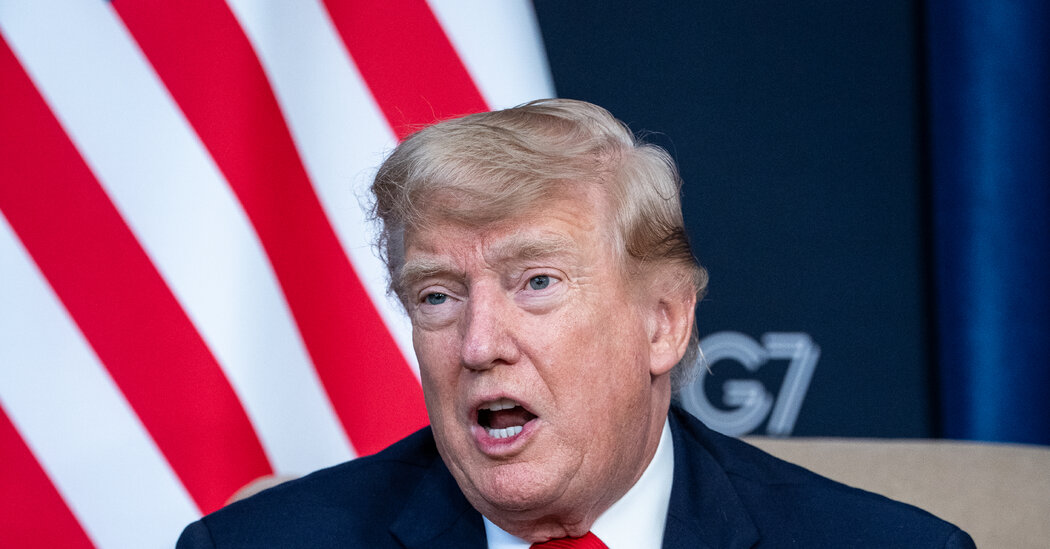
The picturesque lakeside resort of Évian-les-Bains, France, was supposed to serve as a diplomatic crucible where Western powers could realign their fractured defense strategies and inject fresh urgency into the stalling war effort in Ukraine. Instead, the Group of Seven (G7) summit quickly became a showcase for the fundamental realignment of American foreign policy under President Donald J. Trump, who definitively signaled that Eastern Europe has slipped from the peak of Washington’s geopolitical agenda. For European leaders who arrived at the summit hoping to secure a robust, renewed commitment from the United States, Trump’s candid remarks acted as a cold shower, clarifying that the administration’s focus has profoundly shifted toward more immediate regional hot spots, notably the volatile situation in Iran and the broader Middle East. While the world watched to see if the American president would honor his previous, highly publicized boasts about resolving the Russia-Ukraine war in a single day, Trump instead used the international stage to make a startlingly blunt declaration of American detachment, telling reporters that the United States has “nothing to do with” the ongoing conflict. This rhetorical pivot not only disappointed Kyiv’s staunchest advocates but also underscored a bitter truth for the assembled G7 leaders: the protracted war of attrition in Ukraine, which once dominated Washington’s security briefings, has transformed into a secondary concern for a White House that is increasingly preoccupied with securing naval trade routes in the Strait of Hormuz and managing energy crises elsewhere. By declaring that the ongoing war has “no impact on us” beyond the commercial transaction of weapon sales, Trump effectively redefined the American role from that of a strategic protector of democratic sovereignty to a transactional arms merchant, leaving European allies to navigate the terrifying prospect of a resurgent Moscow largely on their own.
Dismantling the Pax Americana: The Anxiety of Transatlantic Alliance Partners
Trump’s geographic dismissiveness—punctuated by his observation that the United States is physically separated from the Ukrainian front lines by “thousands of miles”—represents far more than a passing rhetorical flourish; it marks a watershed moment in transatlantic relations that effectively chips away at the foundations of post-World War II security. For more than eighty years, the security architecture of Western Europe has rested upon the core assumption of an unwavering American nuclear and conventional umbrella, a geopolitical arrangement that has deterred foreign aggression and fostered decades of continental stability. However, the Trump administration’s transactional approach to international alliances has forced European capitals to confront a chilling new defense reality where they must urgently bolster their own domestic military capabilities rather than rely on the automaticity of Washington’s protective shield. This diplomatic decoupling has sent shockwaves through NATO headquarters, where policymakers are now scrambling to draft contingency plans for a European security landscape that may soon exist without significant American logistical support. Trump’s assertion that America’s involvement is limited to weapons sales highlights a mercantile foreign policy paradigm that reduces complex, values-based alliances to mere balance sheets of military hardware. Consequently, leaders in Paris, Berlin, and London are recognizing that the strategic autonomy they once discussed as a distant, theoretical goal has suddenly become a matter of immediate survival. As the United States adopts a posture of strategic retreat from Eastern Europe, the burden of containment is shifting heavily onto a European continent that is still struggling with defense supply chain deficits, fractured political will, and the daunting realization that the American guarantor of their long peace may have permanently turned its gaze inward.
The Geopolitics of Oil: How the Strait of Hormuz Reshuffled the Sanctions Deck
Yet, even as President Trump signaled a desire to distance the United States from direct involvement in the Ukraine conflict, his administration’s fluid geopolitical maneuvering revealed a complex web of energy diplomacy where Middle Eastern stability directly impacts the economic leverage applied against Moscow. A temporary reprieve for the Kremlin came earlier this year when the Trump administration, desperate to contain skyrocketing domestic energy prices exacerbated by the tense military standoff in Iran, quieted its campaign of economic warfare by lifting heavy sanctions on Russian oil. This tactical retreat in economic pressure was a direct response to fears of a catastrophic supply shock in the global crude market, illustrating how closely the war in Eastern Europe is bound to the fragile security of global maritime bottlenecks like the Strait of Hormuz. However, during the summit in France, Trump offered a rare glimmer of optimism for Kyiv by indicating that his freshly minted diplomatic breakthroughs in the Persian Gulf had fundamentally changed the strategic calculus. With a fragile deal now in place to safeguard oil shipments through the critical Strait of Hormuz, the White House believes the acute global energy crisis has sufficiently receded, giving Washington the room to once again tighten the economic screws on Russian crude exports. While this willingness to reimpose sanctions on Russian oil represents a welcome development for a Ukrainian government eager to see Moscow’s war chest depleted, it also serves as a stark reminder of the volatile, transactional nature of contemporary U.S. foreign policymaking. Under this administration, economic warfare is not a permanent moral posture but rather a highly variable lever, adjusted dynamically in response to distant crises, domestic inflation worries, and the fluctuating price of a barrel of gasoline on the American home front.
A History of Friction: The Shadow of Failed Meditations and the Putin Connection
The deep-seated skepticism that currently characterizes relations between Kyiv and Washington is rooted in a history of fraught diplomatic encounters, most notably a failed, high-stakes mediation push orchestrated by the Trump administration in late 2025. That short-lived peace initiative, which aimed to bring a swift end to the conflict that began with Russia’s full-scale invasion in February 2022, collapsed amid bitter acrimony after Ukrainian negotiators roundly rejected the proposed terms, accusing the American president of angling for a settlement that was dangerously skewed in favor of the Russian Federation. This diplomatic breakdown cemented a growing belief in Eastern Europe that the Trump administration’s desire for a quick diplomatic victory overrode any commitment to restoring Ukraine’s internationally recognized sovereign borders. Adding fuel to these fires of distrust are Trump’s recurring public expressions of admiration for Russian President Vladimir V. Putin, whom he recently lauded in an interview with The New York Times for choosing not to interfere with the American blockade of the Strait of Hormuz during the height of the Iranian crisis. To many seasoned diplomats and observers on the ground in Kyiv, this public praise of an authoritarian adversary at the expense of a struggling democratic ally is indicative of a broader, deeply troubling pattern of foreign policy. The perception that the Kremlin view Trump’s recurring involvement as a diplomatic “easy way out” to secure permanent territorial gains has made Ukrainian President Volodymyr Zelensky and his European allies highly wary of any future peace proposals originating from the White House, fearing that any deal brokered under such auspices would merely codify Russian aggression and leave Ukraine permanently vulnerable to future incursions.
Rockets in the Skies over Moscow: Zelensky’s Urgent Appeal and the Reality of War
While global leaders debated high-level policy in the pristine, secure halls of the French resort, the brutal reality of the war continued to play out on the battlefield, punctuated by complex tactical maneuvering and a daring Ukrainian campaign to bring the costs of the conflict directly home to the Russian capital. Speaking to reporters on the sidelines of the G7 summit, a visibly tired but determined President Zelensky pressed his case for urgent military aid, making an impassioned plea to the assembled world leaders for advanced air defense missiles capable of shielding Ukrainian cities from relentless Russian bombardment. The urgency of Zelensky’s appeal was starkly highlighted by his simultaneously released video address, which confirmed that Ukrainian attack drones had successfully struck a major oil refinery located deep inside Russian territory, just ten miles from the gold domes of the Kremlin. This bold, deep-penetrating strike was designed to demonstrate that Kyiv still possesses the asymmetric capability to disrupt Russian war production and energy infrastructure, even as its ground troops face devastating artillery disadvantages on the eastern frontlines. However, maintaining this level of operational pressure requires a steady, predictable supply of high-tech Western armaments, a reality that former U.S. Ambassador to Ukraine William B. Taylor Jr. emphasized when urging the Trump administration to capitalize on the temporary lull in Western Asia to resume robust shipments of Patriot missile batteries. The strategic objective for Kyiv is clear: they must demonstrate substantial defensive resilience and offensive capability to convince both domestic and international audiences that the war is winnable, even as their primary superpower patron openly contemplates a retreat from the geopolitical theater.
Strategic Solitude: The Looming Threat of an Imposed Settlement
The ultimate trajectory of the conflict may now depend on whether the European Union can muster the political unity and industrial capacity to fill the immense vacuum left by the United States’ shifting priorities. As Dr. Liana Fix, a senior fellow for Europe at the Council on Foreign Relations, soberly observed, any renewed attempt by the Trump administration to forcibly inject itself into peace negotiations is viewed with profound apprehension by European officials who fear that Washington’s real goal is a hasty exit that leaves Kyiv at the mercy of Moscow. This fear is compounded by the calculated optimism circulating in the Kremlin, where Russian strategists openly view a Trump-led mediation process as an ideal mechanism to extract sweeping concessions from Ukraine without suffering long-term strategic penalties. Against this tense geopolitical backdrop, the warnings of veteran diplomats like William B. Taylor Jr. serve as a final, urgent plea for the preservation of a principled, values-based American foreign policy that recognizes the defense of Ukraine as an existential national security interest for the entire democratic world. If the United States completes its retreat into transactional isolationism, leaving Ukraine to face its aggressor with dwindling supplies and no diplomatic shield, the resulting instability will not stop at Europe’s eastern flank; it will fundamentally rewrite the rules of international order, signaling to revisionist powers worldwide that national borders can be redrawn through sheer force. For Europe, the G7 summit in France was a jarring wake-up call, a sign that the era of unquestioned American protection has ended, and that the continent’s future stability will depend entirely on its own willingness to stand as a united bulwark against aggression.