




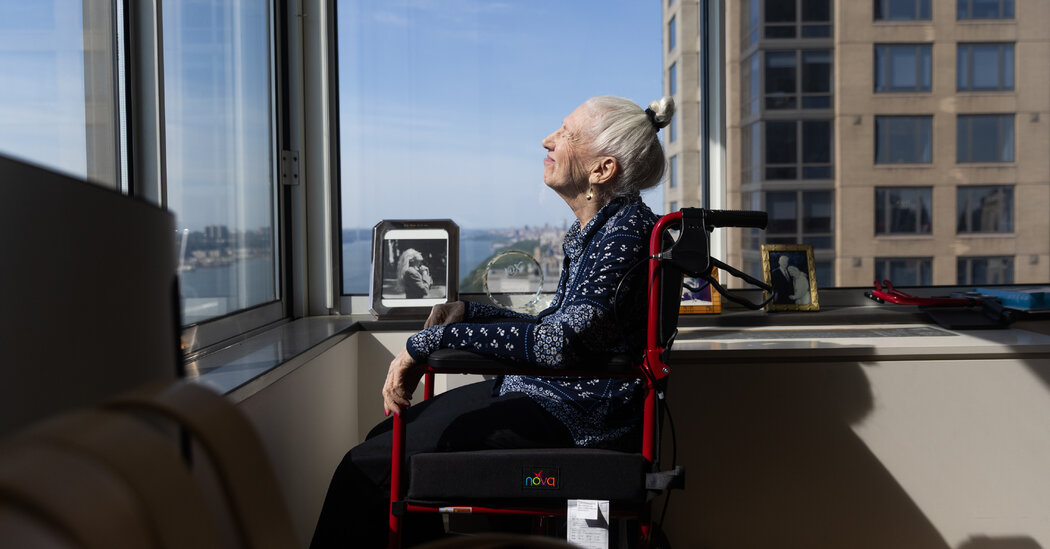
High above the bustling, wind-swept avenues of Manhattan, within the quiet sanctuary of an elegant apartment overlooking the majestic, shimmering sweep of the Hudson River far below, sits Nancy Wexler, a woman whose life’s trajectory represents both a brilliant triumph of human intellect and a tragic, inescapable surrender to biological destiny. At eighty years old, Nancy is no longer the kinetic, indefatigable force who once traversed continents to unlock the deep secrets of human genetics; instead, she is cradled by a brown faux-leather recliner, physically constrained by the devastating, advanced ravages of Huntington’s disease. Beside her sits her devoted sister, Alice, who journeys regularly from California every other month to provide a warm bridge of companionship, love, and shared memory in a world that is gradually slipping away from Nancy’s physical command. On a recent bright, windy afternoon, Nancy offered a visitor a deeply symbolic gesture of her enduring spirit and intellectual legacy: a copy of her newly published memoir, titled My Life, My Science: Pursuing a Cure for Huntington’s Disease. Yet, this deeply personal volume could not be signed with the fluid stroke of her own hand; instead, the title page was marked with a simple rubber stamp of her signature, a stark and heartbreaking reminder of her lost fine motor control. For Nancy, even the simplest physical acts—such as rising from her chair unassisted to warmly greet a guest or articulating a complete, coherent sentence—have become monumental, exhausting struggles against a failing nervous system. She can now manage only a few slurred, whispered words or a single, painstakingly constructed phrase before the sheer physical effort of speech overtakes her. Yet, as she sits in quiet partnership with Alice against the backdrop of the wild blue river, there is an undeniable, radiant dignity in her silence, offering a poignant testament to a brilliant mind trapped within a body that has turned fiercely against itself.
To truly comprehend the profound weight of Nancy’s current physical condition, one must look backward into the long, dark, and generational shadow of the disease that has relentlessly haunted the Wexler family tree for decades. Huntington’s disease is a rare, inherited neurodegenerative disorder that acts as a slow-motion executioner, progressively destroying a person’s cognitive faculties, emotional stability, and their basic ability to control physical movements. It is a disease defined by absolute, uncompromising certainty: once the genetic switch is flipped and symptoms manifest, there is no effective treatment, and there is no cure. For Nancy and her sister Alice, this medical terror was not merely an abstract scientific concept studied in sterile textbooks, but a devastating, chaotic domestic reality that stained their childhood and early adulthood. The disease had already claimed their grandfather and three of their maternal uncles before it laid waste to their beloved mother, Leonore. The psychological toll of watching their mother slowly degenerate, losing her physical autonomy and mental clarity, was so profound that Leonore attempted suicide to escape the inevitable, a desperate path that many others diagnosed with this relentless condition have historically chosen, before she ultimately succumbed to the slow, painful biological erosion of the disease. Because Huntington’s is inherited through a dominant gene, each child born to an affected parent faces a cruel, mathematical fifty-percent genetic coin toss. While Alice’s genetic lottery ticket ultimately spared her from this hereditary curse, Nancy was not so fortunate, meaning half of their mother’s offspring would carry the ticking time bomb in their chromosomes. For decades, the two sisters lived under the agonizing, silent sword of Damocles, knowing that their very DNA held the absolute power to decide their futures. This looming threat of familial destruction, however, did not paralyze Nancy; instead, it became the exact catalyst that ignited an extraordinary, deeply personal scientific crusade, transforming her private dread into a global search for medical answers.
Nancy’s response to this terrifying genetic inheritance was not to retreat in fear, but to run directly toward the fire, embarking on a legendary scientific odyssey that would rewrite the history of modern medical research. Realizing that the key to unlocking the mysteries of Huntington’s lay in studying large, genetically interconnected families, she led a pioneering, decades-long collaborative research effort in the remote, impoverished stilt-house villages along the shores of Lake Maracaibo in Venezuela. Here, among close-knit communities heavily afflicted by the devastating disease, Nancy built deep, trusting human relationships, physically embracing patients, comforting suffering children, painstakingly constructing a massive, unprecedented family tree of over eighteen thousand individuals, and collecting crucial blood samples under extraordinarily difficult field conditions. This monumental, deeply empathetic effort yielded a historic breakthrough of global proportions, leading directly to the identification of the genetic marker for Huntington’s in 1983 and, eventually, the isolation of the specific causal gene itself in 1993. This groundbreaking blueprint revolutionized the entire field of molecular genetics, providing scientists worldwide with a revolutionary template for mapping other complex hereditary diseases and resulting in the creation of a highly accurate presymptomatic blood test that allowed at-risk individuals to discover their biological destiny. In recognition of her extraordinary determination, empathy, and scientific brilliance, Nancy was showered with prestigious accolades and international prizes, including the renowned Lasker Award, often considered America’s Nobel Prize in medicine. She became a towering global figure in the scientific community, dedicating her entire professional life to exploring what it truly means to live under the shadow of a terminal genetic prediction, while advocating fiercely for patients and endlessly searching for the elusive therapeutic key that might one day halt the disease’s progress. She did not merely work in sterile environments; she walked directly into the homes of those suffering, holding their hands and sharing their tears, ensuring her work was always grounded in profound human empathy rather than detached academic curiosity.
Yet, woven directly into the brilliant fabric of this triumphant scientific legacy lies a profound and deeply human paradox that continues to captivate and haunt observers. After dedicating her youth, her sharp intellect, and her relentless energy to developing the precise genetic test that would empower countless at-risk individuals around the world to look behind the curtain of their own mortality, Nancy Wexler made the deeply personal, highly controversial choice not to be tested herself. For decades, the very woman who gave humanity the diagnostic key to knowing its genetic destiny chose to walk in a state of self-imposed ignorance, actively electing to remain in a liminal space of unresolved uncertainty. This fascinating, complex choice was not born of fear or cognitive dissonance, but of an incredibly sophisticated, intimate understanding of the human psyche and the heavy, flatly paralyzing burden of absolute knowledge when no cure or treatment exists to alter that outcome. To know with mathematical certainty that one is destined to suffer an agonizing, slow-motion physical and cognitive decline can be a devastating psychological sentence, a reality Nancy understood far better than anyone else through her intensive, compassionate counseling of families worldwide. By choosing not to take the blood test she had helped create, Nancy managed to preserve a vital, protective pocket of hope and ambiguity, a psychological shield that allowed her to keep working, living, and advocating with frantic energy, unburdened by the crushing certainty of a diagnosed death sentence. Her highly personal decision highlighted a fundamental, universal truth about the delicate architecture of human hope: sometimes, the fragile, unverified possibility of a healthy future is the only fuel powerful enough to sustain us as we walk along the edge of an abyss, proving that survival occasionally requires us to blind ourselves to the very truths we have spent our lives fighting to discover.
Now, many years later, the cruel biological reality she long avoided confirming through genetic testing has ultimately asserted itself with quiet, uncompromising force, transitioning her from the world’s most famous Huntington’s researcher into a patient suffering from the very disease she spent her life studying. As the insidious, progressive symptoms of the condition began to steadily creep into her daily life—manifesting first as subtle, easily dismissed balance issues, then as the erratic, involuntary choreic movements characteristic of the disease, and finally as the severe motor and speech deficits she displays today—the harsh inevitability of her maternal genetics could no longer be hidden or denied. Witnessing this slow, inexorable transition has been a heartbreaking experience for her colleagues, friends, and family, yet Nancy’s personal journey through the progressive stages of the illness has humanized the scientific struggle in ways she could never have fully anticipated during her active laboratory years. Within her quiet Manhattan home, she now experiences firsthand the profound, daily frustration of losing physical autonomy, of feeling her intellect remain remarkably focused while her muscular system flatly refuses to execute her commands, and of relying entirely on the gentle support of caregivers and her sister, Alice, for her most basic needs. Instead of analyzing genetic sequencing data or presenting dazzling research findings to crowded academic auditoriums, Nancy’s daily existence is now defined by the rhythmic quiet of a clinical routine, the comforting presence of family, and the slow, dignified endurance of a body in decline. In this deeply moving chapter, she has become the ultimate subject of her own life’s work, embodying the profound, living bridge between dry biological data and the raw, vulnerable reality of human suffering, proving that even as her physical frame diminishes, her personal journey remains an incredibly powerful instrument of education and profound empathy.
As Nancy Wexler navigates the final, challenging chapters of her life, her deeply evocative story forces us to grapple with profound, uncomfortable questions about fate, knowledge, and the human condition. If our biological destiny is sealed from the moment of conception, is it truly better to pull back the curtain and know our fate, or is there a sacred, necessary wisdom in choosing to live in the protective embrace of the unknown? Nancy’s extraordinary lifetime of achievements suggests that both paths hold their own unique values: her scientific curiosity gave the world the power of choice, while her personal decision to remain untested preserved her ability to lead that very medical revolution without being prematurely crushed by the weight of her own future diagnosis. Although she is now physically silenced by the relentless progression of Huntington’s, her enduring legacy speaks with an eloquent, thunderous authority through the countless lives she has touched, the scientific pathways she has cleared, and her newly published memoir that stands as a lasting monument to her dual identity as both a brilliant conqueror of medical mysteries and a vulnerable human being subject to the inexorable laws of nature. Her life teaches us that while we cannot always control the genetic hand we are dealt, we possess an immense, limitless capacity to define how we play the game, turning our personal fears into a legacy of collective hope that will continue to illuminate the path toward a cure for generations to come. Even as Nancy sits quietly in her recliner, watching the sun slowly set over the Hudson River, her spirit remains an undimmed beacon of light, reminding us that the compassionate pursuit of understanding is the greatest gift we can offer to a fragile world. Her journey remains a masterclass in courage, demonstrating that even when our molecular biology dictates the final chapters of our lives, the narrative of who we are, what we have loved, and the light we leave behind remains entirely our own to write.