






Japan’s Rising Tide of Antiwar Dissent: Challenging a Pacifist Nation’s Drift Toward the Battlefield
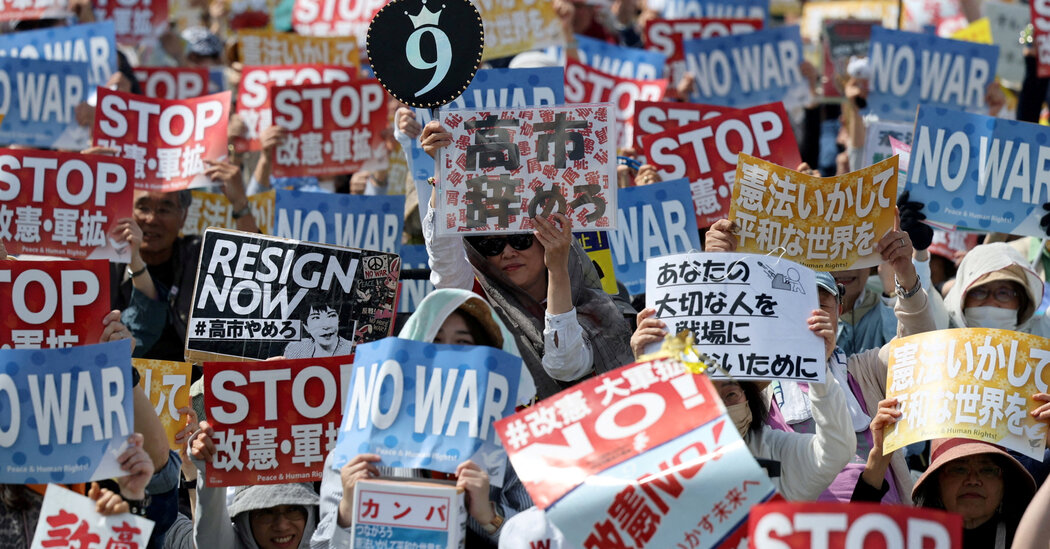
In the crisp autumn air of Tokyo’s bustling streets, a sea of colorful posters and chanting voices echoed a message that has reverberated through Japan’s post-war soul for generations: “No War.” This rallying cry, emblazoned on banners at some of the largest protests the country has seen in at least a decade, underscores a deepening unease with Prime Minister Sanae Takaichi’s bold maneuvers to reshape Japan’s defense posture. As global tensions simmer—from China’s assertive maneuvers in the South China Sea to North Korea’s unpredictable missile tests—the nation finds itself at a crossroads, torn between its cherished pacifist legacy and the harsh realities of modern geopolitics. Takaichi’s administration, emboldened by a decisive February election victory, has wasted no time in dismantling longstanding barriers to military expansion, all while the voices of dissent grow louder, painting a picture of a society grappling with its identity in an increasingly volatile world.
The roots of this standoff trace back to the ashes of World War II, when Allied occupiers crafted Japan’s constitution in 1947, embedding Article 9 as a ironclad pledge renouncing war as a sovereign right and prohibiting the maintenance of armed forces beyond self-defense. This pacifist cornerstone not only disarmed Japan but also rebuilt its image as a peaceful economic giant, fostering a global view of the nation as a beacon of reconciliation rather than aggression. Yet, even as this antiwar ethos guided decades of prosperity, subtle shifts began under previous administrations—tinkering with interpretations of self-defense until it expanded to encompass collective security with allies like the United States. Takaichi, a staunch conservative who ascended to power in October, has accelerated this evolution, lifting historic bans on arms exports, deploying long-range missiles in Japan’s southwestern islands facing Taiwan and the Senkaku/Diaoyu into dispute, and forging tighter defense alliances amid concerns over U.S. reliability. Her government frames these steps as pragmatic necessities, essential for safeguarding Japan’s sovereignty against looming threats from China and Russia. But to critics, these moves represent a perilous erasure of the very principles that shielded Japan from the shadows of its imperial past, raising fears of entanglement in international conflicts and a return to militarism that once devastated the region.
Protests erupted in earnest following Takaichi’s landslide election in February, mobilizing thousands outside the Diet building in Tokyo to defend this constitutional sanctity. Organizers, drawing from Japan’s rarely seen activist grassroots, hailed the event as a turning point, with crowds swelling beyond initial expectations. Analysts note that the Liberal Democratic Party (LDP), long harboring ambitions to revise Article 9 explicitly, seized upon Takaichi’s mandate to push for changes that could allow Japan to more robustly contribute to global peacekeeping or even offensive operations under certain interpretations. By April, as the government scrapped decades-old limits on exporting lethal weaponry—citing enhanced security for Japan and its partners—the demonstrations amplified, hitting over 50,000 participants across more than 200 cities. The momentum peaked last weekend on Constitution Memorial Day, a public holiday honoring the document’s anniversary, where Tokyo alone saw upwards of 50,000 marchers gather in Yoyogi Park, their voices unified in opposition. Eyewitnesses described an atmosphere of quiet determination, with families and students mingling among retirees, sharing stories of Hiroshima and Nagasaki’s horrors alongside concerns about current geopolitical flashpoints. This wave has not only echoed past anti-nuclear movements but also signaled a rare break from Japan’s cultural norm of avoiding public disruption, where polite society often prioritizes harmony over protest.
At the heart of the demonstrators’ demands lies a fervent plea to preserve Japan’s pacifist identity, unaltered. Protesters, ranging from seasoned peace activists to young professionals freshly awakened to global inequities, argue that revising Article 9 could unravel the nation’s reputation as a non-threatening economic powerhouse, one that prospered through trade and diplomacy rather than force. They warn that Takaichi’s policies risk dragging Japan into wars it had sworn off, exacerbating tensions with China—already strained by her remarks that Japan might aid Taiwan’s defense—and fueling a worldwide arms race. Economic anxieties compound the outrage; the Middle East’s ongoing conflicts have spiked global oil prices, adding to the strain from plummeting Chinese tourism, a retaliatory blow following Takaichi’s staunch pro-Taiwan stance. “We’re not just fighting for history,” said one participant in her twenties, a university student clutching a handmade sign during the Tokyo rally. “Kids my age grew up thinking our constitution kept us safe. Now, with wars erupting everywhere, we see how easily that could change.” Calls for Takaichi’s resignation resonate as a demand for accountability, urging a return to prudent diplomacy over perceived hawkishness. This blend of idealism and pragmatism captures the protesters’ vision: a Japan that champions peace without compromising its security, leveraging international alliances discreetly rather than through overt military buildup.
What sets these rallies apart is their unprecedented scale and inclusivity in a country where mass mobilization is seldom seen outside major disasters or economic crises. Japan’s societal fabric, steeped in Confucian values emphasizing group consensus, has historically subdued dissent, relegating protests to niche corners. But this year’s surge defies that trend, featuring a demographic mosaic that includes the silver-haired generations scarred by wartime atrocities and their descendants—digital-native millennials and Gen Z, galvanized by social media feeds of distant conflicts in Ukraine and Gaza. The rallying cry, “The peace constitution is Japan’s treasure,” has become a viral mantra, amplified on X (formerly Twitter) and Instagram with photos of protesters brandishing glowing light sticks, a nod to South Korea’s recent anti-government demonstrations. Organizers have creatively marketed these events as accessible and fun, attracting first-timers who might otherwise shy away from radical action. In Tokyo’s Yoyogi Park, a 30-something IT worker reflected on his conversion: “I used to scroll through videos of wars online and feel helpless. Now, I’m here because I realized our own government could make things worse if we don’t speak up.” This intergenerational fusion not only breathes life into Japan’s peace movement but also highlights a intriguing irony—while the nation ages rapidly, its younger populace is stepping forward, driven by a sense of intergenerational duty and a desire to avert the mistakes of history.
Despite their fervor, the protests have yet to dent Takaichi’s standing significantly; her approval ratings remain solidly in the positive, buoyed by nationalist sentiments and fears of regional instability. Polls conducted by major outlets like Asahi Shimbun reveal a bifurcated public: strong backing for bolstering military capabilities—echoing the LDP’s narrative of a “dangerous neighborhood”—coupled with robust opposition to constitutional overhaul. This schism exposes the fractures in Japanese society, where urban elites and younger cosmopolitans lean toward pacifism, while rural voters and older demographics prioritize defense readiness. Takaichi’s options, however, are not limitless; amending Article 9 demands a two-thirds supermajority in both houses of Parliament followed by a national referendum winning a simple majority. With the LDP short in the upper house, securing such thresholds would necessitate unprecedented coalition-building, potentially fracturing the party’s ideological core. Meanwhile, the demonstrations have spurred national discourse, compelling even pro-military voices to acknowledge the deep emotional undercurrents tied to Japan’s traumatic past. As activist groups vow to intensify their efforts, with plans for more street theater and digital campaigns, observers wonder if this movement could evolve into a broader inquiry into Japan’s role on the world stage—one that balances sovereignty with the humane legacy of peace.
In essence, Japan’s antiwar protests are more than mere resistance; they are a mirror reflecting a nation’s soul-searching amid shifting sands. As Takaichi steers toward defense modernization, her detractors insist on clinging to the pacifist anchor that defined Japan’s rebirth. Whether these voices will alter the trajectory remains uncertain, yet their presence testifies to a resilient spirit unwilling to trade peace for the siren song of military might. In a world rife with conflicts, Japan’s internal debate offers a cautionary tale—and perhaps a blueprint—for nations navigating the thin line between security and serenity.