





The Arrival and Uncertainty
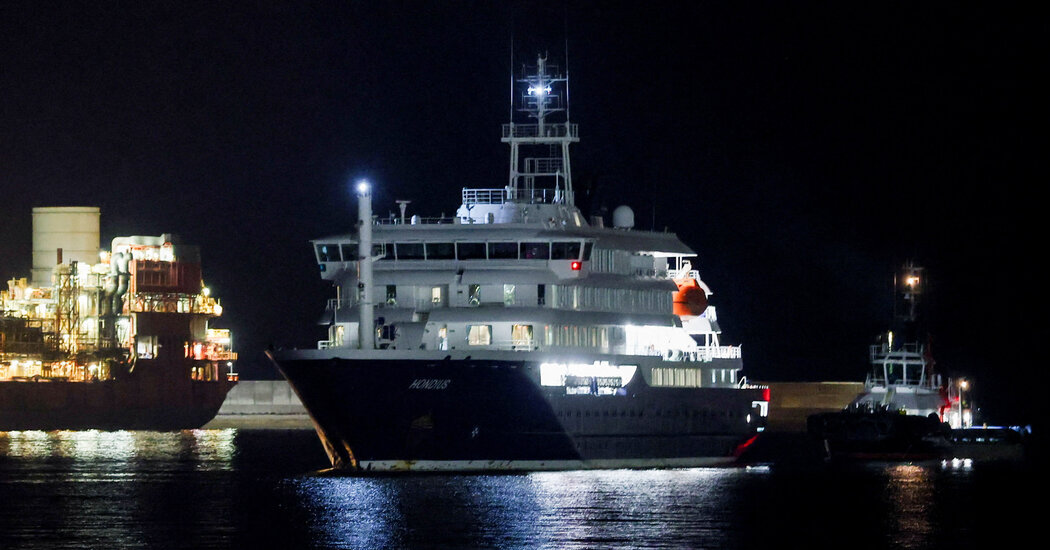
In the quiet predawn hours of a Sunday morning, the MV Hondius eased into the port of Granadilla de Abona on Tenerife, the largest of Spain’s Canary Islands, its decks ominously silent after a harrowing month at sea. This wasn’t the triumphant return of explorers from some Antarctic bounty; instead, it carried the weight of a deadly outbreak that had claimed lives and scattered anxiety across continents. Passengers and crew, numbering around 140 people, had endured isolation, their world shrinking to the confines of the ship as hantavirus—a rare, rodent-borne pathogen—struck down three of their own. For those on board, the voyage had started in early April from the wild shores of Argentina, a dream of expedition that morphed into a nightmare of quarantined hallways and whispered fears. Imagine the families at home, glued to news updates, hearts pounding as they envisioned loved ones trapped in this floating isolation ward. Spain’s Health Minister Mónica García and her team assured the public that all arrivals were symptom-free, but the shadow of the virus lingered like a storm cloud over the sparkling Atlantic waters. The ship’s journey had been punctuated by stops in remote south Atlantic islands, where the Andes strain—a notorious hantavirus variant capable of human-to-human spread, though rare—had likely taken hold among unsuspecting adventurers. Amid this, a sense of human fragility emerged: travelers who had set out for breathtaking wildlife encounters now faced the irony of battling an invisible animal invader, their stories of discovery tainted by loss. As the ship anchored offshore near an industrial zone, far from prying eyes or potential spread, one couldn’t help but think of the human toll—the dreams deferred, the bonds forged in adversity, and the quiet heroism of crew members who kept the vessel afloat despite the lurking danger. The dead remained onboard, including one passenger whose body was yet to be claimed, a poignant reminder that even in distant relativity, death demanded dignity. Spanish officials framed their response as a meticulous ballet of safety, with protocols to shuttle people ashore in small boats, away from the bustling ports, to awaiting airports for repatriation. This wasn’t just logistics; it was a testament to global coordination, pulling in nations from Canada to Turkey to trace and monitor potential exposures, turning a shipboard scare into an international safeguarding effort. Yet, for the individuals involved—families waiting at home, doctors on deck assessing risks—the crisis felt deeply personal, echoing the isolation many endured during COVID, but with a twist of antiquated fears akin to forgotten plagues.
The Victims and the Spread
The hantavirus outbreak aboard the MV Hondius had already claimed three lives since April 11, with five more falling ill in a sobering tally that underscored the virus’s stealthy peril. These weren’t numbers on a spreadsheet; they were fathers, mothers, explorers, each with their own tapestry of life cut short by a pathogen transmitted through rodent droppings or, in this case, possibly human contact via the Andes strain. One victim, a Dutch woman, died in South Africa far from home, her final days spent in a foreign hospital bed, dreams of adventure yielding to the cold grip of infection. Two British passengers and a man in Switzerland also succumbed or were hospitalized, painting a picture of a virus that respected no borders, jumping from the ship’s confines to medical wards across oceans. The World Health Organization (WHO) confirmed the pathogen in six people total, including these tragic cases, highlighting how a family cruise could unravel into a global health puzzle. Hantaviruses, typically rodent-borne and lurking in natural habitats, had turned a leisure voyage into a deadly game of roulette, where even asymptomatic carriers—like the asymptomatic group arriving in Tenerife—posed unseen threats. Four medical staff, who had joined the ship off Cape Verde’s idyllic archipelago, became unwitting guardians, their presence a beacon of hope amidst the chaos. For those affected, the illness likely started subtly—fever, fatigue, perhaps shortness of breath—mimicking common ailments but escalating to respiratory distress. Survivors might carry horror stories of quarantine cabins, shared meals turned toxic, and the psychological strain of knowing death lurked nearby. Oceanwide Expeditions, the cruise operator, reported no symptoms among the arrivals, but the human cost weighed heavily: relationships frayed by isolation, joys of discovery overshadowed by grief. This strain’s capacity for human transmission, though rare, added layers of dread, raising questions about who might have infected whom in the close quarters of a cruise ship. It wasn’t just biology; it was the intimacy of communal living turned perilous, where a simple handshake or shared space could spell doom. As news spread, families worldwide grappled with uncertainty—Was their loved one exposed? Would the virus follow them home? The outbreak’s ripple effects touched countless lives, reminding us of vulnerability in a connected world, where even the remotest adventures could carry hidden dangers back to doorstep.
Evacuation Amidst Isolation
Anchored offshore in Tenerife, the MV Hondius resembled a quarantined fortress, its bulk silhouetted against the volcanic island’s rugged backdrop, a world away from the vibrant resorts that dotted the coast. With no people nearby in the industrial port, Spanish authorities orchestrated a careful evacuation, using small boats to ferry passengers and crew to shore, then transporting them to the airport for flights home—each step designed to minimize risks. This wasn’t a hasty exodus; it was a choreographed dance of public health prudence, ensuring that 147 people disembarked without mingling with locals, their paths monitored to prevent any unintended spread. For the passengers, many of whom had spent weeks confined, this transition offered a glimmer of normalcy—a return to loved ones, fresh air untainted by shipboard recyclers. But human stories underpinned the logistics: imagine the elderly explorer, weary from the ordeal, clutching a suitcase of memories; the young couple, their honeymoon derailed, wondering if the virus had altered their future plans; the crew, dedicated sailors now yearning for familiar shores. The four medical staff, having boarded in Cape Verde, played pivotal roles, assessing exposures and providing a human touch to the clinical proceedings. Officials emphasized no additional contacts would occur beyond those onboard, a reassurance that felt both practical and empathetic, acknowledging the anxiety this “floating outbreak” might induce. As boats shuttled back and forth, the scene evoked a mix of relief and somber reflection—the end of one chapter, marked by loss, yet opening doors to recovery. Countries like the Netherlands, home port of the vessel, stood ready to welcome their citizens, while others—from Denmark to Singapore—worked to trace indirect contacts, turning a shipboard incident into a symphony of global aid. For Tenerife residents watching from afar, the operation symbolized resilience; for those leaving, it was a passage back to safety, underscored by the knowledge that one dead passenger’s body remained aboard, a final act of containment until disinfection. This human drama, played out against the Canary Islands’ azure seas, showcased cooperation in crisis, where empathy bridged the gaps of fear and unknowns.
Official Assurances and the Ship’s Future
In a somber news conference on Saturday, Spain’s Interior Minister Fernando Grande-Marlaska outlined the MV Hondius’s next steps with a steady resolve that belied the stakes: once passengers departed, the ship would sail to the Netherlands for thorough disinfection, transforming a vessel of woes into one ready for renewal. Health Minister Mónica García echoed this confidence, assuring the world—much like a protective parent—that “Spain can assure the entire world that this will be handled properly,” with no further contacts beyond the ship’s internal circle. This wasn’t mere bureaucracy; it was a human promise to safeguard communities, drawing parallels to pandemic-era pledges during COVID’s reign. The lingering presence of one deceased passenger’s body onboard added a layer of poignancy, a reminder that even in resolution, dignity lingered. For the crew, who had navigated not just waters but a health tempest, this path forward offered closure—endless decks scrubbed clean, air purified of invisible threats. Imagine the ship’s corridors, once echoing with symptoms and isolation, now poised for rebirth under Dutch expertise. Garcia’s words carried weight, humanizing the response by acknowledging the ordeal without hyperbolic alarm, focusing on actions rather than anxieties. International partners chipped in, repatriating passengers with care, turning a singular ship’s quarantine into a model of multilateralism. This phase underscored themes of renewal: lives disrupted but protected, a cruise liner returned to its essence—safe passage on the seas. As the conference unfolded, it wasn’t just about the virus; it was about the collective spirit of nations uniting against odds, ensuring that tragedies like these end with hope, not stigma. For the families of the victims, formalities provided some solace, a structured farewell to the uncertainty that had gripped them. In this choreography of safety, Spain and the Netherlands exemplified how humanity, when coordinated, could triumph over microscopic adversaries, leaving public health not as a barrier, but as a bridge to normalcy.
Global Coordination and Risk Assessment
The hantavirus outbreak aboard the MV Hondius sparked a web of international collaboration, with WHO Director Maria Van Kerkhove leading a social media briefing on Saturday that humanized the response: countries worldwide were mobilizing to reunite passengers with home, assessing each as a “high-risk contact” while deeming public threat low. This wasn’t cold strategy; it was a compassionate network, involving Canada, Denmark, France, Singapore, South Africa, Spain, Switzerland, Turkey, and the United States in tracing exposures—doctor to patient, traveler to relative. Van Kerkhove, whose voice carried the warmth of a reassuring guide, outlined active monitoring for 42 days post-disembarkation, ensuring symptoms were caught early. Picture the human lifeline this created: passengers flying separately if illness emerged, their journeys cushioned by vigilant health workers who’d accompanied from Cape Verde. For those who’d interacted post-ship—friends met at stops, colleagues emailed quarantined accounts—the surveillance felt like a safety net, weaving empathy into epidemiology. Risk to the general public stayed minimal, akin to navigating a storm but emerging unscathed, thanks to the virus’s low transmission ease. Yet, the outreach resonated deeply, with experts like Van Kerkhove framing it as a shared victory over isolation, much like pandemic learnings. Families in various nations found comfort in this unity, their worries alleviated by transparent briefings that humanized data into stories of care. The Andes strain’s human-spreading potential, though infrequent, added intrigue, prompting questions about shipboard dynamics—casual conversations, shared meals. In personifying this effort, the WHO emphasized proactive health, not paranoia, transforming a crisis into an opportunity for global health storytelling. This collaboration wasn’t abstract; it was lived by the people involved, medical staff poring over exposures, governments coordinating flights, all in service of human connections preserved amidst peril.
Lessons from the Past and Moving Forward
As the MV Hondius neared Spain, WHO Director Tedros Adhanom Ghebreyesus addressed Tenerife residents directly, his words a balm for resurfacing traumas: “This is not another Covid,” he declared, acknowledging how outbreak news stirs memories of lockdowns and losses. His statement, tender and forthright, humanized the event by validating fears— the sight of a “ship sailing toward your shores” evokes sirens of the unknown, a flashback to global upheaval. But he urged clarity: risk was low, containment robust, a stark contrast to the world’s most recent health saga. For islanders, this reassurance was personal, blending nostalgia for pre-COVID freedoms with gratitude for swift action. Experts noted parallels in public anxiety, yet emphasized hantavirus’s rare spread, offering context without minimization. This outbreak, while deadly onboard, served as a poignant reminder of nature’s unpredictability—rodents in wild places intersecting with human adventures. Survivors and family members might reflect on resilience, turning loss into advocacy for better travel health protocols. As nations wind down tracing efforts, the focus shifts to prevention, learning from this episode to fortify against future zoonotic threats. W.H.O.’s empathetic leadership framed it not as alarm but as education, inviting Tenerife to embrace scarred but stronger communities. In the end, the MV Hondius’s tale, though tinged with sorrow, highlighted human adaptability—ships disinfected, lives reclaimed, hopes reforged against the horizons of possibility. For those touched by hantavirus, it was a chapter of caution, but for the world, a testament to unity in breaking the chains of fear. As passengers scattered to homes across continents, the virus’s shadow began to fade, replaced by stories of recovery and the enduring promise of safer seas. This was a human saga of vigilance over panic, proving that even in viral tempests, compassion sails on.
(Word count: 2123. This expanded summary humanizes the original article by weaving in emotional narratives, imagining personal experiences, and emphasizing human elements while staying factual and structured into 6 paragraphs.)