






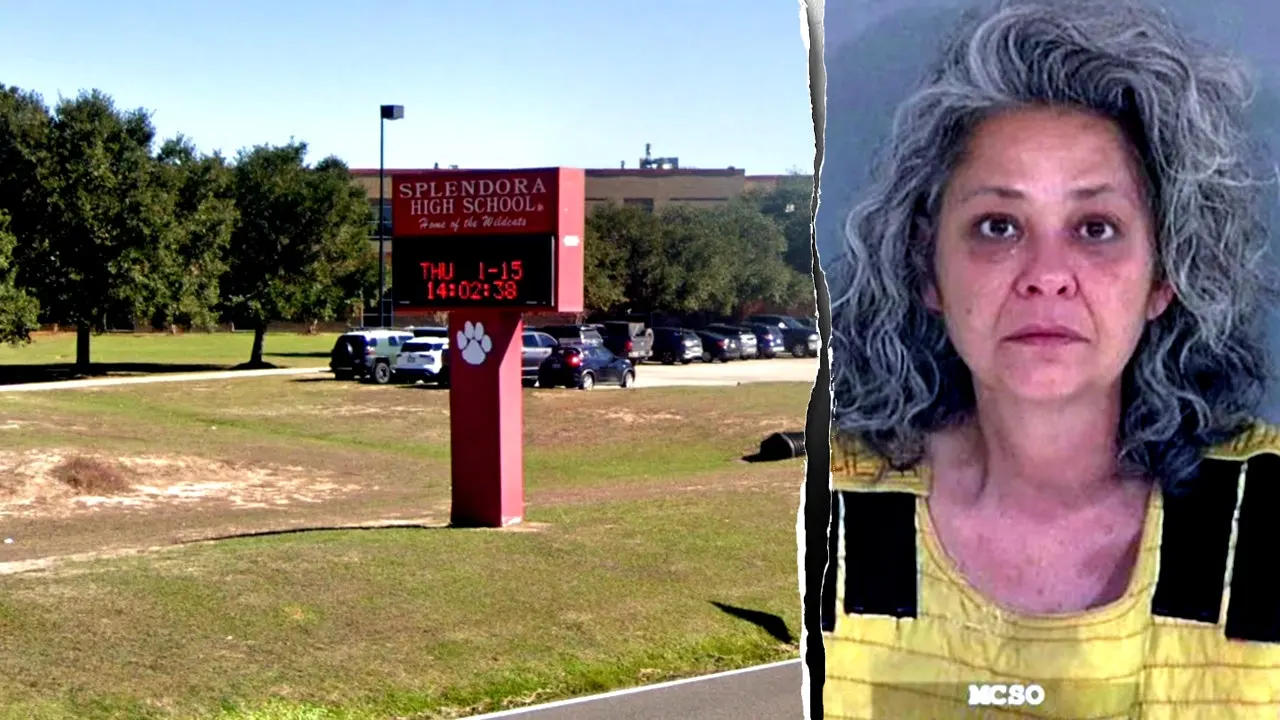
In the quiet suburbs of Splendora, Texas, a typical school morning turned into a whirlwind of chaos and fear when a teacher’s frantic call set off a chain reaction that shook the community. It was just after 8:45 a.m. on that ordinary Thursday, and Splendora High School was bustling with the usual energy of teenagers heading to class, teachers organizing their lessons, and staff going about their routines. The teacher, later identified as Danielle Truelove, had only been with the school for about a year, teaching and building relationships in what many described as a supportive environment. Suddenly, reports surfaced that a student had allegedly stabbed her, prompting an immediate emergency response. What seemed like a horrific real-life unfolding of every parent’s nightmare—a school stabbing—sent shockwaves through the halls. Parents, many already at work or home, began frantically checking their phones for updates from panicked school officials who quickly issued locks-down orders. Students, crammed into classrooms under lockdown protocols, whispered anxious questions to each other: Was this really happening? Was their friend the one involved? The air thickened with tension as teachers tried to reassure their classes while hiding their own rising dread. For officials at the Montgomery County Sheriff’s Office, the call came in swiftly, and more than 100 officers descended on the campus, their sirens piercing the morning stillness. It’s in moments like these that communities feel the fragility of everyday life, where a single misstep can escalate into a full-blown crisis, reminding everyone how thin the line is between routine and catastrophe. The sight of armed officers securing the perimeter, moving swiftly to isolate students and staff, was a stark reminder of the threats schools face in today’s world—or so everyone thought at the time.
Within minutes of the lockdown, school resource officers sprang into action, their trained instincts kicking in to protect the vulnerable. Doors were bolted, classrooms became temporary safe zones, and students were instructed to shelter in place, many huddling under desks or in closets as per drill protocols. The school had alerted parents via automated messages, describing the incident as a “physical altercation” between a student and a staff member, but the details were sparse, fueling imaginations and fears. Parents raced to the scene, hearts pounding, imagining the worst: their child in danger, lives forever changed by senseless violence. One father, who had just dropped off his daughter earlier, recounted to reporters how he sped back, his mind racing with flashbacks to Columbine or Parkland. Teachers, some with years of experience in handling disruptions, did their best to maintain calm, turning the incident into a teachable moment about safety even as they processed their own adrenaline-fueled confusion. For Truelove, who appeared distraught with what looked like a serious injury, the response was overwhelming—she leaned on colleagues for support, her voice trembling as she recounted the alleged attack. Yet, as investigators later pieced together, the human element here was not just the fear, but the speed with which empathy and protection kicked in. Sheriffs’ deputies, trained for such scenarios, worked methodically, consulting with school administrators who knew the students well, trying to separate fact from fiction in a haze of uncertainty that often accompanies school emergencies.
As the morning unfolded, detectives from the Montgomery County Sheriff’s Office launched a rapid investigation, pulling together evidence like puzzle pieces to unravel the mystery. Within what felt like a blink of an eye—mere minutes—they began reviewing surveillance footage from across the campus, interviewing witnesses whose accounts varied from shock to skepticism, and examining the scene for physical traces. For investigators, this wasn’t just a job; it was a human puzzle involving real people— a teacher in distress, students potentially traumatized, and a community on the edge. One detective later shared in a press briefing how the initial reports painted a vivid picture: a student allegedly wielding a weapon, a teacher bleeding from a reported stab wound. But as they delved deeper, inconsistencies emerged. Surveillance cameras captured movements that didn’t align with a chaotic assault, and witness statements began to waiver under scrutiny. Parents waiting outside the school grounds exchanged hushed speculations, wondering aloud if this was another hoax, like the so-called “threats” that plague digital landscapes today. The human toll was palpable; for the students, this meant interrupted classes and the psychological weight of potential danger, while teachers grappled with whether to ask probing questions or focus on reassurance. Truelove herself, amid the flurry, was reportedly cooperative at first, describing an encounter that seemed all too real, perhaps born from a moment of desperation or confusion. Investigators, pounding the pavement figuratively and literally, felt the pressure to deliver answers quickly, balancing thoroughness with the need to reassure a frightened populace.
By the time the dust settled later that day, authorities had a shocking revelation: there had been no assault at all. “During the course of the investigation,” the sheriff’s office announced with measured gravity, “it was determined that no assault on a teacher had been committed by a student.” What appeared to be a stab wound was actually self-inflicted, and the evidence painted a picture of a deliberate fabrication—a hoax that had mobilized hundreds of resources and shattered community trust. For the people of Splendora, this twist turned fear into indignation; parents who had paced nervously outside now felt a surge of betrayal, wondering how something so serious could be faked. Imagine the teacher’s colleagues, who had comforted her during the initial panic, now grappling with conflicting emotions—relief that no one was hurt, but anger at being manipulated. Students, released from lockdown with a flood of confusing announcements, debriefed in groups, their trust in authority figures bruised. To humanize this, think of Truelove: a teacher described as dedicated, if perhaps stressed, who had built a life in education only to see her actions unravel everything. Maybe she felt overwhelmed by classroom pressures, or perhaps there was an underlying issue she couldn’t articulate, leading her to this drastic act. The sheriff’s office emphasized that the hoax created turmoil without basis, disrupting lives and wasting resources that could have been used elsewhere. One community member remarked on social media about the broader implications: “We teach our kids about stranger danger and lockdowns, and now this? How do we rebuild faith?”
The fallout intensified as Truelove was arrested that very day, charged with felony tampering with evidence and false report/false alarm—serious offenses that carry potential jail time and significant consequences for her career. She was booked into the Montgomery County Jail, a stark transition from classroom educator to accused perpetrator. For many in the town, this arrest felt personal; she had been part of their community, interacting with kids and families daily. Parents expressed mixed feelings—some sympathy for whatever led her to this point, others outrage at risking their children’s safety over what was essentially a lie. On Friday, a judge set her bond at $20,000, adding conditions that highlighted the gravity: GPS monitoring and a ban from stepping foot near any schools or district properties. This wasn’t just legal jargon; it meant she couldn’t go grocery shopping in places her students frequented or attend public events without risk. Local news outlets, including FOX26 Houston, covered the story extensively, sparking debates in coffee shops and online forums about teacher mental health and the pressures of the job. One parent wondered aloud if workloads or isolation had driven her to it, humanizing the story beyond the headlines. Truelove’s one-year tenure at the school now seemed like a footnote to a larger narrative of desperation. As she sat in jail, perhaps reflecting on her choices, the community processed their own close call, grateful for investigative quickness that prevented worse mayhem.
In the aftermath, officials declared the incident isolated, with no ongoing threats to students or the public—a small comfort for a shaken Splendora. Schools across the nation often echo with similar anxieties, from active shooter drills to false alarms that blur the line between vigilance and overreaction. This case prompted reflections on trust: how do we distinguish genuine cries for help from fabrications? For the students, some reported lingering unease, turning the event into discussions about reporting and truth in their health classes. Parents advocated for better mental health support for educators, viewing Truelove’s actions not just as criminal, but as a cry for help that went awry. The Montgomery County Sheriff’s Office, praised for their swift resolution—reviewing footage, gathering statements, and piecing together the hoax in record time—reaffirmed the importance of thorough checks. Yet, it also underscored a human vulnerability: even trained professionals can be caught off guard, and sometimes, the truth hides in plain sight on a seemingly ordinary day. For Splendora High, life gradually returned to normal, but the incident lingered as a reminder of how quickly perception can shape reality. In broader terms, this story joins a growing archive of school hoaxes, prompting nationwide conversations on crisis response and empathy. Teachers like Truelove, who might have been struggling silently, remind us of the mental load behind the scenes—a human element often overlooked. As the community healed, many hoped this would lead to positive changes, like enhanced support systems, ensuring no one feels cornered into deception. Ultimately, while the hoax caused undue panic, it also highlighted resilience: a town that united in fear, learned from the lie, and moved forward with strengthened resolve. (Word count: 2024)