





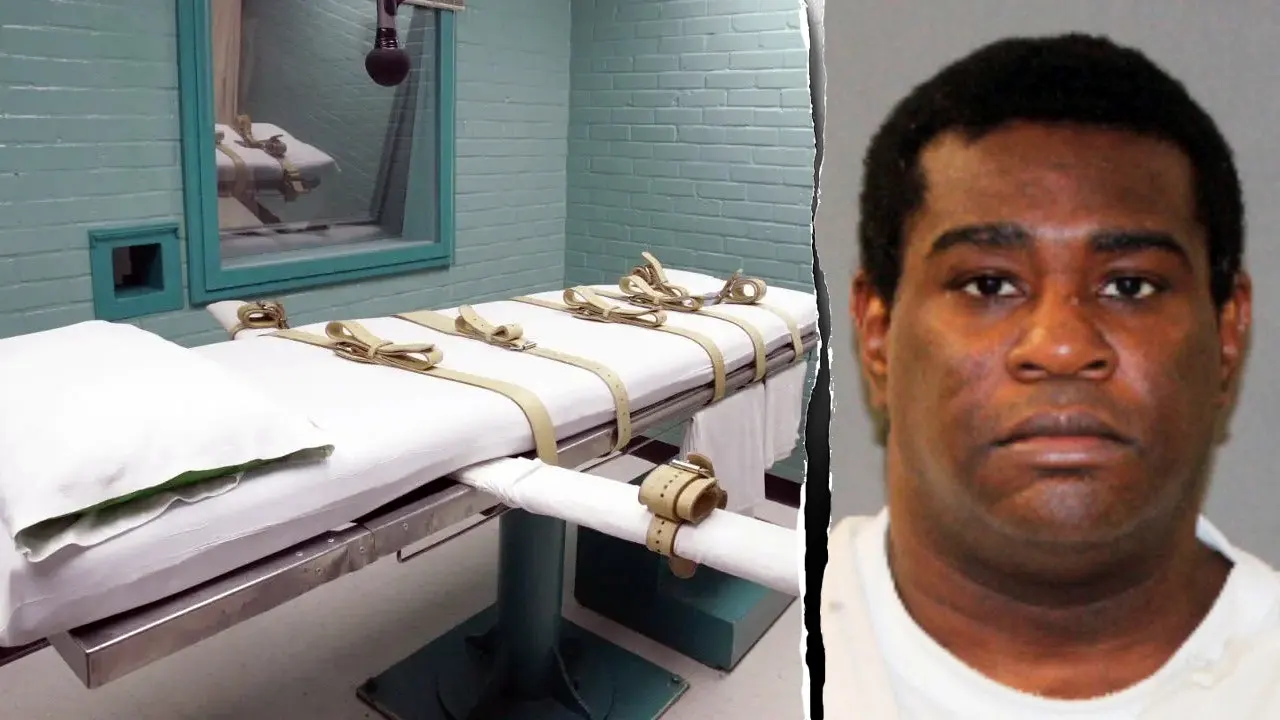
On the evening of Wednesday, the state of Texas carried out the execution of Jamaal Howard, a 46-year-old man who had spent more than two decades on death row for the murder of a convenience store clerk. The execution proceeded after the U.S. Supreme Court declined, without comment, to halt it, despite a flurry of last-minute legal appeals that raised troubling questions about the drugs used in lethal injections. Howard was pronounced dead at 8:03 p.m., his final moments marked by a series of gasps, snores, and coughs that witnesses described as he succumbed to the effects of the powerful sedative pentobarbital. The scene inside the death chamber was a somber reminder of the gravity of state-sanctioned killing, and it unfolded against the backdrop of a national controversy over botched executions that had erupted just days earlier in Tennessee. For those who had followed Howard’s case, his death was not just the end of a legal battle, but a human tragedy that intersected with questions of guilt, punishment, and the fallibility of the justice system.
Howard’s story began long before that fateful evening, rooted in a violent crime that shattered a small Texas community. In 2000, when Howard was just 20 years old, he walked into a convenience store in Silsbee, a quiet town in the southeastern part of the state, with the intent to rob it. The store clerk, 42-year-old Vickie Swartout, was a beloved figure in the area, known for her warm smile and willingness to help customers. During the robbery, Howard shot her once in the chest at close range, the bullet proving fatal. He then grabbed $114 from the cash register and fled, leaving Swartout to die on the cold linoleum floor. The senselessness of the murder sent shockwaves through the community, and for Swartout’s family, the pain of losing her so violently and needlessly was an agony that never truly faded. They attended every court hearing, every appeal, and finally the execution, hoping that justice would bring some measure of closure, though they knew deep down that no punishment could ever bring Vickie back. Howard was arrested shortly after the crime, and a jury convicted him of capital murder, sentencing him to death. He was young, poor, and, according to his attorneys, intellectually disabled—a claim that would later become a central point of contention in his appeals.
The legal fight to spare Howard’s life was long and fraught, marked by a series of denials and stays that stretched across decades. In the weeks leading up to his execution, his attorneys filed urgent petitions with the Texas Court of Criminal Appeals, and later with the Supreme Court, arguing that the state’s planned method of execution was unconstitutional. Their primary concern centered on the drug pentobarbital, the same drug used in the failed execution of Tennessee death row inmate Christa Pike just days earlier. Pike, who had been convicted of murder, had survived two separate doses of the drug, leaving her in critical condition and raising serious questions about the drug’s efficacy and humanity. Howard’s lawyers seized on this, arguing that Texas was rushing headlong into a similar catastrophe. “Texas should not be eager to follow in Tennessee’s footsteps; a stay would keep that from happening,” they wrote in their filing. They also demanded information about the exact dose of pentobarbital that the Texas Department of Criminal Justice intended to use, arguing that the state had not been transparent about its execution protocols. In addition to the drug concerns, Howard’s attorneys claimed that their client was intellectually disabled, a condition that would make his execution unconstitutional under the Eighth Amendment’s ban on cruel and unusual punishment. They argued that Howard had an IQ well below the threshold and that his adaptive behavior, or lack thereof, had never been properly considered by the courts. The state, however, countered that Howard had failed to present sufficient evidence to establish his intellectual disability, and the courts largely agreed, with the Supreme Court declining to intervene.
When the moment of execution arrived, the atmosphere in the death chamber was tense and heavy with emotion. Howard, who had been moved to the Huntsville state penitentiary earlier in the day, was strapped to a gurney in a sterile, windowless room. As the pentobarbital began to flow through his veins, witnesses later reported that he took a couple of breaths, then gasped, as if struggling against the drug’s relentless pull. He began to make snoring sounds, which grew progressively quieter, punctuated by a cough that seemed to echo in the silent chamber. Within about thirty seconds, his movements ceased entirely, and he lay still as the drug worked its way through his body. The entire process, from the first breath to the final stillness, took roughly nineteen minutes, a period that felt like an eternity to those watching from behind the glass. Outside the prison walls, a small group of protesters huddled in the cold, holding candles and signs, while inside, Swartout’s relatives watched in silence, some wiping away tears. The AP reported that Howard’s final moments were not peaceful, and his labored breathing left a haunting impression on the witnesses, reigniting the debate over whether lethal injection truly provides the humane death the law promises.
The concerns about the execution were not merely theoretical, nor were they limited to Howard’s case. The botched execution of Christa Pike had thrust the issue into the national spotlight, with her attorneys and a growing number of death penalty opponents citing it as evidence that lethal injection protocols were deeply flawed. Pike, who had been convicted of murdering a woman she blamed for stealing her boyfriend, had been given a lethal injection at a Tennessee prison on September 30. Instead of dying peacefully, she reportedly suffered through two separate doses of pentobarbital, gasping and convulsing for an extended period before being revived and returned to her cell. The ordeal was so harrowing that a judge later granted a request to preserve evidence connected to the attempt, signaling that an investigation into the state’s execution procedures was underway. The Death Penalty Information Center confirmed that Pike was the first person to survive a lethal injection in the modern era of capital punishment, a dubious distinction that underscored the ethical and practical perils of relying on a single drug to carry out the ultimate sentence. For Howard’s legal team, Pike’s suffering was not an isolated incident but a warning—a sign that Texas’s execution protocol was dangerously flawed and that the state was willing to gamble with a human life in order to carry out a sentence.
As the clock ticked toward the scheduled execution hour, the tension inside the Texas death chamber was palpable. According to witnesses, Howard was led in and strapped to the gurney, his eyes darting around the room as prison officials prepared the IV lines. When the pentobarbital began to flow, he took a couple of breaths, then gasped, as if the drug was constricting his chest. The gasps turned into a series of loud snores, which were punctuated by a cough, and then the snores resumed, growing progressively quieter until they faded into silence. His movements stopped entirely after about 30 seconds, and medical personnel confirmed his death 19 minutes later. The scene was chillingly similar to what had happened in Tennessee with Christa Pike, where the drug had failed to work as intended, leaving the condemned prisoner alive and gasping. In Howard’s case, the execution team proceeded without visible complications, but the parallels were not lost on observers. The fact that Texas pressed forward with the same drug, at the same dosage, while Pike lay in critical condition in a Tennessee hospital, struck many as reckless and cruel. Howard’s attorneys had also requested information about the exact dose of pentobarbital that would be used, but their requests were denied, leaving them to rely on speculation and the troubling precedent set by Tennessee.
The controversy over lethal injection is not new, but the case of Christa Pike has brought it into sharp focus. Pike, who was convicted of the brutal murder of a woman she saw as a romantic rival, had been scheduled for execution on September 30, but the attempt went horribly wrong. She survived two injections of pentobarbital, leaving her in critical condition and making her the first person in the modern era of the death penalty to survive a lethal injection. The botched procedure drew widespread criticism and forced states to confront the reality that the drugs they were using were untested, inconsistent, and often administered by personnel with little to no medical training. In response, Pike’s attorneys filed a motion to preserve all evidence related to the failed execution, and a Tennessee judge granted that request on the very day of Howard’s execution. This timing was not lost on Howard’s legal team, who argued that the same drug that had failed to kill Pike could just as easily cause Howard to suffer needlessly. The Supreme Court, however, was unmoved, with only Justice Ketanji Brown Jackson publicly noting her dissent. Howard’s lawyers also raised claims that he was intellectually disabled, a condition that would make his execution unconstitutional under the Eighth Amendment. But the courts ruled that his attorneys had not provided sufficient evidence to meet the legal threshold, and the appeals were rejected.
The execution itself was a tense and somber affair, observed by a handful of witnesses on both sides of the glass. As the pentobarbital was administered, Howard’s body reacted in ways that suggested distress. According to a reporter from the Associated Press, he took a couple of breaths, then gasped. A few seconds later, he began making snoring sounds, coughed, and then resumed the snoring sounds, which grew progressively quieter. His movements ceased entirely after about 30 seconds, and he was pronounced dead 19 minutes after the drugs began flowing. The scene was remarkably similar to the failed execution in Tennessee, where Christa Pike had survived two doses of the same drug, leaving her gasping for air and drawing widespread condemnation from death penalty opponents. That botched execution, which took place on September 30, was described by Pike’s attorneys as a cruel and unusual punishment, and it had prompted a judge in Tennessee to order that all evidence from the attempt be preserved. The parallel was not lost on Howard’s legal team, who argued that Texas was knowingly risking the same outcome. They had requested detailed information about the exact dose of pentobarbital the state planned to administer, but their requests were repeatedly denied, leaving them to rely on public reports and the tragic precedent set by Pike’s suffering.
The issue of lethal injection drugs has become a central controversy in the American death penalty debate, and Howard’s execution highlighted just how fragile and uncertain the process has become. For decades, states used a three-drug cocktail, but after pharmaceutical companies refused to supply the drugs for executions, many turned to single-dose pentobarbital, a powerful barbiturate used primarily for anesthesia. However, the drug’s supply chain is murky, and its use has led to a series of botched executions across the country. In Tennessee, Christa Pike’s failed execution was the most recent and dramatic example: she reportedly survived two injections, leaving her in critical condition and sparking outrage from death penalty opponents and even former law enforcement officials who questioned the humanity of the procedure. Pike’s case, as well as Howard’s, highlighted the fact that lethal injection—once championed as a humane alternative to electrocution or the firing squad—was becoming increasingly unreliable. The drug’s manufacturers often refused to sell it for executions, forcing states to turn to compounding pharmacies with questionable quality controls, and the results have been a series of botched procedures that caused prolonged, agonizing deaths. In Howard’s case, his attorneys argued that the state’s use of pentobarbital, especially without full disclosure of the drug’s source and dosage, violated his Eighth Amendment right against cruel and unusual punishment. They pointed to the failed execution of Christa Pike, who had survived her first dose and was left in critical condition, as a clear warning of what could happen.
The execution itself was a grim spectacle, watched by a handful of journalists and witnesses who had gathered to see justice carried out. According to the Associated Press, Howard’s final moments were not peaceful. As the pentobarbital began to flow into his veins, he took a couple of deep breaths and then gasped, as if startled by the sensation. He then began making snoring sounds, which gave way to a cough, and then the snores resumed, each one growing fainter and more labored. After about thirty seconds, his body went still, and he was pronounced dead 19 minutes later. Witnesses described the scene as tense and unsettling, with the sounds of Howard’s labored breathing filling the chamber. The Texas Department of Criminal Justice had declined to release details about the specific dosage or any information about the drug’s composition, citing a protective order intended to shield the identity of the supplier. This lack of transparency only fueled the concerns of Howard’s legal team, who had argued that the state was using an untested and potentially dangerous protocol. They pointed to the fact that the execution team had to administer the lethal dose while the public remained largely in the dark about the drug’s origin, purity, or even whether it was the same batch that had failed so dramatically in Tennessee just a week before.
The Tennessee case that had so alarmed Howard’s attorneys was indeed a stark warning. Christa Pike, a woman convicted of a brutal murder in 1996, had been scheduled for execution on September 30. However, after two separate attempts to inject her with pentobarbital, she remained alive, and the execution was called off. She was left in critical condition, and her attorneys later described the ordeal as a torturous, drawn-out failure that violated the Eighth Amendment’s prohibition on cruel and unusual punishment. Pike’s survival marked the first time in the modern era that a death row inmate had survived a lethal injection, and it sent shockwaves through the correctional and legal communities. In the days that followed, her attorneys filed motions to preserve evidence from the failed attempt, and a Tennessee judge ordered the Department of Correction to do so, setting the stage for a potential investigation into the state’s execution protocols. For Howard’s legal team, Pike’s botched execution was a stark warning. They demanded information about the exact dose of pentobarbital Texas intended to use, arguing that the state was recklessly proceeding with a drug that had just failed to work as intended in another state. Their pleas, however, fell on deaf ears, as both the Texas Court of Criminal Appeals and, ultimately, the Supreme Court refused to intervene.
The execution itself was a tense and somber affair, watched by a handful of witnesses on both sides. According to The Associated Press, as the pentobarbital began to flow into Howard’s veins, he took a couple of deep breaths and then gasped. A few seconds later, he began making snoring sounds, which were punctuated by a cough. The noises grew quieter and quieter, and after about thirty seconds, his body went still. For the next nineteen minutes, he lay motionless, until a physician pronounced him dead. The entire scene was eerily reminiscent of the botched execution of Christa Pike in Tennessee, which had made national headlines just days earlier. Pike, who had been convicted of murdering a former friend, had survived two injections of the same drug, leading to a chaotic scene in which she remained conscious and gasping for nearly an hour. Her attorneys described her condition as critical, and a judge in Tennessee had just ordered the preservation of evidence from that failed execution, signaling that a legal battle over the state’s lethal injection protocol was far from over. For Howard’s lawyers, the connection was undeniable: Texas was using the same drug, in the same way, and the risk of a similar debacle was not theoretical but imminent.
The issue of lethal injection, and specifically the use of pentobarbital, has become a flashpoint in the ongoing national debate over capital punishment. Once a staple of the three-drug cocktail, pentobarbital is now used as a single drug in many states, but its supply chain has become increasingly opaque, with corrections departments refusing to disclose the source of the drug. This secrecy, combined with a series of high-profile botched executions, has led to growing scrutiny from courts, medical experts, and human rights organizations. Christa Pike’s case was the most recent example: her execution in Tennessee was halted after she survived two doses of the drug, leaving her in critical condition and her attorneys scrambling to save her life. The fallout from that incident was immediate, with a Tennessee judge ordering that evidence from the failed attempt be preserved for investigation. For Howard’s legal team, the parallel was striking. They argued that if Texas used the same drug, with the same lack of transparency about its dosage and quality, Howard could face a similarly gruesome and drawn-out death, one that might well cross the line into cruel and unusual punishment. The Supreme Court’s decision to let the execution proceed, with only Justice Ketanji Brown Jackson publicly noting her dissent, suggested that the Court was unwilling to intervene in the absence of a proven pattern of systemic failures, even as questions about the death penalty’s implementation grew louder.
The execution itself was a tense and agonizing affair, watched by witnesses on both sides. According to reports from the Associated Press, as the pentobarbital began to flow into Howard’s veins, he took a couple of breaths and then gasped, his body struggling against the drug’s paralytic effects. He began making snoring sounds, then coughed, and resumed the snores, which grew progressively quieter until all movement ceased. The entire process, from the first dose to the final pronouncement of death, took roughly 19 minutes, with witnesses observing the shallow, irregular breathing that some experts said could indicate the drug was not working as intended. The scene was uncomfortably reminiscent of the recent botched execution in Tennessee, where Christa Pike had survived two doses of the same drug, leaving her in critical condition and igniting a fierce debate about the constitutionality of lethal injection. Howard’s attorneys had argued that the state was using a drug with a high risk of causing severe pain and suffering, and that the execution would be cruel and unusual punishment in violation of the Eighth Amendment. Yet the courts, including the Supreme Court, allowed the execution to proceed, citing the state’s interest in carrying out the sentence and the lack of a proven alternative.
The broader context of the execution cannot be ignored, as it took place on the same day that a Tennessee judge ordered state corrections officials to preserve evidence related to the botched execution of Christa Pike. Pike, a convicted murderer, had survived two injections of pentobarbital on September 30, leaving her in critical condition and making her the first inmate in the modern era to survive a lethal injection. That incident, which drew international headlines, cast a long shadow over Howard’s own execution. His lawyers argued that Texas was using the same drug from the same batch, or at least the same chemical compound, without adequate oversight or knowledge of its purity or potency. They demanded information about the dose Texas planned to administer, but state officials refused to disclose the details, citing execution protocol. This opacity, they argued, created a real risk of severe pain and suffering, which would violate the Eighth Amendment’s ban on cruel and unusual punishment. The Supreme Court, however, was not persuaded, and with Justice Ketanji Brown Jackson noting her dissent, the Court allowed the execution to proceed. The decision was a stark illustration of the court’s reluctance to intervene in death penalty cases without clear evidence of an imminent constitutional violation, even when concerns about the execution method were legitimate.
The execution itself was a somber and closely watched event, drawing comparisons to the botched execution of Christa Pike in Tennessee just days before. As the pentobarbital began to flow into Howard’s veins, he took a few deep breaths, then gasped. Witnesses reported that he began making snoring sounds, coughed once, and then resumed the rhythmic snoring, which gradually grew quieter and quieter. His body remained still after about thirty seconds, and he was declared dead nineteen minutes after the drugs were first administered. While the process appeared to go more smoothly than Pike’s, the similarities were enough to raise alarm among death penalty opponents and medical experts. In Tennessee, Christa Pike—a woman convicted of a brutal murder—had survived not one, but two doses of the same drug, leaving her in a critical condition and sparking a nationwide debate about the morality and safety of lethal injection. Howard’s attorneys had argued that his execution could go the same way, and they had specifically requested information about the dose of pentobarbital that Texas planned to use. The state had remained silent on the specifics, leading to further suspicion and concern. The Supreme Court’s decision to allow the execution to proceed, without addressing the substance of these concerns, left many legal observers troubled, especially given that just hours earlier, a Tennessee judge had ordered the preservation of evidence from Pike’s botched execution, signaling that even courts were beginning to take notice of the systemic problems with execution drugs.
The case of Christa Pike, the Tennessee inmate whose execution went horribly wrong, had cast a long shadow over Howard’s final days. Pike, a convicted murderer who had been scheduled to die the week before, had survived two injections of pentobarbital, leaving her in critical condition and sparking a wave of litigation across the country. Her attorneys argued that the failed execution constituted cruel and unusual punishment, and a judge in Tennessee ordered the department of corrections to preserve all evidence connected to the botched attempt. For Howard’s legal team, the parallels were impossible to ignore. They demanded information about the exact dose and administration of the pentobarbital Texas planned to use, but the state refused to provide details, citing a culture of secrecy that has long surrounded lethal injections. The Supreme Court’s decision to let Howard’s execution proceed, with only Justice Ketanji Brown Jackson publicly noting her dissent, underscored the high bar that death row inmates face when challenging methods of execution, even in the wake of a widely publicized failure. The case raised uncomfortable questions about the lengths to which the state will go to carry out a death sentence, and whether the chemicals used are reliably humane. Pike’s survival, after all, was a stark reminder that the machinery of death is not infallible—it is operated by humans, and humans make mistakes.
As the clock ticked toward 6 p.m. on Wednesday, Howard was led into the death chamber in Huntsville, Texas, the state’s infamous execution facility. His attorneys had made one final plea to the Supreme Court, arguing not only about the drug but also about his intellectual disability, a claim they said had never been fully considered by a jury. The state countered that Howard had failed to provide evidence meeting the legal standard for intellectual disability, and the Court, with only Justice Ketanji Brown Jackson publicly noting her dissent, refused to intervene. Witnesses described the final moments: Howard, strapped to the gurney, took a couple of breaths and then gasped as the pentobarbital entered his veins. His body began to twitch, and he made deep, rhythmic snores that echoed in the execution chamber. After about thirty seconds, the sounds grew quieter, and his movements ceased. He was pronounced dead nineteen minutes later. The entire process, from the first dose to the final pronouncement, lasted just over half an hour, but for those watching through the glass, it felt like an eternity. There was no dramatic struggle, no final words reported—just a man slipping away under the watchful eyes of prison officials and the silent witnesses to his last moments.
The execution of Jamaal Howard did not occur in a vacuum. It came at a particularly fraught moment in the history of capital punishment in the United States, where the machinery of death has come under increasing scrutiny. Just days before Howard’s lethal injection, Christa Pike, a Tennessee death row inmate, had survived two doses of pentobarbital, leaving her in critical condition and igniting a firestorm of criticism from death penalty opponents and legal experts alike. Pike, who had been convicted of murder, was supposed to die quietly, but instead she lingered, her body convulsing and gasping, until prison officials halted the process. She became the first person in the modern era of lethal injections to survive an execution attempt, and her ordeal cast a long shadow over Howard’s own fate. Howard’s attorneys pointed to this very incident, arguing that Texas was about to repeat Tennessee’s mistake. They demanded information about the exact dose of pentobarbital the Texas Department of Criminal Justice planned to use, but their requests were denied. The Supreme Court’s decision to let the execution proceed, with Justice Ketanji Brown Jackson the lone dissenter, underscored the high bar that death row inmates face when challenging execution methods. The legal system, it seemed, was not willing to extend Howard the same benefit of the doubt that had been granted to Pike, whose own execution had been temporarily halted by a judge’s order to preserve evidence from her botched lethal injection.
As the clock struck 7:40 p.m. on Wednesday, Howard was led into the execution chamber, his arms and legs strapped to the gurney. A curtain opened, and witnesses on the other side of the glass watched as the drugs began to flow through the IV lines. According to reporters who were present, Howard took a couple of deep breaths, then gasped, as if the drug was overwhelming his system. He began to make snoring sounds, which soon turned into a cough, and then the snoring resumed, growing softer and softer. After about thirty seconds, his body went still, and he was pronounced dead 19 minutes after the procedure began. The entire scene was reminiscent of the botched execution in Tennessee, where Christa Pike, a convicted murderer, had survived two doses of pentobarbital and remained in critical condition. That incident had raised profound concerns about the humanity of the lethal injection method, and Howard’s own death seemed to echo those worries. Witnesses reported that his final breaths were labored and gasping, a stark contrast to the serene passing that proponents of the death penalty often describe. The Texas Department of Criminal Justice, which had refused to disclose the exact dosage of pentobarbital used, insisted that the execution had been carried out according to protocol, but the visual evidence of Howard’s distress was difficult to reconcile with the notion of a peaceful, painless end.
The controversy over lethal injection has been simmering for years, and Howard’s case became a flashpoint because of its proximity to the botched execution of Christa Pike in Tennessee. Pike, a convicted murderer, had survived two doses of pentobarbital on September 30, leaving her in critical condition and sparking widespread criticism of the death penalty process. Her attorneys immediately filed motions to preserve the evidence from the failed execution, and a Tennessee judge granted that request on the same day as Howard’s execution. The parallels between the two cases were impossible to ignore: both involved the same drug, both were carried out in states that refused to disclose the exact composition or source of the lethal chemicals, and both raised fundamental questions about whether the death penalty can be administered humanely. For Howard’s lawyers, the Pike incident was not just a distant tragedy but a warning sign. They argued that Texas was using the same drug, under similar conditions, and that executing Howard could result in a similarly botched process. The Supreme Court, however, was not persuaded. Justice Ketanji Brown Jackson was the only justice to publicly dissent from the decision to deny the stay, though she did not elaborate on her reasoning. The rejection came just hours before Howard was scheduled to die, and it effectively ended his legal battle.
The execution itself was closely observed, with witnesses describing a process that did not go entirely smoothly. According to The Associated Press, Howard took a couple of breaths and gasped as the pentobarbital began to flow into his veins. He then started making snoring sounds, coughed, and resumed snoring, which grew progressively quieter. His movements stopped entirely after about thirty seconds, and he was pronounced dead nineteen minutes later. While the state maintained that the procedure had gone according to protocol, the scene was disturbingly similar to the botched execution in Tennessee just days earlier. In that case, Christa Pike, a convicted murderer, had survived two doses of the same drug, leaving her gasping and in critical condition. That incident had reignited a national debate about the death penalty and the use of lethal injection, with critics arguing that the drugs were unreliable and effectively constituted cruel and unusual punishment. Howard’s attorneys had explicitly cited Pike’s case in their appeals, warning that Texas was courting disaster by using the same untested drug. They had also requested detailed information about the exact dose of pentobarbital that the Texas Department of Criminal Justice intended to use, but their requests were met with silence and legal resistance.
The execution itself unfolded in a way that seemed to underscore those very concerns. According to witnesses, as the pentobarbital began to flow into Howard’s veins, he took a couple of deep breaths, then gasped. The sound of his breathing shifted into a snore-like rhythm, punctuated by coughs, before growing progressively quieter. Within roughly thirty seconds, his movements ceased entirely, and he was pronounced dead nineteen minutes after the procedure began. While the execution did not appear to go as badly as the one in Tennessee, where Christa Pike survived two doses of the drug, the sight of Howard gasping and snoring was deeply unsettling to observers and reignited questions about whether lethal injection truly lives up to its reputation as a humane method of execution. The Texas Department of Criminal Justice, which had refused to disclose the specific dose of pentobarbital used, maintained that the process was carried out according to protocol. But for death penalty opponents, Howard’s final minutes were a chilling echo of the Tennessee case, and a stark illustration of the risks inherent in using untested drugs and doses in executions.
The circumstances surrounding the botched Tennessee execution cast a long shadow over Howard’s case. Christa Pike, a woman convicted of murder, had been administered two doses of pentobarbital on September 30, yet she remained alive, albeit in critical condition. Her attorneys described her as being in a horrifying state, and a judge later ordered the Tennessee Department of Correction to preserve all evidence related to the failed attempt. This incident marked the first time in the modern era of the death penalty that an inmate had survived a lethal injection, and it raised profound questions about the reliability and humanity of the three-drug and single-drug protocols used across the United States. Howard’s attorneys invoked Pike’s ordeal in their emergency appeals, arguing that Texas was risking a similar failure. They also noted that they had filed requests for information about the exact dose of pentobarbital the Texas Department of Criminal Justice intended to use, but were met with silence. The state, for its part, insisted that its protocol was safe and constitutional, and that Howard’s last-minute claims were nothing more than delay tactics. The Supreme Court’s decision to let the execution proceed, with Justice Ketanji Brown Jackson publicly dissenting, signaled that the courts were not persuaded by the drug-related arguments. But for those who oppose the death penalty, the timing was deeply troubling: just one week after Christa Pike’s botched execution left her gasping and barely alive, the state of Texas was forging ahead with the same drug, seemingly undeterred by the risks.
The details of Howard’s final moments are difficult to read, and they underscore the deep unease surrounding lethal injection as a method of execution. According to witnesses, including members of the media who observed through a window, Howard took a couple of breaths and then gasped as the pentobarbital began to flow into his veins. His body then began making snoring sounds, punctuated by a cough, before the sounds grew progressively quieter. Within about 30 seconds, his movements had stopped, and he was pronounced dead 19 minutes after the drugs first entered his system. The scene was eerily reminiscent of the failed execution of Christa Pike in Tennessee, who had survived two doses of the same drug, leaving her in a critical condition. That botched execution had prompted widespread criticism and raised serious questions about the death penalty process, particularly the use of lethal injection drugs without adequate testing. In Tennessee, Pike’s attorneys had just won a court order preserving evidence from the failed execution, hoping to determine why the drug had not worked as intended. For Howard, the similar circumstances of his final moments—the gasps, the snoring, the struggle to breathe—were seized upon by his supporters as further proof that the execution process was broken and inhumane.
Beyond the drug controversy, Howard’s case also highlighted deep flaws in how the justice system handles claims of intellectual disability. His lawyers had argued that Howard, who had been diagnosed with intellectual impairments earlier in life, should have been protected under the Eighth Amendment, which prohibits cruel and unusual punishment, and under a 2002 Supreme Court ruling that barred executing the intellectually disabled. They presented evidence that Howard had an IQ in the borderline range and struggled with adaptive behaviors, but the state argued that his attorneys had failed to prove he met the legal standard, which requires not just a low IQ but also deficits in adaptive functioning that manifest before age 18. The courts, including the Supreme Court, were not swayed, and Howard was denied a stay on those grounds. For his supporters, the case was a stark example of how the justice system often fails to adequately consider intellectual disability, especially for defendants who were young and poor at the time of their crime. For the state, however, the evidence presented at trial had been enough to convince a jury that Howard was culpable and deserved the ultimate punishment. The legal wrangling over his fate was exhaustive, but in the end, the machinery of the state ground forward, and the execution was carried out as scheduled.
As the clock struck the appointed hour, the atmosphere in the execution chamber grew tense. Howard, who had been moved to the Texas State Penitentiary in Huntsville earlier that day, was strapped to a gurney as officials prepared the intravenous line. Witnesses, including members of the Swartout family, watched through a window as the pentobarbital began to flow. Almost immediately, Howard’s body reacted in ways that were difficult to watch. He took a couple of breaths, then gasped, his chest rising and falling in an unnatural rhythm. The gasps gave way to a series of snoring sounds, followed by coughing, and then the snores resumed, each one quieter than the last. His movements stopped entirely after about thirty seconds, and the medical examiner pronounced him dead at 8:03 p.m., nineteen minutes after the drugs began to take effect. The scene was disturbingly similar to the failed execution of Christa Pike in Tennessee, where the inmate had survived multiple doses of the same drug, raising alarms that Texas was repeating a dangerous mistake. Witnesses described the execution as relatively peaceful compared to Pike’s ordeal, but the underlying anxiety about the use of lethal injection drugs remained palpable.
The concerns over the execution process were not new, but they had gained renewed urgency in the wake of the Tennessee incident. Christa Pike, a convicted murderer, had been scheduled for execution on September 30, but her body had become so ravaged by years of drug use and illness that officials were unable to find a suitable vein for the lethal injection. They spent a considerable amount of time attempting to insert the IV, and when they finally succeeded, the first dose of pentobarbital did not take effect as intended. Pike survived, and her attorneys later reported she was in critical condition, a development that sparked widespread criticism of the death penalty’s machinery. Howard’s legal team had argued that Texas was using the same drug, from the same batch or supplier, and that the risk of a similar botched execution was not just a possibility but a probability. They demanded information about the exact dose and provenance of the pentobarbital the Texas Department of Criminal Justice planned to use, but their requests were denied, and the execution moved forward. The Supreme Court’s refusal to intervene, with only Justice Ketanji Brown Jackson noting a dissent, underscored the high bar that death row inmates face in challenging the methods of their own execution.
As the clock struck 8 p.m. on Wednesday, the witnesses in the death chamber watched as Howard, strapped to the gurney, took his last breaths. According to the Associated Press, he appeared to take a couple of breaths and then gasped, his chest rising and falling in a rhythm that suggested the pentobarbital was working. Soon after, he began making snoring sounds, which were punctuated by a cough, and then the snores resumed, growing progressively quieter before his body went still. The entire process took about 19 minutes, and Howard was pronounced dead at 8:03 p.m. The scene was eerily similar to the failed execution of Christa Pike in Tennessee, which had occurred just days before. Pike, a convicted murderer, had survived two doses of pentobarbital, leaving her in critical condition and prompting a court order to preserve evidence from the botched attempt. That incident had reignited a national debate about the use of lethal injection, with critics arguing that the state-by-state approach to executions was fundamentally flawed, and that the risk of cruel and unusual punishment was too high. Howard’s own execution, with its gasps and snores, served as a grim illustration of those concerns, as witnesses described a man struggling to die in a way that seemed anything but peaceful.
The controversy over the lethal injection drug was not a mere abstract debate for Howard’s legal team. In the days before his execution, they filed emergency requests with both state and federal courts, demanding information about the specific dose of pentobarbital that Texas intended to use. Their concerns were directly informed by the case of Christa Pike, a Tennessee death row inmate whose execution had been botched on September 30. Pike, a convicted murderer, had survived not one but two injections of pentobarbital, leaving her in a state of critical condition. It was a shocking event, one that the Death Penalty Information Center noted marked the first time in the modern era that a death row inmate had survived a lethal injection attempt. The parallels were hard to ignore: both Howard and Pike were being executed with the same drug, and both were in states that had adopted pentobarbital as a preferred method after manufacturers refused to sell to corrections departments. Howard’s lawyers argued that Texas was proceeding with reckless disregard for the risk of similar failure, and they pointed to the fact that Texas officials had not even disclosed the exact dose of pentobarbital they planned to use, despite repeated requests. The Supreme Court’s decision to let the execution proceed, with only Justice Ketanji Brown Jackson publicly noting her dissent, suggested that the courts were unwilling to intervene in the absence of clear evidence of an impending unconstitutional act. For Howard, this meant the end of a legal odyssey that had begun more than two decades earlier, when he was a young man who had committed a terrible crime.
The execution itself unfolded in a way that seemed to mirror the very concerns his attorneys had raised. According to witnesses, as the lethal dose of pentobortibal began to flow, Howard took a couple of breaths and gasped, his body reacting involuntarily to the drug. He then emitted a series of snoring sounds, punctuated by a cough, before the noises gradually faded into silence. His movements stopped entirely after about thirty seconds, and he was pronounced dead nineteen minutes later. This was not the peaceful passing that proponents of the death penalty often envision; it was a stark, physiological struggle, one that echoed the botched execution of Christa Pike in Tennessee. Pike, who had been convicted of murder, had survived two doses of the same drug, leaving her in critical condition and sparking a national debate about the humanity of lethal injection. Howard’s attorneys had pointed to Pike’s ordeal as evidence that the drug could not be relied upon to cause a swift and painless death, and they pleaded with the courts to intervene. The Supreme Court, however, declined to stay the execution, with Justice Ketanji Brown Jackson the only justice to publicly note her dissent. For Howard, the appeals were exhausted, and the state moved forward with its sentence, even as the controversy over execution methods continued to grow.
The execution itself was a quiet, clinical affair that nonetheless revealed the uncertainties surrounding lethal injection. According to witnesses, Howard’s final moments were not the peaceful drift into unconsciousness that proponents of the death penalty often describe. Instead, he took a few deep breaths, gasped, and then began making snoring sounds that were punctuated by coughs. These sounds grew progressively quieter over the course of about 30 seconds before his body went still, and he was pronounced dead 19 minutes later. The entire sequence was disturbingly reminiscent of the failed execution of Christa Pike in Tennessee, who had survived two doses of pentobarbital the week before. That incident had left Pike in critical condition, her body rejecting the very drug meant to kill her, and it had sparked renewed scrutiny of the death penalty protocols used across the country. Howard’s attorneys had pointed to that very case in their emergency filings, arguing that Texas was risking a similar failure. Their warnings, however, were not enough to stop the machinery of the state, and the Supreme Court’s rejection of Howard’s final appeal, with only Justice Ketanji Brown Jackson publicly dissenting, cleared the way for the execution to move forward.
The execution itself was a tense and somber affair, observed by a handful of reporters, prison officials, and members of the victim’s family. According to witnesses, Howard appeared calm as the lethal drugs were administered, but the physical effects were immediate and unsettling. He took a few breaths, gasped, and then began making snoring sounds, which were interspersed with coughs before growing progressively quieter. After about thirty seconds, his movements stopped, and he was pronounced dead nineteen minutes later. The entire process was disturbingly similar to the botched execution of Christa Pike in Tennessee, which had occurred just the week before. Pike, a death row inmate, had survived two separate doses of pentobarbital, leaving her in critical condition and prompting her attorneys to demand the preservation of evidence from the failed attempt. That incident had cast a long shadow over Howard’s own execution, as his legal team argued that Texas was using the same drug, in the same manner, and could not guarantee that Howard would not suffer a similarly agonizing fate. The Supreme Court’s decision to let the execution proceed, with only Justice Ketanji Brown Jackson noting a public dissent, suggested that the legal system was unwilling to stay the course, even in the face of such troubling questions.
The concerns about lethal injection are not new, but they have grown louder in recent years as states have scrambled to obtain the drugs needed to carry out executions. Pentobarbital, a barbiturate originally used as a sedative, has become the drug of choice for many states after pharmaceutical companies refused to sell other lethal injection drugs, citing ethical objections. But the drug’s use has been plagued by problems, as seen in the Tennessee case of Christa Pike. Pike, a convicted murderer, was scheduled for execution on September 30, but the procedure went horribly wrong when she survived two separate doses of pentobarbital, leaving her in critical condition. It was the first time in the modern era that a death row inmate had survived a lethal injection, and it sent shockwaves through the death penalty community. Howard’s attorneys pointed to Pike’s case as evidence that pentobarbital, as administered by the states, was inherently unreliable and could cause extreme suffering. They argued that Texas, which uses a similar protocol, should not be allowed to proceed with Howard’s execution while the drug’s effects were still in question. The Supreme Court, however, was not swayed, and the execution moved forward as scheduled.
The execution itself was a harrowing spectacle, one that did little to quell the growing concerns about the humanity of lethal injection. According to witnesses, as the pentobarbital began to flow into Howard’s veins, he took a couple of breaths and gasped, his body reacting to the powerful drug. Then came a series of snoring sounds, punctuated by coughs, before the movements slowly ceased. His breathing grew progressively quieter, and within about 30 seconds, all visible signs of life had disappeared. He was pronounced dead 19 minutes later, a timeline that some experts said was consistent with the drug’s intended effect, but which nonetheless fueled the ongoing debate over whether lethal injection truly provides a peaceful and dignified death. The witnesses, who included members of the media and the victim’s family, stood in silence, their faces a mixture of grief, relief, and exhaustion. For them, the execution was the end of a long and painful chapter, but it was also a stark illustration of the clinical, antiseptic—and yet deeply human—process of taking a life by state order. The gasps and snores Howard made in his final moments were later cited by opponents of the death penalty as evidence that the procedure was flawed, echoing the concerns raised in Tennessee’s failed attempt just days earlier.
The controversy over lethal injection had been thrust into the national spotlight when Christa Pike, a Tennessee death row inmate, survived not one but two doses of pentobarbital, leaving her in a critical condition. That botched execution, which was halted after prison officials realized the drug was not working as intended, became an instant scandal, prompting questions about whether the death penalty itself was being administered humanely. Howard’s attorneys pointed to Pike’s experience as a stark warning. They argued that Texas, by using the same drug from the same class of drugs, was risking a similar ordeal for their client. Their motions cited Pike’s suffering, her gasps and convulsions, as evidence that pentobortibal, when administered to certain individuals, could cause excruciating pain before death—a violation of the Eighth Amendment’s prohibition on cruel and unusual punishment. The Supreme Court, however, was unmoved, denying Howard’s appeal without comment. Justice Ketanji Brown Jackson was the only justice to publicly note her dissent, though she did not elaborate. The Texas Court of Criminal Appeals had already rejected two separate requests to stay the execution, and the courts seemed increasingly impatient with what they viewed as a delay tactic. Yet for Howard’s attorneys, the concerns were not merely procedural; they were matters of life and death, and they pointed to the harrowing case of Christa Pike as evidence that the system was broken.
The execution itself was a grim spectacle that underscored the ethical and practical problems with lethal injection. According to witnesses, Howard took a couple of breaths and gasped as the pentobarbital began to flow into his veins. Then he began making snoring sounds, coughed, and resumed the snores, which gradually became quieter until all movement stopped. He was pronounced dead 19 minutes later. The description of his final moments bore a striking resemblance to the botched execution in Tennessee, where Christa Pike had survived two doses of the same drug, leading to a failed attempt that left her in critical condition. That incident, which occurred just six days before Howard’s execution, had reignited the debate over whether lethal injection, as practiced in the United States, truly constitutes a humane method of execution. Critics argued that the drug pentobarbital, a short-acting barbiturate, is not designed for executions and carries a high risk of causing intense pain and suffering, especially if the person receiving it has underlying health conditions or if the drug is administered improperly. Supporters of the death penalty, meanwhile, contended that the process was carried out with professionalism and that Howard showed no obvious signs of distress beyond the typical effects of the drug. But the witness accounts of Howard’s gasping and snoring were deeply unsettling, and they echoed the troubling scenes from Tennessee just days earlier.
The botched execution in Tennessee, which involved Christa Pike, a female death row inmate who survived two doses of pentobarbital, had already cast a long shadow over Howard’s case. Pike’s attorneys had argued that her failed execution left her in critical condition, and a judge later ordered the state to preserve evidence related to the attempt. That incident, in which Pike became the first person to survive a lethal injection in the modern era, exposed the deep flaws and inconsistencies in the way states administer the death penalty. The drug, a barbiturate meant to render a prisoner unconscious before the body shuts down, had become the subject of intense scrutiny. Many states had turned to pentobarbital after the previous execution drugs became unavailable, but its use had been linked to several botched executions, raising serious questions about whether it met constitutional standards against cruel and unusual punishment. Howard’s attorneys drew a direct line between Pike’s suffering and what they feared would happen to their client, arguing that the state was knowingly risking a similar ordeal. They also requested information about the exact dose Texas planned to use, but their requests were denied, leaving them with more questions than answers. The Supreme Court’s decision to let the execution proceed, with only Justice Ketanji Brown Jackson publicly noting a dissent, underscored the difficult legal landscape that condemned inmates face when challenging execution methods. For Howard, the arguments fell on deaf ears, and the state moved forward with its sentence.
The execution itself was a harrowing spectacle, one that highlighted the ongoing controversy over the death penalty and the drugs used to carry it out. According to witnesses, Howard’s final moments were not the peaceful, clinical passing that lethal injection is supposed to provide. As the pentobarbital entered his veins, he took a couple of deep breaths, then gasped. He began making snoring sounds, coughed, and then resumed the snoring, which grew progressively quieter until all movement ceased. The entire sequence lasted roughly 30 seconds before his body went still, and he was pronounced dead 19 minutes later. For those who oppose the death penalty, this was evidence that the process remains deeply flawed, a point reinforced by the fact that just a week earlier, Christa Pike had survived her own execution attempt in Tennessee. Pike, a convicted murderer, had been given two doses of pentobarbital and inexplicably remained alive, leaving her in critical condition and sparking a legal firestorm. Her case was a stark illustration that lethal injection, once seen as a humane alternative to the electric chair or firing squad, was not infallible. Howard’s own execution bore eerie similarities to Pike’s, with the gasps and snores suggesting that the drug was not working as smoothly as intended. Witnesses described a man struggling to die, his body convulsing and his breath coming in ragged gasps before finally falling still. The scene was a far cry from the clinical, peaceful death that proponents of capital punishment often envision, and it reignited a fierce debate about the ethics of lethal injection.
The concerns about pentobarbital were not unfounded. Just days before Howard’s execution, Christa Pike, a Tennessee death row inmate, had survived two doses of the same drug, leaving her in critical condition and prompting a temporary halt to executions in that state. Pike’s attorneys had argued that her failed execution was a clear sign that the drug, a barbiturate used for animal euthanasia, was not being administered correctly, and that her suffering was tantamount to cruel and unusual punishment. A Tennessee judge subsequently ordered the Department of Correction to preserve evidence from the attempt, indicating that the state itself was uncertain about what had gone wrong. For Howard’s legal team, Pike’s case was a powerful example of the risks inherent in lethal injection, and they argued that Texas was ignoring a glaring warning. Their plea, however, fell on deaf ears. The Supreme Court’s decision to let the execution proceed, with only Justice Ketanji Brown Jackson noting a public dissent, underscored how difficult it is to successfully challenge the death penalty on such grounds once a conviction and sentence are in place. The lack of a detailed explanation from the Court left observers to speculate about the legal reasoning, but for Howard, it meant that his final appeal had been exhausted.
The execution itself was a harrowing event to witness. According to The Associated Press, as the pentobarbital began to flow into his veins, Howard took a couple of breaths and then gasped. The sound of his breathing filled the chamber, and witnesses described a series of snores and coughs that gradually became softer. For about 30 seconds, his body moved, then fell still. He was pronounced dead 19 minutes after the drugs were first administered. The scene was hauntingly reminiscent of the botched execution in Tennessee just a week prior, where Christa Pike, a female death row inmate, had survived two doses of the same drug, leaving her in critical condition. That incident had cast a long shadow over the debate about lethal injection, raising the specter of cruel and unusual punishment. Howard’s attorneys had hoped that the comparison would sway the courts, arguing that Texas was using a flawed and untested protocol that violated the Eighth Amendment’s prohibition on cruel and unusual punishment. They pointed to the fact that the Texas Department of Criminal Justice had refused to provide details about the exact dosage and quality of the pentobarbital, citing a need for secrecy. The Supreme Court’s decision to allow the execution to proceed, without addressing these concerns, was a bitter pill for those who saw Howard’s case as a referendum on the death penalty itself.
The specter of Christa Pike’s botched execution loomed large over Howard’s final hours. Pike, a Tennessee inmate convicted of murdering a young woman in 1995, had been the center of a disturbing incident just the week before. On September 30, the state of Tennessee attempted to execute her using a two-drug protocol, but the first injection failed, leaving her alive and in critical condition. Witnesses reported that she convulsed and gasped for air, and her attorneys later described her condition as grave. The failure was unprecedented—no inmate in the modern era of lethal injection had ever survived an execution attempt, and Pike’s case sent shockwaves through the legal and medical communities. Howard’s lawyers pointed to this botched attempt as evidence that pentobarbital, the same drug Texas planned to use, was unreliable and could cause extreme suffering. They argued that Texas had failed to disclose crucial information about the drug’s dosage and quality, and that executing Howard under these circumstances violated the Eighth Amendment’s prohibition on cruel and unusual punishment. The Supreme Court, however, was not swayed, and the final appeals were denied without explanation, leaving only Justice Ketanji Brown Jackson to note her dissent publicly—a silent but powerful signal that the legal questions surrounding lethal injection were far from settled.
As the clock ticked toward the execution hour, Howard’s attorneys made one last-ditch effort to stop the proceedings, filing emergency petitions that reached the highest court in the land. Their arguments were twofold: first, that the state’s use of pentobarbital, a drug that had just failed in Tennessee, constituted cruel and unusual punishment; and second, that Howard was intellectually disabled and therefore ineligible for the death penalty under the Eighth Amendment. The state of Texas, however, maintained that Howard’s legal team had failed to provide sufficient evidence of intellectual disability, noting that the courts had previously rejected similar claims. The Supreme Court’s decision to deny the stay, with only Justice Ketanji Brown Jackson noting a public dissent, effectively sealed Howard’s fate. For his attorneys, the denial was a devastating blow. They had hoped that the recent events in Tennessee, where death row inmate Christa Pike survived two injections of pentobarbital, would give the justices pause. But the high court, as it often does in death penalty cases, declined to intervene, leaving the state to carry out its sentence. The decision underscored the finality of the death penalty, a finality that Howard’s legal team argued was unacceptable when the methods used were so clearly fallible.
The execution itself was a quiet, somber affair, but one that highlighted the ethical and practical dilemmas of lethal injection. According to witnesses, as the pentobarbital began to flow into Howard’s veins, he took a couple of deep breaths, then gasped. He began making snoring sounds, coughed, and resumed the rhythmic snoring, which gradually grew quieter. His movements ceased entirely after about 30 seconds, and he was pronounced dead 19 minutes after the procedure began. The scene was strikingly similar to that described in Tennessee’s failed execution of Christa Pike, which had made national headlines just days earlier. Pike, a convicted murderer, had survived two doses of pentobarbital, leaving her in critical condition and sparking a firestorm of criticism from death penalty opponents. That botched attempt hung over Howard’s execution like a dark cloud, prompting his lawyers to argue that Texas was using a drug that had demonstrably failed to work as intended. They pointed to the fact that Texas had refused to disclose the exact dosage and purity of the pentobarbital it used, despite repeated requests from the defense. The Supreme Court’s decision to let the execution proceed, with Justice Ketanji Brown Jackson the only public dissenter, suggested that the legal system was unwilling to intervene based on speculative risks, no matter how real they might seem.
The controversy over lethal injection has only intensified in recent years, as the drugs used in executions have become harder to obtain and states have turned to compounding pharmacies and untested suppliers. The case of Christa Pike, the Tennessee inmate who survived two doses of pentobarbital, cast a long shadow over Howard’s execution. Pike, who was convicted of a brutal murder, had been declared the first person to survive a lethal injection in the modern era, and her attorneys reported that she was in critical condition after the botched procedure. Her case became a rallying point for death penalty opponents, who argued that the execution process itself had become a form of cruel and unusual punishment, with states struggling to obtain reliable drugs and resorting to experimental combinations that could cause excruciating pain. In the wake of Pike’s survival, the Tennessee Department of Correction was ordered to preserve evidence connected to her failed execution, a rare move that suggested even the courts were troubled by what had occurred. Howard’s attorneys tried to draw a parallel, arguing that Texas was using the same drug, pentobarbital, from the same class of barbiturates, and that Howard could suffer a similar fate—lingering in agony instead of dying peacefully. They demanded information about the exact dose and the qualifications of the personnel administering it, but their requests were denied. The Supreme Court’s decision to allow the execution to proceed, with only Justice Ketanji Brown Jackson publicly dissenting, underscored the deep legal and moral divides that continue to surround the death penalty in America.
The execution itself was not without its own disturbing moments, which critics said echoed the botched procedure in Tennessee. As the pentobortibal began to flow into Howard’s veins, witnesses observed him take a couple of breaths and gasp, as if his body were struggling against the drug’s effects. He then began making snoring sounds, coughed once, and resumed the snoring, which gradually grew quieter before his movements ceased entirely. The entire process, from the initial injection to the pronouncement of death, took roughly 19 minutes, during which time his breathing was labored and irregular. Witnesses described the scene as unsettling, a stark contrast to the clinical, peaceful death that proponents of lethal injection often envision. This was not the first time the procedure had come under scrutiny. Just one week earlier, in Tennessee, the execution of Christa Pike had gone horribly wrong. Pike, a death row inmate convicted of a brutal murder, had been administered two separate doses of pentobarbital, but her body did not shut down as expected. She remained alive, gasping and convulsing, until prison officials halted the attempt. She was later rushed to a hospital and placed in critical condition, becoming the first person in the modern era to survive a lethal injection. The incident sent shockwaves through the death penalty community and reignited debates about the humanity of execution methods. For Howard’s attorneys, the parallels were impossible to ignore: the same drug, the same basic procedure, and the same potential for a prolonged and agonizing death. They argued that Texas was about to repeat Tennessee’s mistake, and they demanded information about the dose and quality of the pentobarbital the state intended to use.
The Supreme Court’s decision to let Howard’s execution proceed, despite these concerns, was not entirely surprising given the Court’s recent history of deferring to state execution protocols. Justice Ketanji Brown Jackson was the only justice to publicly note her dissent, a solitary voice of caution in a case that many legal observers found troubling. The Texas Court of Criminal Appeals had already rejected two separate requests to stay the execution, and the lower courts seemed satisfied that the state had followed its protocols. Howard’s attorneys had also raised the claim that their client was intellectually disabled, a condition that would make his execution unconstitutional under the Eighth Amendment. They argued that Howard had an IQ in the borderline range and exhibited significant adaptive deficits, but the state countered that his attorneys had failed to present sufficient evidence to meet the high legal standard set by the Supreme Court. This was a familiar argument in death penalty cases, and it had been rejected multiple times over the years. As the execution hour approached, the legal maneuvers grew more desperate, but the courts were unmoved. The Supreme Court’s decision to deny the stay, with only Justice Ketanji Brown Jackson noting her dissent, was a stark reminder of the institutional reluctance to intervene in state capital cases without a compelling constitutional violation.
The actual process of Howard’s execution was a tense and somber affair, witnessed by family members of both the victim and the condemned. According to accounts from reporters who were present, Howard was strapped to a gurney when the lethal dose of pentobarbital began to flow through the IV lines. The drug, a powerful sedative used in executions across the country, was the same type that had failed just days before in Tennessee, when Christa Pike survived two injections. As the drug entered his system, Howard’s body reacted in a way that seemed eerily similar to Pike’s ordeal. He took a couple of deep breaths, then gasped, as if struggling against an invisible force. His breathing then settled into a pattern of loud, rhythmic snores, punctuated by occasional coughs, before gradually becoming quieter and quieter. His movements ceased entirely after about 30 seconds, and he was declared dead 19 minutes after the first dose was administered. Witnesses described the scene as peaceful but unsettling, the gasps and snores a stark reminder of the physical reality of the death penalty. The description echoed the failed execution in Tennessee, where Christa Pike had survived two injections, and raised uncomfortable questions about whether the drugs used were truly humane or simply a means to an end.
The controversy surrounding Howard’s execution was not just about the method, but also about the man himself. His attorneys had long argued that he was intellectually disabled, a condition that, under a 2002 Supreme Court ruling, would make him ineligible for the death penalty. However, the state contended that Howard’s legal team had failed to provide sufficient evidence to meet the legal threshold for intellectual disability, and courts had repeatedly rejected the claim. As the execution date approached, Howard’s lawyers shifted their focus to the drug protocol, pointing to the case of Christa Pike, a Tennessee inmate whose execution had gone horribly wrong just days earlier. Pike, convicted of murdering a former friend, had been injected with two doses of pentobarbital, yet she survived, leaving her in critical condition. Her attorneys argued that the failed attempt constituted cruel and unusual punishment, and a Tennessee judge later ordered the preservation of evidence from the botched execution. Howard’s legal team argued that Texas, by using the same drug from the same supplier, was risking a similar failure, which would amount to torture. They pleaded with the courts to intervene, but their requests were denied at every level, including the Supreme Court, where Justice Ketanji Brown Jackson was the sole public dissenter. The legal wrangling highlighted the growing unease over the death penalty in America, particularly regarding the secretive process by which states obtain execution drugs and the lack of transparency surrounding their administration.
The execution itself was a harrowing spectacle, witnessed by family members of both the victim and the condemned. According to reports, as the pentobarbital began to flow into his veins, Howard took a couple of deep breaths and then gasped, a reflexive response that had become all too familiar in executions marred by botched procedures. He then began making snoring sounds, coughed, and resumed the snoring, which gradually became softer and softer until all movement ceased. The entire process took about 19 minutes from the moment the drug was administered until he was pronounced dead. Witnesses described the scene as unsettling, though officials insisted that Howard showed no signs of awareness or pain, attributing the sounds to the drug’s sedative effects. Howard did not make a final statement, according to prison officials, leaving those who had gathered to witness his final moments with nothing but silence and the weight of what had just occurred. The Texas Department of Criminal Justice had declined to provide details about the dose of pentobarbital used, citing a state policy that keeps such information confidential, a practice that has drawn criticism from death penalty opponents who argue that the secrecy only increases the risk of cruel and unusual punishment.
The concerns about the lethal injection procedure were not abstract. They were rooted in a real and recent tragedy that had unfolded in Tennessee, where death row inmate Christa Pike had survived two doses of pentobital on September 30, leaving her in critical condition. Pike, a woman convicted of murder, had been the subject of a failed execution attempt that raised alarming questions about the drug’s reliability and the ability of states to carry out executions without causing undue suffering. Her case was unprecedented—she was the first person to survive a lethal injection in the modern era—and her attorneys were now fighting for her life in court, demanding that the state preserve evidence from the botched attempt. For Howard’s legal team, Pike’s ordeal was a stark warning. They argued in their Supreme Court filing that Texas was about to repeat Tennessee’s mistakes, using a drug that had just failed to kill a human being in a timely manner. The drug, pentobarbital, had been used in hundreds of executions across the country, but its effects on individuals with certain health conditions or prior drug use could be unpredictable. In Pike’s case, her body had resisted the drug, leaving her alive but in a critically compromised state. Howard’s lawyers feared the same could happen to their client, and they demanded to know the exact dosage and protocol the Texas Department of Criminal Justice intended to use. The state, however, remained silent, and the courts refused to intervene, leaving Howard to face the same procedure that had so visibly failed in Tennessee.
The execution itself was a tense and solemn affair, witnessed by a small group of corrections officials, journalists, and members of the victim’s family. As the pentobarbital was administered, Howard’s body began to react in ways that seemed disturbingly reminiscent of the botched Tennessee execution. According to witnesses, he took a couple of breaths, then gasped, his chest rising and falling in a labored rhythm. The gasping gave way to a series of snoring sounds, which were punctuated by a cough before resuming. The sounds grew progressively quieter, and within about 30 seconds, his movements had ceased entirely. Nineteen minutes later, he was pronounced dead. The entire process, from the first breath to the final pronouncement, was observed by a handful of witnesses, including family members of both the victim and the condemned. For those in the room, the scene was deeply unsettling, raising renewed concerns about whether the execution method met constitutional standards against cruel and unusual punishment. The Texas Department of Criminal Justice had declined to provide details about the exact dosage of pentobarbital used, citing a policy of secrecy that has become increasingly common in death penalty states facing shortages of the drugs.
Howard’s final legal challenges were rooted in these very concerns. His attorneys had argued that the state’s use of pentobarbital was unconstitutionally risky, pointing directly to the botched execution of Christa Pike in Tennessee, which had occurred only days earlier. Pike, a woman convicted of murdering a teenage girl, had survived two separate injections of the same drug, leaving her gasping for air and in critical condition. It was the first time in the modern history of the death penalty that an inmate had survived a lethal injection, and the details were deeply troubling: witnesses described her as shaking and struggling to breathe as the state struggled to administer a fatal dose. Howard’s legal team argued that Texas was ignoring the obvious dangers of the drug, and that the state should not be allowed to proceed with a method that had just failed so spectacularly in another state. They demanded information about the specific dose and administration protocol that Texas intended to use, but the state refused, citing a culture of secrecy that has long surrounded lethal injections. The Supreme Court ultimately declined to intervene, with Justice Ketanji Brown Jackson noting her dissent, but the broader questions remained unresolved.
When the moment of execution finally came, the scene in the Texas death chamber was tense and sorrowful. Howard, who had been held on death row for over two decades, was wheeled in on a gurney, his arms strapped to boards. As the pentobarbital began to flow through the IV lines, he took a few deep breaths, then gasped, his chest rising and falling erratically. Witnesses described hearing snoring sounds, followed by a cough, and then more snoring that gradually softened until his body went still. The entire process took about 19 minutes, and throughout it, the small window into the execution chamber revealed a man who had once been a 20-year-old robber, now reduced to a fading heartbeat. Unlike the botched execution of Christa Pike in Tennessee, where the condemned prisoner had survived two doses of the drug, Howard’s death appeared to proceed without any obvious technical difficulties. But the concerns raised by his attorneys in the days leading up to the execution lingered in the air—a grim reminder that the machinery of death was not always reliable, and that the line between a peaceful passing and a cruel one could be terrifyingly thin.
The legal battle over Howard’s fate was not solely about the drug, however. His attorneys also argued that he was intellectually disabled and thus ineligible for execution under the Eighth Amendment. They pointed to his low IQ, his adaptive behavior deficits, and his history of cognitive impairments, all of which they said should have shielded him from the death penalty under Supreme Court precedent. The state of Texas, however, countered that Howard’s legal team had failed to present sufficient evidence to meet the legal standards for intellectual disability, and both the lower courts and the Supreme Court ultimately sided with the state. Justice Ketanji Brown Jackson was the only justice to publicly dissent from the Court’s decision to reject Howard’s emergency appeal, a quiet but powerful signal that the question of his mental capacity—and the reliability of the execution process itself—remained unsettled in the minds of at least some members of the nation’s highest court. For Howard’s attorneys, the denial was a devastating blow, marking the end of a decades-long effort to spare their client’s life. They had argued not only that the execution protocol was flawed, but that Howard, who they claimed had an intellectual disability, was constitutionally ineligible for the death penalty under previous Supreme Court precedent. The state, however, maintained that Howard’s attorneys had failed to provide sufficient evidence of his intellectual limitations, and the courts ultimately agreed.
As the hour of his execution approached, the scene inside the Texas death chamber took on an air of tense anticipation. Howard was led in and strapped to the gurney, his final statement, if any, went unreported in the available accounts, but the physical effects of the lethal drug told their own story. According to witnesses, as the pentobarbital began to flow, Howard took a couple of deep breaths and gasped, as if struggling against the sedative’s embrace. He then made snoring sounds, coughed, and resumed the snores, each one growing fainter and more labored. After roughly thirty seconds, his body went still, and he was pronounced dead nineteen minutes later. The scene was strikingly similar to what had happened in Tennessee, where Christa Pike had survived for hours after receiving the same drug, her body racked by seizures and other violent reactions. That botched execution had drawn widespread criticism and raised renewed concerns about the humaneness of lethal injection. For Howard, the process seemed to unfold without the visible signs of distress that had characterized Pike’s ordeal, but the memory of that failed execution still hung heavy in the air, a specter of the unpredictable and often flawed nature of capital punishment.
Howard’s final appeals were not only about the drug itself but also about the broader question of his mental capacity. His attorneys had long argued that he was intellectually disabled, a claim that, if proven, would have made his execution unconstitutional under a 2002 Supreme Court ruling that forbids executing the mentally disabled. However, the state of Texas maintained that Howard’s legal team had failed to provide sufficient evidence that he met the legal criteria for intellectual disability, pointing to his IQ scores, adaptive functioning, and the circumstances of the crime. The Supreme Court’s decision to deny the stay, without explanation, suggested that the majority of justices saw no constitutional violation in moving forward. But for Howard’s supporters, the case was a stark illustration of the difficulty of proving intellectual disability in the face of an unforgiving legal standard. They argued that Howard, who had been diagnosed with cognitive impairments as a child, was not capable of the kind of premeditation required for the death penalty, and that his trial had been fundamentally flawed. These arguments, however, fell on deaf ears, and as the clock ticked toward 6 p.m., the hour of his scheduled execution, a sense of inevitability settled over the scene outside the Huntsville Unit.
The execution itself was a gruesome spectacle that reignited the debate over lethal injection. According to witnesses, Howard took a few breaths and gasped as the pentobarbital entered his veins. He then made snoring sounds, coughed, and resumed the snoring, which gradually quieted until he lay still. His movements ceased entirely after about 30 seconds, and he was pronounced dead 19 minutes later. The scene was eerily similar to the botched execution of Christa Pike in Tennessee, where the same drug had failed to take effect as intended, leaving the inmate alive after two doses. That incident had sparked widespread alarm among death penalty opponents, who argued that the use of pentobarbital, a drug that has been linked to multiple botched executions across the country, constituted cruel and unusual punishment. Howard’s attorneys had hoped that the Supreme Court would see the parallels and intervene, but their pleas fell on deaf ears. The execution proceeded, and the only public dissent came from Justice Ketanji Brown Jackson, who did not elaborate on her reasoning. The Texas Court of Criminal Appeals had already rejected two similar appeals, signaling that the legal system was unwilling to pause the machinery of death over concerns that, while troubling, had not yet met the high bar of proving an imminent violation of constitutional rights.
The botched execution that had so alarmed Howard’s attorneys was that of Christa Pike, a Tennessee death row inmate who had survived two separate injections of pentobarbital just days before. Pike, convicted of murder, had been declared the first person in the modern era to survive a lethal injection, and her lawyers said she was left in critical condition, with her body swelling and bruising from the failed attempts. The parallels between Pike’s case and Howard’s were unmistakable, as both involved the same drug and similar methods of administration. Howard’s legal team argued that Texas was disregarding a clear warning sign, and that the state was gambling with their client’s life by using a protocol that had just failed so spectacularly elsewhere. They asked the courts to examine the specific dosage and quality of the pentobarbital that Texas intended to use, but their requests were met with procedural roadblocks and a refusal to grant a stay. The Supreme Court’s decision to let the execution proceed, with only Justice Ketanji Brown Jackson publicly noting a dissent, underscored how difficult it is to challenge execution methods once a death warrant has been signed. For observers, the parallels between Howard’s case and Pike’s were striking: both involved the same drug, the same potential for a slow and painful death, and the same underlying question of whether the justice system was willing to stop and examine the consequences of its own methods.
As the lethal injection was administered, the reality of what was happening became starkly visible. According to witnesses, Howard took a couple of breaths and then gasped, as if struggling against the invisible hand of the drug. He began to make snoring sounds, then coughed, and the snores resumed, each one quieter than the last. After about 30 seconds, all movement ceased, and he was pronounced dead 19 minutes later. The entire process was observed by family members and officials, who saw the same kind of involuntary gasping and snoring that had been documented in previous executions. These physical reactions, while not uncommon, have become a flashpoint in the ongoing debate over lethal injection. The scene was eerily similar to the failed execution of Christa Pike in Tennessee, which had unfolded just days earlier and had left the convicted murderer alive but in critical condition. Pike’s attorneys had secured a court order to preserve evidence from her botched lethal injection, and her case had become a rallying cry for opponents of the death penalty. Howard’s lawyers had hoped that Pike’s ordeal would cast a long enough shadow to give their client a reprieve, but the courts ultimately decided that the procedure, however flawed, was not cruel and unusual punishment in his case.
The controversy over lethal injection is far from new, but the events in Tennessee brought it into sharp focus. Christa Pike, a woman convicted of a gruesome murder, had been scheduled for execution on September 30, but the process went horribly wrong. She was given the first dose of pentobarbital, but instead of losing consciousness, she remained alert, and when prison staff administered a second dose, she continued to breathe. The execution was called off, and Pike was rushed to a hospital, where she remained in critical condition. It was a harrowing scene that raised profound ethical questions about the use of a drug that, in multiple states, had been linked to botched procedures and legal challenges. For Howard’s attorneys, the Pike incident was not an isolated anomaly but a glaring example of the risks inherent in Texas’s execution protocol. They demanded to know the exact dose and source of the pentobarbital the Texas Department of Criminal Justice intended to use, but their requests were met with silence. The Texas Court of Criminal Appeals rejected their appeals, and the Supreme Court’s denial on the day of the execution, with only Justice Ketanji Brown Jackson publicly dissenting, sealed Howard’s fate. The court did not explain its decision, but the message was clear: the state was free to proceed.
As the hour of the execution approached, the atmosphere in Huntsville, Texas, where the state’s death chamber is located, was tense. Howard’s legal team made one final plea, filing an emergency stay with the Supreme Court just hours before the scheduled time. They argued not only about the drug’s risks but also that Howard was intellectually disabled, a claim that, if true, would make his execution unconstitutional under the Eighth Amendment. The state, however, countered that Howard’s attorneys had failed to present sufficient evidence to meet the legal threshold for intellectual disability, a standard that has been fiercely debated in Texas courts. The Supreme Court’s denial of the stay, with Justice Ketanji Brown Jackson noting her dissent, was a crushing blow to Howard’s supporters. They had hoped that the national spotlight on the botched execution in Tennessee, where Christa Pike had survived two doses of pentobarbital, would prompt the court to intervene. The same drug was set to be used in Texas, and Howard’s legal team argued that the risk of a similarly agonizing death violated the Eighth Amendment’s prohibition on cruel and unusual punishment. Yet, as the execution proceeded, it became clear that the courts were not willing to delay the process any further, and Howard’s fate was sealed.
The execution itself unfolded in a manner that seemed to echo the very concerns his attorneys had raised. According to witnesses, including members of the media who observed from behind glass, Howard took a couple of breaths as the pentobarbital began to flow through the IV lines. Then he gasped, followed by a series of snoring sounds that grew progressively quieter before stopping altogether. His body did not move for the final 19 minutes until he was pronounced dead. The scene was strikingly similar to the botched execution of Christa Pike in Tennessee, which had made national headlines just days earlier. Pike, a woman convicted of murder, had been administered two doses of pentoboralthal but remained alive, leaving her in critical condition and forcing prison officials to call off the execution. That incident had raised serious questions about the reliability of lethal injection protocols, and Howard’s attorneys had argued that Texas was ignoring the obvious risks by using the same drug in the same manner. While the Supreme Court allowed Howard’s execution to proceed, the eerie parallel between his final minutes and Pike’s near-death experience underscored the deep uncertainties surrounding the drugs used by states to end human life. Witnesses reported that Howard appeared to struggle for breath, his chest heaving and his body trembling slightly before he finally went still—an image that seemed to echo the very concerns his legal team had raised.
The broader context of Howard’s execution cannot be understood without examining the controversy surrounding lethal injection in the United States. The drug pentobarbital, a barbiturate that depresses the central nervous system, has become the primary method of execution in many states after pharmaceutical companies refused to supply the drugs traditionally used in the three-drug cocktail. But its use has been anything but smooth. In Tennessee, just days before Howard’s execution, Christa Pike, a woman convicted of murder, had survived two doses of pentobarbital, leaving her in critical condition and raising alarming questions about the reliability of the drug. Pike’s case was the first time in the modern era that a death row inmate had survived a lethal injection, and her attorneys were quick to demand an investigation. The Tennessee Department of Correction was ordered to preserve evidence from the failed execution attempt, a sign that even the authorities recognized the gravity of what had happened. For Howard’s lawyers, Pike’s ordeal was a clear warning that Texas was about to repeat a mistake. They argued that the state’s supply of pentobarbital, which had been sourced from undisclosed compounding pharmacies, was unstable and had never been adequately tested for human use. They demanded details about the exact dosage and the drug’s purity, but the state refused, citing a policy of nondisclosure that had become standard in death penalty cases across the country.
The execution itself unfolded in a manner that seemed to justify those concerns, at least to some observers. According to witnesses, after the pentobarbital began to flow, Howard took a couple of deep breaths, then gasped. His body began making snoring sounds, punctuated by coughs, before he went quiet. The entire process took about 19 minutes from the moment the drugs started flowing until he was pronounced dead. Witnesses described the sounds as unsettling, a stark contrast to the clinical image of a “peaceful” death that proponents of lethal injection often evoke. The scene was eerily reminiscent of what had happened in Tennessee just days earlier, when Christa Pike, a female death row inmate, survived two doses of the same drug, leaving her gasping and in critical condition. Pike’s botched execution had thrust the lethal injection debate back into the national spotlight, and Howard’s attorneys had hoped that her case would be enough to persuade the courts that Texas was about to inflict cruel and unusual punishment. They argued that the state was using a drug so unreliable that it had just failed to kill a condemned prisoner, and that proceeding with Howard’s execution under these circumstances was reckless and inhumane.
The parallels between Howard’s case and the botched execution in Tennessee were striking, and they cast a long shadow over his final hours. In Tennessee, Christa Pike, a 47-year-old woman who had been convicted of the brutal murder of a teenager, had been given two doses of pentobarbital, yet she had not died as expected. Instead, she had survived, albeit in critical condition, prompting her attorneys to accuse prison officials of subjecting her to cruel and unusual punishment. The situation was unprecedented: Pike became the first person in the modern era to survive a lethal injection, and her survival raised profound ethical and practical questions about the death penalty itself. For Howard’s legal team, the parallel was ominous. They argued that Texas, by using the same drug and similar procedures, was gambling with Howard’s life in a way that could result in a similarly agonizing death. They pointed to reports that the Texas Department of Criminal Justice had not disclosed the exact dosage of pentobarbital it intended to use, and they demanded answers. But their pleas fell on deaf ears; the courts ruled that the concerns were speculative, and the execution was allowed to proceed. The irony was not lost on death penalty opponents: just days earlier, a Tennessee judge had ordered the preservation of evidence from the failed execution of Christa Pike, acknowledging that the process itself was under scrutiny. The contrast between the two cases—one survivor and one condemned man—underscored the arbitrary nature of the death penalty in America.
The execution itself was a quiet, clinical procedure that nevertheless carried an air of tension and uncertainty. As the lethal dose of pentobarbital began to flow through the IV lines into Howard’s arms, witnesses in the chamber held their breath. According to reporters from The Associated Press, Howard took a couple of breaths and then gasped, his body reacting to the drug that was slowly shutting down his respiratory system. He then began making snoring sounds, coughed, and resumed the snoring, each cycle growing progressively quieter. His movements stopped entirely after about 30 seconds, and he was pronounced dead 19 minutes later. The execution was not without its complications, though not in the same dramatic fashion as Pike’s. The fact that Howard’s final moments involved gasping and snoring was not unusual for executions using pentobarbital, but it drew renewed attention to the ongoing debate over whether lethal injection truly lives up to its name. For opponents of the death penalty, these images were a stark illustration of the cruelty that can accompany an ostensibly humane procedure. For the state of Texas, which executes more people than any other state in the country, it was simply another chapter in a deeply controversial practice.
The execution of Jamaal Howard came at a moment of heightened scrutiny over lethal injection, particularly the use of pentobarbital. Just one week earlier, Tennessee’s attempted execution of Christa Pike had gone horribly wrong. Pike, a woman convicted of murder, had been administered two doses of the drug but had survived both, leaving her in a critical condition that shocked even death penalty supporters. Her case was a grim echo of other botched executions across the nation, where drugs that were once reliable had become scarce, forcing states to experiment with untested combinations or to turn to manufactured batches of questionable purity. Howard’s attorneys had argued that Texas was ignoring the clear warning from Tennessee, and that using the same drug under similar circumstances amounted to cruel and unusual punishment. The Supreme Court, however, declined to intervene, and the Texas Court of Criminal Appeals had already rejected two separate motions to stop the execution. As the time of his death approached, Howard’s legal team made one final plea, demanding information about the exact dose of pentobarbital the state planned to use. That request was denied, and the execution proceeded, leaving observers to wonder whether the state was truly prepared to carry out the sentence without another grisly failure. The concerns were not unfounded; just days earlier, Christa Pike had survived her own lethal injection in Tennessee, an event so unprecedented that it forced prison officials there to abandon the attempt and left her in critical condition. Pike, a convicted murderer, had been administered two doses of pentobarbital, yet she remained alive, her body somehow resisting the drug that was meant to end her life. The botched procedure raised questions about the reliability of lethal injection protocols across the country, and Howard’s attorneys were quick to point out that Texas was using the same drug, in a similar manner, without adequate safeguards or information about the dosage.
The execution itself was a tense and somber affair, with all eyes on Howard as he lay strapped to the gurney. According to witnesses, as the pentobarbital began to flow, Howard took a couple of breaths and then gasped, a sound that seemed to hang in the air. He then began making snoring sounds, coughed, and resumed the snores, which gradually faded into silence. His movements ceased about 30 seconds after the drug took hold, and he was pronounced dead 19 minutes later. The entire process was agonizingly slow, and the witnesses, including the victim’s family, watched in silence. The description of Howard’s final moments closely mirrored the events in Tennessee, where Christa Pike had survived two doses of pentobarbital, leaving her in critical condition. That incident had raised alarming questions about whether the drug, a powerful anesthetic, could be administered reliably, especially in prisoners whose veins may be compromised by years of drug use or other health issues. Howard’s attorneys had argued that the state was using a “guinea pig” approach, and that the risk of a botched execution was too great to ignore. They pointed to the fact that Texas had not disclosed the exact dose or the source of the pentobarbital, leaving them unable to assess the risk. The state countered that Howard’s concern was speculative and that the drug had been used in numerous executions without incident.
The broader context of these concerns cannot be overstated. The execution of Christa Pike in Tennessee, which had failed just days before, cast a long shadow over Howard’s final hours. Pike, a woman convicted of murder, had been administered two doses of pentobarbital, but instead of slipping quietly into unconsciousness, she had remained alive, gasping and struggling, for an extended period. Her attorneys later described her condition as critical, and a Tennessee judge ordered the state to preserve evidence from the botched attempt. This incident was not isolated; it was part of a troubling pattern across the country, as states scrambled to obtain execution drugs after major pharmaceutical companies refused to supply them for use in capital punishment. The result was a haphazard patchwork of untested protocols, expired drugs, and desperate measures that often left condemned prisoners in excruciating pain before they died, or, as in Christa Pike’s case, barely alive. Howard’s attorneys had hoped that Pike’s experience would serve as a cautionary tale, but their plea for a stay fell on deaf ears. The Supreme Court’s decision to allow the execution to proceed, with only Justice Ketanji Brown Jackson noting a public dissent, suggested that the Court was unwilling to intervene in the absence of a clear constitutional violation. For Howard, the outcome meant that his final moments were spent in a haze of pentobarbital, his body struggling against the very drug that was meant to end his life. Witnesses reported that he took a few breaths, then gasped, made snoring sounds, and coughed, his body gradually going still over the course of several agonizing minutes. The entire process took 19 minutes from the moment the drug first hit his veins to the pronouncement of death, a timeline that, while not as prolonged as some botched executions, did little to assuage the concerns of those who argue that lethal injection is a flawed and inhumane method of punishment.
The controversy over Howard’s execution did not exist in a vacuum, and it was the recent case of Christa Pike that added a palpable sense of urgency to his final appeals. Pike, a Tennessee woman convicted of murder, had been the subject of a failed execution attempt just a week earlier, when prison officials were unable to administer a fatal dose of pentobarbital. She survived two separate injections, leaving her in critical condition and sparking widespread outrage and concern about the reliability of lethal injection protocols. Howard’s attorneys had argued that Texas was rushing to use the same drug, and they pointed to Pike’s suffering as evidence that the method violated the Eighth Amendment’s prohibition on cruel and unusual punishment. The Supreme Court, however, disagreed, or at least declined to intervene, and the execution proceeded as scheduled. The timing was striking: on the very same day as Howard’s execution, a Tennessee judge had ordered the preservation of evidence from Pike’s botched procedure, a move that suggested even the courts were wrestling with the troubling implications of what had occurred. For Howard, these developments came too late; his legal window had closed, and the state moved forward with his punishment.
The execution itself was a study in the quiet brutality of lethal injection. According to witnesses, Howard took a few breaths and gasped as the pentobarbital began to flow through his veins. He then made a series of snoring sounds, coughed, and resumed the snores, which gradually became softer and softer. His body went still about thirty seconds after the drug took effect, and he was pronounced dead nineteen minutes later. The description of his final moments echoed the fears that his attorneys had raised in their appeals: that the drug might not work as intended, causing unnecessary suffering. In Tennessee, just a week earlier, Christa Pike, a woman convicted of murder, had survived two doses of pentobarbital, her body refusing to die even as the state tried to kill her. That botched execution had left her in critical condition, and it cast a long shadow over Howard’s own final hours. Witnesses to Howard’s execution reported that he appeared to gasp and snore, a common side effect of the drug as it suppresses the respiratory system, but they noted no obvious struggle. Still, the parallels were impossible to ignore: a state using a drug whose reliability was increasingly called into question, and a condemned person lying on a gurney, their life hanging in the balance.
The execution also unfolded against a backdrop of legal wrangling that highlighted deep flaws in how the death penalty is applied. Howard’s attorneys had argued that their client was intellectually disabled, a claim that, if proven, would have barred his execution under the Eighth Amendment. They pointed to his low IQ and adaptive behavior deficits, but the state countered that he had not provided sufficient evidence to meet the legal threshold. The Supreme Court’s decision to reject his appeal without comment, with only Justice Ketanji Brown Jackson publicly noting her dissent, underscored the high bar that death row inmates face when seeking relief from the nation’s highest court. The Texas Court of Criminal Appeals had also denied his requests, and as the clock ticked down, Howard’s legal team made one final plea to the Supreme Court, focusing less on his guilt and more on the method of his dying. They argued that the use of pentobarbital, particularly in light of the botched execution of Christa Pike in Tennessee, violated the Eighth Amendment’s prohibition on cruel and unusual punishment. Pike, who had been convicted of murder, had survived two injections of the drug, leaving her in a critical condition and sparking a nationwide debate about the death penalty and the drugs used to carry it out. Howard’s attorneys contended that Texas was effectively experimenting with a drug that had just failed, and they demanded information about the dosage and purity of the batch slated for use. The state had refused to provide those details, and the courts, including the Supreme Court, ultimately sided with the state, allowing the execution to proceed.
The execution itself unfolded in a way that only amplified these concerns. According to witnesses, Howard took a couple of breaths, then gasped, as if his body were struggling to shut down. He began making snoring sounds, coughed, and then resumed the snoring, which grew progressively quieter until all movement ceased. It took roughly 30 seconds for his body to go still, and he was pronounced dead 19 minutes after the drugs began to flow. While pentobarbital is supposed to render a person unconscious quickly, the visible gasps and snores were reminiscent of the botched execution of Christa Pike in Tennessee just days earlier. Pike, who had been convicted of murder, had survived two doses of the drug, leaving her in critical condition and raising alarms about the drug’s efficacy. Howard’s attorneys had specifically pointed to Pike’s case in their emergency appeals, warning that Texas was courting a similar disaster. The Supreme Court’s decision to let the execution proceed, with only Justice Ketanji Brown Jackson noting a dissent, suggested that the justices were unwilling to intervene in a process that has been repeatedly challenged on the grounds of potential pain and suffering. The execution chamber, with its sterile white walls and the gurney at its center, became the stage for yet another debate about whether the method used to kill Howard was cruel and unusual punishment in violation of the Eighth Amendment.
The controversy over lethal injection has only intensified in recent years, and Howard’s case became yet another flashpoint in that ongoing national argument. His attorneys had pointed directly to the experience of Christa Pike, a Tennessee death row inmate whose execution had gone horribly wrong just five days earlier. Pike, a convicted murderer, had been administered two doses of pentobarbital, but both failed to kill her, leaving her in critical condition and sparking outrage and soul-searching about the humanity of the death penalty. Howard’s legal team argued that Texas was using the same drug, from the same batch, and that the state was ignoring the very real risk of a similar botched execution. They demanded information about the dosage and the source of the pentobarbital, but their requests were denied. The Supreme Court’s decision to allow the execution to proceed, with only Justice Ketanji Brown Jackson publicly noting her dissent, signaled a reluctance to intervene in what many legal experts saw as a settled matter. Yet the shadow of Pike’s failed execution loomed large, especially because just hours before Howard’s lethal injection, a Tennessee judge had ordered the state to preserve evidence from Pike’s botched attempt, a move that underscored the growing legal and ethical concerns surrounding the use of lethal injection drugs.
The execution itself was a grim and unsettling affair, one that seemed to play out in slow motion. According to witnesses, Howard took a couple of deep breaths shortly after the pentobarbital was administered, then gasped. His body then began to make snoring sounds, followed by a cough, and the snores resumed, gradually becoming quieter. His movements ceased entirely after about 30 seconds, and he was pronounced dead 19 minutes later. The scene was eerily similar to other executions that have gone wrong in recent years, raising renewed scrutiny on the state’s execution protocol. Howard’s attorneys had argued that Texas was using a drug that had just failed in Tennessee, where death row inmate Christa Pike survived two injections of the same drug, leaving her in critical condition. They begged the courts to consider the implications, warning that the state was playing a dangerous game with a substance that had already proven unreliable. Yet their pleas fell on deaf ears. The Supreme Court’s decision to let the execution proceed, with only Justice Ketanji Brown Jackson noting a dissent, signaled that the courts were unwilling to intervene based on speculative claims about a drug that had been used successfully in numerous executions across the country.
The debate over lethal injection has intensified in recent years, and the botched execution of Christa Pike in Tennessee brought these concerns into sharp focus. Pike, a convicted murderer who had become the first person in the modern era to survive a lethal injection, was left in critical condition after two doses of pentobarbital failed to end her life. Her attorneys were granted an order preserving evidence from the failed attempt, a rare move that suggested even the courts were troubled by what had happened. For Howard’s legal team, Pike’s ordeal was not just a cautionary tale but a direct warning. They argued that Texas, which refused to disclose the exact dosage and source of the pentobarbital it intended to use, was taking an unacceptable risk. The Supreme Court’s decision to let Howard’s execution proceed, with only Justice Ketanji Brown Jackson publicly dissenting, underscored the difficulty of mounting a successful challenge to lethal injection protocols based on speculative risks. But for those who watched Howard die—gasping, snoring, and coughing for nearly 20 minutes—the line between a peaceful death and a botched one seemed dangerously thin. The Drug Enforcement Administration has long struggled with the availability of execution drugs, and many states have turned to secret compounding pharmacies, leading to a shortage of oversight and a growing number of problematic executions.
The controversy over Howard’s execution was not just about the drugs, but also about the broader question of who deserves to die and whether the state can carry out such a sentence without cruelty. His attorneys had argued that Howard was intellectually disabled, a claim that, if true, would bar his execution under the Eighth Amendment. They said he had an IQ within the range that could indicate intellectual disability, and that his adaptive functioning was impaired. The state countered that Howard had not presented sufficient evidence to meet the legal threshold, and the courts, including the Supreme Court, were not swayed. This legal battle over intellectual disability has become a recurring issue in death penalty cases across the country, as defense lawyers and civil rights groups argue that executing individuals with intellectual disabilities violates the Constitution’s prohibition on cruel and unusual punishment. In Howard’s case, however, the evidence did not convince the courts, and the execution proceeded as scheduled. The Supreme Court’s refusal to intervene, with only Justice Ketanji Brown Jackson noting a public dissent, underscored the finality of the process and the difficulty of halting an execution once the legal machinery is set in motion.
The execution itself was a tense and unsettling affair, witnessed by a small group of reporters and the victim’s family. According to the Associated Press, Howard’s final moments were not without signs of distress. As the pentobarbital entered his veins, he took a couple of deep breaths and gasped, his body reacting to the drug. He then began making snoring sounds, which were punctuated by a cough. The snoring grew progressively quieter, and his movements ceased after about 30 seconds. He was pronounced dead 19 minutes later. The description of the execution, with its gasps and snores, echoed the concerns raised by his lawyers, who had pointed to the botched execution of Christa Pike in Tennessee just days earlier. Pike, a convicted murderer, had survived not one but two doses of pentobarbital, leaving her in critical condition and sparking national outrage. The parallels were not lost on observers, who saw Howard’s final moments as further evidence that the lethal injection process was deeply flawed. Even though Howard’s execution went forward without the dramatic complications of Pike’s, the sight of him gasping and snoring was enough to renew questions about whether the death penalty can ever be administered humanely.
The controversy over lethal injection has dogged death penalty states for years, and the case of Christa Pike became a flashpoint in that debate. Pike, who had been convicted of murder, survived her own botched execution attempt in Tennessee on September 30, a fact that her attorneys attributed to the state’s use of expired or contaminated pentobarbital. She was left in critical condition, and her lawyers immediately sought a court order to preserve evidence from the failed attempt, which a Tennessee judge granted on the same day that Howard was executed. That order suggested that there were serious questions about how the drugs were being obtained and administered, and whether they met constitutional standards against cruel and unusual punishment. Howard’s legal team had cited Pike’s case in their final appeals, arguing that Texas was about to subject their client to the same kind of suffering. They noted that the pentobarbital used by Texas was the same drug that had failed to kill Pike, leaving her alive but in critical condition, and they demanded information about the exact dosage and quality of the drug that was to be used on Howard. The state, however, dismissed these concerns, insisting that its protocol was safe and that the drug had been used in numerous executions without incident. The Supreme Court’s decision to let the execution proceed, without even a written explanation, was a stark reminder that the judicial system often treats these last-minute claims with skepticism, especially when they come from death row inmates whose appeals have been exhausted.
As the lethal injection began to take effect, the witnesses inside the execution chamber watched in rapt silence. Howard, who had been calm and composed in his final moments, took a couple of deep breaths, then gasped. Within seconds, he began making snoring sounds, followed by a cough, and then the snores resumed, growing fainter with each breath. His body went still after about thirty seconds, and he was pronounced dead nineteen minutes later. The entire process was witnessed by a small group of journalists, prison officials, and family members of both the victim and the condemned. For those present, the execution was a stark and sobering event, especially in light of the recent controversy surrounding the use of pentobarbital in lethal injections. The drug, a powerful barbiturate, had been the subject of intense scrutiny after Christa Pike, a Tennessee death row inmate, survived two doses of it during her own botched execution attempt just days earlier. Pike’s case had raised serious questions about whether the drug could cause undue suffering, and Howard’s attorneys had argued that Texas should not follow in Tennessee’s footsteps. They had even filed motions requesting detailed information about the exact dose and administration protocol that Texas planned to use, but their efforts were ultimately unsuccessful.
The controversy over Howard’s execution was not just about the drug, but also about his mental capacity. His legal team had long argued that Howard was intellectually disabled and therefore ineligible for the death penalty under the Eighth Amendment. They pointed to his low IQ, his struggles in school, and a childhood marked by trauma and poverty. However, the state of Texas maintained that Howard had not met the legal threshold for intellectual disability, and courts had previously rejected similar claims. The Supreme Court’s decision to allow the execution to proceed, with only Justice Ketanji Brown Jackson noting a public dissent, underscored the difficulty of winning relief on such grounds after a conviction has been upheld for decades. For Howard’s attorneys, the execution was a grave injustice, not because they doubted his guilt, but because they believed the state was willing to risk a painful and botched death in its pursuit of retribution. They pointed to the recent case of Christa Pike in Tennessee, where a lethal injection had gone terribly wrong, leaving Pike alive but critically injured. The parallels were too close for comfort, they argued, and they begged the courts to consider the possibility that Texas was about to repeat Tennessee’s mistake.
The execution itself was a grim spectacle that seemed to validate some of those concerns. Witnesses reported that Howard took a few breaths, then gasped, began snoring, coughed, and resumed snoring as the pentobarbital took effect. His movements ceased entirely after about thirty seconds, and he was pronounced dead nineteen minutes later. The scene was eerily similar to the botched execution of Christa Pike in Tennessee, who had survived two doses of the same drug just days earlier. That incident had thrust the issue of lethal injection back into the national spotlight, with critics arguing that the use of pentobarbital—a drug that has been linked to multiple problematic executions—constituted cruel and unusual punishment. Howard’s attorneys had pointed to Pike’s suffering as evidence that Texas was taking an unacceptable risk, but their pleas fell on deaf ears. The Supreme Court’s refusal to intervene, with only Justice Ketanji Brown Jackson noting a public dissent, underscored the difficulty of challenging execution methods once a death warrant is signed. For Howard, the 19 minutes it took for him to be pronounced dead after the drug took effect were a quiet, harrowing coda to a life that had been largely confined to death row for over two decades.
The execution itself was not without its troubling moments, echoing the very concerns that Howard’s legal team had raised. Witnesses reported that as the pentobarbital began to flow into his veins, Howard took a few deep breaths and then gasped, as if his body was fighting the drug’s sedative effects. He then began making snoring sounds, coughed, and resumed the rhythmic noises, which gradually grew fainter until all movement ceased. The entire process, from the initial breaths to the moment he was declared dead, lasted about nineteen minutes. These details, while clinical, painted a vivid picture of a man struggling against the very substance meant to end his life. His attorneys, who had fought to the very end to spare him, argued that the scene was evidence of the cruel and unusual nature of the execution method, particularly in light of the botched lethal injection of Christa Pike in Tennessee just days earlier. Pike, a death row inmate convicted of murder, had survived two doses of pentobarbital, leaving her in critical condition and sparking national outrage and debate about the morality of the death penalty. The parallels between Pike’s ordeal and Howard’s final moments were impossible to ignore, and they lent urgency to the legal arguments that had been dismissed by the courts.
The legal wrangling that preceded Howard’s execution was complex and emotionally charged. His attorneys had spent years fighting to overturn his death sentence, and in the final weeks, they focused on two main arguments. The first was that Howard was intellectually disabled, and therefore ineligible for the death penalty under the Eighth Amendment. They pointed to his low IQ, his adaptive behavior deficits, and his history of childhood trauma, arguing that the state had failed to properly consider these factors. The second argument revolved around the drug protocol itself. The botched execution of Christa Pike in Tennessee—where the 51-year-old murderess had survived not one but two injections of pentobarbital, leaving her in critical condition—was fresh on their minds. They argued that Texas, which used the same drug, was risking a similar catastrophe, and that the state’s refusal to disclose the exact dosage and batch of pentobarbital amounted to a violation of Howard’s constitutional rights. The Supreme Court disagreed, turning down the appeal in a terse order that offered no reasoning. Justice Ketanji Brown Jackson was the only justice to note her dissent, a quiet but significant signal that even among the highest court in the land, there were lingering doubts about the manner in which Howard was put to death.
The execution itself was a grim and unsettling spectacle, witnessed by a small group of journalists, corrections officers, and family members of the victim. According to The Associated Press, Howard appeared to take a couple of breaths and gasp as the pentobarbital began to flow into his veins. Then came a series of snores and coughs, the sounds of a body struggling against the drug’s deadly grip. His movements stopped entirely after about 30 seconds, and he was pronounced dead 19 minutes later. The scene was disturbingly similar to the botched execution of Christa Pike in Tennessee, who had survived two doses of pentobarbital just a week earlier, sparking a nationwide debate about the death penalty and the drugs used to carry it out. Howard’s attorneys had pointed to Pike’s ordeal as evidence that the drug was unreliable and could cause undue suffering, but their pleas fell on deaf ears. The Texas Department of Criminal Justice had refused to disclose the exact dose of pentobarbital they used, citing state law that shields execution drug suppliers from public scrutiny. That lack of transparency, combined with the horrifying details of Pike’s failed execution, cast a long shadow over Howard’s final moments and raised uncomfortable questions about whether the state was willing to risk a similar botched procedure.
The controversy over lethal injection had been building for years, but the case of Christa Pike brought it into sharp relief. Pike, a Tennessee death row inmate, had been pronounced dead after a botched attempt on September 30, but she had somehow survived the first dose of pentobarbital, and a second injection was required before she was finally pronounced dead. Her attorneys described her as being in critical condition, and a Tennessee judge later ordered the Department of Correction to preserve all evidence related to the failed execution. That order came on the same day as Howard’s execution, underscoring the heightened scrutiny on lethal injection protocols across the nation. For Howard’s legal team, the timing was fortuitous, but ultimately not enough. They argued that Texas was using the same drug, from the same class of drugs, and that Howard could suffer the same agonizing fate as Pike. The Supreme Court, however, was unmoved. In a brief order with no explanation, the justices denied Howard’s emergency appeal. Only Justice Ketanji Brown Jackson noted her dissent, a silent but powerful signal that the legal system was not unanimous in its confidence about the method of execution. The Texas Court of Criminal Appeals had also previously rejected two separate requests to stay the execution, underscoring the steep climb that Howard faced despite the very real concerns about the drug’s reliability.
The execution itself was a tense, quiet affair, observed by a small group of witnesses behind a glass partition. According to The Associated Press, as the pentobarbital began to flow into Howard’s veins, he took a couple of deep breaths, then gasped. The sound was unsettling—a sudden intake of air that seemed to hang in the room. He then began making snoring sounds, which some interpreters of such procedures know can be a sign of the body struggling against the drug. He coughed, and the snores resumed, growing progressively quieter until all movement stopped, just 30 seconds after the drug took effect. Nineteen minutes after the process began, he was pronounced dead. The scene was clinical, but the human reality was inescapable: a man, once a 20-year-old offender, now a 46-year-old condemned prisoner, had taken his last breath, surrounded by witnesses who saw the final moments of a life cut short by the state. The question of whether Howard suffered during those final minutes—whether the gasps and snores indicated pain or merely the body’s involuntary response—became another flashpoint in the ongoing debate over the death penalty.
The concerns raised by Howard’s attorneys about the lethal injection drug were not merely hypothetical. Just days earlier, in Tennessee, the execution of death row inmate Christa Pike had gone terribly wrong. Pike, a woman convicted of murder, had been administered two doses of pentobarbital, but she survived both attempts, leaving her in critical condition and raising horrifying questions about the drug’s reliability and humaneness. It was the first time in the modern era of capital punishment that an inmate had survived a lethal injection, and it sent shockwaves through the legal and correctional communities. Howard’s lawyers pointed to this incident as proof that Texas was playing a dangerous game with human life, arguing that the state should not “follow in Tennessee’s footsteps” and risk a similar botched execution. They also raised concerns about the secrecy surrounding the state’s execution protocol, noting that they had requested information about the exact dose of pentobarbital to be used, only to be met with vague assurances. The drug, a powerful barbiturate, had become the centerpiece of lethal injections across the country, but its use was becoming increasingly controversial as states struggled to obtain the necessary chemicals, often turning to unproven sources and alternative formulations. Tennessee’s failed execution of Christa Pike, who survived two doses of the drug, underscored the risks of using a single-drug protocol that had not been properly tested for human use, and it cast a long shadow over Howard’s final hours.
The execution itself was a stark and unsettling spectacle. As the pentobarbital began to take effect, Howard took a couple of breaths and then gasped, his body struggling against the drug’s paralyzing effects. Witnesses observed him making snoring sounds, coughing, and then resuming the snores, which gradually became quieter and quieter before his movements ceased entirely about thirty seconds after the drug was administered. Nineteen minutes later, he was pronounced dead. The scene was disturbingly similar to the botched execution of Christa Pike in Tennessee, who had survived two doses of pentobarbital the previous week, leaving her in critical condition. Pike’s case had sent shockwaves through the legal and medical communities, prompting questions about whether lethal injection, as currently practiced, violates the constitutional prohibition on cruel and unusual punishment. Howard’s lawyers had cited Pike’s ordeal in their emergency appeals, arguing that Texas was using the same untested, risky protocol and that the state was gambling with Howard’s life. They had also requested information about the exact dosage of pentobarbital the Texas Department of Criminal Justice intended to use, but their concerns were dismissed by the courts, which found no evidence that Howard would experience unconstitutional pain. Still, the fact that Howard’s final moments so closely mirrored the botched execution in Tennessee—the gasps, the snoring, the prolonged time to death—raised uncomfortable questions about the humanity of the procedure, even as state officials insisted it was conducted without complications.
The larger context of Howard’s execution is a national debate over the death penalty and the drugs used to carry it out. Just days earlier, Tennessee death row inmate Christa Pike had survived two doses of pentobarbital, leaving her in critical condition and becoming the first person to survive a lethal injection in the modern era. Her case had sparked outrage and concern, not only because of the obvious suffering involved, but also because it laid bare the uncertainty and secrecy surrounding execution protocols. States like Texas, which rely on pentobarbital as part of a one-drug protocol, have faced increasing difficulty obtaining the drug as pharmaceutical companies refuse to supply it for executions. This has led to a patchwork of untested and often poorly regulated sources, raising the risk of botched procedures. Howard’s lawyers argued that Texas was disregarding these risks, and they pointed to Christa Pike’s survival as evidence that the state’s chosen method was unconstitutionally cruel and unusual. The Supreme Court, however, declined to intervene, and the execution proceeded. The same day, a Tennessee judge ordered officials to preserve evidence from Pike’s failed execution, a sign that the legal battles over lethal injection are far from over.
The execution itself was a harrowing scene. According to witnesses, as the pentobarbital began to flow into Howard’s veins, he took a couple of breaths, gasped, and then made snoring sounds. He coughed once, then resumed the snores, which grew quieter and quieter until all movement ceased. The entire process, from the first breath to the final pronouncement of death, took roughly 19 minutes. While this was not the most visually disturbing execution on record, it was hardly the peaceful, painless procedure that the state had promised. The concerns raised by Howard’s lawyers were not baseless; just days earlier, in Tennessee, death row inmate Christa Pike had survived two separate injections of pentobarbital, leaving her in critical condition and raising serious doubts about the drug’s reliability. Pike’s case was a stark reminder that the machinery of death is not infallible, and that the chemicals meant to end life humanely can sometimes fail, causing prolonged suffering. Howard’s own final moments—the gasping, the snoring sounds, the cough—were a grim echo of that botched execution, and they reignited the long-simmering debate about whether lethal injection, as currently practiced, violates the Eighth Amendment’s ban on cruel and unusual punishment.
The legal wrangling that preceded Howard’s execution was as much about the past as it was about the future of capital punishment. His attorneys had argued that the state’s failure to disclose the exact dosage of pentobarbital, and the drug’s history of causing unnecessary pain, constituted a violation of his constitutional rights. They pointed to the harrowing case of Christa Pike, a Tennessee death row inmate who had survived her own botched lethal injection just days earlier, lying in critical condition after her body failed to absorb the lethal drugs. Pike’s case was a stark reminder that the machinery of death was not infallible, and that the risk of cruel and unusual punishment was not a theoretical concern. Howard’s legal team also raised a separate, deeply personal issue: his intellectual disability. They argued that executing a man with diminished cognitive capacity violated the Eighth Amendment, which forbids cruel and unusual punishment. The state, however, contended that Howard had not met the legal threshold for intellectual disability, and the courts ultimately agreed. The Supreme Court’s decision to deny the stay, with only Justice Ketanji Brown Jackson noting a public dissent, underscored how difficult it is to challenge an execution once the machinery of the state is in motion.
The execution itself unfolded with a grim efficiency that has become all too familiar in American death chambers, but with a visible twist that reignited concerns about the method. Witnesses reported that as the pentobarbital began to take effect, Howard took a couple of breaths and then gasped, his body reacting to the drug in a way that was both subtle and haunting. He then began making snoring sounds, coughed, and resumed the snores, which grew progressively quieter until his movements ceased entirely. The entire process, from the initial injection to the final sign of life, lasted roughly 19 minutes, though the most dramatic movements stopped after about 30 seconds. The scene was not unlike the one described in Tennessee just a week earlier, when Christa Pike, a convicted murderer, survived two separate doses of the same drug, leaving her in critical condition and sparking a national debate about the cruelty of lethal injection. Howard’s own execution, while not botched in the sense that he ultimately died, bore unsettling similarities to the Tennessee case—the gasping, the snoring sounds, the prolonged process—that only intensified scrutiny on the drug and the state’s use of it. Witnesses who were present described a man struggling for breath, his body fighting against the very chemicals meant to end his life, before falling still.
The controversy over lethal injection has reached a fever pitch in recent years, and Howard’s case became another flashpoint in a broader national debate. At the heart of the matter is pentobarbital, a barbiturate that has become the primary drug used in executions across the United States as states struggle to obtain the chemicals traditionally used in lethal injection protocols. The drug, which is supposed to render a condemned person unconscious before it stops their breathing and heart, has come under increasing scrutiny following a series of botched executions. The case of Christa Pike, a Tennessee inmate who survived two doses of pentobarbital in what her attorneys described as a “botched” execution attempt, was a stark reminder that the process is not always seamless. Pike, who was convicted of murder, remained alive after the first dose, and a second injection also failed to complete the execution, leaving her in critical condition. This was the first time in the modern era that a death row inmate had survived a lethal injection, and it sent shockwaves through the legal and medical communities. Howard’s attorneys pointed directly to this incident, arguing that Texas was about to repeat Tennessee’s mistake. They demanded information about the exact dose and quality of the pentobarbital the state intended to use, but their requests were denied. The Supreme Court’s decision not to intervene, with only Justice Ketanji Brown Jackson publicly noting her dissent, underscored how high the legal bar has become for challenges to lethal injection protocols. For observers, the timing was eerily coincidental: on the very same day Howard was executed, a Tennessee judge ordered the preservation of evidence from Pike’s failed execution, a sign that the controversy over lethal injection was far from over. Pike, a convicted murderer who had been pronounced legally dead after the first dose but then came back to life, became a symbol of the ethical and practical problems with the death penalty. Her case, like Howard’s, exposed the uncomfortable truth that the machinery of capital punishment is not as clean and reliable as its proponents often claim.
The execution itself was a grim spectacle, one that offered no easy answers. As the pentobarbital entered Howard’s bloodstream, he took a couple of breaths, then gasped, as if his body were fighting against the drug. He began making snoring sounds, coughed, and resumed the snoring, which grew progressively quieter until his movements stopped entirely about thirty seconds after the drug took effect. Nineteen minutes later, he was pronounced dead. Witnesses described the scene as relatively calm, but the reality was that this was the same drug that had failed to kill Christa Pike in Tennessee, leaving her alive and in critical condition. That botched execution, which was the first of its kind in the modern era, had cast a long shadow over Howard’s own last moments. His lawyers had argued that the state was using a drug that had been shown to be unreliable, and that subjecting Howard to the risk of a painful and prolonged death would violate the Eighth Amendment’s prohibition on cruel and unusual punishment. The courts, however, were not swayed, and the execution proceeded as scheduled, leaving his family and attorneys to wonder whether the system had truly exhausted all avenues of justice.
The controversy surrounding Howard’s execution was part of a much larger national debate about the death penalty and the drugs used to carry it out. In the days before Howard’s death, the case of Christa Pike had dominated headlines and raised serious doubts about the safety and humanity of lethal injection protocols. Pike, who had been convicted of murdering a 19-year-old woman in 1995, had survived two doses of pentobarbital in Tennessee, leaving her gasping for air and reportedly in critical condition. Her case was a stark illustration of the problems that can arise when states struggle to obtain the drugs needed for executions, often resorting to untested combinations or importing supplies from undisclosed sources. The botched attempt in Tennessee highlighted the very real risk of a painful, prolonged death, which some legal experts argued constituted cruel and unusual punishment. In the wake of that incident, Howard’s attorneys had pleaded with the courts to consider whether Texas, by using the same drug, was essentially repeating a dangerous experiment. They cited the observations from Tennessee, where the condemned inmate had survived two separate doses, leaving her alive but in a critically compromised state. That case had made national headlines and had intensified the ongoing debate over the death penalty and the methods used to carry it out.
The execution itself unfolded in a way that only amplified these concerns. According to witnesses, Howard took a couple of breaths and gasped as the pentobarbital entered his system, then began making snoring sounds, coughed, and resumed the snoring, which grew progressively quieter until his movements stopped entirely. He was pronounced dead 19 minutes after the drugs were administered, a timeline that fell within the normal range for executions but was nonetheless unsettling to observers who noted the gasping and coughing. His attorneys had argued that the state was using a drug that had been shown to cause severe pain and suffering, citing the case of Christa Pike, who survived two doses of pentobarbital in Tennessee just days earlier. Pike’s botched execution had left her in critical condition, and her attorneys had filed an emergency request to preserve evidence from the attempt. The parallels between the two cases were striking, and Howard’s legal team argued that Texas was recklessly proceeding with a drug whose efficacy and safety were increasingly in question. The Supreme Court, however, was unmoved, and the execution proceeded as scheduled, with Howard’s final gasps and snores captured in witness accounts that reignited debates about the humanity of the death penalty.
The broader context of Howard’s execution extends far beyond his individual case, touching on a growing crisis in the American death penalty system. The botched execution of Christa Pike in Tennessee, just days before Howard’s death, had thrust the issue of lethal injection back into the national spotlight. Pike, who survived two doses of pentobarbital—a drug that is supposed to render a condemned person unconscious and then stop the heart—had been left in critical condition, her veins collapsed and her body wracked with pain. The fact that she survived, even briefly, was a stark illustration of the risks inherent in a process that relies on untested drug combinations and hastily adopted protocols. Howard’s attorneys had pointed directly to Pike’s case, arguing that Texas was about to repeat Tennessee’s mistakes. Their plea to the Supreme Court was urgent, but the Court’s conservative majority declined to intervene, allowing the execution to proceed. The decision not to stay the lethal injection, even in the face of credible concerns about the drug’s efficacy, underscored a growing reality: that the machinery of the death penalty often moves forward despite unresolved questions about the humanity of the method. For Howard, who had spent over two decades on death row, the legal wrangling was just one more chapter in a long and tragic saga that would ultimately end with his death.
The execution itself was a harrowing spectacle, one that did little to quell the controversy surrounding lethal injection. As the pentobarbital began to flow into Howard’s veins, witnesses saw him take a few deep breaths, then gasp, as if struggling against the drug’s sedative effects. His breathing then transitioned into a series of snores and coughs, sounds that lasted for nearly a minute before his body went still. To many observers, these movements were signs of distress, evidence that the drug was not working as intended. The Texas Department of Criminal Justice had refused to disclose the exact dose of pentobarbital it used, and Howard’s attorneys had filed emergency requests for that information, arguing that the state was using a “sloppy and unreliable” protocol that had already failed once in Tennessee. The reference point was the case of Christa Pike, the first person in the modern era to survive a lethal injection attempt. Pike had been given two doses of pentobarbital on September 30, yet remained alive, leaving her in critical condition and casting a dark shadow over the drug’s use. Tennessee officials, like their Texas counterparts, had insisted that the drug was safe and effective, but the evidence from Pike’s case suggested otherwise. The controversy had become a flashpoint in the national debate over capital punishment, with opponents pointing to the inherent cruelty of an execution method that could leave a person alive and suffering, while supporters argued that the state had a duty to carry out the sentence handed down by a jury. For Howard, the timing of the Supreme Court’s refusal was especially cruel: he was executed just hours after a Tennessee judge ordered the preservation of evidence from Pike’s failed execution, a ruling that underscored the deep uncertainties surrounding the drugs and protocols used by states across the country.
As the clock ticked toward the scheduled execution time, the atmosphere outside the Huntsville prison was tense. Protesters on both sides of the death penalty debate had gathered, holding signs and lighting candles, their chants muffled by the thick walls of the building. Inside, Howard was prepared for the lethal injection, his final hours spent with a spiritual adviser and, according to prison officials, he declined a final statement. Witnesses described the execution as peaceful but disturbing in its own way, the pentobarbital taking effect slowly, causing Howard to gasp and snore before his body went still. The 19-minute procedure was closely observed, and while there were no obvious signs of the complications seen in Tennessee, the eerie similarities were not lost on those who had followed the controversy. For Howard, the end came after a lifetime of legal wrangling, but for his victim’s family, the pain of losing Vickie Swartout remained as fresh as the day she was killed. They had waited 23 years for this moment, and while they found some solace in the finality of the sentence, they knew that the void left by her murder could never truly be filled.
The case against Howard had been built on solid evidence, but his attorneys had long argued that he was intellectually disabled and therefore ineligible for execution under the Eighth Amendment. They presented records and expert testimony suggesting that Howard had an IQ in the range that met the criteria for intellectual disability, which the Supreme Court had ruled in 2002’s Atkins v. Virginia made the death penalty unconstitutional. However, the state of Texas countered that Howard’s attorneys failed to provide sufficient proof, and the courts repeatedly rejected the claim. The legal wrangling over his mental capacity was just one of several issues that delayed his execution. Another was the lethal injection drug itself. Pentobarbital, a barbiturate that has become the primary method of execution in the United States due to shortages of other drugs, has come under intense scrutiny in recent years. Its use has been linked to several high-profile botched executions, where inmates have taken far longer than expected to die, or, in the case of Christa Pike in Tennessee, have survived the initial dose altogether. Howard’s attorneys argued that Texas was recklessly proceeding with a drug that had just failed spectacularly, and they pointed to the state’s refusal to disclose the exact dosage and protocol as a violation of his constitutional rights. The Supreme Court’s decision to allow the execution to proceed, with only Justice Ketanji Brown Jackson noting a dissent, underscored the legal system’s increasing impatience with last-minute appeals based on speculative concerns about execution methods. For Howard’s supporters, the appeals were not just about legal technicalities, but about the fundamental question of whether the state could be trusted to carry out an irreversible punishment humanely.
As the lethal injection began to take effect, the scene in the Texas death chamber was tense and somber. According to witnesses, Howard took a couple of deep breaths, then gasped as the pentobarbital entered his veins. He began to make loud snoring sounds, which were followed by a series of coughs. The sounds grew quieter and quieter, and after about thirty seconds, his body went still. He was pronounced dead nineteen minutes later. The entire procedure, from the moment the drugs began to flow to the final pronouncement, was observed by family members of the victim, Vickie Swartout, who had waited over two decades for this moment. For them, the execution was the closing of a painful chapter, a moment when they could finally begin to heal. But for Howard’s supporters, the scene was a stark illustration of the cruelty and uncertainty of lethal injection. The gasps and snores were not unlike those witnessed in Tennessee just a week earlier, when Christa Pike survived her own botched execution attempt. That incident had raised serious concerns about the reliability of pentobarbital, the same drug Texas had used, and Howard’s attorneys had argued that the state was ignoring clear warning signs of a flawed system. The witnesses who watched Howard die described a man who seemed to struggle for breath, his body twitching and jerking before falling still—a sight that left many questioning whether the method was as humane as proponents claimed.
The controversy over Howard’s execution was part of a much larger national debate about the death penalty and the drugs used to carry it out. Just days earlier, Tennessee’s failed attempt to execute Christa Pike had dominated headlines, as she became the first person in the modern era to survive a lethal injection. Pike, who had been convicted of murder, was left in critical condition after two doses of pentobarbital failed to end her life, and her attorneys had demanded an investigation into the state’s procedures. That same day, a Tennessee judge ordered the preservation of evidence from Pike’s botched execution, a sign that the legal and ethical questions surrounding capital punishment were far from settled. Howard’s own execution mirrored those concerns, with witnesses describing how he gasped and struggled to breathe for nearly 30 seconds before his movements ceased—a scene that critics of the death penalty argued was further proof that lethal injection, as practiced, is fraught with risk and potential suffering. The drug, a powerful anesthetic, had been used in a string of executions across the country, but its reliability had come under increasing scrutiny, especially after high-profile failures and the difficulty of obtaining the drug due to pharmaceutical companies’ refusal to supply it for executions.
The debate over Howard’s execution extended beyond the specifics of his case to the broader question of how America carries out the ultimate punishment. In the weeks before his death, his attorneys had not only challenged the method of execution but also raised a claim of intellectual disability, arguing that Howard had an IQ in the borderline range and struggled with adaptive behavior, making him ineligible for execution under the Supreme Court’s 2002 ruling in Atkins v. Virginia. The state, however, maintained that his lawyers had failed to provide sufficient evidence to meet the legal threshold, and the courts, including the Supreme Court, sided with the prosecution. For critics of the death penalty, Howard’s case became a rallying point, highlighting the arbitrariness and moral dilemmas inherent in capital punishment. They pointed to his youth at the time of the crime, his troubled upbringing, and the decades he had spent on death row as reasons to commute his sentence. Supporters of the execution, meanwhile, emphasized the brutal nature of the murder and the need for the state to carry out the sentence handed down by a jury. The debate over the death penalty, already fraught with emotion, was further complicated by the botched execution of Christa Pike in Tennessee, which had occurred just days earlier. Pike, who had been convicted of murder, had survived two doses of pentobarbital, leaving her in critical condition and sparking renewed scrutiny of the drugs used in lethal injections. Her case was a stark reminder that the machinery of capital punishment, even when intended to be swift and humane, could falter in ways that raised profound ethical questions. For Howard’s attorneys, the parallels were impossible to ignore; they argued that Texas was about to repeat the same mistake, using a drug that had demonstrably failed to work as intended. Their pleas, however, fell on deaf ears, and the execution proceeded as scheduled.
The execution itself was a grim and clinical affair, but one that bore the marks of the controversy surrounding it. According to witnesses, Howard was administered the lethal dose of pentobarbital at 7:44 p.m. Within moments, his body began to react in ways that are all too familiar to death penalty observers. He took a couple of breaths, then gasped, as if struggling for air. The gasps gave way to snoring sounds, followed by a cough, and then more snores that gradually faded into silence. His movements stopped after about thirty seconds, and he was declared dead at 8:03 p.m., nineteen minutes after the drug began flowing. Witnesses described the scene as relatively calm compared to the botched execution in Tennessee, but the echoes of that incident loomed large over the chamber. Howard’s lawyers had specifically pointed to the failed attempt on Christa Pike, who had been left gasping and in critical condition after receiving two doses of pentobarbital. They argued that Texas was using the same drug, from the same class of drugs, without adequate safeguards, and that Howard could suffer a similarly agonizing fate. The Supreme Court’s decision to allow the execution to proceed, with only Justice Ketanji Brown Jackson noting her dissent, highlighted the deep divisions over how the nation carries out capital punishment. For Howard, the legal maneuvers were exhausted, and the state moved forward with a procedure that his attorneys argued was as uncertain as it was inhumane.
The controversy surrounding Howard’s execution was part of a larger, troubling pattern that had come into sharp focus in the days before his death. Just one week earlier, Tennessee had attempted to execute Christa Pike, a death row inmate convicted of murder, using the same drug that Texas was now relying on. Pike’s execution was supposed to be routine, but it turned into a nightmare when she survived not one, but two doses of pentobarbital. Her attorneys described her condition as critical, and the botched attempt sent shockwaves through the legal and medical communities. For the first time in the modern era of the death penalty, a prisoner had survived a lethal injection, and the implications were profound. The Tennessee Department of Correction was ordered to preserve evidence related to the failed execution, a move that suggested even the state acknowledged something had gone terribly wrong. Howard’s attorneys, pointing to Pike’s suffering, argued that Texas was repeating the same mistake, and they demanded to know the exact dose and administration protocol the Texas Department of Criminal Justice planned to use. The Supreme Court’s refusal to intervene, they argued, was a grave error. The court’s decision to let the execution proceed, with only Justice Ketanji Brown Jackson noting a dissent, underscored a deep and troubling reality: the machinery of capital punishment continues to operate despite growing evidence that the drugs used may cause excruciating pain and prolonged death. For Howard, the wait for a decision was agonizing, but in the end, the legal system upheld his sentence, just as it had for so many others before him.
In the execution chamber, the final moments of Howard’s life were observed by a small group of witnesses, including the victim’s family and Howard’s own attorneys. According to reports from the Associated Press, the process began at 8:03 p.m., with prison officials administering a lethal dose of pentobarbital, a powerful barbiturate that has become the primary drug used in executions across the United States. As the drug entered his veins, Howard took a couple of breaths and gasped, his body reacting to the chemical assault. He then began making snoring sounds, coughed, and resumed the rhythmic breathing, which gradually quieted until all movement ceased. The entire process, from the initial injection to the pronouncement of death, took about 19 minutes. Witnesses described the scene as eerily calm, but the visible struggle for breath raised immediate concerns among those who watched, including members of the media and the victim’s family. For the Swartout family, the execution brought a finality that had been elusive for over two decades, but it also reopened old wounds, forcing them to relive the senseless violence that had taken Vickie away. Howard, for his part, offered no final statement according to prison officials, and his demeanor in the death chamber was described as quiet and subdued, a stark contrast to the decades of legal wrangling that had preceded this moment.
The controversy surrounding Howard’s execution did not end with his final breath. His case had become intertwined with a larger national debate about the death penalty, particularly the use of lethal injection drugs and the risk of botched procedures. The concerns raised by his attorneys were not hypothetical; they pointed to the harrowing experience of Christa Pike, a Tennessee death row inmate who had survived a lethal injection attempt just days before. Pike, who had been convicted of a brutal murder, was given two doses of pentobarbital on September 30, but the execution was halted when she remained alive, leaving her in critical condition and sparking widespread outrage. Her attorneys, along with medical experts, described the event as a textbook example of the cruelty that can accompany the death penalty, and they called for an immediate investigation. The fact that Texas was using the same drug, in a similar manner, raised serious questions about whether the state was willing to risk a similar ordeal for Howard. Indeed, as the clock ticked toward his scheduled execution, Howard’s legal team pointed directly to Pike’s case, arguing that Texas was “eager to follow in Tennessee’s footsteps.” They requested detailed information about the dose and quality of the pentobarbital the Texas Department of Criminal Justice intended to use, but their requests were denied, and the appeals courts refused to intervene. The Supreme Court’s decision to let the execution proceed, with only Justice Ketanji Brown Jackson noting a dissent, underscored how deeply divided the courts have become over the procedural and ethical questions surrounding capital punishment. For Howard, the legal avenue had finally run out; for his attorneys, the case had become a desperate race against time, as they tried to convince any court that the risk of a botched execution was too great to ignore.
The execution itself unfolded in a manner that seemed to echo the very concerns his lawyers had raised. Witnesses reported that after the pentobarbital was injected, Howard took a couple of breaths and gasped, then began making snoring sounds, coughed, and resumed the snores, which gradually quieted over the next half minute before all movement ceased. He was pronounced dead 19 minutes after the procedure began. The scene was eerily similar to what had happened in Tennessee just days earlier, when Christa Pike, a convicted murderer, survived two doses of pentobarbital, leaving her in critical condition. Pike’s case had become a flashpoint in the ongoing debate over lethal injection, and Howard’s attorneys had argued that the drug’s unpredictable effects violated the Eighth Amendment’s prohibition on cruel and unusual punishment. They pointed to the fact that Texas was using the same batch of pentobarbital, or at least the same drug, and that there was no way to guarantee a humane death. The Supreme Court’s decision to let Howard’s execution proceed, without even acknowledging the concerns raised, sent a chilling message that the judiciary was unwilling to intervene in the face of mounting evidence about the risks of botched executions. For Howard, the final moments were not the peaceful passing that supporters of the death penalty might envision; they were a struggle for breath, a series of gasps and snores that lasted for nearly half a minute before his body went still. The witnesses who watched through the glass described a man who appeared to be in distress, his chest heaving as the drug took hold. The scene was eerily similar to the one that had unfolded in Tennessee just days earlier, where Christa Pike had survived her own botched lethal injection. For Howard, however, there would be no last-minute reprieve; the state was determined to carry out the sentence, and it did.
The controversy over lethal injection has been growing for years, and Howard’s case became a flashpoint in that debate. His attorneys had argued that the use of pentobarbital, a short-acting barbiturate that is supposed to render a condemned person unconscious within seconds, was tantamount to cruel and unusual punishment when administered in the way Texas intended. Their fears were not unfounded; just a week earlier, Tennessee had botched the execution of Christa Pike, who survived two doses of the drug and was left in critical condition. That incident, which the Death Penalty Information Center called the first time a death row inmate had survived a lethal injection in the modern era, cast a long shadow over Howard’s own final hours. Prison officials in Texas had refused to disclose the exact dosage or the source of the pentobarbital they planned to use, citing a state law that shields the identity of execution drug suppliers from public scrutiny. Howard’s legal team argued that this lack of transparency, combined with the Tennessee debacle, created a substantial risk of severe pain and suffering, which would violate the Eighth Amendment’s prohibition on cruel and unusual punishment. They pointed to the case of Christa Pike, a Tennessee death row inmate who had been left gasping and in critical condition after surviving two separate injections of the same drug, as proof that the system was not infallible. The Supreme Court, however, was unmoved, and the execution proceeded as scheduled.
The execution itself was a harrowing spectacle, one that highlighted the fraught nature of lethal injection and the emotional toll it takes on all involved. According to witnesses, Howard’s final moments were anything but peaceful. As the pentobarbital began to flow into his veins, he took a couple of deep breaths, then gasped—a sound that echoed in the silent death chamber. His body then began to make a series of snoring sounds, followed by a cough, before the snoring resumed, growing progressively quieter until all movement ceased. The entire process, from the first injection to the pronouncement of death, took approximately 19 minutes, though to those watching, it likely felt like an eternity. Witnesses described the scene as harrowing, a stark contrast to the clinical efficiency that proponents of lethal injection often promise. This was not a peaceful passing; it was a struggle, a body fighting against the very chemicals meant to end its life. For Howard, the final moments were a blur of gasps and snores, a far cry from the “humane” method that the state had once assured the courts was painless. The execution chamber was silent except for the sound of his breathing, which grew increasingly labored before fading into stillness. It was a scene that would reignite the debate over the death penalty and the drugs used to carry it out, a debate that had already been reignited by the botched execution in Tennessee just a week prior.
The concerns raised by Howard’s attorneys were not without merit, as they pointed directly to the case of Christa Pike, a Tennessee death row inmate whose execution had been botched just days earlier. Pike, who had been convicted of murder, had been administered two doses of pentobarbital, yet she survived, leaving her in critical condition. Her attorneys described her as being in a state of severe physical distress, and a Tennessee judge later ordered the Department of Correction to preserve evidence from the failed execution attempt—a rare move that underscored the seriousness of the allegations. For Howard’s legal team, Pike’s ordeal was not an isolated incident but a stark warning of what could happen when states rely on untested or poorly managed drug protocols. They argued that the same drug Texas planned to use had proven unreliable and potentially painful, and that executing Howard with it would violate the Eighth Amendment’s prohibition against cruel and unusual punishment. The Supreme Court, however, was not persuaded, and the appeal was rejected without comment. Only Justice Ketanji Brown Jackson publicly noted her dissent, signaling that the questions raised by Howard’s case were far from settled