





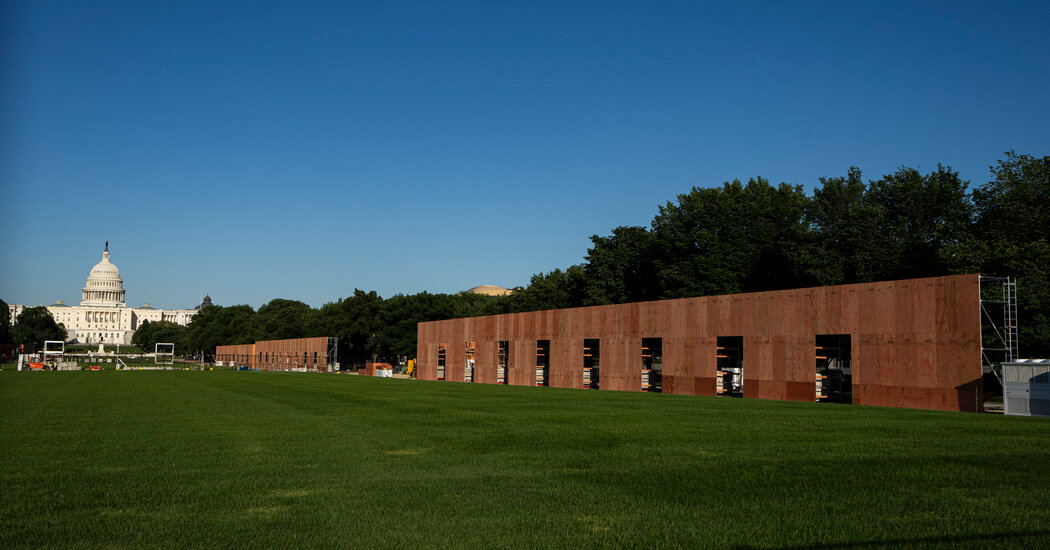
The milestone of a nation’s 250th birthday should, in theory, be a rare moment of collective pause—a time to set aside everyday political squabbles, look back at a shared history, and look forward together. Yet, as the United States approaches this monumental Semiquincentennial, the crown jewel of the national celebration, the Great American State Fair, is instead exposing the deep ideological fault lines of a highly polarized era. Planned to kick off on the National Mall, the 16-day festival was envisioned as a grand, unifying tapestry of American culture, food, and community. However, the event has quickly transformed into a battlefield of political branding, with several states withdrawing their participation as the shadow of partisan politics looms heavily over what was supposed to be a nonpartisan civic party.
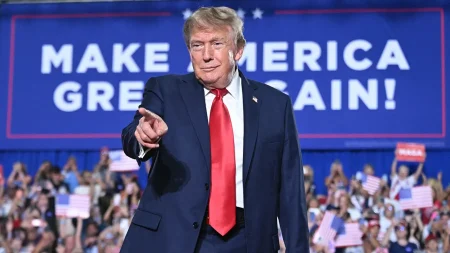
At the heart of the friction is the decision by at least five states—Connecticut, Massachusetts, North Carolina, Pennsylvania, and Oregon—to officially pull out of the national exhibition. All five of these states are currently led by Democratic governors, signaling a growing discomfort with how the Trump administration and its close allies have branded and managed the upcoming festivities. For these states, the decision to opt out was not made lightly, representing a difficult choice between participating in a high-profile national milestone or distancing themselves from an event they feel has been co-opted for political optics. The withdrawals represent a significant blow to the event’s promise of total national representation, illustrating how even a milestone as historic as a 250th anniversary can become fragmented by the gravity of modern political division.
For some of the boycotting states, the choice to withdraw was framed in practical, human terms: local priorities and the reality of tight state budgets. State representatives have pointed out that organizing a massive, multi-week exhibition in Washington, D.C., requires major financial and logistical commitments that are hard to justify when local communities are struggling. Michele Walker, speaking for North Carolina’s Department of Natural and Cultural Resources, emphasized that they chose to keep their limited resources closer to home, focusing instead on community-driven celebrations like the one planned at their own State Capitol in Raleigh. Meanwhile, in Oregon, the concerns were dual-pronged; state spokesperson Luke Harkins noted that in addition to high costs, there was a palpable, growing worry among local officials that the event on the National Mall was shaping up to be far more partisan than the unifying, inclusive celebration they were originally promised.
In the face of these high-profile defections, the organizers of the fair, a group called Freedom 250, are scrambling to keep up appearances and ensure that all fifty states and territories are represented in some fashion. Rachel Reisner, a spokesperson for the organization, insists that the fair remains a nonpartisan endeavor dedicated to celebrating every corner of the country. To bypass the boycotts of state governments, the organizers have turned to the private sector and local organizations to act as stand-ins. For instance, rather than an official delegation from North Carolina, the state will be represented by Spevco, a local specialty vehicles company. While this corporate matchmaking ensures that every state’s name will be on the map, it strips the event of its official civic weight, turning a celebration of democratic unity into a collection of corporate exhibits and substitute sponsors.
This logistical gymnastics highlights the complex and controversial nature of Freedom 250 itself, which operates as a subsidiary of the National Park Foundation. What began in 2016 as a quiet, bipartisan congressional commission to plan the nation’s birthday has morphed over the years into an operation heavily influenced by political allies and big-donor access. Critics have pointed to a lack of financial transparency despite the use of taxpayer funds, as well as high-dollar donor perks and events that seem designed to elevate political insiders. The fair’s secular, festive vibes have been further complicated by the inclusion of highly commercialized and partisan events nearby, such as a major Ultimate Fighting Championship match on the White House lawn, championed by close presidential allies. This blurring of civic commemoration, corporate influence, and political campaigning eventually alienated the event’s scheduled musical performers, many of whom backed out after realizing the heavy political undercurrents of the venue.
As the physical footprint of the Great American State Fair rises on the National Mall—complete with regional food stalls, military showcases, and a towering 110-foot Ferris wheel—the atmosphere remains charged with irony. The grand structures of celebration are being built, but the spirit of shared nationhood feels noticeably strained. With musical acts canceling and political rallies taking their place, the fairgrounds reflect the complex reality of a modern America finding its way through deep division. Ultimately, the empty stalls and corporate stand-ins serve as a poignant reminder of the challenges of defining a singular national identity, showing that even on its 250th birthday, America’s most complex struggle remains learning how to celebrate together.