


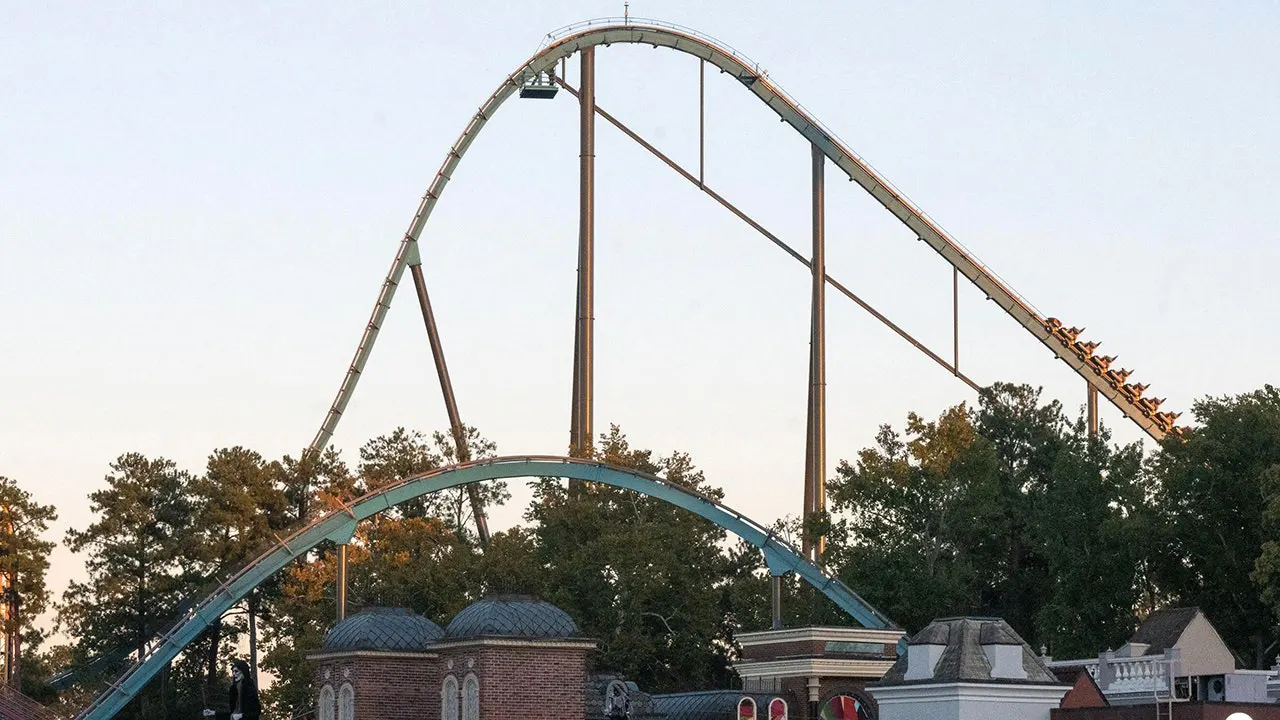
On a warm October afternoon, Six Flags Over Georgia should have been a place of carefree laughter. Families streamed through the gates, teenagers screamed with delight, and the Goliath roller coaster loomed over the park like a promise of pure adrenaline. But on Oct. 12, that promise turned into a nightmare. Hassan Jihad Ibn Kariem, a 42-year-old man, was ejected from the ride, and witnesses described a horrifying sequence: he rose out of his seat, seemed to hang in the air for a terrible instant, and then fell headfirst back into the coaster car before being thrown from the ride. The screams of joy turned into screams of terror. Other riders were left shaken, some in tears, as the park shut down the ride and emergency personnel rushed to the scene. Kariem died at the hospital, leaving behind a family, friends, and a community struggling to understand how a day at an amusement park could end in such a sudden, violent loss. In the immediate aftermath, reports swirled. Some passengers who had ridden Goliath earlier that day said they had felt uneasy about the restraints—that the lap bars seemed loose, or that there was too much room between the bar and their bodies. Those concerns, shared in the chaos after the accident, would take on a new and haunting significance. For those who witnessed the fall, the memory of the sounds—the metallic click of the coaster climbing its first hill, the rush of wind, the sickening thud—would not fade easily. The ride, a towering steel giant that had thrilled countless visitors since its debut, now stood silent under a slate-gray sky, surrounded by yellow tape and parked emergency vehicles. The initial reports were confusing, but one detail was clear: the ride’s restraint system, a lap bar designed to hold passengers securely, had not been enough. And in the days that followed, a larger story emerged—one about safety, trust, and the fragile line between thrill and tragedy.
Less than two weeks later, Six Flags made its first major move. In a statement released on Friday, John Reilly, the president and CEO of Six Flags Entertainment, said the company was “reinforcing safety precautions at our parks and taking additional measures, including adding seat belts on Goliath and other coasters with a similar restraint.” The announcement was both a concession and a promise. For the families who had trusted the park with their lives, it was also a reminder that the old system—lap restraints that had been considered state-of-the-art—was no longer enough. Reilly did not offer many details. Six Flags did not say exactly which other coasters would receive the seat belts, nor did it give a timeline for when the rides might reopen. But the company said it had enlisted independent engineers and inspectors to review safety procedures across all of its parks. This was not just a technical fix; it was an effort to restore a shattered sense of trust. Yet for many, the announcement raised more questions than it answered. If seat belts were necessary now, why had they not been there before? Why had the lap bars, designed to lock securely over a rider’s thighs, failed in the first place? The company’s carefully worded statement could not erase the image of a man slipping out of his seat. It could not bring back Kariem. It could only offer a solemn commitment: that this would not happen again. Still, the silence on specifics—which rides, when, how—left riders, employees, and safety experts waiting for more. The phrase “similar restraint” was chilling in its vagueness, suggesting that the problem was not confined to a single ride. Park-goers began to look at lap bars with new suspicion. In the meantime, the roller coasters that had been pulled from service stood silent, their empty trains resting in the stations, a visible reminder that the business of fun is also a business of liability, and that every safety decision has a cost.
To understand what went wrong, it helps to understand the ride itself. Goliath was built by Bolliger & Mabillard, a Swiss manufacturer widely regarded as one of the most respected names in roller coaster engineering. The company’s coasters are known for smooth loops, steep drops, and airtime—that weightless sensation riders feel at the top of a hill. The restraint system on Goliath was central to that experience. In a U.S. patent granted to the company in 2001, the designers described a system meant to give riders the sensation of sitting on a “flying carpet” while still “guaranteeing optimum security.” The design was elegant in theory: a padded restraint that locked over the rider’s lap and upper legs, held in place by a bar between the knees. It was intended to be comfortable, unobtrusive, and safe. Unlike the shoulder harnesses used on many other coasters, the lap bar allowed for a feeling of openness, almost as if you were flying. But that feeling of freedom came with a vulnerability. If the bar did not lock properly, or if a rider was somehow able to move beyond it, there was nothing else to catch them. The very feature that made the ride so thrilling—the absence of a heavy harness—may also have made it more dangerous. Experts began to examine the ride’s mechanism, checking sensors, latches, and the hydraulic systems that hold the bars in place. The question was not just whether Kariem’s restraint had failed, but whether the design had a flaw that could affect other rides built by the same manufacturer. Investigators would later look at video footage, ride logs, and maintenance records. They would interview the operators who checked the restraints before dispatch. And they would ask the most basic question of all: How could this have been prevented? For the families waiting for answers, the technical details were cold comfort. They wanted to know how a machine designed to guarantee security could betray a man so completely.
The impact of the accident spread far beyond one park. In total, nine Six Flags roller coasters—all manufactured by Bolliger & Mabillard and all using a similar lap-restraint design—were taken out of service. Goliath remained closed, of course, as state and local officials continued their investigation into Kariem’s death. But the other eight coasters, located at Six Flags parks in Illinois, New Jersey, North Carolina, Ohio, and Ontario, Canada, were also shut down. For regular visitors, the closures were a jarring sight. Roller coasters that had been running for years, with names like Batman, Riddler, and others, were suddenly silent, their entrances blocked by chain-link fences and “closed for maintenance” signs. For those who had planned trips around these rides, the inconvenience felt minor compared to the weight of the tragedy. Some guests were disappointed; many more were anxious. The decision to close nine rides across the continent suggested that the problem was not isolated, and that investigators were taking the possibility of a systemic issue seriously. Six Flags said it had brought in independent engineers and inspectors to review safety procedures, a step meant to reassure the public that the company was doing everything it could. But the lack of a timeline was troubling. Six Flags did not say when the rides might reopen, which coasters would receive seat belts, or even whether seat belts alone would be enough to prevent a similar tragedy. Safety experts noted that seat belts are a common secondary restraint on many coasters, but they are not a substitute for a functioning primary lap bar. If the lap bar itself is defective, a seat belt can only do so much. The investigation, the inspections, and the retrofits would all take time. Meanwhile, every passing day with a closed coaster was a reminder that the amusement park industry, which thrives on the illusion of effortless joy, operates on a foundation of complex machinery, constant monitoring, and the quiet assumption that nothing will go wrong.
The shock waves extended beyond Six Flags properties. SeaWorld Orlando, one of Florida’s most popular attractions, temporarily shut down its Mako roller coaster after learning that the ride used a restraint system similar to the one on Goliath. Mako, a floorless coaster named after the fastest species of shark, had opened to great acclaim and was known for its smooth, soaring ride. But in the wake of the Georgia accident, park operators decided not to take any chances. The ride remained closed for about a week, and when it reopened on Tuesday, many visitors were relieved—but the memory of the tragedy lingered. At SeaWorld, guests who arrived expecting to ride Mako were redirected to other attractions. Some were understanding. Others felt a chill, realizing that the same technology that had once seemed so safe was now suspect. A roller coaster at La Ronde, an amusement park in Montreal, was also temporarily closed, though it was not immediately clear how long that closure lasted. These precautionary measures reflected a broader anxiety in the theme park world. If a restraint system that had been certified by engineers and approved by regulators could fail once, could it fail again? The answer, no one wanted to say out loud, was that it could. Amusement parks are places where people willingly hand over control to machines, trusting that the men and women who design and maintain those machines have thought of every possibility. The Goliath accident shattered that trust. For the families who had visited Six Flags Over Georgia on Oct. 12, the ride was not just a ride; it was a death trap. For everyone else, it was a warning that safety in the amusement park industry is not guaranteed, but is a constant, ongoing struggle. The closures at SeaWorld and La Ronde were not just bureaucratic precautions; they were an acknowledgment that public confidence is fragile and that a single tragedy can ripple across an entire industry.
Ultimately, the death of Hassan Jihad Ibn Kariem is a story about a man, not a machine. He was a father, a son, a friend. He went to Six Flags Over Georgia expecting a day of fun, and he never came home. Reports have described him as a college graduate, a man with dreams and responsibilities, and his family is said to be pursuing legal action in the wake of his death. An attorney has warned that the accident could raise broader safety questions, and the investigations by state and local officials are all attempts to make sense of a senseless loss. But these efforts also point to a larger reckoning. How much risk is acceptable in the pursuit of fun? When a roller coaster is designed to make riders feel like they are flying, who is responsible for making sure they don’t fall? The seat belts being added to Goliath and other coasters are a small, symbolic gesture—a piece of webbing and a buckle that might have saved one life. But they cannot undo the damage. They cannot restore the trust that evaporated in a single moment on a clear October day. They can only serve as a reminder that safety is not a static achievement, but a continuous effort. For the amusement park industry, the lesson is clear: every ride, every restraint, every safety check must be re-examined, not just after a tragedy, but before it. For the rest of us, the lesson is more personal. We ride these machines because they make us feel alive, because we trust the people who built them and the people who run them. That trust is a gift, and it is never guaranteed. As the investigation continues, as the seat belts are installed, and as the coasters slowly reopen, the memory of a man who went to the park on a sunny morning and never returned will remain. Perhaps that is the real legacy of this tragedy: a moment of collective pause, a reminder that every thrill is borrowed from a system of safety that must never be taken for granted. His name was Hassan Jihad Ibn Kariem. He deserved better. And so does everyone who straps into a coaster and takes a deep breath, hoping that the ride will end safely.