

Across the heart of America, a weekend meant for celebration turned instead into a chorus of sirens and grief. In three distinct college communities stretching from the Midwest to the coast, the familiar sounds of homecoming cheers, tailgate laughter, and street-corner chatter were violently interrupted by gunfire. By the time the last shell casing had been collected and the first frantic phone calls made to worried parents, one young life had been extinguished, and at least twenty-one others lay wounded in hospitals that should have been treating nothing more than sprained ankles or too much celebration. These were not anonymous urban hot spots; these were campuses where students walk to class, where alumni return for cherished traditions, where the local coffee shop knows the faces of its regulars. And yet, across Indiana, Delaware, and Alabama, the same chilling reality settled in: nowhere, not even the hallowed grounds of higher learning, is truly safe from the epidemic of violence that has woven itself into the American story. Police departments, university presidents, and shell-shocked students were left not just to investigate shattered crime scenes, but to answer an unanswerable question—how could this happen here, again?
The first echoes of gunfire rang out in Bloomington, Indiana, shortly after the witching hour on a Saturday morning that was supposed to belong to Indiana University’s homecoming. For hours, the historic intersection of Kirkwood Avenue and Dunn Street had hummed with the electric energy of a campus alive with reunion, with old friends reconnecting, with the easy joy of youth. But at approximately 1:30 a.m., the festivities curdled. Officers who had been monitoring the large crowd, their presence a quiet reassurance amid the sprawl of celebration, heard pops that were unmistakably gunfire. In the chaos that followed, they spotted a man wielding a firearm, sprinting away from the scene—a figure swallowed by the panic until officers apprehended him near Dunn Meadow, where they recovered both a weapon and scattered shell casings. Though police would later state it was unclear whether this suspect had actually fired any shots, and though no deaths were reported in Bloomington, the damage was done. The crowd that had been riding the high of school pride dispersed into a terrified scatter, and at least seven people were taken to hospitals, their injuries a stark price for a night of supposed joy. Police noted that a disturbance in the crowd may have lit the fuse, but such explanations do little to comfort the students who now associate their beloved homecoming with the smell of gunpowder and the sight of emergency lights reflecting off storefront windows. Indiana University police and state troopers arrived in force, but they were arriving to a scene that had already changed forever for everyone present—a lesson in how quickly the ordinary becomes the traumatic.
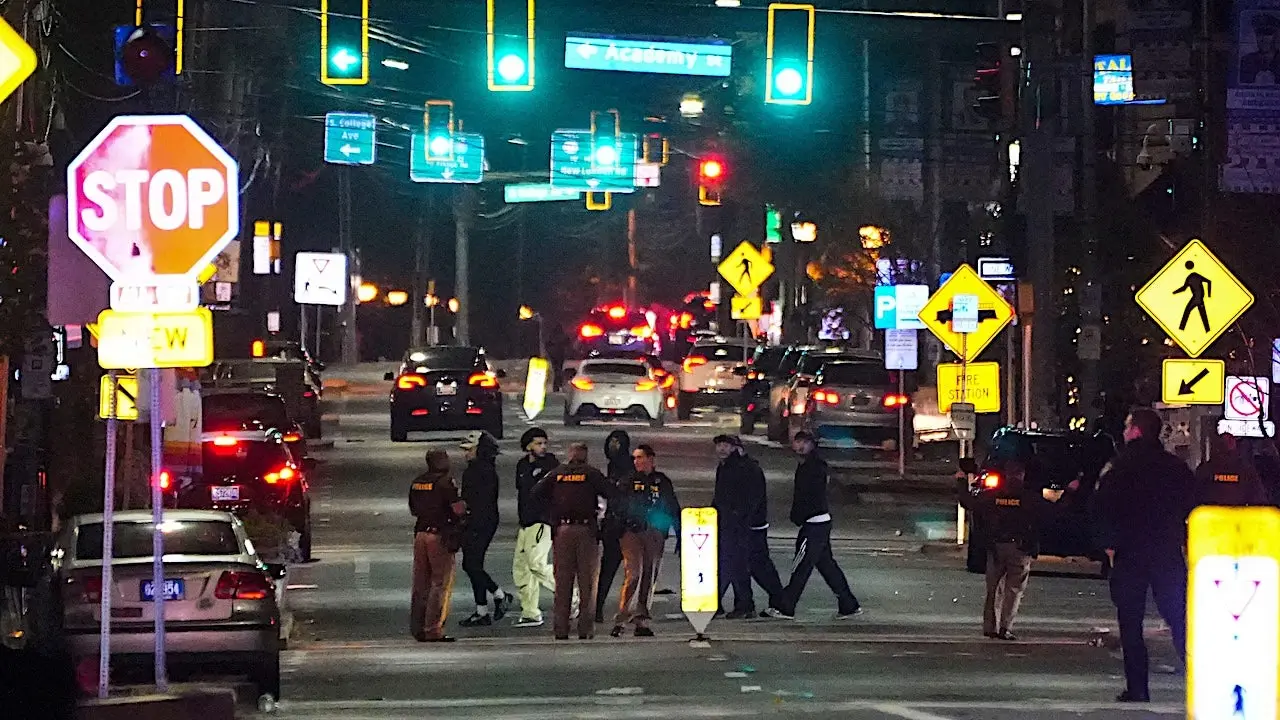
Hundreds of miles away, the University of Delaware awoke to its own nightmare. The shooting on Main Street in Newark on Saturday night sent shockwaves through a community that prides itself on its charming college-town feel. “We are deeply concerned about the shooting on Main Street Saturday night, which has impacted our entire community,” said Peter Bothum, the school’s director of media relations, his words carrying the weight of institutional grief. The university, ever cautious with unconfirmed facts, did not immediately provide a confirmed number of victims or offer clarity on fatalities, but reports indicated at least six people had been hospitalized, their beds filled by the young lives of students whose only crime was being out on a weekend night. University President Laura Carlson, in a painful email to the campus community, wrote with a rawness that betrayed her administrative composure: “I am writing to you about the shooting last night in Newark on Main Street, although it is difficult to know what to say when violence like this erupts in our community.” She acknowledged that “we are all impacted,” and asked the community to keep the victims in their thoughts and hearts as they received care. But her words also acknowledged the invisible wounds—the students and community members who were on Main Street, who witnessed the violence, who will carry those images for years. It is one thing to read about gun violence in the abstract; it is another to have watched it unfold on your street, to have run from it, to have heard the screams of strangers become the soundtrack of your academic year. Newark police led the investigation, but for the students, the most pressing question was simply whether their friends were okay, and whether the place they now called home would ever feel the same again.
In Birmingham, Alabama, the violence struck at the heart of one of the South’s most storied traditions. The Magic City Classic is not just a football game; for more than a century, it has been a reunion, a celebration of heritage, and a testament to the resilience of two historically Black universities—Alabama A&M and Alabama State—who have turned their rivalry into a beloved annual pilgrimage. Nearly 70,000 fans packed the stands for Saturday’s game, won by Alabama A&M 31-28, in one of the largest crowds in the entire division. Families with children, alumni with decades of memories, and vendors lining Graymont Avenue West created a festival atmosphere outside Legion Field. But shortly after 7:50 p.m., that festive air dissolved. Officers found nine people suffering from gunshot wounds in the 400 block of Graymont Avenue West—a stretch that should have been filled with the clatter of commerce and the chatter of fans drifting home. One person was dead. One victim clung to life in critical condition, while seven others lay stable but wounded in hospital beds. Birmingham Police Chief Michael Pickett expressed his gratitude that more people weren’t injured, a cold comfort but a real one. Officers detained one individual for questioning and secured “multiple weapons” from the scene, yet the deeper wound lingers. This was not a random act in a forgotten alley; it was an attack on a celebration that represents Black excellence, shared history, and the warmth of community. Even the game’s rich legacy, so deep that Alabama State coach Eddie Robinson Jr. has proposed a Hall of Fame to honor it, feels fragile when a single evening can end with a body in the street and families left to reconcile their beloved tradition with the violence that shadowed it. The crowd was mostly gone by the time the shots rang out, the stadium having disgorged its 70,000 souls, but the vendors and stragglers remained—the everyday people—and they paid the price.
These three tragedies did not exist in isolation. As police in Indiana, Delaware, and Alabama began their grim work, other communities reported their own catastrophes. In Dallas, four people were dead and fifteen injured following three separate shootings in a single neighborhood, a scene so sprawling that Police Chief Daniel Comeaux described it as a “really big scene” that was “spread out.” Officers were interviewing arrested individuals, desperately trying to piece together whether the shootings were connected or merely the ambient violence of a city on edge. In Fayetteville, Arkansas, six people were transported to hospitals with gunshot wounds after a shooting that followed an altercation early Sunday morning; there, too, no arrests had been made. The pattern is as predictable as it is maddening: a crowded gathering, a dispute or a trigger-happy individual, a sudden eruption that leaves shell casings and casualties. It happens at football games, at tailgates, on main streets, in downtown districts. It happens near Notre Dame, where a police officer and a woman were shot after football tailgates. It happens at Florida A&M, where twelve people were injured near a football stadium, including six children. It happened in Iowa, where students were wounded downtown after a fight erupted near campus. The list grows with each passing week, each incident adding to a national ledger of grief that has become impossibly heavy. These are not statistics; they are sons and daughters, classmates and team members, young people with uncertain futures and older ones with deep roots in their communities. And every single one of them was in a place they believed to be safe.
As the sun rose on Sunday morning, the campuses and streets that had hosted these celebrations were transformed. Police tape fluttered in the breeze, marking off areas where the ground still held the shadows of fallen bodies. Grief counselors were mobilized, university presidents drafted careful statements, and students scrolled through group chats, accounting for their friends. The practical tasks of investigation—checking hospitals, interviewing witnesses, reviewing surveillance footage—continued in parallel with an emotional reckoning. For the University of Delaware, the future became about updating a dedicated alerts page and sharing confirmed information with a community desperate for answers. For Indiana University, it was about reassuring students that the streets they walked would be guarded. For Birmingham, it was about preserving a cherished tradition that had been tarnished, but not erased. The resilience of these communities is remarkable, but it is also exhausting. Every school year brings new notifications, new vigils, new declarations of “thoughts and prayers” followed by the inevitable silence until the next tragedy strikes. The toll on students is incalculable; they are asked to learn, to grow, to build their futures, while being constantly reminded that their lives can be interrupted or ended by a stranger’s weapon. Parents drop their children off at college with hope and anxiety intertwined, wondering if their alma mater is any safer than the world they grew up in—knowing, with a sinking feeling, that it is not.
Yet even in the wake of such violence, there is a stubborn thread of humanity that refuses to snap. The first responders who rushed toward the sounds of gunfire while others fled. The bystanders who applied pressure to wounds with their own hands, who called 911 with shaking fingers, who helped police search for the fallen. The university presidents who, despite their formal language, reached out to their communities with genuine pain. The neighbors who opened their doors to students who needed refuge, the counselors who stayed late into the night, the chaplains who stood quietly in hospital corridors. These are the counterweights to the violence, the reminders that community is not just a word in a mission statement but a lived reality. The Magic City Classic will be played again next year, because the tradition is bigger than the men who bring guns to it. Main Street will be filled again, because the students of Delaware refuse to surrender their campus to fear. Kirkwood Avenue will welcome homecoming again, because the alternative—retreating into fortified seclusion—is not a life worth living. As the investigations continue, as arrests are made and charges are filed, as the injured heal and the bereaved mourn, these communities are already engaged in the harder work of rebuilding. They will host vigils, they will demand change, they will examine the systems that fail them, and they will hold each other close. This is the agonizing cycle of American life in the twenty-first century: heartbreak, recovery, resolve, and then heartbreak again. But within that cycle is also hope—stubborn, defiant, and resilient. Because as long as there are college students walking to class, alumni returning to old haunts, and families gathering on game days, there is something worth fighting for. And that, perhaps, is the truest victory these communities can claim.