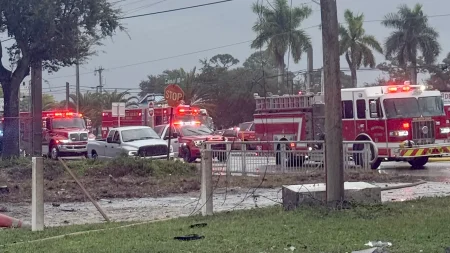


There are some images that the mind refuses to accept. A plane is supposed to be a marvel of engineering, a silver shape that catches the light as it climbs into the sky, carrying people away from one life and toward another. But in the photographs and video clips that began circulating online, that familiar symbol of hope and progress became something else entirely. The footage showed the plane plunging toward the ground with a terrible, unnatural speed, its wings catching the air in a way that no wing should, its body tilting and twisting as if the laws of flight had suddenly been repealed. And then came the explosion. The impact turned metal into fire, and fire into a column of smoke that rose into the sky like a dark monument to everything that had just been lost. People watched the videos on their phones, in their living rooms, in crowded offices, and many of them had to look away. There is an intimacy in such footage that we are not prepared for. We see the end of a flight, but we also see the end of countless private hopes and plans and goodbyes. The plane was not just an object. It was filled with people who had reasons to fly, people who had said goodbye at security checkpoints, people who had looked out the window at the clouds and imagined the day ahead. Now all of that is compressed into a few seconds of falling and a flash of fire. The cause of the crash was not immediately known, and in that vacuum of information, the mind fills with darker possibilities. We want an explanation. We want to point to something and say, that is why. But the footage offers no such comfort. It only shows us the moment of ending, leaving everything that led to that moment hidden and unknown.
In the hours after the video was shared, the same question appeared again and again in headlines and social media posts: what led up to the crash? It is a question that feels impossible to answer, because the people who could answer it are gone. The pilots may have felt something wrong in the controls, heard an alarm, called out a warning, or simply realized that the world was falling away beneath them. The passengers may have felt a sudden lurch, seen the cabin lights flicker, heard the sound of engines changing pitch. There may have been quiet conversations, prayers, hands reaching for other hands, or a stunned silence that was worse than any scream. But all of that remains private, sealed inside the wreckage and the silence. The videos show the last seconds, but they cannot show the decisions that came before. Investigators will spend months examining every fragment of the wreckage, every meter of radar data, every weather report, every maintenance record, every training log. They will listen to voice recorders and study flight data with the patience of archaeologists. They will ask whether the plane was struck by lightning, whether a mechanical failure caused the descent, whether a bird strike or fuel contamination or a misread instrument played a role. They will consider the human factor: fatigue, stress, error, miscommunication. They will not rush to judgment, because they know that every crash is a chain of events, and the explosion on the video is only the last link in a chain that may have been forged years earlier, on a factory floor, in a control tower, in a boardroom, or in a cockpit on a previous flight. The phrase not immediately known is not a failure of reporting; it is an honest admission that some truths require time, and that our desire for instant understanding does not always match the slow and careful work of those who are trained to find the real story.
But behind the videos and the headlines, there are people. It is easy to forget that when we watch a plane fall on a screen, we are watching strangers whose lives were as real as our own. They had names, ages, jobs, families, favorite songs, old photographs, unread messages, and half-finished plans. They had people waiting for them at the airport, people who had made signs or prepared dinners or cleared their schedules for the day. Those people are now standing in the harsh light of tragedy, their hearts breaking in public because the crash was so public. They are learning about their loved ones through the same footage that the rest of the world is watching, and there is a special cruelty in that. They must ask not only what happened to the people they love, but also whether those people suffered, whether they were afraid, whether they knew what was coming. The explosion in the video is a horror to us because it is distant and sudden; to the families, it is the last moment of their loved one’s life, replayed over and over by strangers who have no personal stake in the pain. We must remember that grief is not a spectacle. It is not content. It is not something to be shared and commented upon. It is a private, aching, human experience that happens to be taking place in public. And while we wait for the investigation to reveal what went wrong, the families are waiting for something far more important: the official confirmation of what they already know in their hearts, the beginning of a long process of mourning, and the hope that the truth, however painful, will bring some measure of closure. The rest of us will move on to the next story, but they will carry this day with them for the rest of their lives.
The investigation itself will be a long and delicate operation. Teams of experts will walk through the debris field in an orderly grid, cataloguing every piece of metal, every wire, every scrap of luggage, every personal item that might hold a clue. They will look at the way the ground was scarred by the impact, the way the wreckage is scattered, the direction of the debris, the patterns of burn marks. They will recover the flight recorders, if they can be found, and they will spend days extracting and analyzing the data. They will interview air traffic controllers, ground crews, weather forecasters, and anyone who saw or heard anything in the final minutes. They will compare the plane’s history with other aircraft of the same model, looking for patterns that might point to a design flaw or a systemic problem. They will study the pilots’ backgrounds, their training, their recent schedules, and their conversations. They will ask difficult questions about maintenance procedures, about the company that operated the flight, about the regulatory environment, about the economic pressures that sometimes lead corners to be cut. And through all of this, they will be careful not to release any information until they are sure of it, because a wrong conclusion can harm the families, damage the reputation of the victims, and create a false narrative that obscures the truth. The public may grow impatient. News cycles will demand answers. But the investigators know that a crash is not a mystery to be solved in a day; it is a puzzle that must be assembled piece by piece, with humility and precision. They owe it to the people who died to get it right. They owe it to the families to provide not just answers, but the right answers, grounded in evidence and tested by rigorous analysis. Until then, the cause remains unknown, and we must learn to sit with that uncertainty.
There is also the question of how we, as observers, respond to the images that are now circulating online. The videos of the plane falling and exploding have become part of a vast digital archive of disaster, similar to the footage of other tragedies that have been captured by phones and security cameras. We are living in an age where no moment is too terrible to be recorded, and no tragedy is too fresh to be shared. The same technology that allows us to bear witness also risks making us numb. We scroll past images of suffering and then feel guilty for scrolling. We share videos and add comments that we would never say aloud in front of the grieving families. We demand answers before the facts are known, and we speculate wildly about causes that we know nothing about. This is not compassion; it is the opposite of compassion. If we truly care about the people affected by this crash, we must resist the urge to consume their tragedy as entertainment. We must wait for official information and treat rumors with suspicion. We must be mindful of the fact that the families are watching, that they can see every post, every hashtag, every armchair theory about what the pilots should have done differently. We must remember that behind every pixel of the video is a person, and behind every person is a web of relationships that has been torn apart. We can use the footage to learn, to understand, and to remember, but we cannot use it to fill a void of ignorance with speculation. The best way to honor the dead is not to make them famous in death, but to demand the truth in life, and to treat their memory with the dignity that every human being deserves. That means being careful with the images, being gentle with the families, and being patient with the investigation. It means recognizing that our shock and sadness are real, but that they are not the same as the grief of those who have lost someone.
Eventually, the investigation will end. A report will be released. The cause of the crash will be determined, and changes will be made to ensure that it does not happen again. That is how aviation works: each tragedy becomes a lesson, and the lessons become new rules, new procedures, new technologies that make flying safer for everyone. But no rule or procedure will bring back the people who died. No new technology will erase the memory of the explosion that lit up the sky. There is a profound unfairness in tragedy, a randomness that defies our desire for order. We want to believe that the world is rational, that things happen for reasons, that if we are careful enough, we will be safe. But a plane falling from the sky reminds us that we are not in control, that even our greatest achievements are fragile, that life can end in an instant. And yet, in the aftermath, we also see something remarkable. We see strangers running toward the wreckage, not away from it. We see first responders working without rest, investigators searching for truth, communities coming together to offer comfort. We see people holding vigils, lighting candles, leaving flowers, donating blood, and sharing messages of support. We see the human capacity for love and solidarity shining through the smoke. That is the other story in the videos, the one that is not immediately visible. The explosion is not the last word. The cause of the crash may not be known for some time, but this much is certain: the people who died were not alone in the universe, and the people left behind will not be alone in their grief. We are all connected, and when a plane falls, something in all of us falls with it. We do not know the pilot’s name, or the passenger’s name, or the child who was traveling alone, but we know that they were human, and so are we. That is enough to make us mourn, to make us question, and to make us hope that out of this terrible loss, some measure of understanding and mercy will emerge. Until then, we wait, we remember, and we hold the unknown in our hearts, trusting that the truth, when it comes, will be carried with the same care and gravity that it deserves.