


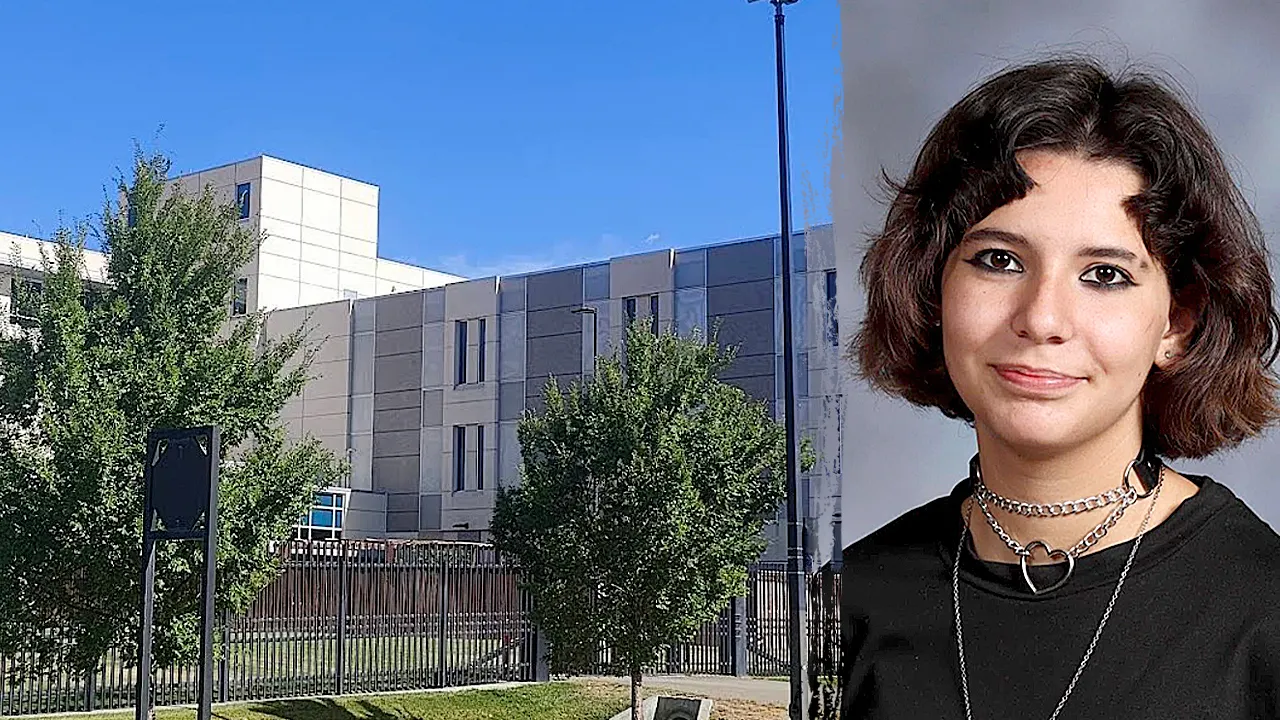
Somewhere between a quiet town in northern Utah and a city in Oregon, the long nightmare of the Arellano family finally ended the way so many missing-child stories never do: with a live girl, a grateful grandmother, and a suspect in handcuffs. Kylie Arellano vanished from her home in Garden City, Utah, on May 29, 2025. She was 15 years old, old enough to feel independent and young enough to still be vulnerable. That was more than 500 days before law enforcement found her safe in Oregon. For those 500 days, her family did what families in such circumstances do: they held tight to memory, retraced her last known movements, stared at her photographs, and waited for a phone call that might break their hearts in new ways every time it rang. They learned to live with the terrible ambiguity of a missing child. Kylie was not a wild teenager who had run away and simply forgotten to come home; at least, her loved ones never allowed themselves to believe that. They suspected, from early on, that someone from the digital world had reached into her life. In the end, those suspicions were supported by evidence. According to a law enforcement source, the man who was with Kylie when she was recovered had met her on Snapchat before she disappeared. On Sunday, Oregon police, acting on information delivered by FBI agents, brought Kylie to safety. The 39-year-old man with her was taken into custody without incident. A search that had stretched from the Rocky Mountains to the Pacific Northwest, with leads from across the United States and even other countries, had finally reached a conclusion. It was not a miracle, though it must feel like one to those who love her; it was the product of stubborn, patient, meticulous police work. To the public, Kylie was a photograph on a missing-person poster. To her grandmother, she was “our baby girl.” To the investigators who never stopped chasing possibilities, she was a reason to keep working. Now that reason has come home, but the echoes of those 500 days will not disappear overnight.
At its heart, this case was a marathon for law enforcement that refused to let a teenager become a statistic. The FBI’s Salt Lake City field office and the Rich County Sheriff’s Office jointly led a search that never lost momentum. They chased unconfirmed sightings, verified tips, worked with partners in other countries, and traced the same names and screen names through a web of digital breadcrumbs. At least twice, the public was asked for help. Rich County Sheriff Dale Stacey told reporters that detectives had gone through multiple states chasing possible sightings and specifically urged residents to check whether they had photographic or timestamped evidence that might place Kylie somewhere at a certain time. That sort of appeal can generate thousands of useless leads, but it can also produce the one decisive clue that breaks a case open. The decisive clue finally arrived in Oregon. According to an FBI statement, local police in Oregon took a minor who had been missing for a year and a half to safety, after receiving information from the field office in Salt Lake City. The agency credited Oregon State Police, the FBI’s Portland field office, and the Utah Department of Public Safety for their assistance. But the statement also closed the door on public curiosity: “As this case is ongoing, no further information will be released at this time.” That is standard in active investigations, especially one that had reached across international borders. For the public, the known facts were enough: a missing girl was found, a suspect was in custody, and the case would continue behind closed doors. Those who had followed Kylie’s story could finally exhale, even as investigators, prosecutors, and victim advocates braced for the next phase. The silence that followed was not an ending but a promise that more work remains.
FBI Director Kash Patel issued a statement that combined relief with a sharp warning. “Tonight, local police in Oregon brought a minor who had been missing for a year and a half to safety, acting on information provided by our FBI Salt Lake City Field Office,” Patel told Fox News Digital. “We are grateful she can return home, and we will continue working with our partners to hold those responsible accountable.” Then he aimed his words at an online underworld that has become a real and terrifying threat to children. “To anyone using gore groups to target and exploit children: the FBI and our partners are coming for you. We are using every tool at our disposal to combat nihilistic violent extremism, bring offenders to justice and protect America’s children.” His comments pointed to the disturbing phenomenon of online communities that share violent content and prey on minors. They also reflected the direction of modern child-exploitation investigations, in which internet platforms can become hunting grounds. Kylie’s case, with its alleged Snapchat connection, is a sobering example of how predators operate. The FBI itself had recently publicized an operation that netted more than 350 alleged child sex abusers, a number that underscores the scope and urgency of the threat. For Kylie’s grandmother, though, the investigation was not a statistic. She used social media to thank the FBI and the teams that helped find her grandchild. “THANK YOU for all you and your agents and teams are doing to find our baby girl, Kylie Arellano and bring her home!!!” Her caps-locked gratitude was the voice of a family that had spent 500 days feeling powerless suddenly feeling their power restored. It was also a testament to the quietly heroic work of federal and local law enforcement, the kind that rarely makes headlines until a case like this ends in a reunion instead of a tragedy.
There is still much the public does not know, but the emerging outline of Kylie’s disappearance fits a tragically familiar pattern: an adult male, a teenage girl, and a social media app. According to a law enforcement source, the 39-year-old suspect allegedly met Kylie on Snapchat before she went missing. If true, the timeline suggests that at least part of the grooming occurred in a space that parents cannot fully see. Snapchat’s disappearing messages make it uniquely difficult to monitor, and child safety experts have long raised alarms about the app’s potential for exploitation. A predator can slide into a child’s direct messages as an apparent peer, offer attention, validate their struggles, and slowly gain trust. He can present himself as someone who understands them better than their own parents do, and then use that trust to isolate and control. Kylie’s case began when she was 15; the man she was found with was 39. That power imbalance is virtually impossible to overcome on a child’s own. In recent years, authorities have become increasingly aggressive in going after such predators, but the sheer number of cases remains staggering. The FBI announced earlier this year that it had arrested more than 350 alleged child-sex-abuse offenders in a single operation. Each of those arrests represents a potential Kylie somewhere—a child who may have been saved before they disappeared, or a child whose rescue came later. Kylie’s rescue came after 500 days, but it did come. For anyone who has ever doubted that a missing child can be found, that is a fact worth holding onto. It remains to be seen what charges the 39-year-old will face, or whether additional suspects will be identified. But the alleged digital trail from Snapchat to a real-world meeting is exactly the kind of pathway that law enforcement now knows to trace, and it is exactly the kind of story that should make parents pause.
Long before the rescue, the investigation had swerved into painful territory inside Kylie’s own family. In late October, unsealed search warrants reviewed by KUTV revealed that investigators had examined Kylie’s mother, Stephanie Coleman. They questioned her about a 2024 allegation of physical abuse. They also probed discrepancies involving missing text messages from the night Kylie disappeared and suspicious marks inside the home. Coleman has consistently denied any role in her daughter’s disappearance and denied the abuse allegation. She provided what she said were timestamped “good night” text messages from May 29, 2025, and explained that the suspicious marks were caused by an injured cat. She has publicly maintained that Kylie was likely groomed and lured away by someone she encountered online. The unsealed warrants offer a glimpse into the immense pressure families of missing children feel when their own homes become part of the crime scene. While police systematically rule out or rule in the people closest to the victim, parents are forced to live through a nightmare alone, aware that their grief is being observed, their histories audited, and their phone records reviewed. None of this means Coleman is involved; the warrants are investigative tools, not verdicts. But they underscore a harsh truth: in missing-person cases, the first circle of scrutiny is often the family. It is an agonizing reality for innocent relatives and an essential one for investigators. As the case develops, authorities have promised to hold “those responsible” accountable—language that leaves room for further arrests or charges. For now, the focus should remain on Kylie and her safe return. It would be cruel to let sensational details distract from the fundamental fact: a child who was missing for over a year and a half is alive and in the care of people who want to help her.
Kylie’s homecoming is not the end of a story; it is the beginning of a harder one. Rescue does not erase trauma, and a 17-year-old who has spent months or years away from her family does not simply walk through the front door and resume her childhood. There will be counseling, medical care, legal proceedings, and the slow, fragile work of rebuilding bonds. There will also be questions that only time can answer. How did she survive? Why didn’t she try to escape? What happened during those 500 days? Some of those questions will be answered in the criminal case; some may never be. The fact remains that Kylie Arellano’s name can finally be removed from the list of missing children. For Garden City, a small community that has lived with this uncertainty for far too long, the news brings not just relief but a renewed sense of vigilance. Parents across the country will likely hear Kylie’s story and think about their own children’s phones, their own kids’ Snapchat accounts, their own quiet neighborhoods. They will wonder if a predator could be just a few clicks away. The answer is yes, and that is exactly why federal agents and local sheriffs continue to chase leads across state lines and overseas. In his statement, FBI Director Kash Patel promised that the FBI would continue to hold those responsible accountable. Kylie’s grandmother asked the world to thank the people who brought her “baby girl” home. The world can do that—and it can also pay attention, because the next case is always waiting to be solved. For now, there is an afterword to a missing-person poster: a grateful family, a suspect in custody, and a girl whose life has been handed back to her. She will need every bit of human kindness in the years to come, but she has something just as important: people who never stopped looking for her, and who will not stop walking beside her now that she is home.