

-
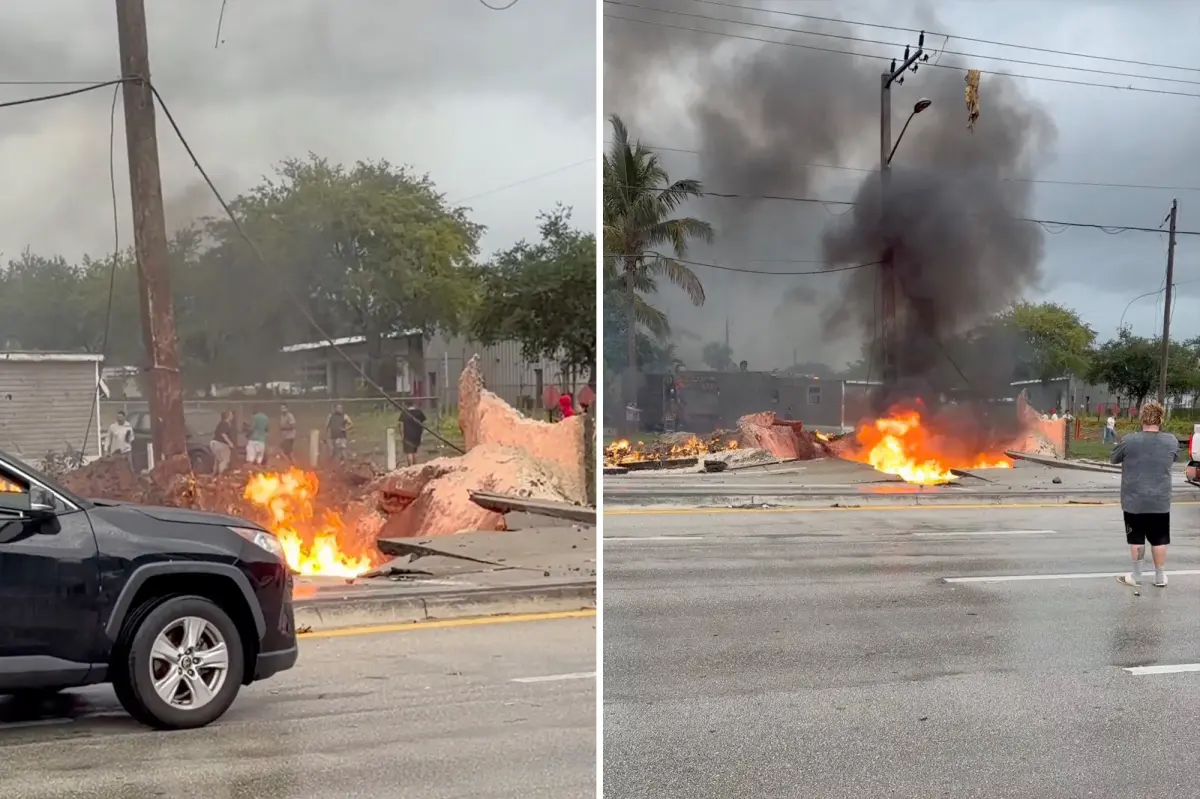
The quiet afternoon air over Greenacres, Florida, was shattered shortly after 1 p.m. when a sleek private jet turned from a routine journey into an unspeakable disaster. The aircraft, a Learjet 60 worth an estimated $2 million, plunged out of the sky and slammed into a south Florida mobile home park, turning a peaceful residential neighborhood into a scene of roaring flames, thick black smoke, and heartbreak. Witnesses described the sound of the impact as something closer to a missile strike than an airplane accident, a thunderous, unnatural blast that shook homes and sent people running toward the windows in alarm. The plane tore through trees, ripped down live power lines, and struck a mobile home with such force that the trailer was apparently obliterated, leaving only a massive crater and the twisted, burning skeleton of the aircraft in its place. Within minutes, the sky above the park was filled with smoke visible for miles, and emergency dispatchers were flooded with frantic calls. First responders arrived to find a chaotic, smoking wreckage strewn among the homes, with flames still consuming what remained of the plane and the structures around it. It was a scene that no one in that community could have prepared for, and one that would leave an entire region grieving before the full scope of the tragedy was even understood. At this early stage, no one knew exactly how many souls were aboard the chartered plane, nor whether any residents on the ground had been caught in the fireball. What was certain was that lives had been lost, and that the ordinary rhythms of daily life in a small Florida community had been violently interrupted forever.
-
The aircraft at the center of this tragedy was a Learjet 60, a twin-engined executive jet known for speed, range, and the kind of quiet luxury that makes it a favorite among those who need to travel privately. Its value, around $2 million, speaks to its place in the upper tier of general aviation, a machine designed for efficiency and comfort, not for the destruction it wrought. According to aviation news sources, the jet had been operating as a chartered flight, though authorities remained tight-lipped about its origin, destination, or the reason for its ill-fated flight. What is known from eyewitness accounts is that the plane appeared to be in serious trouble as it descended, clipping trees and shearing power lines before hitting the ground in a massive explosion of fuel and metal. The crash was so violent that video captured from nearby bystanders showed a towering fireball rising into the sky, followed by thick plumes of smoke climbing over the mobile home park. In the footage, the crater left by the impact is enormous, a dark scar in the earth surrounded by scattered wreckage and the charred remains of what had been someone’s home. The sound, according to those who heard it, was not the scream of engines but a deeper, more terrifying roar, followed by a series of secondary pops and explosions. It was a noise that seemed impossible, one that did not belong to a normal day in a quiet town, and it will likely remain seared into the memory of every person who heard it for the rest of their lives.
-
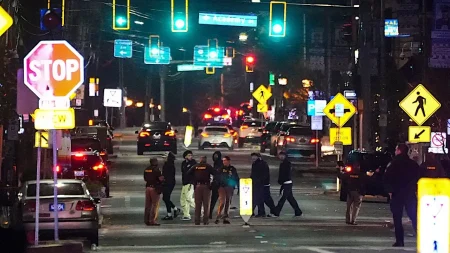
Palm Beach County Fire Rescue quickly declared the event a “mass casualty incident,” a term used when the number of victims may overwhelm available resources, and the implications were grim. Officials confirmed that there were “multiple fatalities,” but in the immediate aftermath, they could offer no definitive number. It was not clear how many people had been sitting in the chartered Learjet when it went down, nor whether any residents of the mobile home park had been killed or injured on the ground. The uncertainty only deepened the anguish, as family members and friends waited in unbearable suspense, desperate for word about loved ones who might have been aboard the aircraft or who lived in the path of the falling plane. The response was swift and massive: fire trucks, ambulances, police cruisers, and specialized rescue units converged on the scene, their lights flashing against a backdrop of smoke and ruin. Firefighters battled the blaze, hosing down the smoldering wreckage while searching for any sign of survivors, though the intensity of the fireball made the task horrifically difficult. The crater and the scattered debris left little hope of easy recovery, and rescue teams were forced to proceed carefully, mindful of the unstable structure and the risk of further collapse. Ambulances stood at the ready, but the scene was more about recovery than rescue. In the hours that followed, a solemn silence settled over the area as investigators began their painstaking work, trying to piece together what had gone wrong and, more importantly, to identify the remains of those who had perished. The official guidance to the public was simple: stay away, let the authorities do their work, and wait for answers that would not come quickly.
-
The setting of this disaster only adds to its emotional weight, because Greenacres is not the kind of place associated with private jets and high-altitude drama. It is a community of modular and mobile homes, modest residences and neatly kept yards, home to retirees on fixed incomes, young families starting out, and working-class people who value quiet and affordability. Mobile home parks are often close-knit places, where neighbors know each other by name, share cookouts and holidays, and look out for one another’s children. The idea that a sleek, expensive aircraft would come down here, of all places, feels almost grotesque, a collision of two entirely different worlds. The park sits just outside Palm Springs, Florida, in a broader region that has seen tremendous growth and development, but the character of this particular community remains friendly, unpretentious, and neighborly. On a normal afternoon, the streets would have been filled with the ordinary sounds of life: dogs barking, lawn mowers humming, maybe a porch radio playing old songs. Instead, the afternoon was torn apart by an explosion that killed the silence and brought in a swarm of emergency vehicles, news helicopters, and curious onlookers. Residents stood behind police tape, their faces pale and drawn, watching helplessly as firefighters picked through the wreckage of what had been a neighbor’s trailer. Some held each other and cried; others stared in blank disbelief, unable to process the fact that a disaster of this scale had struck so close to home. The loss is not just to the families directly involved, but to the entire community, which now must come to terms with the fact that one of their own was taken in the most sudden and violent way imaginable.
-
The crash raises a host of questions that will occupy investigators for months. The National Transportation Safety Board was expected to take charge of the investigation, sending a team of experts to comb through the wreckage, examine the flight recorders if they could be recovered, and determine what caused the Learjet 60 to lose control on its approach. Why was the plane flying so low over a residential area? Was there an engine failure, a sudden mechanical problem, a medical emergency in the cockpit, or an error in navigation? Did the pilot attempt some desperate maneuver to avoid the homes below, or did the aircraft simply fall from the sky without warning? These answers will matter to the families seeking closure, and to the aviation industry, which relies on such investigations to improve safety and prevent future accidents. But for the residents of Greenacres, the more pressing question is human: who has been lost, and how could such a thing happen in their quiet neighborhood at lunchtime, when ordinary people were going about their day? The fact that the plane was a private charter adds another layer of concern, as communities across the country increasingly share the sky with corporate jets, small planes, and helicopters. Residents of mobile home parks, often located near airports or along flight paths because of cheaper land and easier zoning, may now wonder if they have been living beneath a hazard without knowing it. For those who saw the fireball and felt the ground shake, the fear is visceral and impossible to shake. The investigation will be methodical, measured, and slow, but for those who lost someone, the waiting is a special kind of torment, a daily reminder that the worst day of their lives is still not fully understood.
-
In the end, this is a story of ordinary people facing an extraordinary tragedy, a community brought together by grief and by the stubborn human instinct to care for one another. There will be time in the coming days and weeks for memorials, for candlelight vigils, for fundraisers to help those whose homes were destroyed and whose lives were turned upside down. There will be moments of silence, words of condolence from scattered politicians, and prayers spoken in a dozen different ways by people who share the same aching need to make sense of something that seems senseless. But beyond the official response and the media coverage, there will be quieter moments too: a neighbor offering a comforting hand, a stranger leaving flowers at the edge of the crater, children asking difficult questions that parents struggle to answer. The names of the victims, when they are finally released, will become more than statistics; they will become symbols of fragile lives cut short, of family dinners left unfinished, of plans for tomorrow that will never come to pass. The rescue workers who sifted through the ash and metal will carry this day with them for the rest of their careers, as will the first responders who answered the call and saw things no amount of training can fully prepare them to see. And the community of Greenacres, a place of double-wide homes and front-porch waves, will have to find a way to heal, even as the scar in the earth remains, a terrible reminder of how quickly life can change. But if there is any comfort to be found in days like this, it is in the resilience of the human spirit, the way that sorrow can draw people together in ways that joy sometimes cannot. The fire will eventually be extinguished, the wreckage cleared, the wreckage removed, but the memory of this afternoon will endure, a tragic chapter in the story of a little town that never expected to make headlines, and never expected to lose so much, all at once, in the space of a single terrifying moment.