


On an otherwise unremarkable Thursday evening, the kind that settles over Washington, D.C., like a blanket of amber streetlight and quiet duty, the careful calm around the White House was broken by a single parked car. Secret Service officers were making their routine passes along Constitution Avenue, a broad and storied boulevard that runs alongside the heart of American power. Their attention was drawn to a vehicle that seemed out of place—a man sitting inside, not moving with traffic, not parking for a monument, but lingering in a way that felt wrong. According to the Department of Homeland Security, the officers approached and began speaking with the driver. What they heard next sent a chill through the evening air. The man, later identified as an illegal immigrant from Venezuela, reportedly told them that voices in his head had instructed him to come to the nation’s capital and kill President Donald Trump. In that moment, the quiet street was no longer just a backdrop for tourists and commuters; it became the stage for a potential national security crisis, one that ended not with gunfire or chaos, but with the swift, quiet professionalism of the agents who had trusted their instincts.
The suspect’s words were as troubling as they were strange, a window into a mind clearly at odds with itself. He had come to Washington, he said, because something inside him was commanding him to do violence against the President of the United States. There is a particular kind of sorrow in that admission—the confession of a man who was, by his own account, losing a battle with his own thoughts. The Secret Service officers, trained to take every threat seriously, did not dismiss his statement as mere rambling. They moved carefully, methodically, understanding that the line between a confused individual and a determined attacker can be razor-thin. The man was a Venezuelan national, present in the country illegally, which added an immediate layer of complexity to an already tense situation. For the officers on the scene, the task was not to judge his politics or his history, but to protect the President and the public. They had to determine whether the voices he described were the product of a psychiatric breakdown, a deliberate performance, or something in between. Whatever the truth, the encounter had already crossed a threshold: a direct threat against the President, made within sight of the White House, from inside a stolen vehicle, with firearms at hand.
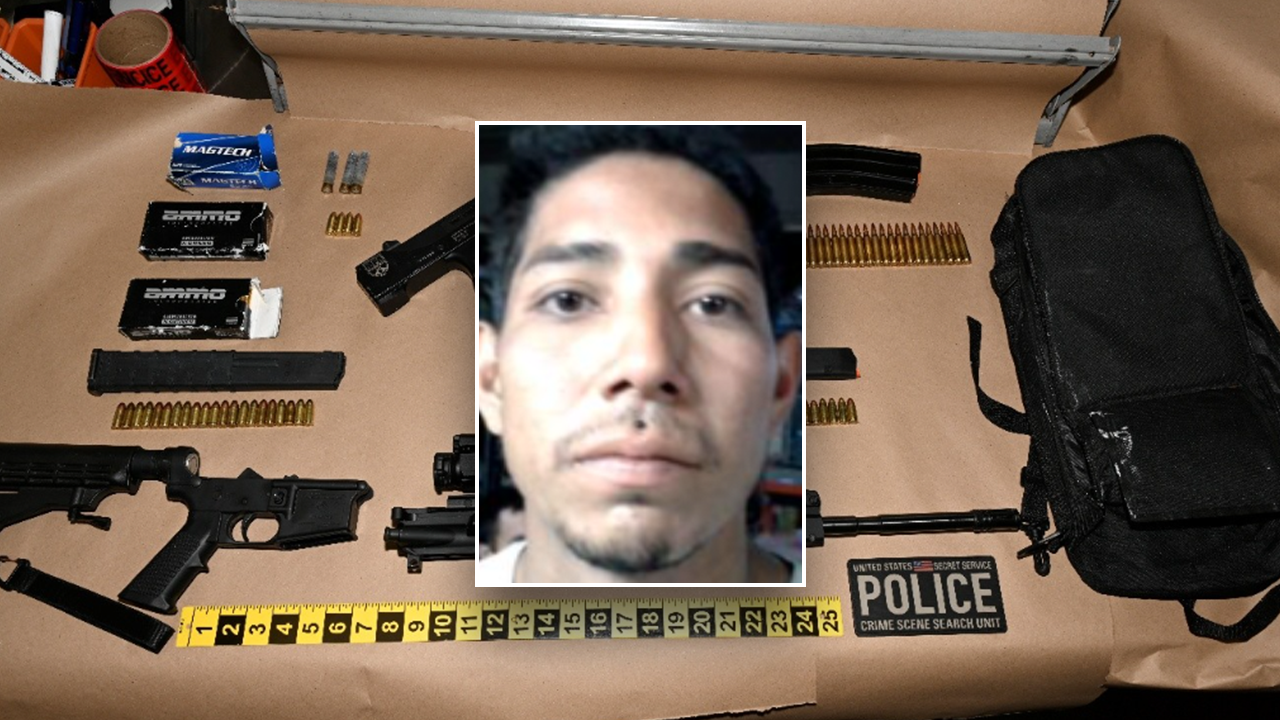
When investigators searched the vehicle, the scene shifted from alarming to deeply unsettling. Inside, officers discovered three firearms: an AR-15-style rifle, two handguns, and dozens of rounds of ammunition. The weaponry was not the kind of thing one carries for a casual stroll through the capital; it was an arsenal, compact but lethal, the sort of firepower capable of inflicting catastrophic harm in seconds. The vehicle itself was stolen, which meant that the man had not only come to Washington with deadly intentions—or at least with deadly means—but had done so in a car that belonged to someone else, adding theft to the growing list of offenses. It is impossible to know what would have happened had the Secret Service not noticed the suspicious parked car. Perhaps the man would have continued to sit, wrestling with his voices until the moment passed. Perhaps he would have driven away, the threat evaporating into the night. But perhaps not. The presence of the rifles and ammunition, combined with his stated intention, suggests that the situation was a powder keg, and the officers’ intervention may have prevented a tragedy. In the aftermath, the suspect was taken into custody, and federal authorities began the slow, careful process of unraveling his story—where he had been, how he had crossed into the country, where the weapons had come from, and whether anyone else was involved.
The arrest immediately reignited conversations about the safety of American political leaders and the pressures facing those who protect them. The Secret Service, an agency accustomed to silent vigilance, was thrust into the headlines once again. For the agents who patrol the perimeter of the White House, every unusual behavior is a potential threat, and every threat must be weighed against the possibility that it is a cry for help. This incident, though still developing, underscores the extraordinary difficulty of their mission: they must be both armed guardians and compassionate listeners, capable of discerning a genuine assassination plot from a deeply troubled person in need of mental health care. The Department of Homeland Security, which released the initial details, made clear that the investigation was ongoing, and that more information would be released as it became available. But beyond the official statements lies a more human reality. The suspect, a man far from home, reportedly driven by voices no one else could hear, found himself at the center of a national security drama. His status as an illegal immigrant complicates the narrative, raising questions about border enforcement and the vulnerabilities of the immigration system. Yet it also raises questions about the support systems—or lack thereof—for people who arrive in a new country with unresolved trauma, mental illness, or both. The incident is a reminder that public safety and human dignity are not opposites; they are intertwined.
There is a temptation to reduce this story to a single headline, to file it under “thwarted attack” and move on. But to do so would be to miss the deeper currents beneath the surface. The man’s reported belief that voices were commanding him to kill the President is a heartbreaking reflection of how mental illness can warp a person’s perception of reality, turning terrifying impulses into irresistible orders. It also highlights a troubling pattern in American life: too often, people in the grip of severe psychiatric distress are left to wander until they collide with the machinery of law enforcement. The presence of high-powered firearms in a stolen car only deepens the tragedy. How did this man, who was in the country illegally, gain access to an AR-15-style rifle and two handguns? That question will likely be at the center of the investigation, and it speaks to the broader, unresolved debate over gun access and public safety. At the same time, the incident feeds into the political polarization of our era, where threats against leaders are increasingly common, and where the border, crime, and security are constantly debated in stark terms. But behind the politics is a human being, one who may be more sick than evil, more lost than malicious. That does not excuse his words or the weapons found in his possession, but it does invite us to consider a fuller picture, one that acknowledges the complexity of the human mind and the failures of the systems meant to catch people before they fall.
As the story continues to develop, and as investigators piece together the man’s movements and intentions, the nation is left to hold two thoughts at once. The first is gratitude: gratitude for the Secret Service officers who noticed a parked car and followed their instincts, for their training, their patience, and their courage in facing a potentially lethal situation without firing a single shot. The second is unease: unease at how easily a troubled man with stolen guns and violent thoughts could come so close to the President of the United States, and unease at the knowledge that this is not an isolated event but part of a broader climate of threat, fear, and division. The suspect’s case will now move through the federal system, where he will face serious charges and, one hopes, receive the kind of mental health evaluation that his reported statements so clearly demand. For the rest of us, the episode is a reminder that safety is never guaranteed, that vigilance is a constant companion in the nation’s capital, and that the line between a person in crisis and a national threat is often thinner than we would like to admit. We are left with questions that no single arrest can answer: How do we protect our leaders without dehumanizing those who struggle? How do we secure our borders while still seeing the people who cross them as human? And how do we keep our streets safe from guns in the hands of those who hear voices telling them to kill? There are no easy answers, only the ongoing, imperfect work of balancing security with compassion, and vigilance with grace. For now, the White House stands, the President is safe, and a man sits in custody, facing the consequences of a night when his own mind became his enemy. The rest of the story is still unwritten, and the country will watch, waiting for the next chapter.