



Paragraph 1
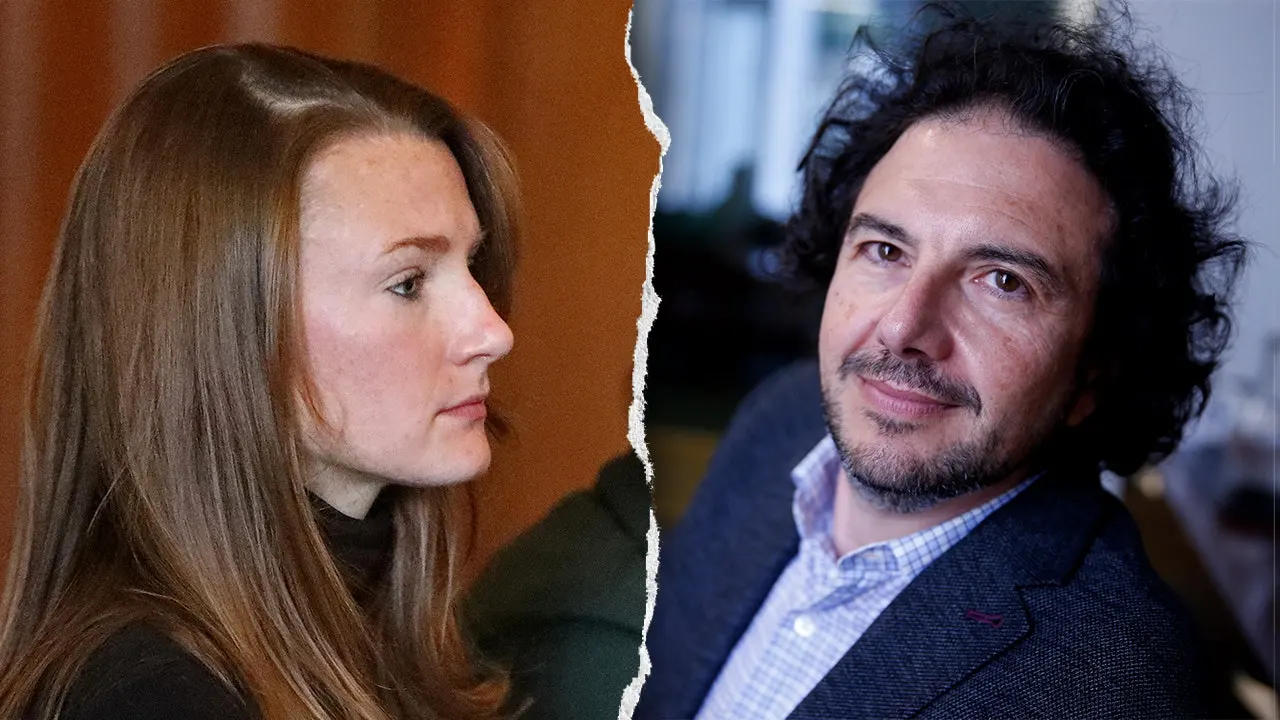
In a courtroom battle that has become a flashpoint for the clash between workplace misconduct claims and the right to defend one’s reputation, a Massachusetts jury awarded former MIT biologist Dr. David Sabatini a $6 million defamation verdict against Dr. Kristin Knouse, the former colleague whose sexual misconduct allegations dismantled his once-stellar American scientific career. The verdict, delivered in October, was a striking reversal of fortune for Sabatini, who had been publicly ostracized and stripped of his positions at MIT, the Whitehead Institute, and the Howard Hughes Medical Institute after Knouse’s accusations surfaced in 2021. But this is far from over. Knouse has formally appealed the verdict, and Sabatini’s legal team has filed its own cross-appeal, setting the stage for a prolonged appellate war that could reshape how sexual misconduct allegations are litigated and how internal campus investigations are weighed against civil defamation claims. The case is not merely a personal dispute between two scientists; it has become a proxy battle over due process, the credibility of accusers, the authority of university tribunals, and the enduring consequences of the #MeToo movement in elite academic institutions. For Knouse, the stakes are existential—she faces a massive financial judgment and a verdict that publicly branded her allegations false. For Sabatini, whose career was incinerated long before a jury heard his side, the victory is bittersweet, arriving years after he lost his laboratory, his income, his reputation, and his place in the American research establishment. Both sides are now digging in, convinced that the appellate courts will vindicate their version of events, and both are warning that the outcome will send a powerful message about who gets believed when scandal strikes a powerful man and a junior woman.
Paragraph 2
Knouse’s legal team is framing the appeal as a fight for the future of workplace misconduct reporting. Her attorney, Ellen Zucker, contends that the $6 million verdict will have a chilling effect on women who come forward with allegations of harassment or abuse, particularly in male-dominated fields like science. “When someone can get sued for having spoken out, that kills the willingness of anyone to participate in an investigation,” Zucker told Fox News Digital. “Daring to speak out will get you sued, and the likelihood that anyone would come forward goes down a lot.” In presenting her client’s case, Zucker argued that Knouse told the truth about her experiences with Sabatini, and that multiple other women corroborated her account, while investigators at the Whitehead Institute found that Sabatini violated institutional policy by engaging in an undisclosed romantic relationship with a junior researcher. According to Zucker, the jury’s verdict reflects a broader societal refusal to believe women who challenge powerful men, and she warned that penalizing accusers will deter people from cooperating with internal investigations, leaving campus tribunals and employers unable to address misconduct. The appeal, she insisted, is rooted in a conviction that the verdict cannot stand legally—not merely because of the facts, but because of the legal standards applied to defamation claims arising from statements made during internal investigations and institutional proceedings. Zucker’s language is deliberately sweeping, invoking the spirit of #MeToo and warning that a victory for Sabatini is a defeat for every woman who has ever hesitated to report abuse because she feared retaliation. She characterized the case as a cautionary tale about what happens when institutions defer to powerful men and punish the women who expose them, and she promised to fight the verdict all the way through Massachusetts’ appellate courts, where she believes the legal errors made at trial will be corrected.
Paragraph 3
Sabatini’s defense team rejects that narrative with equal force, arguing that the jury’s verdict was rooted not in anti-woman bias but in a careful examination of contemporaneous documents that revealed Knouse’s claims were fabricated. “The jury verdict in this case should have no impact on women who truly have been harassed or abused and decide to report the misconduct,” said Sabatini’s attorney, Lisa G. Arrowood. “What the jury found here, based on the contemporaneous documents written by Dr. Knouse herself, was that no harassment ever occurred and that her claims of harassment and rape were false and defamatory. This jury verdict, therefore, has no bearing on people who report truthfully.” Arrowood emphasized that the case was not an attack on the #MeToo movement, and she noted that Sabatini has never criticized the right of women to complain about genuine harassment. Instead, she argued, this was a unique situation in which the jury concluded that Knouse had manufactured allegations to harm Sabatini, and that the evidence—emails, text messages, and other documents written by Knouse herself—proved it. Arrowood also expressed confidence that the $6 million award would survive appeal, noting that the trial judge was careful and frequently ruled in Knouse’s favor on close evidentiary calls. “This is her right,” Arrowood said of Knouse’s appeal, “However, the judge was very careful in this case and frequently ruled in her favor on many close calls. We think her appeal will be unsuccessful.” Beyond defending the verdict, Sabatini’s team is pursuing a cross-appeal aimed at overturning an earlier court decision that dismissed the Whitehead Institute as a defendant in the case. Arrowood argues that the institute, along with MIT and other institutions, should be held accountable for relying on a one-sided investigation that ignored exculpatory evidence, and she has signaled that the cross-appeal is an essential part of Sabatini’s broader fight to clear his name and restore his legacy.
Paragraph 4
The events that led to this legal reckoning began more than a decade ago, and the relationship between Sabatini and Knouse was, by all accounts, complex and fraught with power imbalances. The pair first met in 2012, when Knouse was a doctoral student in the Harvard-MIT M.D./Ph.D. program and Sabatini served on her thesis committee. At the time, Sabatini was one of the most celebrated biologists in the world, a towering figure in the field of cell metabolism whose work had implications for cancer and aging research. By 2018, after Knouse had been named a Whitehead Fellow—a prestigious independent research position—the two began a romantic relationship, according to court documents. Sabatini maintains that the relationship was consensual, and his attorneys have pointed to the fact that Knouse continued to engage with him willingly for years. Knouse, however, alleged that the relationship was coerced, and that Sabatini exploited his position of authority to create a workplace dynamic she could not escape. In 2021, a Whitehead Institute investigation found that Sabatini had violated its workplace relationship policy by failing to disclose the relationship, and that finding triggered his ouster from every institution with which he was affiliated. But the investigation did not stop at policy violations. Text messages made public during the trial painted a far more complicated picture, with Knouse writing that she would “fixate on how I’m being held as a backup and competed against other women.” In one message about visiting Sabatini’s hotel room during a work retreat, she wrote that “in hindsight, it was quite aggressive, #hetoo.” More damningly, court documents revealed that Knouse launched a campaign against Sabatini that she herself called “Covert Operation Dethrone,” and she joked in a text message about buying a Lamborghini if she won a settlement. For the jury, these documents were decisive—they undermined the narrative of a frightened accuser and instead suggested a calculated effort to destroy Sabatini’s career, while also exposing the messy, ambivalent nature of a relationship that did not fit neatly into the categories of predator and victim.
Paragraph 5
The institutional response to Knouse’s allegations was swift and severe, and it is that response that Sabatini’s legal team now wants to put on trial. After Knouse accused him of sexual misconduct, MIT administrators stripped Sabatini of his tenured position, the Howard Hughes Medical Institute dismissed him, and the Whitehead Institute ousted him from his role. These actions were based on internal Title IX investigations, which concluded that Sabatini had violated institutional policies by engaging in an undisclosed romantic relationship with a junior researcher. But critics of such investigations, including the Foundation for Individual Rights and Expression, have long argued that campus tribunals operate under a low burden of proof, rarely allow the accused to cross-examine accusers, and are vulnerable to manipulation by the parties involved. Arrowood seized on this critique, arguing that the institutions rushed to judgment before the facts could be tested in a court of law, and that investigators allowed Knouse’s legal team to control what evidence they received—even to the point of controlling what materials were shown to Sabatini himself. “This verdict should send universities the message that all the facts and documents from both sides need to be obtained and analyzed before deciding to fire someone,” Arrowood said. “Here, the investigators and the Whitehead Institute allowed one party and her lawyers to control what evidence they received and even what they could show to Dr. Sabatini. Had the full picture been shown to the institution and to the investigators, we believe the outcome would have been different.” Sabatini’s team is now seeking to hold the institutions accountable for what they allege was a negligent and biased investigation, even though MIT and HHMI were not defendants in the original defamation lawsuit. MIT declined to comment on the case but referred Fox News Digital to a 2022 letter sent to staff when Sabatini resigned, in which the school said he had “behaved in ways incompatible with the responsibilities of faculty membership.” HHMI did not respond to a request for comment, leaving the institutions’ role in the saga to be examined in the appellate proceedings.
Paragraph 6
When the case finally reached a Suffolk County courtroom, the jury delivered a resounding verdict for Sabatini, denying Knouse’s counterclaims of harassment and ordering her to pay him millions in damages for defamation. But the outcome in court did not undo the years of professional and personal devastation Sabatini endured. His American research operation was destroyed, his funding was pulled, and his name—once synonymous with groundbreaking science—became associated with scandal. It took the intervention of activist billionaire Bill Ackman, who funded a new laboratory for Sabatini in Prague, to allow him to continue his life-saving cancer research in Europe. Reflecting on the ordeal, Sabatini told Boston 25 News: “I lost everything. There was nothing left of my normal life. I’ve been dreaming about this moment for all this time, but often thinking I might not make it, financially, emotionally or physically.” His words capture the human toll of a case that has always been about more than legal doctrine. For Sabatini, the defamation victory is a vindication, but it cannot restore the years he lost, the students he could no longer mentor, or the institutional support that once allowed his research to flourish. For Knouse, the verdict is a catastrophic personal and financial blow, and her appeal represents both a legal challenge and a desperate attempt to reclaim her own narrative. As the case moves to the Massachusetts appellate courts, with formal briefing schedules still pending, both sides are preparing for a long and bitter fight. Sabatini’s team is seeking to expand the scope of liability to include the institutions that fired him, while Knouse’s lawyers are arguing that the trial was tainted by legal errors and a hostile social climate. Whatever the appellate courts decide, the case has already become a landmark in the ongoing national conversation about how to balance the protection of those who report misconduct with the rights of the accused. It is a story of two brilliant scientists whose lives collided in a relationship that neither could fully control, and whose aftermath is a warning about the high price of ambiguous truth in an era of polarized outrage.