


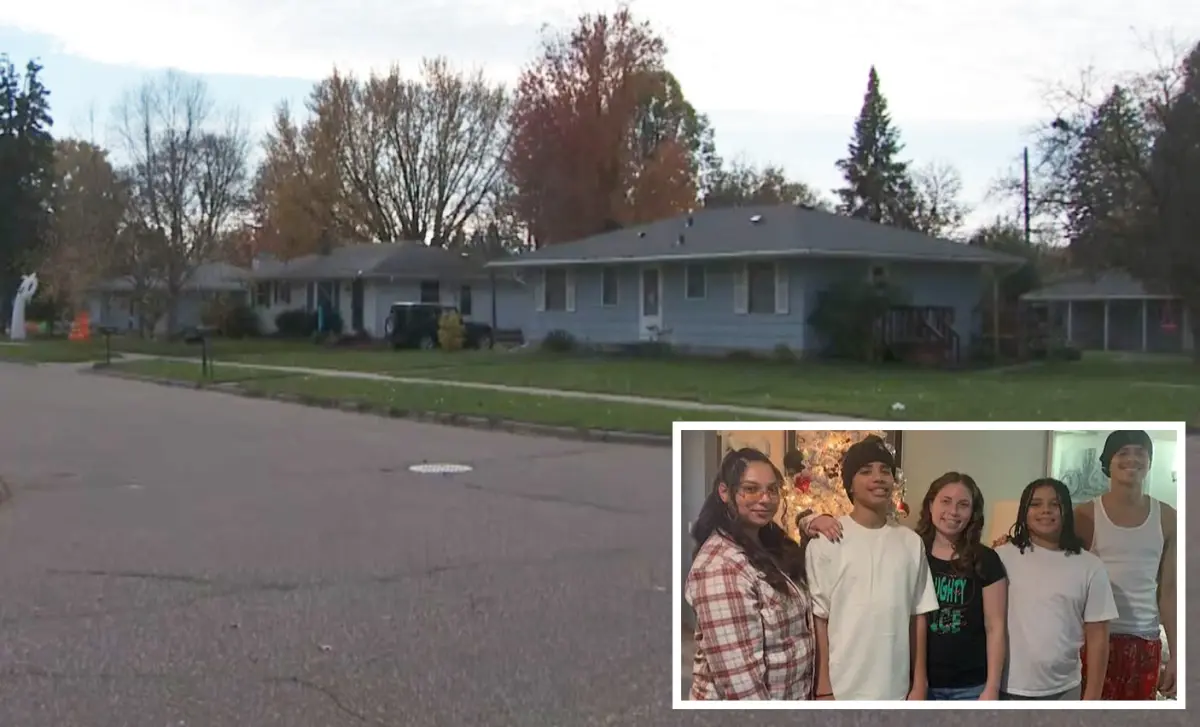
Just before 1 a.m. on Nov. 1, a 911 call came in about an assault in a quiet home in North St. Paul, Minnesota. When police arrived, they discovered something far more devastating than a typical disturbance. Lisa Thigpen, 37, was dead, her body showing visible stab wounds. Gregory Thigpen, 41, her husband and the father of her four children, was also dead, killed by what appeared to be a self-inflicted gunshot wound. Inside the same house was the couple’s 14-month-old granddaughter, a tiny, helpless witness to an unspeakable tragedy, found unharmed by some strange mercy. Police described the attack as an apparent murder-suicide and an “isolated incident” involving the married couple. As of Friday afternoon, the official causes of death had not been released. But for anyone who knew Lisa’s history, the word “isolated” must have felt painfully wrong. This night did not come out of nowhere. It was the brutal final chapter in a story that had been written over many years, one filled with threats, fear, a restraining order, and a mother’s desperate attempt to save her family from the very man who would eventually destroy it.
Lisa was a mother of four. Her eldest daughter, Paige, was 22; her other children were 17, 15, and 13. She and Gregory had been together for a long time, long enough to build a family and, at least on some level, long enough to believe that love could heal old wounds. But the violence in their relationship went back more than a decade. Court records show that in 2006, shortly after their first daughter was born, Gregory was sentenced to 90 days in jail on a criminal conviction of domestic assault causing bodily harm, for an incident involving Lisa. It should have been a moment of reckoning. Instead, it became part of a pattern that somehow did not end the relationship. Lisa and Gregory had three more children and married in 2015. To neighbors and friends, they may have looked like an ordinary family, the kind of family that gathers for birthdays and school events and quiet evenings at home. But behind that ordinary facade, Lisa was living in fear. She later described Gregory as “extremely controlling” and said he kept her isolated from everyone. The verbal and emotional abuse, she wrote, had been present throughout their relationship and had only gotten worse. It is difficult for outsiders to understand why a woman stays with a man who hurts her. But domestic violence is never simple. It is tangled with love, fear, shame, hope, and the desperate desire to keep children safe. Lisa was not weak. She was a woman trying to hold her family together, even as the seams were tearing apart.
In September 2018, Lisa made the difficult decision to seek legal protection. Her petition for a restraining order is chilling, not because of legal language, but because of the raw terror in her words. “The verbal and emotional abuse has been throughout our relationship and have escalated over the past year – threatening to kill me, kill me and himself, and leave the kids without parents,” she wrote. She described herself as unable to sleep, shaky, and constantly afraid. She told the court about an incident earlier that month when she and Gregory were arguing about money while two of their children were home. Suddenly, Gregory yelled, “I am going to snap,” and attacked her. He held her down, restrained her, and attempted to strangle her. As she struggled for breath, he told her he was going to kill her. The only reason he stopped was that their daughter, then just 14 years old, walked into the room and told him to let go. A teenage girl should never have to witness her father trying to kill her mother. She should never have to be the one to intervene in such a terrifying moment. Lisa survived that attack, but she was left with scratches, bruises, and red marks across her neck, chest, and chin. More importantly, she was left with the certain knowledge that her husband was capable of killing her. In her request for the restraining order, she wrote, “I am scared of what Greg will do the next time he snaps.” The judge believed her and granted the order. For a brief time, Lisa had the protection of the law, though no piece of paper can truly stop a man determined to hurt someone.
Two months later, Lisa went back to court and asked to have the restraining order removed. The judge granted that request as well. In her filing, Lisa reportedly explained why: “I would like to go to marriage counseling and save [our] family and marriage.” She added, “He has been following the order and I feel no threats to me. Gregory is willing to be more involved with [our] children.” To many people, this decision is hard to understand. How could a woman who was strangled and threatened with death put her trust in her abuser again? But those who work with domestic violence survivors know this is heartbreakingly common. Abusers apologize. They promise to change. They can be charming and convincing, especially when they sense their victim is ready to leave. The survivor wants to believe in the possibility of change because the alternative is too painful to accept: the realization that the person she loves and shares children with is dangerously broken. Lisa also had to consider what leaving would mean. It would mean splitting her family, uprooting her children, facing financial hardship, and possibly triggering even more rage from a man who already felt entitled to control her. The most dangerous time for a victim is often after she leaves. So Lisa chose to stay. She chose counseling. She chose hope. There is no shame in that choice. The shame belongs to the man who used her hope as another form of control. Gregory may have followed the order for a while. He may have seemed sincere. But the violence was not over. It was waiting. And Lisa, who had once been so afraid she could not sleep, allowed herself to believe that maybe, just maybe, her family could be saved.
The events of Nov. 1 were the final, unbearable consequence of that fear. Police found Lisa dead from stab wounds and Gregory dead from a gunshot wound. The couple’s 14-month-old granddaughter was in the house, untouched by the violence but forever touched by its aftermath. Police called the attack an isolated incident, but for Lisa’s family, it was the end of a long nightmare they could not prevent. Now her children are left to navigate a world without their mother, while also trying to understand that their father was the one who took her life. Paige, only 22, suddenly carries an enormous weight. She is not just grieving; she is responsible for helping to raise her younger siblings, handling legal matters, arranging funerals, and trying to find a way forward after a tragedy that will define their lives. A GoFundMe page was created to support them, and by Friday it had raised almost $30,000. The page’s plea is heartbreaking: “Paige, at just 22 years old, is also facing the overwhelming responsibility of helping care for her younger siblings and handling the many things that come with losing a parent so unexpectedly. No one this young should ever have to face these kinds of challenges.” The money will help with immediate needs, but it cannot bring Lisa back. It cannot erase the image of what happened that night. It cannot undo the years of abuse, the threats, the fear, or the moment a 14-year-old had to stop her father from killing her mother.
Lisa Thigpen was more than a victim. She was a woman who tried, again and again, to protect her children and to keep her family together. She was a mother strong enough to write down her worst fears in a legal document, hoping someone would listen. The system did listen for a time; it granted her a restraining order. But the system cannot watch a woman sleep. It cannot be present when an argument about money turns into strangulation. It cannot force a man to change, and it cannot guarantee safety after the order is lifted. What we can do, in her memory, is pay attention to the women who speak about their fear before it is too late. We can stop blaming survivors for staying, and understand that leaving is often the most dangerous moment of all. We can remember that abuse is not always bruises and broken bones. It is also sleepness nights, shaking hands, isolation, and the slow crushing of hope. Lisa wrote the truth in 2018. He threatened to kill her, kill himself, and leave their children without parents. She knew the danger. She hoped he was wrong. But in the end, she was not saved, and her children are left without a mother, carrying a grief no one should have to carry. No one should live in that kind of fear. No one should die in that kind of home. And no young woman should have to stand at her mother’s grave at 22, suddenly responsible for everything that comes after.