






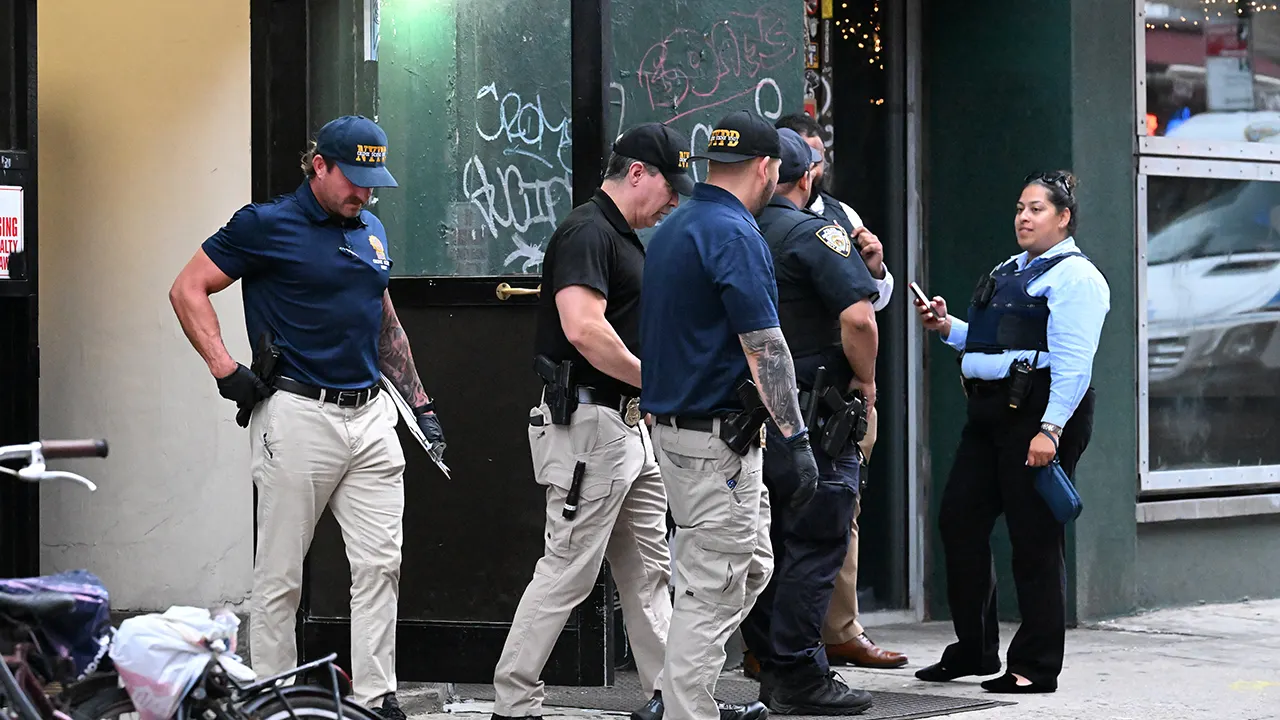
The Lower East Side of Manhattan, a neighborhood perpetually alive with the chatter of tenement residents and the cacophony of urban life, was shattered on a seemingly routine Sunday afternoon. The peace of the day was violently interrupted just after 4 p.m., when dispatchers began receiving a frantic flurry of 911 calls reporting an assault in progress at 126 Ludlow Street, a modest apartment building nestled among the area’s ever-present mix of old-world charm and modern gentrification. What was initially typed into the dispatch system as a domestic disturbance call would rapidly escalate into a harrowing confrontation with death, leaving a family torn asunder, a community in shock, and police officers burdened with the weight of a life-and-death decision that had to be made in the fraction of a heartbeat. The NYPD officers who arrived on the scene were entering what they expected to be a standard, albeit serious, call—yet they had no idea that they were about to encounter a man in the throes of a severe mental health crisis, armed with a large butcher knife, and actively engaged in a violent assault against a family member. The mundane, familiar façade of a brick apartment building had become the stage for one of the darkest and most tragic outcomes of urban policing—a fatal encounter where the line between protection and tragedy blurred irreparably.
As the officers entered the building through the front door, the first immediate sign that this was no ordinary disturbance came in the form of a gruesome visual trail. A thick, smeared trail of blood wound its way up the staircase, a crimson guide pointing toward the source of the violence that had been reported. This trail, stark and ominous against the worn treads of the stairwell, immediately shifted the officers’ posture from cautious to high-alert, signaling that a serious injury had already occurred. Following the path of the blood, they began their ascent, their police radios crackling with the tension of the moment. But the confrontation was destined to happen much sooner than they anticipated. Descending toward them, filling the narrow stairwell with his presence, was 54-year-old Wei Chan. In his hand, he brandished what officers would later describe as a large butcher knife, a weapon designed for carving meat, now transformed into an instrument of deadly intent. The officers immediately recognized the lethal threat posed by the man and the weapon. In a desperate bid to de-escalate the situation without resorting to deadly force, they issued repeated, clear, and loud verbal commands for Chan to drop the knife and show his hands. The stairwell, normally a cramped, echoing space, became a pressure cooker of adrenaline. NYPD Assistant Chief Melissa Eger later recounted the terrifying sequence at a Sunday evening press conference, stating plainly that despite the repeated commands, Chan continued his forward advance, closing the distance between himself and the officers, forcing them to make an instantaneous judgment call based on the doctrine of self-defense and the protection of their own lives.
The decision to fire is the most irreversible action a police officer can take, and in that agonizing split second, the responding officers determined that retreat was no longer an option. Wei Chan’s advancement was not stopping; he was not dropping the weapon. Faced with the cold, hard calculus of survival versus the threat of imminent grievous bodily harm or death within the confined space of the stairwell, the officers discharged their weapons. The sound of gunfire exploded in the stairwell, a deafening thunderclap that ricocheted off the walls and out onto Ludlow Street, startling residents and passersby. Chan was struck, and the force of the rounds brought his advance to a definitive, tragic end. He collapsed on the landing, the butcher knife clattering away from his hand. Emergency medical personnel were immediately summoned, and the wounded man was rushed to a local hospital. Despite the efforts of trauma surgeons, Wei Chan was pronounced dead at the hospital. The immediate threat was neutralized, but the spiritual and emotional carnage had just begun. As the officers took stock of the scene, they discovered the source of the blood trail they had followed moments earlier. Upstairs, they found Wei Chan’s 75-year-old father, Cheung Chan, suffering from a significant laceration to his head. It became clear that the assault reported in the 911 call had been perpetrated by the son against the father, a violent family dispute that had erupted into a horrific act of domestic violence. The elderly father had been attacked with the very knife his son had been carrying, and it was only the swift response of the police that prevented the situation from becoming even more deadly.
The emotional weight of this tragedy is amplified by the revelation of Wei Chan’s background. According to NYPD Assistant Chief Melissa Eger, Wei Chan had no known criminal history with the department—he was not a career criminal, nor a gang member, but rather a 54-year-old man living out an ordinary life within a family structure. However, Eger confirmed that Chan did have a documented mental health history with the department. This detail humanizes the perpetrator, recasting him not simply as a violent aggressor, but as a deeply troubled individual likely suffering from a psychological crisis that spiraled out of control. It is a heartbreaking narrative that is playing out across cities nationwide: a person in the grips of a mental health breakdown, threatening a loved one, and ultimately meeting a violent end at the hands of law enforcement. The system’s failure to catch this trajectory before it reached this boiling point is a sobering reality. Meanwhile, the true victim of the initial attack, 75-year-old Cheung Chan, was also transported to the hospital for treatment. Fortunately, investigators reported that he was expected to survive his injuries, though the psychological scars of being attacked by his own son—and knowing that his son was subsequently killed—will likely linger far longer than any physical wound. The surviving officers were also transported to a hospital for evaluation, a standard procedure following an officer-involved shooting, yet a critical acknowledgment of the immense psychological toll that taking a life exacts on the individuals tasked with wearing the badge.
In the days following the incident, the official machinery of accountability and transparency kicked into high gear. Mayor Zohran Mamdani announced that he had been briefed on the tragic outcome and assured the public that a thorough internal investigation would be conducted. In a statement posted to social media platform X, Mamdani emphasized the city’s commitment to transparency, noting that “As with every incident in which NYPD officers discharge their weapons, there will be an internal investigation, and body-worn camera footage of the incident will be released.” This promise of footage release is crucial, as it offers the only objective, unfiltered record of the chaotic seconds that led to the discharge of the officers’ weapons. It will provide the public, the courts, and the investigators with the necessary context to determine whether the use of deadly force was justified, or whether alternate de-escalation tactics failed. The officers involved, who now face the scrutiny of the investigation and the psychological weight of their actions, are a reminder of the perilous nature of their profession. Assistant Chief Eger defended their actions amidst the tragedy, framing their response within the context of heroism, stating, “Their actions are a reminder of how officers run towards danger and not away from it.” While the praise from the department may offer some validation, it does little to erase the image of a mentally ill man with a knife on a staircase, a sight that will haunt all involved for a lifetime.
This fatal shooting on Ludlow Street serves as a stark, humanizing microcosm of the broader national debate surrounding policing, mental health, and the use of force. It highlights the impossible position law enforcement officers are placed in when responding to mental health crises, where they are required to act as social workers, negotiators, and armed enforcers simultaneously, often under extreme duress. For the residents of the Lower East Side, the incident serves as a grim reminder that tragedy can erupt within the most unassuming concrete walls, turning familiar streets into scenes of disbelief. For the Chan family, the loss is absolute—a father who survived the physical attack now faces a lifetime without his son, mourning a man who was lost not just to a bullet, but to the demons that had claimed his mind. As the internal investigation proceeds and the body-camera footage is reviewed, the hope remains that this tragedy will prompt a deeper examination of how we, as a society, better support those struggling with severe mental illness before a staircase becomes the final battleground. In the end, there are no victors here—only a grieving father, traumatized officers, and a community forced to reconcile with the fact that sometimes, the thin blue line is the last—and most brutal—line of defense in the face of human despair. The investigation continues, but the questions of what could have been done differently, and how such a fate could have been avoided, will linger unresolved in the quiet moments of the neighborhood.