


Paragraph 1: The Toll Behind the Badge
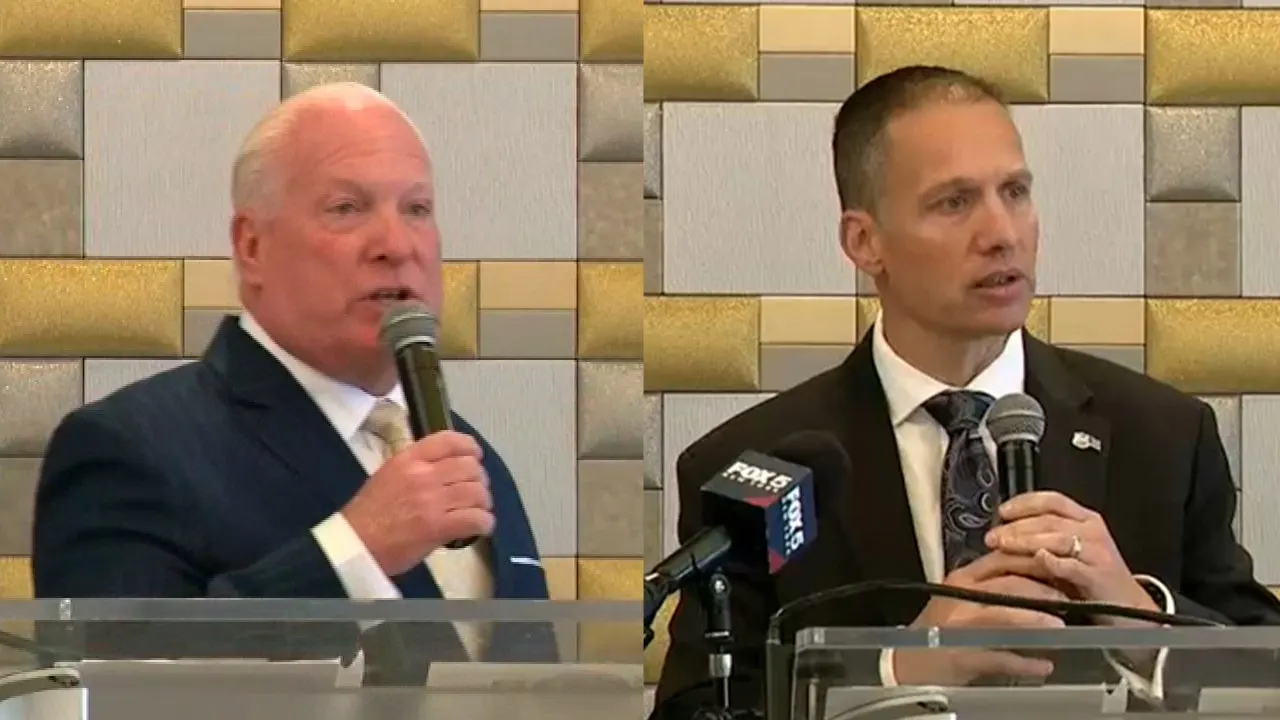
There is a kind of exhaustion that settles into a person when they realize that the job they signed up for no longer ends when they take off the uniform. For Louis Civello, a Suffolk County police officer and the president of the Suffolk County Police Benevolent Association, that reality has become impossible to ignore. Speaking at a New York State Public Safety Alliance event, Civello described the current moment for law enforcement as an “inflection point” — a moment where the dangers of the job have shifted from the streets to the front doors of officers’ own homes. “This job is harder than ever before,” he said, and the weight of those words was clear. He wasn’t just talking about the physical risks of confronting criminals, though those certainly remain. He was talking about the creeping, chilling realization that the people who resent law enforcement are no longer content to face an officer in the line of duty. Instead, they follow them home. They learn their addresses. They stand outside their windows. They target wives and children. The badge, once a symbol of public service, has become a target for a kind of personalized vengeance that leaves officers feeling that no space is truly safe. And as Civello made clear, this is not a rare or extreme case. It is becoming the new normal, and the laws meant to protect public servants have not kept pace with the darkness arrayed against them. The event itself was designed to advocate for stronger legal protections for law enforcement and other local officials, but what resonated most was the deeply human story Civello shared — a story that could have ended in tragedy but instead ended in a warning.
Paragraph 2: A Protester Followed Him Home
Civello’s story began in what should have been an ordinary encounter for a police officer. In early 2026, he arrested a protester who showed up at his office for trespassing. It was a straightforward incident, the kind of thing police officers handle every day without thinking twice. But for this particular individual, an arrest was not the end of the matter — it was the beginning of a campaign of intimidation. “Well, that wasn’t enough for this individual,” Civello recalled. The protester decided to find out where Civello lived, and then did something that remains legal in New York: he showed up at the officer’s home with a billboard truck. Let that sink in for a moment. A billboard truck, parked outside a police officer’s house, blaring a message designed to terrorize not just the officer but everyone inside that home. Civello noted the sheer resources behind such an action, observing that “these people” have enough money to buy billboard trucks, which only underscores how organized and deliberate such harassment has become. But the more chilling part of his testimony was the clarity he brought to the intent. “There’s only one reason to come to my house, right?” he said. He explained that as a public figure, his office location is no secret. There are seven police precincts in Suffolk County, any one of which could serve as a legitimate site for protest. “You only come to my home to terrorize my family, to get at me via my wife and my children,” Civello said. It was a stark reminder that the harassment of police officers has moved beyond the streets and into the most private and vulnerable spaces a person has. The billboard truck was not a protest. It was a threat, written in giant letters, telling an officer that even his sanctuary was not beyond reach.
Paragraph 3: The Family’s Fear Becomes the Norm
What makes Civello’s account so powerful is not just the incident itself but what it represents for the families behind the badge. When he went home that day, it wasn’t just him who had to process what happened. His wife had to look out the window and wonder if the person outside was a harmless demonstrator or someone bent on harm. His children had to grapple with the terrifying knowledge that their father’s job had exposed them to an angry stranger who knew where they lived. Civello was careful to say that this was far from an isolated incident. This kind of harassment, he explained, has become the norm for officers and their families. It is a psychological warfare waged in driveways and front yards, and it takes a toll that cannot be measured in statistics. The officer who spends his shift protecting strangers comes home to find that the one place he expected to find peace has been compromised. The wife who waits for her husband to return from a late shift now has to worry whether someone else is watching. Every time a car slows down in front of the house, every time a stranger rings the doorbell, there is a moment of cold fear. That is not a way to live. And yet, as Civello pointed out, the law currently offers almost no relief. “The laws are woefully inadequate, and they’re gonna get worse if we don’t work to fix them,” he said. His words were not an exaggeration or a cry for sympathy; they were a humble plea for the basic right to let his family feel safe in their own home. When an officer pins on that badge every morning, they accept certain risks. But their families never signed up for that. And the fact that a person can target a police officer’s home, with no legal consequence, reveals a serious gap in the protections society owes to those who protect it.
Paragraph 4: The Law Has Not Caught Up
Civello’s frustration came into sharper focus when he laid out exactly what the law does not do. “Right now, no law against it. No law against coming to my house,” he said. To make the point even more visceral, he painted a disturbing hypothetical: “So if you are a rapist, and I as a police officer arrest you, you can sit at the edge of my driveway and greet my wife as she comes home. No law against it. No law is publishing my address. If you want to look me up, look any police officer up, look any of us up, it’s a few clicks of a mouse.” The terrifying reality is that in New York, there is no specific statute preventing this kind of targeted harassment against public servants. A criminal can discover where an officer lives, stand outside that home, and even publish the address online for others to see, all while staying within the letter of the law. This is why Civello called on the state to enact an anti-doxxing law, which would make it illegal to publish the personal information of law enforcement officers or other public employees with malicious intent. He also raised a question that may be on the minds of many officers: “Why don’t we have a ‘Halo Law?'” The nickname refers to a recently enacted Florida statute that protects first responders from harassment after they give an individual a warning. In Florida, there is at least an acknowledgment that the people who wear the uniform deserve an extra layer of legal protection. New York, Civello argued, has no such common-sense safeguards. “Why don’t we have an anti-doxxing law? Why don’t we have laws that make sense?” he asked. The answer, he would suggest, is not that such laws are complicated. It is that the political will to protect police officers and other public servants has not matched the escalating danger they face. And until that changes, officers are left to wonder whether anyone in Albany is truly listening to the quiet fears of their families.
Paragraph 5: A Wider Coalition and the Call for Fifteen Feet
Civello was not alone in his appeal for stronger protections. Scott Munro, the president of the Detectives’ Endowment Association, stood beside him and delivered a message that was both simple and deeply compelling. “All we’re asking for is fifteen foot,” Munro said. “Fifteen foot, that’s all we’re asking for, for safety reasons.” The request for a fifteen-foot buffer zone may sound modest, but it carries enormous meaning. It would create a protected space around public servants, ensuring that individuals who are angry or hostile cannot get so close that they pose an immediate physical threat. Munro went on to highlight the broader coalition behind this effort. The New York State Public Safety Alliance, he relayed, is a coalition of 99 unions, including firefighters, traffic agents, sanitation enforcement agents, environmental police, bus drivers, and many more. At first glance, it might seem strange to include bus drivers and traffic agents in the same conversation as police officers. But Munro explained why these workers are part of the fight: “You’re gonna say ‘why MTA?'” he said. “It’s because they’re assaulted every day, they’re in their faces every day.” The reality is that the epidemic of violence against public servants extends far beyond law enforcement. Every day, ordinary workers who simply do their jobs — whether they are driving a bus, issuing a ticket, or responding to an emergency — find themselves in harm’s way. And the numbers are staggering. “Those people get assaulted every day. Assaults are up, almost 2,500 assaults this year alone on police officers, felony assaults, and public servants in New York City,” Munro said. That is roughly 2,500 families, 2,500 homes, and 2,500 lives forever changed by a moment of violence or intimidation. These are not just statistics. They are the hidden costs of a society that has allowed disrespect for authority to curdle into outright aggression.
Paragraph 6: A Moment That Calls for Action
The testimonies of Civello and Munro paint a picture of a system strained to its breaking point. On one side, there are the officers and public servants who continue to show up every day, despite knowing that their families are not safe. On the other side, there is a legal landscape that has not evolved to meet the new realities of doxxing, swatting, and home-based harassment. The New York State Public Safety Alliance, with its impressive coalition of 99 unions, is attempting to change that. But the work is far from done. The “Halo Law” and anti-doxxing protections are not radical ideas; they are basic measures designed to ensure that the people who risk their lives for the public are not subjected to a campaign of terror in their own neighborhoods. Civello’s story, with its billboard truck and the fear it inspired, is a stark reminder that the threats facing officers are no longer confined to alleyways or dark parking lots. They have followed officers home, and they are waiting at the edge of the driveway. When a police officer puts on the uniform in the morning, they accept that they may be called upon to make the ultimate sacrifice. But their wives and husbands, their sons and daughters, never accepted that burden. Lawmakers have a choice now. They can continue to treat these incidents as isolated acts of rudeness, or they can enact the laws that give public servants and their families a measure of safety. As Civello and Munro made clear, this is not about special privileges. It is about ensuring that the people who protect our communities are not left to face the mob alone, with nowhere to turn and no law to shield them. The officers are asking for fifteen feet. They are asking for a law that protects their addresses. They are asking to be able to go home and know that home is still a sanctuary. That is not too much to ask. In fact, it is the least a grateful society can do. As Fox News Digital reached out to both unions for further comment, the question remains whether the public will heed their call before another family has to learn the hard way that no law exists to protect them. The answer to that question will determine not just the future of policing, but the very meaning of public service in New York.