


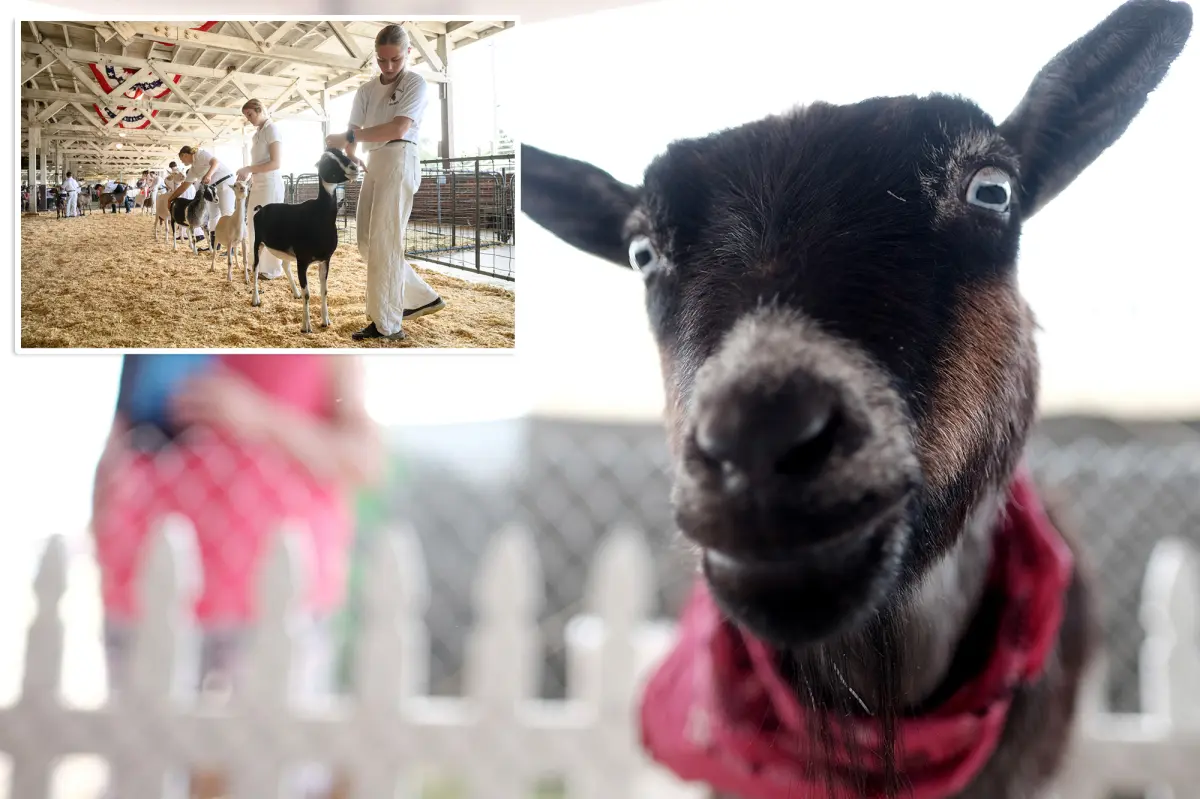
There’s a particular kind of joy that comes from watching a child kneel down beside a baby goat, offering a handful of feed and laughing as warm little mouths nibble at their palm. It’s the kind of wholesome, pastoral moment that families carry with them long after the drive home. But in North Carolina, that cherished experience has taken on a serious and unsettling tone. State health officials are now urging anyone who had contact with baby goats from a mobile petting zoo called Farm Adventures to contact their local health department. Several of those young goats have tested positive for rabies. The North Carolina Department of Health and Human Services (NCDHHS) confirmed that the infected animals came from Farm Adventures, a small operation based in Harmony, North Carolina, which had been attending off-site events across multiple counties. For anyone who visited the farm’s Harmony location or encountered the goats at an event between July 28 and August 27, health officials want to hear from them. It’s not a routine request, and it stems from the sobering reality that rabies is nearly always fatal once symptoms appear, which makes the urgency completely understandable.
The details of the exposure window are enough to make any parent pause. During the period in question, Farm Adventures was not simply sitting quietly in one place; it was a mobile operation, carrying its animals to events where children and elderly individuals were present. Those two groups are among the most vulnerable when it comes to infectious diseases, which is likely one reason the state health department is moving with such precision and caution. NCDHHS said the petting zoo held off-site events across multiple counties during the critical time frame, and organizers of those events are now being notified. The investigation is still ongoing, and officials have said that additional information about potential exposure locations will be released as it becomes available. For families who attended one of these events, the uncertainty can be agonizing. Did my child touch the goats? Was there a scratch? Was it the same day? Health officials understand this anxiety, and their message is clear: don’t wait, don’t guess, just call. A quick conversation with a local health department can determine whether someone needs medication to prevent an infection, and that small step could make all the difference.
Farm Adventures, the small family-run petting zoo at the heart of this story, has responded with a public statement that is both heart-wrenching and cooperative. According to the farm, four of its baby goats had contracted rabies, and the animals were euthanized to prevent further spread. The goats were named Molly, Maggie, Cow, and Uno — names that remind us these were not faceless livestock but cherished creatures, each with a personality and a place in the farm’s daily life. In a Facebook statement, Farm Adventures said it is working closely with public health officials, the North Carolina Department of Agriculture, and animal control to address the situation and ensure the safety of both its animals and clients. The farm also explained that the four goats were housed in a separate pen, away from the other animals at the petting zoo. They were too young to receive their vaccinations when a skunk entered their pen. While the skunk was removed, the farm was not aware that the goats had been bitten. The goats showed no signs or symptoms of rabies, which made the discovery all the more shocking. It was only after one of the animals was sent for a necropsy, following concern from the farm’s veterinarian, that the grim truth came to light. State health officials later confirmed that several of the goats tested positive for rabies at the North Carolina State Laboratory of Public Health.
Rabies is one of those diseases that has haunted human imagination for centuries, and for good reason. According to the Centers for Disease Control and Prevention (CDC), rabies is a viral disease that is deadly if people do not receive medical care before symptoms begin. Once the virus reaches the brain and clinical signs appear, survival is extraordinarily rare. The virus typically spreads through bites or scratches from an infected animal, but it can also be transmitted when saliva from an infected animal comes into contact with broken skin or mucous membranes. In the United States, bats, skunks, raccoons, and foxes are the animals most frequently found with rabies. It’s a chilling thought, but there is also a layer of reassurance in the data. The CDC reports that roughly 100,000 Americans receive rabies vaccinations following a potential exposure every year, and because of this prompt, effective treatment, human rabies infections are extremely rare in the country. In North Carolina, no human cases have been reported since 2011. That statistic is not meant to minimize the danger but to frame it accurately: the threat is real, but it is also preventable with quick action. The goats at Farm Adventures likely encountered the virus through that skunk, and while the animals did not survive, the broader human tragedy can still be avoided.
So what should someone do if they visited Farm Adventures or attended an event where the mobile petting zoo was present? The guidance from public health officials is straightforward and vitally important. Anyone who had contact with the baby goats — whether that means petting, feeding, holding, or being licked by them — should contact their local health department right away. This applies even if there was no visible bite or scratch. Rabies transmission can occur in subtle ways, and health officials are not taking any chances. The purpose of the call is not to panic people but to assess risk and determine whether post-exposure prophylaxis, a series of vaccinations that can prevent the virus from taking hold, is needed. It is crucial to act before symptoms begin. Waiting is the one thing that could turn a preventable situation into a tragic one. Health officials also want to hear from people who may have simply been present at an event where the goats were, because the investigation is still mapping out the full scope of potential exposures. For those who are worried about overreacting, the message is simple: a phone call is a small price for peace of mind. Public health departments are not there to judge or frighten; they are there to help people stay safe.
At its heart, this is a story about the fragile line between human life and the natural world around us. It’s easy to see animals as innocent, and in this case, they were. The baby goats did nothing wrong; they were victims of a skunk that slipped into their pen, and they suffered the consequences of a virus they never had a chance to fight. The farm owners, too, are grieving. They described the past few days as incredibly difficult, and anyone who has ever loved an animal can understand the weight of that statement. They made the painful decision to euthanize their animals not out of cruelty, but out of responsibility. They are cooperating with investigators, being transparent about what happened, and trying to do right by the families who visited them. Public health officials are working long hours to trace every possible exposure, notify event organizers, and release information as quickly as they can. In the end, this is a reminder that health is a shared responsibility. It lives in the choices we make, the calls we place, and the care we show for one another. If you were at a Farm Adventures event or visited the Harmony location during those dates, make the call. It could save your life, and it will certainly help a community heal.