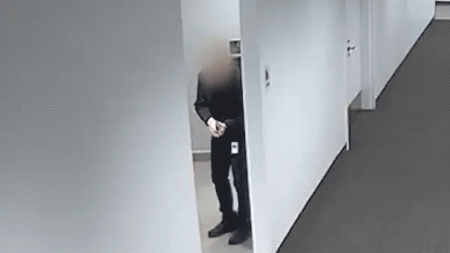




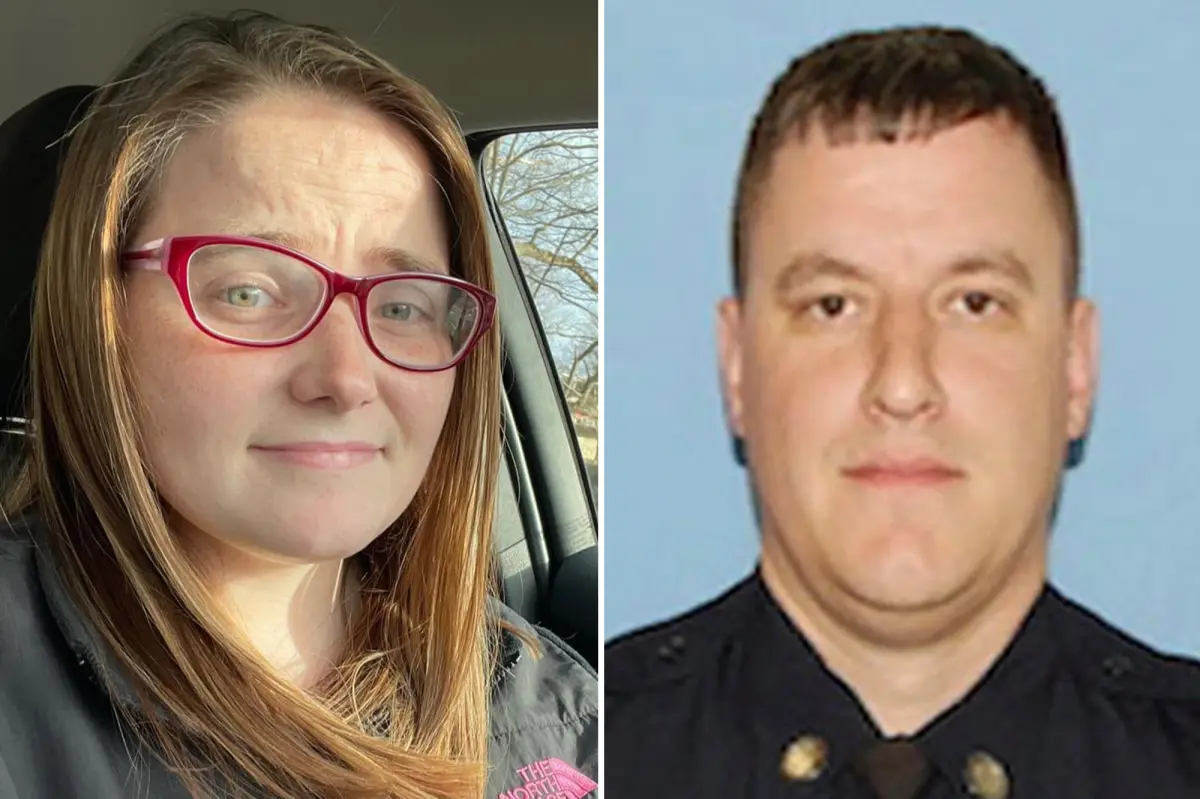
In a Boston courtroom, the final chapter of a devastating story is about to be written. A jury is poised to decide the fate of Matthew Farwell, a disgraced former Stoughton police detective accused of killing Sandra Birchmore, a young woman whose life was marked by broken trust and unimaginable betrayal. For nearly four weeks, the trial has unfolded through harrowing testimony, drawing back the curtain on a relationship that began when Sandra was just a teenager and ended with her death at 23, pregnant and full of hope for a son she would never meet. Farwell, now 41, a married father of three, has pleaded not guilty to charges of killing a witness and killing an unborn child. As closing arguments are set to begin Friday morning, the jury must weigh two profoundly different versions of what happened on February 1, 2021, when Sandra was found dead in her Canton apartment. At the heart of the case is a question that has haunted her family and community for years: Did Sandra take her own life, or was she silenced by a man who had spent years exploiting her? Behind the legal terminology and forensic debates lies a human tragedy—a girl who once dreamed of becoming a police officer, who was allegedly groomed by the very people meant to protect her, and whose death may have been dismissed too quickly because of who she was.
Sandra Birchmore’s journey into the orbit of Matthew Farwell began when she was a teenager with aspirations of a career in law enforcement. She joined a youth police program that Farwell helped run, a program designed to mentor young people interested in police work. Instead of finding a safe harbor, prosecutors say, Sandra found a predator. Farwell, a man in a position of power and authority, allegedly began grooming the troubled teenager and eventually started a sexual relationship with her when she was just 15 years old. Massachusetts law sets the age of consent at 16, which meant the relationship was not only a profound abuse of trust but also a crime. For years, Sandra carried the weight of this secret. As she grew into adulthood, the dynamic remained, with Farwell continuing to exert control over her life. Prosecutors described a disturbing pattern of manipulation and abuse, painting a picture of a young woman trapped by her own loyalty, fear, and perhaps a twisted sense of love. The relationship continued in secret even as Farwell married and started a family. Sandra, meanwhile, was not just a victim of sexual abuse; she was also navigating a difficult life, trying to build something for herself. To her friends and colleagues, she was bright and warm, someone with real aspirations. But behind the surface, she was entangled in a web of lies and exploitation that would ultimately prove fatal. Her abuser was not a stranger lurking in the shadows; he was a police officer, a married man, a twin brother, and someone she had once looked up to. The betrayal she endured was not just personal—it was systemic, rooted in the unchecked authority of a trusted adult.
The prosecution’s case against Farwell is built on a chilling narrative of control, jealousy, and violence. Years after the abuse began, Sandra discovered that Farwell’s wife was pregnant with their third child. The news, prosecutors say, broke something inside her. She had watched Farwell build a life with someone else while she remained a hidden secret, and she demanded that he give her a baby too—or she would expose their relationship. Farwell, according to prosecutors, reluctantly agreed, perhaps as a way to keep her quiet, perhaps because he believed he could manage the situation. When Sandra became pregnant, however, rumors of their connection began to circulate, and Farwell’s carefully constructed double life started to crumble. Rather than face the consequences, prosecutors argue, he decided to eliminate the threat. On the day before his wife gave birth, Farwell allegedly went to Sandra’s apartment and killed her, staging the scene to look like suicide. The timing was not a coincidence, prosecutors say; it was a calculated move to protect his family and his reputation. But Farwell’s defense tells an entirely different story. His lawyers do not deny that he had a sexual relationship with Sandra, nor do they dispute that he was the last person to see her alive. What they claim is that Sandra took her own life, dying by suicide shortly after Farwell went to her apartment to break up with her. According to the defense, Farwell was trying to end the relationship, not silence Sandra. They called their own experts, including a former medical examiner, who testified that her injuries were consistent with suicide rather than homicide. The defense’s version of events asks the jury to believe that a young woman excited about her pregnancy, surrounded by people who saw no signs of despair, would suddenly end her life and her unborn child’s life just after an emotional confrontation.
Over the course of the trial, the jury heard from 50 witnesses, each adding a layer of complexity to the central question of how Sandra died. The prosecution called 38 witnesses, including forensic and medical experts, law enforcement officials, first responders, and several of Sandra’s friends and colleagues. One after another, they testified that Sandra was happy in the weeks before her death, that she was eagerly preparing for the birth of her son, and that she showed no signs of the depression or hopelessness that might point to suicide. Her joy was palpable to those around her—she had a future ahead of her, a baby to love, and dreams that were finally coming into view. The prosecution also called Farwell’s twin brother, William “Billy” Farwell, whose testimony was nothing short of damning. Billy, who had also been a police officer at the time, was granted immunity for having had sex with Sandra while on duty in exchange for his cooperation. He told the jury that he had been intimate with Sandra when she was an adult, but more importantly, he described her as appearing happy and untroubled in the days before her death, contradicting the defense’s narrative that she was emotionally unstable. Billy’s testimony went even further, suggesting that his brother had engaged in a cover-up. He testified that Matthew told him he had wiped his cell phone after Sandra’s death, and he described how other police officers had conducted only a cursory investigation into the twins’ connection to her. The image that emerged was of a compromised police investigation, one that seemed designed to protect its own rather than seek the truth. Billy’s words painted a portrait of a brother who was not just grieving or confused, but actively trying to hide evidence of his involvement.
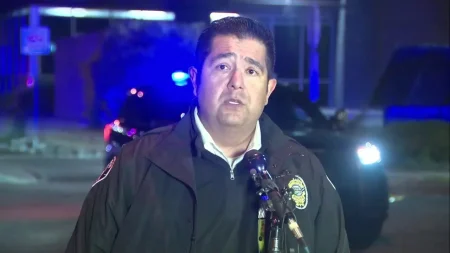
Sandra’s death was initially ruled a suicide, a determination that allowed the case to go cold for years and caused her family immense pain. The Norfolk County district attorney at the time, Michael Morrissey—who has since faced sharp criticism for his handling of another high-profile murder case, the prosecution of Karen Read—declined to bring charges. For Sandra’s loved ones, the sense of injustice was overwhelming. Here was a young woman with marks of abuse, a history of being preyed upon by police officers, and a pregnancy, yet the official response seemed to accept her death at face value. It was only when federal authorities launched their own investigation that the case began to gain momentum, ultimately leading to Farwell’s arrest more than three years later. The federal probe uncovered details that had been overlooked or ignored, reigniting hope that Sandra would finally get the justice she deserved. One of the most stunning revelations to emerge during the trial was the identity of the father of Sandra’s unborn child. Both Sandra and Matthew Farwell believed he was the father, but DNA testing conducted after her death revealed otherwise. The real father was a married military recruiter with whom Sandra had also been having an affair. This twist complicated the narrative, but it did not undermine the prosecution’s core argument: whether or not Farwell was the biological father, he believed he was, and that belief gave him a motive to kill. The betrayal Sandra experienced in her short life was staggering. She was abused by one officer, had a sexual relationship with his twin brother, and was entangled with yet another man who was hiding his own secrets. None of this diminishes her humanity, but it illuminates the ways in which she was failed by the people and systems around her. Both Farwell brothers resigned from the police department amid an internal investigation into their relationships with Sandra, yet accountability beyond that has been slow and painful.
As the trial now moves toward its conclusion, the emotional weight of the case is impossible to ignore. Farwell has chosen not to testify, leaving his defense team to speak on his behalf. His lawyers have argued that Sandra’s death was a suicide, a tragic end to a complicated and troubled life, but the prosecution has painted a far more sinister picture of a calculated predator who manipulated a vulnerable young woman for years and then killed her to protect himself. The jurors, who will receive an hour and a half of closing arguments from each side before beginning deliberations, are now tasked with a profound responsibility. They must sift through the evidence, weigh the credibility of witnesses, and decide whether the stories they have heard point to guilt beyond a reasonable doubt. For Sandra Birchmore, the trial is the last chance for her voice to be heard. She was a daughter, a friend, a colleague, and an expectant mother. She was someone who believed in the promise of law enforcement, only to be betrayed by those who wore the badge. The case has exposed not only the alleged crimes of one man, but also the failures of a system that enabled him—failures that allowed a death to be dismissed, an investigation to be stifled, and a family to wait more than three years for answers. When the jury returns, it will not just be deciding the fate of Matthew Farwell. It will be deciding whether Sandra Birchmore’s life mattered, whether her death was a tragedy or a crime, and whether justice can finally catch up to a story that has been marked by too much silence for too long. No matter the outcome, the trial has already laid bare the devastating consequences of abuse, the corruption of power, and the enduring human need for truth. For anyone struggling with suicidal thoughts, help is available by calling the National Suicide Prevention Lifeline at 988 or visiting SuicidePreventionLifeline.org, because every life deserves care, compassion, and a chance to be seen.