


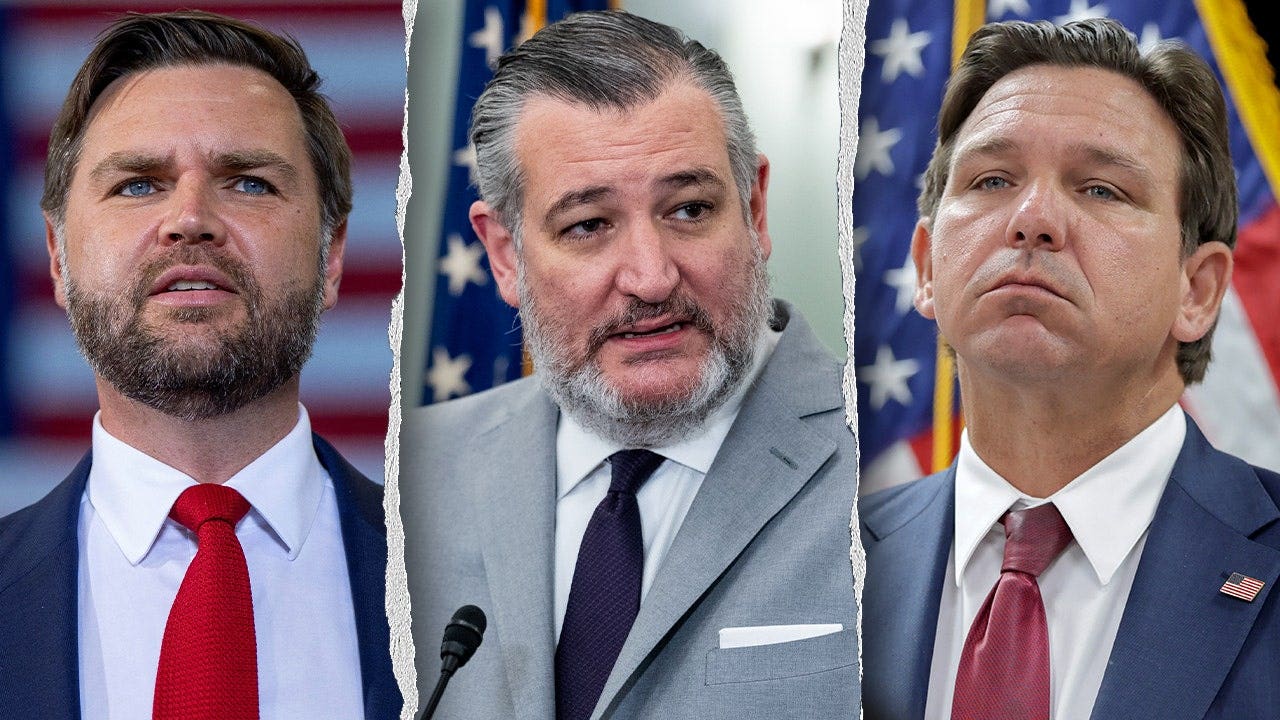
The political landscape is still smoldering in the wake of a bruising midterm election cycle, and the fallout from Tuesday’s contests has triggered a period of intense soul-searching and finger-pointing within the Republican party. As the dust settles, the initial reaction from financial markets was swift and brutal, with Wall Street suffering a significant downturn. While economic factors are often complex, former President Donald Trump was quick to lay the blame squarely at the feet of the Democratic leadership, framing the market’s negative reaction as a direct consequence of their policy agenda. This economic anxiety serves as the backdrop for a more profound political reckoning, as the GOP grapples with the reality that their expected “red wave” did not materialize, leaving them to question their strategy, their messaging, and their leadership as they prepare to navigate the treacherous waters of a divided government.
The internal battle over the party’s future direction has already begun, with prominent Republican figures staking out their claims and trading barbs over the reasons for their underwhelming performance. The clash is not merely about policy but about the very identity and coalition of the party. Figures like Vice President-elect J.D. Vance, Senator Ted Cruz, and Florida Governor Ron DeSantis represent different factions and philosophies, and their post-election analyses have put them at odds with one another. The debate centers on whether the party’s losses were due to a failure to connect with suburban voters, a lackluster ground game, or the unpopularity of certain candidates. This high-stakes public squabbling is a clear indication that the path forward for the GOP is fraught with tension, as the party’s most influential voices struggle to define a coherent strategy that can win back the trust of the American people.
The Democratic party, while celebrating unexpected victories that defied historical precedent, is not without its own internal divisions and controversies. Their success in flipping several Republican-held seats has emboldened the progressive wing, which is now pushing for a more ambitious legislative agenda. Prominent members of the left, including those from the “Squad,” are publicly urging the leadership to leverage their newfound power to pursue long-cherished goals such as Medicare for All and reparations. However, their victories have also come under scrutiny, particularly in key races where the personal histories of successful candidates have sparked intense debate. For example, in a tight Minnesota contest, a Somali Democrat’s professional background has come under a microscope, raising questions about qualifications and experience that are quickly becoming a national talking point. These victories, while a source of celebration, are also a source of contention, revealing the ideological and strategic fault lines that run through the Democratic coalition.
Amid the political flux, issues of immigration and public safety have surged to the forefront of the national conversation, fueled by a series of high-profile incidents and policy clashes. In New York City, the director of U.S. Immigration and Customs Enforcement (ICE) publicly criticized the city’s sanctuary laws following an operation where agents tackled criminal migrants on the streets, arguing that such policies hinder law enforcement and endanger public safety. This tension is mirrored in Seattle, where a sanctuary policy could potentially result in a convicted Venezuelan sex offender being released back onto the streets. These local conflicts highlight the deep divide between federal enforcement priorities and local governance, creating a legal and political battleground that resonates with voters concerned about crime and border security. The debate is further inflamed by legal actions, such as the Department of Justice’s lawsuit against Penn State University over in-state tuition rates for undocumented students, which serves as a flashpoint in the broader culture war over the treatment of immigrants.
The culture wars extend beyond immigration, touching upon freedom of expression, public health mandates, and social issues that continue to polarize the nation. A veteran firefighter’s long-running battle against a vaccine mandate is now heading to the 9th Circuit Court of Appeals, where he is arguing that his religious rights were violated, a case that has become a symbol for those who believe their personal liberties are under attack. Concurrently, the political vitriol has spilled into the world of sports and entertainment, with a New York Knicks champion publicly labeling pop superstar Taylor Swift the “fakest fan” from the celebrity row, a comment that underscores how even sports arenas are not immune to the charged atmosphere. These stories capture a public mood that is confrontational and weary, where figures from all walks of life are being pulled into the vortex of partisan debate, reflecting a society that is deeply engaged with, and often exhausted by, the constant churn of controversy.
In this environment of anxiety and division, there is a simultaneous search for practical solutions and lighthearted distractions. On the one hand, editorial voices are counseling caution, advising investors not to let their emotions drive financial decisions in the wake of the market turbulence, while others are urging the Supreme Court to address what they see as discriminatory policies. On a more local and hopeful note, voters in Baltimore passed a measure to create a newborn baby fund, a tangible step to support new parents—a reminder that civic action can still yield positive, bipartisan results. Finally, a nugget of health advice suggests a simple mealtime habit could help keep blood sugar spikes in check, offering a small but actionable way for individuals to manage their personal well-being amidst the larger chaos. From the panic on Wall Street to the fight over a firefighter’s job, from the scolding of a pop star to the creation of a fund for babies, the week’s news reflects a nation grappling with its problems and seeking a way forward, one argument, one trial, and one hopeful initiative at a time.