


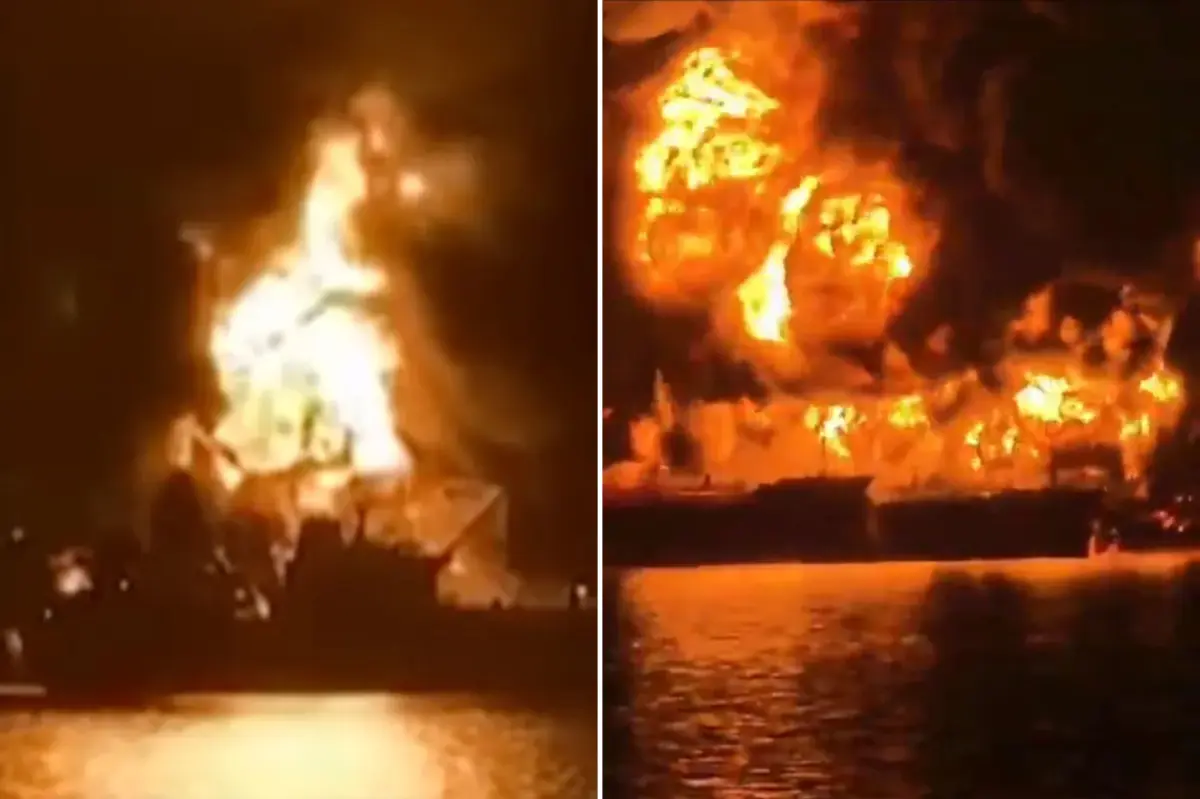
The crew of the US-owned oil tanker Safesea Vishnu faced a nightmarish ordeal in the Persian Gulf, their lives thrown into chaos by what the ship’s owner called a “barbaric attack” from Iran. As the vessel anchored near Iraq’s Khor Al Zubair and loaded flammable naphtha, two unmanned boats packed with explosives slammed into it just before midnight. The explosion turned the ship into an inferno, forcing all 28 seafarers to confront sheer terror in the dark waters.
Imagine the panic—the crew, ordinary men and women from around the world, dedicated to their jobs transporting vital fuel, suddenly fighting for survival. The attack was no accident; it was calculated, carried out by Iranian extremists whose mindset, the chairman Sv Anchan lamented, showed in unverified videos of people cheering and chanting “Allahu Akbar” as flames rose. These weren’t warriors on a battlefield; they were professionals keeping global trade alive, families away from home, now thrust into war’s brutal reality.
Vulnerability gripped them instantly. Fire raged, blocking evacuation routes, and another ship docked alongside made escape even harder. Lowering lifeboats? Impossible. As flames devoured the tanker, desperation peaked—until the daughter vessel’s mooring ropes snapped, drifting away and opening a sliver of hope. In heart-pounding moments, the crew leaped into the churning sea, their courage and raw survival instincts pulling them through.
Rescue came swiftly thanks to the Iraqi Coast Guard, averting a massacre. But joy turned to sorrow: one brave seafarer perished in the cold, unforgiving water. The other 27 made it, now safe and recovering, but forever scarred by the brush with death. Their story reminds us of the human cost behind headlines, the unspoken fears of loved ones waiting for word back home.
Chairman Anchan’s indignation boiled over. “These men and women are not soldiers,” he declared, pleading for the world to see them as essential pillars of society, not pawns in geopolitical games. Their daily grind—hauling energy, food, and goods—fuels economies and sustains lives, yet they’re now targets. He urged governments and maritime bodies to act: shipping lanes can’t become war zones, and seafarers can’t be treated as expendable.
This incident sits amid a storm of tension since US strikes against Iran two weeks ago. At least 16 vessels have been attacked in the Gulf, prompting American retaliation, like bombing Iranian sites. Iran’s new supreme leader threatens to blockade the vital Strait of Hormuz, escalating fears of a full-blown crisis. In this volatile chess game, it’s the everyday sailors like those on Safesea Vishnu who pay the highest price, their resilience a testament to humanity’s endurance in the face of madness.