







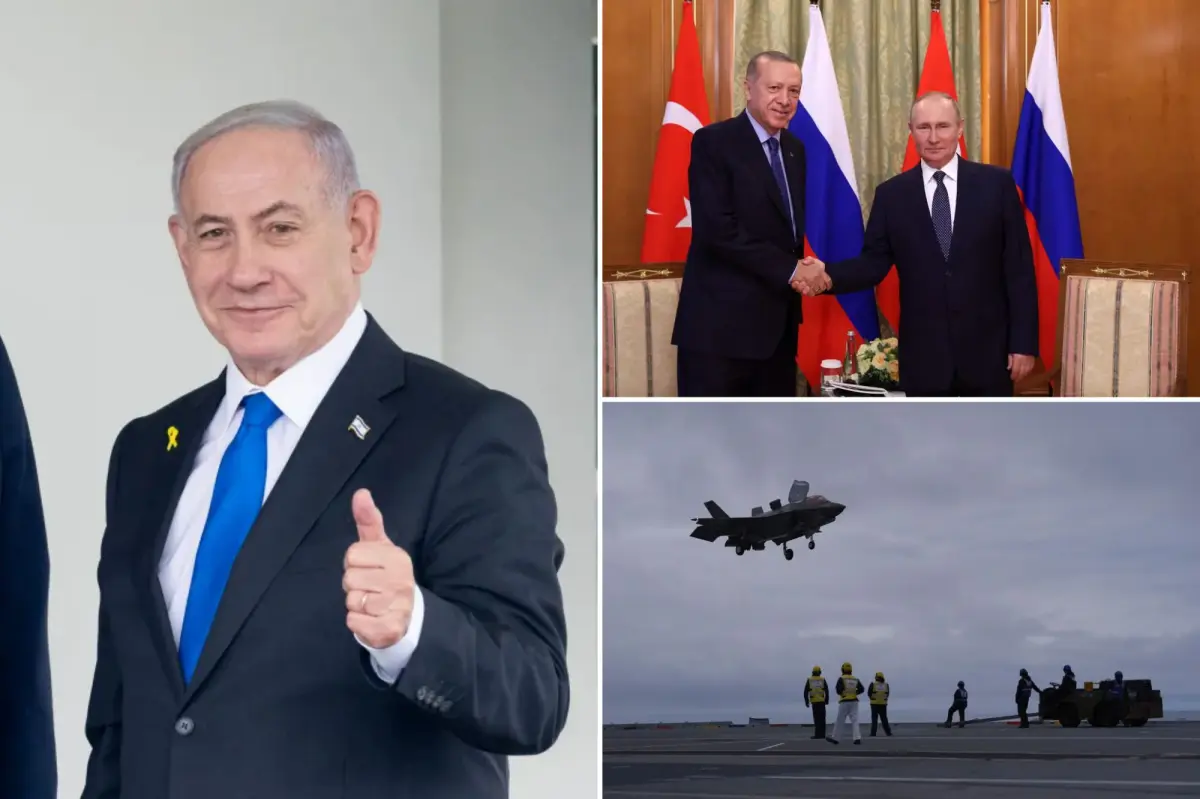
The geopolitical chess board of the Middle East and the Mediterranean is seeing a fresh wave of tension, highlighted by a direct appeal from Israeli Prime Minister Benjamin Netanyahu to U.S. President Donald Trump. In a recent interview on “Fox & Friends,” Netanyahu urged Trump to block any attempts to deliver advanced F-35 fighter jets—or even their engines—to Turkey. The Israeli leader warned that arming Turkey with such cutting-edge military hardware would severely disrupt the regional balance of power. At the heart of Israel’s defense strategy is its undisputed air superiority, which relies heavily on its own fleet of at least three dozen F-35s. Netanyahu argued that compromising this advantage, which is bolstered by the United States’ strong footprint in the region, would pose a direct threat to the stability of the Middle East.
This plea comes at a crucial diplomatic juncture, as Turkish President Recep Tayyip Erdogan heads into a NATO summit in Ankara with a clear objective: securing Turkey’s readmission into the elite F-35 joint strike fighter program. Turkey was expelled from the program in 2019 under bipartisan pressure from Washington after Ankara purchased the Russian-made S-400 missile system. U.S. defense officials feared that operating the Russian system alongside the F-35 could allow Moscow to gather sensitive intelligence and compromise the stealth jet’s advanced capabilities. Despite this exile, Turkey—which boasts the second-largest standing army in NATO—has been working behind the scenes to mend fences and regain access to the crown jewels of American aviation technology, a move that is met with fierce resistance from various international stakeholders.
Netanyahu did not hold back in his assessment of Erdogan, painting a picture of an unpredictable and hostile leader whose rhetoric posing a threat to several nations. “Turkey is a great country, but it’s governed by a man who calls openly for the annihilation of Israel,” Netanyahu remarked. He pointed out that Turkey currently occupies the northern half of Cyprus and frequently issues threats toward Greece—both of which are fellow NATO members or allies. Furthermore, the Israeli Prime Minister accused the Turkish administration of harboring grand territorial ambitions, noting that Erdogan has spoken openly about conquering Jerusalem and that his government is deeply influenced by the ideology of the Muslim Brotherhood, an Islamist movement that is traditionally extremely hostile to Western interests.
The relationship between Turkey and the broader international community has been famously volatile. While Turkey operates as a key NATO member, it has frequently clashed with Western partners, particularly over its aggressive posturing in the Aegean Sea against Greece and its 2019 military offensives targeting Kurdish forces in northern Syria, which briefly drew sanctions from the U.S. and Europe. Domestically, Erdogan’s administration has adopted an increasingly fiery anti-Israel stance, especially following the outbreak of the war with Hamas in late 2023. Netanyahu highlighted extreme statements from Turkish officials, claiming the Turkish Foreign Minister suggested Israel has no place in humanity, while the Interior Minister expressed a desire to govern Jerusalem, fueling Israel’s insistence that Turkey cannot be trusted with top-tier Western weaponry.
Compounding the anxiety in Washington and Jerusalem is Turkey’s highly complex and often contradictory relationship with Russia. After a period of intense friction in 2015 when Turkey shot down a Russian fighter jet, relations have warmed significantly. Erdogan raised eyebrows in 2023 by declaring that he trusts Moscow just as much as he trusts the West. Yet, Turkey continues to perform a delicate balancing act; it has provided crucial combat drones and military aid to Ukraine, supported Kyiv’s aspirations to join NATO, and worked to counter Russian dominance in the Black Sea, even as it initially delayed the NATO accessions of Sweden and Finland over disputes regarding Kurdish activists.
The ultimate decision now rests heavily on the shoulders of President Trump, who back in office faces a complex diplomatic dilemma. Trump has previously expressed admiration for Erdogan, calling him an “extraordinary leader” and a “good friend,” which could influence his administration’s willingness to negotiate. However, Trump must weigh this personal rapport against intense, bipartisan skepticism within the United States Congress, as well as the urgent security anxieties of Israel, Washington’s closest ally in the region. As the NATO summit gets underway, the debate over the F-35s will serve as a critical test of how the Trump administration intends to navigate the competing demands of loyalty to long-term allies and the pragmatic realities of global defense partnerships.